

Systems Biology Lab @ 🔬Weizmann Institute of Science. # Understanding design principles of biological circuits.
Israel
Joined September 2017
- Tweets418
- Following896
- Followers2.6K
- Likes774




Thanks, Anshul. Thank you for discussing this with us and for making the models and the data publicly available. It is really appreciated. We are looking forward to hearing more and comparing our approaches.

Great to see instant use of our resource. This is the advantage of fast open releases of data and model resources. But I disagree with the conclusions from this analysis. We have been working on a detailed analysis of these data & come to a very different conclusion. 1/
1
7
1,231
Our main interest is the differential binding strengths observed across peaks/ non-peaks, many of which do have the canonical motifs. So, in this analysis, we are only considering the variation in peak strength, as captured by the count score.
1
3
289
How transcription factors (TFs) selectively recognize their genomic targets among numerous sites containing similar DNA motifs remains an open question. (1/n)
Although detected in some cases, cooperativity had a negligible contribution to genome-wide binding predictions. Nevertheless, the models captured differences in binding preferences between TFs with similar motif preferences, even within the same cellular environment.
Although detected in some cases, cooperativity had a negligible contribution to genome-wide binding predictions. Nevertheless, the models captured differences in binding preferences between TFs with similar motif preferences, even within the same cellular environment.
1
43
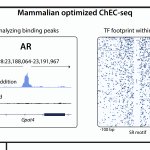
(1/7) How do steroid receptors identify their target sites within the mammalian genome, despite the abundance of similar DNA motifs? We tackled this question by adapting ChEC-seq for mammalian tissue culture, enabling footprint-resolution mapping of transcription factor binding.
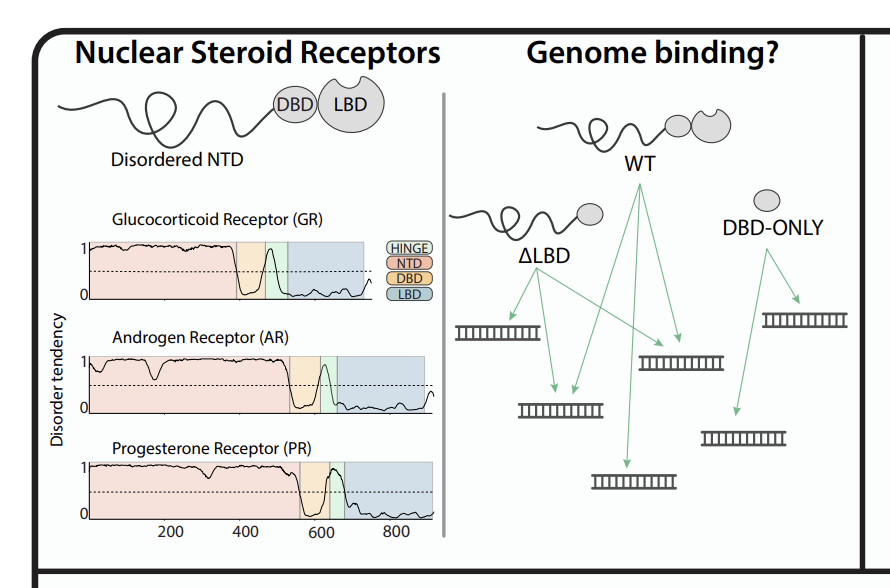
(7/7) This is the lab’s first mammalian study, extending principles of IDR-directed genome targeting from yeast to mammalian transcription factors while introducing a mammalian ChEC-seq platform for high-resolution mapping of protein-DNA interactions. genome.cshlp.org/content/ear…
12
544
(6/7) The NTDs also direct genome targeting to distinct SR motifs, but not to other Transcription factor’s motifs in budding yeast, where mammalian cofactors are absent.

3
363
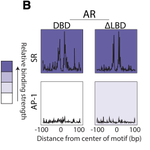
(5/7) Footprint analysis uncovered an unexpected role for AP-1. Rather than simply recruiting steroid receptors, AP-1 strongly shapes binding when the NTD is absent. The NTD relieves this AP-1 bias, enabling receptors to efficiently bind canonical steroid response elements.

4
335
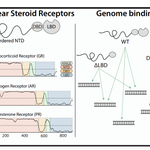
(4/7) Progressive NTD truncations reveal that this targeting is encoded by many weak determinants spread throughout the disordered sequence.

6
353
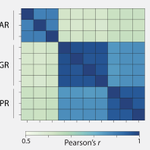
(3/7) Although androgen, glucocorticoid, and progesterone receptors recognize the same DNA motif through similar DNA-binding domains, their intrinsically disordered N-terminal domains (NTDs) direct them to distinct genomic targets.

4
378
