

Award winning Journalist| Film Maker |2 Time African Journalist of The Year | Nieman Fellow| #100MostInfluentialAfricans 2022 | Email [email protected]
World Citizen🇿🇼 🇿🇦 🇬🇧
Joined September 2009
- Tweets62.8K
- Following5.1K
- Followers9K
- Likes37.4K





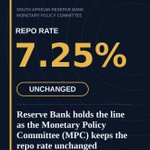


The Democratic Alliance (DA) should accept that Herman Mashaba does not want to work with it, and move on. What is happening to the DA today also happened to the uMkhonto weSizwe (MK) party in 2024, and the DA was part of the group that blocked MK.
The DA finished first in all three Gauteng metros, yet it may be shut out of every one of them. That is painful to the DA, but it is the system the DA helped to defend when it suited the party.
What the DA needs to do now is prepare for 2029 and 2031, and campaign for an outright win if the coalition partners chosen by ActionSA fail to deliver. A coalition built on shared spoils rather than shared principles tends to collapse under the weight of its contradictory visions.
Parties that agree only on how to divide positions will fight the moment the first difficult decision arrives.
The DA can also campaign to change the law on coalitions, so that the party with the most votes leads the coalition. Laws exist to facilitate order, and if they cease to do so, they can and should be changed. Leave the rest to the voters in 2029 and 2031.

DA threatens to go to court if inaugural Joburg council meeting not postponed
brnw.ch/21x7e5g


Today I want to talk to young black Africans. I say black deliberately, because young white people and young Indian people are taught about money at home as a matter of course, and most black families are not.
I was lucky. In 1996 I met a medical doctor in London, Dr Tendai Maboreke, who became a brother, a friend and a mentor. We were united by our love for rap music. He was the first man to teach me about stocks and about property. He warned me about conspicuous consumption and told me to focus on stocks and property, not the sports cars I was buying at the time.
I do not know about other Africans who follow me on this app, but I come from a country where, when a black person makes it in life, the explanation is usually black magic, a trip to the witch doctor. People do not want to accept that you made it through work.
At 55 years of age, I am still asked how I live in a wealthy suburb, when I have worked for 36 years for blue-chip news companies and won multiple awards. Because I am black, some of my compatriots keep asking how he drives a Maserati and how he has a house in England. I first went to England 32 years ago, but you must still explain how you own a house there.
So what I want to share with young black Africans today is the culture of money. I bought shares over the years. Some made me a lot of money, some made me very little, and at times I lost. Overall they made me a great deal, and I took that money and invested it in property.
In 2010, my primary residence in Harare was worth around US$500,000 (R8.7 million). Had I sold it, paid the taxes and bought Tesla shares at the time of its initial public offering, that US$500,000 (R8.7 million) would be worth about US$168 million (R2.9 billion) today. US$1 million (R17.4 million) would be worth about US$335 million (R5.8 billion).
I have often spoken with presidents and former presidents of African countries, and some have become friends. They give me advice on politics and I give them advice on communications. What I have told them again and again is that African politicians have money but do not understand it.
Take Zimbabwe, Malawi or Zambia. If Robert Mugabe or Bingu wa Mutharika had taken US$1 million (R17.4 million) from the treasury in 2010 and bought Tesla shares, that man would be worth US$335 million (R5.8 billion) today.
Governments do this. Norway's sovereign wealth fund, the largest in the world, has held Tesla shares. Saudi Arabia's Public Investment Fund bought a stake of between 3 and 5 per cent in 2018. The principle is the same: a government that invests, instead of consuming, builds wealth for its people. The same applies to individual wealth.
Now take US$100 million (R1.7 billion). That is roughly what Zimbabwe loses through gold leakages every month. Had US$100 million (R1.7 billion) been invested in Tesla shares in 2010, it would be worth about US$33.5 billion (R581 billion) today. Think about what that could have done for our hospitals, our roads and our schools.
I decided to share this lecture today because Anthropic, the company that owns Claude, listed on the Nasdaq on Thursday. Shares went first to institutions, and now individuals can buy them through a brokerage.
If you are a clever young African, you would rather put your money into shares than into a car, which is a liability. Be careful with borrowing, because shares can fall as well as rise, but this is exactly what Dr Maboreke was teaching me in 1996.
I was driving a Toyota Supra, a beautiful sports car, and he asked me whether I knew that if I sold it, I could buy shares that might be worth 20 or 30 times as much after five years. I was sceptical, because I did not understand the game. In our families, these things were not understood or shared.
Eventually my wish to make my mentor happy overcame my doubt, and that is how I bought my house in Harare at 29, in one of the most affluent suburbs. I had understood money.
I had also understood that there is a good loan and a bad loan. A good loan is a mortgage on a house that costs £100,000 and is worth £400,000 ten years later. A bad loan is borrowing to buy a Maserati. If you have to borrow to buy one, you cannot afford it. A Maserati is a liability, while a house is an investment. That is how a lot of white people became rich.
Elon Musk did nothing mysterious. He understood where to buy, whether shares or companies, and then he grew them.
Many African politicians steal the seed, the maize seed, instead of putting it into the ground, letting it germinate and eating from the harvest while making sure everyone else is fed. Even if you take the lion's share, when people are fully fed, they do not care.
But if you take the lion's share and leave them without hospitals, without roads, without good schools and without jobs, then you become the tyrant your people say you are, fattening your wallet while they live in poverty.
So to young black Africans; if you think you will get rich by going to work alone, you are wasting your time. Buy shares, study how they work, and you give yourself a real chance of becoming wealthy, depending on the risk you are willing to take.
Today someone can buy shares without ever opening a business and become a multimillionaire. In a world where Africans do not understand how this works, others will get richer and richer while we look aside and say he must have gone to a witch doctor for muti.
That is why I advise, publicly and privately, politicians and businesspeople who give gifts. Imagine a businessman or a politician had put US$1 million (R17.4 million) into Tesla shares in 2010 and said, this is for my community, my church or the school where I studied. Today that gift would be worth more than US$300 million (R5.2 billion). If you give a villager money, he will consume it. If you invest it for him, it will look after him for life.
This is what young black people should be discussing when they meet at the groove, at the nightclub, over lunch and at sports events, because it is what white people have done for generations, and it has worked.
General Valerio Sibanda, the former commander of the Zimbabwe Defence Forces, once said that we do not have to condemn everything that came with colonialism, and that we should pick the good habits.
He gave Cecil John Rhodes as an example of a pioneer entrepreneur and said black people should copy that.
We own the country and we own the resources. We can do even better than Rhodes, because he was a coloniser and this land is ours. Unless we understand that, our people will always be poor.
It is Sunday afternoon. On Friday we have fun, on Saturday we play music, and on Sunday let us talk finance. Today, when a black man owns a house in Harare, Joburg, London, America or France, the first question is how he got it, because we come from a community that was never taught how money is made. Let us learn to make sense of money and investments.
The beauty of owning shares is that you are not taxed on them until you sell. In many countries, you are not taxed on the increase in the value of shares until you sell them. The rules differ from country to country, so you must understand the tax laws that apply to you.
Suppose I had bought US$1 million (R17.4 million) worth of Tesla shares in 2010. Today that investment would be worth more than US$330 million (R5.7 billion). The gain is on record, but it is not in my pocket, and a government cannot tax a gain I have not cashed in. You are taxed when you sell, not when your shares rise.
Now suppose I see a building in Johannesburg worth US$1 million (R17.4 million), and I have no cash in the bank, only the Tesla shares. Ordinarily one would think, let me sell US$1 million (R17.4 million) worth of shares and buy the building. That is not what rich people do, and that is why they are rich.
Rich people go to a bank with their share certificate and ask to borrow US$1 million (R17.4 million). The bank asks for collateral, and you put shares worth more than US$330 million (R5.7 billion) on the table. You want only US$1 million (R17.4 million), a tiny fraction of what you hold, so the bank gives it to you gladly. You buy the building with the bank's money. You have sold nothing, so you have triggered no tax on your shares, and a loan is not income, so you pay no income tax on it.
The building then earns rent. You use the rent to service the loan, and only that rental income is taxed. Your shares stay untouched and keep growing.
Compare that with the ordinary person who sees the same building. She has to sell a couple of her houses to raise the money, and each sale is taxed. I know this from experience. I recently sold a property in Harare for US$565,000 (R9.8 million) and paid over US$45,000 (R781,000) in duties and taxes to the Zimbabwean government.
Now suppose I invest US$500,000 (R8.7 million) from the sale of that property, in Anthropic shares. Anthropic listed on the Nasdaq on Thursday, and individual investors can now buy shares through a brokerage.
Tesla shares have multiplied about 335 times since 2010. If Anthropic's shares grew at that same rate over the next 20 years, my US$500,000 (R8.7 million) would become about US$168 million (R2.9 billion). That is the difference between spending a house and planting it.
Tesla was doubted for years before it rewarded those who held on, and Anthropic is a new listing whose price has already swung sharply in its first days of trading. But the lesson for young Africans stands. A house sold and spent is gone for ever, while the same money invested wisely can look after your children and grandchildren.
This is not financial, tax or legal advice. I am sharing my own experience and views, and the figures are illustrations based on past performance, which is no guide to the future.
Before you buy shares, borrow against them or make any other investment decision, please seek professional advice from a qualified financial adviser, tax adviser or lawyer in your country.
Share prices do not move in one direction. They rise and fall, sometimes sharply, and investors can lose some or all of the money they put in. Investing requires patience, research and an understanding of the risks involved.
Never invest money you cannot afford to lose.
The book that set me on the path was given to me around 1998 by Dr Maboreke, the London doctor who taught me about stocks and property. It was Rich Dad Poor Dad by Robert T. Kiyosaki, first published in 1997. At the time I was buying sports cars. The book taught me the difference between assets that put money in your pocket and liabilities that take it out.
For readers who want to understand the world of shares, I recommend five more books. The Intelligent Investor by Benjamin Graham, first published in 1949, remains the foundation of value investing. One Up on Wall Street by Peter Lynch, first published in 1989, shows how ordinary people can spot good companies. A Random Walk Down Wall Street by Burton G. Malkiel, first published in 1973, explains how markets behave and why timing them is so hard.
The Little Book of Common Sense Investing by John C. Bogle, first published in 2007, makes the case for low-cost, long-term investing. The Psychology of Money by Morgan Housel, first published in 2020, is about how our own behaviour decides whether we build wealth or lose it.
I have always encouraged my followers to read. In a continent where too few of us were taught about money at home, these books are a good place to start.
I hope the engagement this post attracts will be useful to all of us, so that we learn how people build wealth and use it well.

It is important for South Africa to fix its border control and immigration laws, but immigration is not South Africa’s immediate problem. Your immediate problem is corruption, an economy that is not growing and incompetence!
Jacinta and her gang have spent months marching against foreigners. Thousands have taken to the streets in Durban, Pretoria, Johannesburg and Cape Town under the banner of March and March, with a simple message; undocumented foreign nationals are the reason young South Africans have no jobs. Human Rights Watch documented violent attacks on foreign nationals, some of them fatal caused by these marches. But is the message correct?
Now compare that with what the auditor-general has just told the country. The National Youth Development Agency (NYDA) has received a qualified audit opinion for the 2025/26 financial year, because it failed to show that about R780 million paid to non-governmental organisations (NGOs) running the presidential youth employment initiative ever reached the young people it was meant for. That money was meant for jobs, the very jobs the marchers say they are fighting for.
Nobody is marching on the NYDA. Nobody gave its board a deadline to explain where R780 million went. Nobody shut down an NGO office or chased a director through the streets with a knobkerrie.
The anger went to the spaza shop owner from Malawi, the Mozambican woman selling vegetables in the inner city and the Zimbabwean waiter. None of them sat on a board, signed a payment or had any power over youth employment money.
Let me be precise, because precision matters. A qualified audit opinion means the money was not accounted for, and the auditor-general found it could not be shown to have reached its intended beneficiaries.
Courts and investigators will decide what happened to it. But the point stands. South Africa's young people are not short of excuses for their unemployment. They are short of accountability, and the people who failed to provide it are South Africans, not foreigners.
Put the figure in perspective. At a stipend of R4,000 a month, R780 million pays more than 16,000 young people for a full year. That is 16,000 young South Africans with a salary, a reference letter and a first step into the labour market. That is what went missing on paper, and it is only one fund, in one year.
The real problem in South Africa is not the foreign national selling airtime on a street corner. It is the South African who treats public money meant for the poor as a personal opportunity.
It is the officials who sign off, the intermediaries who collect, the oversight bodies that look away and the politicians who promise change at every election. These are South Africans stealing from other South Africans, and that theft has cost far more jobs than any immigrant ever could.
Border control is a legitimate debate, and every country has the right to enforce its immigration laws. But a young person without a job is being lied to when they are told that the man next to them in the queue is the cause. Their anger is justified, but it is pointed at the wrong people.
If South Africans want to march for jobs, they should march to the NYDA, to the NGOs that took the money and to the Presidency that launched the initiative. They should march until someone explains where R780 million went. That is a march worth joining.


I am very much aware of the trip you reference, because one of its triggers was the illegal arrest and imprisonment of myself and a group of others in July 2020.
The African National Congress (ANC) has the capacity to impose what is morally right on the Southern African Development Community (SADC) region. It has the state power to do so, but it chooses not to, because its leaders and the party itself rely on money from broken states for elections.
People from the Zimbabwe African National Union Patriotic Front (ZANUPF) and their allies give money to the ANC, sometimes for salaries, sometimes for elections. It is a well-known fact, and it is the leverage ZANUPF holds over your leaders in South Africa, at the expense of the South African state.
If South Africa wanted order in the region today, SADC would have order. Because of the corrupt element within the ANC and the South African state, that order is not there and will not be put in place anytime soon. South Africa has brilliant bureaucrats and brilliant technocrats, but they act only on political instruction from Luthuli House and the state. Without that instruction, very little can be done.
So yes, ANC leaders were told that Zimbabwe is not a province, and they did nothing, because the party benefits from the very people who insulted it. Until South African and ANC leaders stop putting their personal interests ahead of the national interest of South Africa and the region, nothing will change.
What is needed is for South Africa to stop shielding dictatorships in SADC and massaging their egos. Constitutions are being changed illegally across the region, and South Africa knows there are SADC protocols that can be invoked to stop all this nonsense. It will not invoke them, because its leaders benefit from the rot.
The apartheid government did the opposite. When it realised that its relationship with Ian Smith would sink the apartheid state itself, it threw Smith under the bus and put the state ahead of personal loyalties. The ANC has failed to do the same.
If nothing drastic changes, the ANC could sink to around 20% in 2029. South Africans need to see and feel that change, including in the way the ANC engages with the region. Without it, the ANC will go the way of the United National Independence Party (UNIP), which is history in Zambia because Kenneth Kaunda and his regime did not change and did not move with the times.
The ANC is being punished for corruption, for failing to deliver, and indirectly for propping up broken regimes and dictatorships that create a mess on its doorstep. I have always said that complaints about illegal immigration in South Africa are legitimate, because people arriving illegally need hospitals, social services and somewhere to sleep, and they compete with locals for those resources.
If the root cause is not dealt with, nothing will change, and the oldest liberation party in Africa will sink and become history.
South Africa does not lack the tools. Article 33 of the SADC Treaty allows sanctions against any member state that undermines the principles and objectives of the region. The Protocol on Politics, Defence and Security Co-operation allows mediation, and in the last resort intervention, when a member state descends into instability, as happened in Lesotho in 1998.
The SADC Principles and Guidelines Governing Democratic Elections set the standard against which every election and every constitutional change in the region can be measured.
Decisions at SADC are taken by consensus, but consensus does not form by accident. It forms when the most powerful country in the region leads, and Pretoria has chosen not to lead. Until it does, the instruments will sit in a drawer while the rot spreads.

Part of the reason the African National Congress (ANC) is on life support, as you put it, is the decisions it made in backing broken regimes in the region at the expense of South Africa itself. Broken regimes cannot deliver healthcare to their citizens. They cannot deliver jobs.
They cannot deliver good schools. It is in the nature of human beings to go where their lives can be saved in hospitals and where they can find work, so the inward flow of illegal immigration into South Africa will not stop until the ANC confronts this problem.
It started a long time ago, with Thabo Mbeki supporting Robert Mugabe and making sure that an opposition that had won elections did not actually govern. That arrangement was authored in Pretoria by Mbeki and the ANC, and it continues to this day.
As I have said many times, the ANC benefits from this mess in a selfish way. It receives money for its election campaigns from Zimbabwe and other broken states, and some of its leaders have made personal fortunes at the expense of the country. If the ANC wants to rebuild and renew itself, it must change these things.
A tougher ANC in the Southern African Development Community (SADC) region, and a tougher South African government across Africa, will mean that things start to change, because South Africa carries that power.
John Vorster and P.W. Botha used it against Ian Smith when they realised that propping up Smith and his policies was sinking the apartheid regime itself.
They had to change course. They put the interests of their own state ahead of Smith's, something the ANC has never understood and still does not understand.
A great deal happens that is not reported, for one reason or another. One of the things least reported is the interconnectedness of South African leaders and the dictators running broken states that feed illegal immigration into South Africa.

I have said this many times, and each time I say it I am showered with insults, but it remains the truth and nothing but the truth. When South Africa says it will deport illegal immigrants or stop them from crossing, it is fighting a losing battle. The only way South Africa will be secure is when the neighbouring states around it are economically viable and able to provide jobs for their citizens.
As things stand, we have a political ecosystem in which South Africa supports dictatorships in the region. Some of those dictatorships have even put money into the ruling African National Congress (ANC) for its election campaigns.
So politically, I understand why the ANC says very little about the rot in neighbouring countries, because to some extent it benefits from it. But until that rot is dealt with, you are fighting a losing battle. As I have always said, deporting people back to Zimbabwe or Mozambique is a revolving door.
The tweet attached says there was no Border Management Authority (BMA), no soldiers, and I suppose no police either. It is not surprising that they were not there. South Africa's land borders with its neighbours stretch for thousands of kilometres. How many BMA officials and soldiers do you intend to put on such a boundary? It is practically impossible.
I always give the example of my holidays in France, in a town called Annecy, which sits on the border with Switzerland. I do not fly into France. I fly into Geneva, because it is closer to Annecy than the nearest French airport. When I drive from Geneva to Annecy, a journey of about 40 minutes, I do not see a single border official.
Nobody is rushing from Switzerland to France or from France to Switzerland looking for jobs. Because the economies are in balance, there is hardly any need for border officials, apart from one or two to make sure the equipment on the border is well looked after.
So until that economic imbalance is resolved, and until South Africa's leaders have the gumption to sit down with their counterparts and say that things must change, nothing will change. People have been crossing South Africa's borders illegally for more than 100 years.
That does not mean I support illegal immigration. It means I understand the history. I am not foolish enough to believe that the South African state, in its present form, can stop illegal immigration by deploying border officials and deporting people. It is absolutely ridiculous to think so, because it is never going to happen.
Populist politicians can use immigration to win votes, but that is where it ends. They get their votes, they go to parliament, and they cannot deliver any of the things they promised.
Herman Mashaba is going to be mayor of Johannesburg. Bookmark this tweet. He will not be able to do anything he has promised on illegal immigration, because he is not national government. He will be a mere mayor with no capacity to act on it. He cannot deploy Johannesburg police to the borders.
You will see that illegal immigration will not change until the fundamental problem, the push and pull created by broken states, is resolved. People can be as emotional as they want about the issue, but emotions resolve nothing. They simply make you angry, and anger fixes nothing. It gives you high blood pressure and makes you ill.
What is needed is to fix the root cause, which is broken states driven by corruption. They cannot provide services for their people. They cannot provide jobs for their people. And South Africa has gained from that, which is why certain quarters in South Africa are quiet. Zimbabwe, for instance, has become a supermarket for South African companies. Everything up to toothpicks and toilet paper is made in South Africa and sold in Harare.
Until the root cause is dealt with, forget it.

Chuck Robbins is the Chair and Chief Executive Officer of Cisco, the American networking and cybersecurity company.


So Ramaphosa went ALL the way to Silicon Valley and didn’t meet any of the key CEOs? Not even ONE?
AMD’s Lisa Su ?
Google’s Sundar Pichai?
OpenAI’s Sam Altman ?
Meta’s Mark Zuckerberg ?
Apple’s John Ternus or Tim Cook ?
Anthropic’s Dario Amodei ?
Broadcom’s Hock Tan ?
In essence, South Africa deployed its highest political office in the land and nearly a quarter of its Cabinet, & not ONE of Silicon Valley’s key CEO’s responded!
How catastrophic! This is embarrassing to say the least!

Tonight I decided to play some reggae vibes on vinyl and ended the session with a vinyl TK Zee! Reggae classics galore!
You need to read books such as Tubes by Andrew Blum and Chip War by Chris Miller, and follow technology publications such as Wired, MIT Technology Review, TechCentral and ITWeb, and stop posting such ignorant claims on social media.
You are entitled to dislike South Africa or its leadership, but that dislike should never push you into weaponising and accentuating lies to feed your resentment.
South Africa is the centre of Africa's data centre industry. It has 65 data centres. They hold more than 60% of Africa’s operational capacity, and by some estimates close to 70% of its hyperscale capacity.
Hyperscale means the very large facilities run for global cloud providers. Africa as a whole still accounts for less than 1% of global data centre capacity, so the continent has a long way to go. That is why Cyril Ramaphosa and his government are in America.
Johannesburg is where most of that current capacity sits. Teraco, now owned by Digital Realty, is the largest provider in the country, with about 189 megawatts (MW) of IT load. Its Isando campus near OR Tambo International Airport is the biggest single data centre in Africa at 70 MW. Its Bredell campus is next in size at 63 MW, followed by Brackenfell in the Western Cape at 50 MW.
Other major players include Africa Data Centres, Open Access Data Centres, Equinix, NTT and Vantage Data Centres. Amazon Web Services (AWS), Google and Microsoft Azure have also built local cloud infrastructure, which lets South African banks, retailers, media houses and government departments keep their data in the country and cut delays for users.
The next phase will be much bigger. National data centre capacity is expected to grow from about 400 MW to at least 1,200 MW, driven largely by Teraco, which is targeting 500 MW in total, and by newcomer Cavaleros Group in Johannesburg.
Vantage plans a further 100 MW across two Johannesburg campuses. Artificial intelligence (AI) is a big part of the demand, because AI workloads need far more power than ordinary storage and computing.
So why would you question why the head of state of South Africa would take his delegation that includes business people and students to the heart of the AI industry?
You talk about electricity. Data centres used almost 1% of South Africa's electricity in 2025, in a country that has spent years dealing with load shedding and ageing power stations. Water is another worry, since many facilities rely on it for cooling.
Operators are responding by building their own renewable energy supply and moving to more efficient cooling systems.
Africa Data Centres, for example, has signed a 20-year agreement for 12 MW of solar power. Whether the grid and water supplies can keep pace, there are alternatives that will decide how much of this investment actually gets built.
There are books available if you are in South Africa. Bookshops such as Exclusive Books, a South African chain, stock titles on technology and innovation, and they will help you understand what this is about instead of posting nonsense.
I have taken a picture of four of these books in my study. They are not expensive at all, and I have read them over time to understand this particular issue.
Crowdsourcing was written by Jeff Howe @crowdsourcing, who coined the term and was my classmate at Harvard University. The Innovation Navigator was co-written by my friend Sebastian Fixson @sebastianfixson, who is at Babson College in Massachusetts, where he is a Professor of Innovation and Design, together with Tucker Marion, and it has since been updated for the age of artificial intelligence.


Who in their right mind would ever consider data centers in SA?
They have literally none of the basic requirements:
High quantities of Stable, uninterrupted electricity
Large amounts of clean, uninterrupted fresh water
High Public safety(a data center is basically a warehouse full of very expensive GPUs)
SA does not meet a single standard
You clearly don’t understand at all how investment works. You are arguing against a trip that nobody sold the way you are describing it.
The South African Presidency called it a learning visit on artificial intelligence (AI), not a deal signing mission. The stated aim was to study how Silicon Valley works, meet Stanford, Google and Cisco, and build relationships that can turn into investment later. Deals are never signed in week one. They follow months of work, and you know that.
You also claim the trip failed because no signed agreement was announced. That is not how serious investors operate. The test is what comes after, and President Cyril Ramaphosa told his delegation to deliver concrete investment, research and skills partnerships with measurable outcomes. If that has not happened in a year, criticise it then, with evidence.
On the cost, the President said sponsors and companies carry most of the delegation's bills. If you have figures showing taxpayers footed the bill, show them. You won’t produce anything because you are lying!
As for James Manyika, he is a senior Google executive and one of the most respected African minds in the technology world.
Calling a meeting with him a photo opportunity, then adding "no disrespect to my Zimbabwean brother", is exactly the disrespect you claim to avoid. Nobody hid behind him. A man of his standing in that room is a point in the delegation's favour.
Judge the trip by what it delivers, not by a verdict you reached before the delegation had even flown home.

I don't know what you're trying to protect in this embarrassing Ramaphosa clown show.
A 300 man delegation. Eight ministers. A week in Silicon Valley. And the big win is a photo with James Manyika?
No disrespect to my Zimbabwean brother. Nobody questioned his CV, his title, or his right to be in that room.
The problem is a head of state's trip being sold as a triumph when no deal, investment or agreement was announced.
Show us the signed agreement. Show us the investment figure. Show us the jobs. If you can't, then that wasn't a working visit, it was a lunch meeting between two African brothers.
And don't hide behind Manyika to defend a trip that failed on its own.
Africa has a major problem, and it is that too many of its citizens worship personalities instead of ideas. During the 2024 American election, grown, educated men lined up to kiss Elon Musk's backside. They told us he was a genius, that he could do no wrong, and that he must never be questioned. Then Musk himself had the decency to admit that some of his actions had gone too far. That tells you people follow personalities, not ideas.
I was one of the few people on this app in Southern Africa who showed, with facts, that Musk and Trump were a danger to the world order. We were insulted by people who should know better, because these are not ordinary people. They are educated.
They told us we did not know what we were talking about. Unlike Musk, they do not have the decency to come back and say they got it wrong. We do not need them to. The whole world can see it.
This culture of hero worshipping people because they are wealthy has to stop. Some billionaires made their billions through criminality. Others made them by crushing the small man and the ordinary worker.
In Africa they are worshipped anyway, and nobody dissects or interrogates what they do. There is one rule for billionaires and celebrities, and another for ordinary people.
Consider what Musk has actually done. He boasted about feeding the United States Agency for International Development (USAID) into a wood chipper, as he led the Department of Government Efficiency (DOGE).
A study in The Lancet projected that if those cuts continue, more than 14 million additional deaths could occur by 2030, including 4.5 million children under five, with HIV/AIDS and malaria programmes among the hardest hit. Is that smart?
Those are projections, and Musk's defenders dispute them, but the programmes that kept poor people alive, many of them in Africa, were gutted all the same.
Then look at how Black workers fared at his own company. The United States Equal Employment Opportunity Commission (EEOC) sued Tesla, alleging widespread racial harassment of Black employees at its Fremont factory, including the N-word used openly, swastikas and nooses.
California's state civil rights regulator brought similar claims, and a Black former contract worker, Owen Diaz, won a jury verdict of more than $130 million, later cut to about $15 million, before Tesla settled.
Yet it was Black people from Southern Africa that I saw on this app twerking for him, regardless of everything he has done.
Some people here spend their days on Twitter bootlicking Trump and Musk, hoping white people will notice them and throw them a few crumbs. All those white people do is laugh, because what they see is laughable.
Until the fanboys and the fanatics, who are mostly men, abandon this cult of personality built on wealth and celebrity, Africa will not go far.
We see it every day in countries like Zimbabwe, where individuals are worshipped at the expense of the greater good of the nation. The continent has bright flashes of intelligence and success, but as a whole it is still backward.
My father always told me that when people are poor, they will do anything to be noticed by the powerful and the wealthy, hoping for crumbs.
The lesson I took from him is that nothing earns more respect than a man who sticks to the facts and the truth, even when it costs him something. Too many of our people have not yet learned that lesson.

This is totally false, and it shows the danger of social media in the wrong hands. President Cyril Ramaphosa went on a pre-arranged working visit to Silicon Valley, announced well before he left, and its focus was artificial intelligence (AI). It was not a state visit and it was not a political visit.
When he arrived at Google, he was welcomed by, among others, Dr James Manyika, who is indeed Zimbabwean, but his nationality had nothing to do with it.
Dr Manyika is a senior vice president at Google and Alphabet, with responsibility for research, labs, technology and society. If the president is in Silicon Valley to learn about AI, who else would you expect him to meet at Google, a random person who knows nothing about the subject?
Dr Manyika is not a random man, and he is certainly not a token. President Barack Obama appointed him vice chair of the Global Development Council at the White House. To portray him as a token figure is false, irresponsible reporting, and wrong. It is a deliberate attempt to diminish South Africa's trip with falsehoods.
There is also a background to this. Dr Manyika was in South Africa this year for the Google AI summit in Johannesburg, alongside Strive Masiyiwa, whose company, Cassava Technologies, is building an AI factory in Cape Town powered by Nvidia chips. So when the South African president goes to Silicon Valley, it is a continuation of that investment drive.
I do not know who else you wanted him to meet. He was not there to meet politicians, because this was not a political trip. It was a working visit about artificial intelligence, and it was announced as exactly that before he left.
Google had nothing for the South African president and his giant delegation. Luckily there was a fix to the embarrassment.
Cyril Ramaphosa turned that pity meeting into a victory lap.
James Manyika, a Zimbabwean, came to the rescue of South Africa's president.
Manyika stepped in to save a brother.
Ramaphosa was arriving with no real meeting, and he stepped in so his fellow African would not be humiliated in public.
He gave him a room. He gave him a photo. He gave him a handshake to take home.
Without Manyika, it was a no-show also at Google. It was empty chairs, empty schedule, and empty hands.
That is how low South Africa has fallen. Its president now needs a friendly face at Google to keep a failed visit from looking like one.
Manyika came as a brother. He came to cover for a man who had flown across the world with no deal, no leverage, and no respect.
Manyika saved the photo, but he could not save the trip.
The biggest problem is that there is a huge market for stupidity.
Crooked populists have always preyed on ignorant people to make money. Imagine being told that if foreigners leave, you will get jobs and the economy will improve.
You would have to be very stupid to believe that. Yet here we are, with loads of stupid people believing in the woman from KwaMashu, while she makes money from their stupidity.
Foreigners did not shut down the factories, collapse the municipalities or loot the state coffers. The people who did that are still in office, and the populists are counting on you to look somewhere else.
Every time a hungry person blames a poor neighbour, the real culprits sleep a little better.


In 2016, I was using my Twitter account to promote my upcoming documentary film, State of Mind, which was released in 2018. We were already working on the film at the time. On the advice of the late Dr Alex Magaisa, may his soul rest in peace, I decided to set up a separate Twitter account specifically for the film.
However, I would sometimes get confused or forget that I was now using my primary account, Hopewell Chin’ono, rather than the State of Mind account. I would then tweet as though I were still posting from the film’s account.
These things happen, particularly when you manage multiple accounts. You simply need to be more cautious and always check which Twitter handle you are using before posting.
But in this particular case, the question is: was he using his ghost account, the one he uses to go after people, promote himself or pursue whatever other agenda he has?

Hopewell Chin’ono retweeted
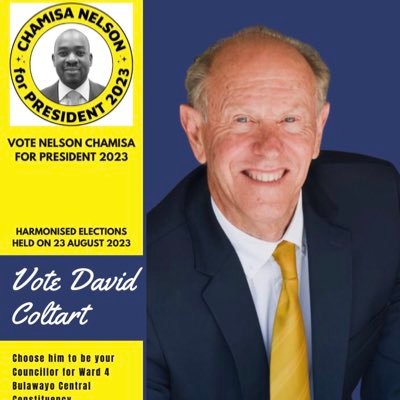
"Councils must pay for illegal demolitions: Minister Garwe" - a headline in the Chronicle @ChronicleZim today.
The residents of @CityofBulawayo can be assured that BCC has no obligation to pay for any illegal demolitions in Bulawayo because we never sanctioned any demolitions and they did not occur here.
As I have said repeatedly, as problematic as illegal vending and illegal structures are, we must always be guided by the principle of Ubuntu and try by all means to respect basic humanity.
We need also to be thankful to our management. Our housing and town planning departments are efficiently run and as a result we have relatively few illegal structures constructed in Bulawayo.
heraldonline.co.zw/councils-…
We have sick people walking around us! How can this be real?

Nearly half of the rape victims whose ages and sex could be verified by police during the latest reporting period were children, with 4,362 victims under the age of 18, exposing the scale of sexual violence against minors in South Africa.
insidepolitic.co.za/children…

This is how a rich man says, "I was foolish."
Yet his headless fanatics were telling us here that he was a genius who understood exactly why he had to pump money into Make America Great Again (MAGA), an outfit he is now embarrassed to be associated with!
The genius, it turns out, existed only in the minds of those who clapped for him.
This is sickening and tragic!

Nearly 600 women killed in South Africa within three months bbc.in/4fI4xUi

Readers added context they thought people might want to know
SAPS statistics for July-September 2026 show 5,590 total murders (down from prior year), including 4,819 adult men, 581 adult women and 149 children among 5,549 verified cases.
gov.za/news/speeches/…
timeslive.co.za/news/south-afr…
africa.dailynewsegypt.com/south-africa-c…
sanews.gov.za/south-africa/s…