


小星陪你逛车展 retweeted

The remainder of the 2026 Formula One season could be turned into a championship tour for 20-year-old Italian driver Kimi Antonelli. But what's his full name?
READ MORE: lvrj.com/post/3915204

小星陪你逛车展 retweeted

Privacy could be one of the biggest things holding institutional finance back from fully moving onchain.
Think about banks, exchanges and financial firms. They need blockchain transparency, but they cannot expose every transaction, balance or business strategy to the public.
@primus_labs is working on this problem through zkTLS and zkFHE.
zkTLS helps verify information from Web2 platforms without exposing unnecessary private details, while zkFHE enables computation on encrypted data.
Together, these technologies could make confidential DeFi, private financial applications and institutional onchain activity more practical.
What makes Primus worth following is its focus on bringing privacy and verification into existing blockchain ecosystems, including BNB Chain.
The future of onchain finance shouldn’t require choosing between privacy and proof.
Explore here 🔗 s.kaito.ai/AHqewM8
Join Primus labs campaign on kaito 🔗 s.kaito.ai/AHqewM8

Good morning CT 🧡
Privacy and verification will play a big role in the future of onchain finance.
Which @primus_labs is working towards with zkTLS and zkFHE, making it possible to verify information and use sensitive data without exposing everything.
More privacy, better verification and more possibilities for Web3.
Explore and join the Primus campaign on Kaito s.kaito.ai/AHqewM8


小星陪你逛车展 retweeted

good morning fren
Web3 keeps talking about transparency but what about making data trustworthy without exposing everything?
That's what makes the collaboration between @primus_labs and CournotProtocol interesting.
Primus brings zkTLS into the picture allowing data from websites and API to be verified without revealing sensitive information. Cournot adds another layer by turning reliable evidence into structured verifiable decisions.
Imagine what this could unlock:
• More trustworthy prediction markets
• Better data for AI agents
• Verifiable information without exposing private details
What i like about this direction is that both projects approach a problem web3 still needs to solve how do we trust information without blindly trusting its source? Less guesswork more verifiable data. Definitely a collaboration worth keeping an eye on

小星陪你逛车展 retweeted

this is f*cking insane
Opus 5.5 just rebuilt a real moment from inside the Large Hadron Collider
two protons crash at almost the speed of light and the whole thing is over in 36 billionths of a second
nothing here is made up. every line you see is a real particle CERN caught in 2012
and CERN flagged this exact crash as a possible "god particle"
Opus 5.5 slowed it down hundreds of millions of times so you can actually watch it


小星陪你逛车展 retweeted

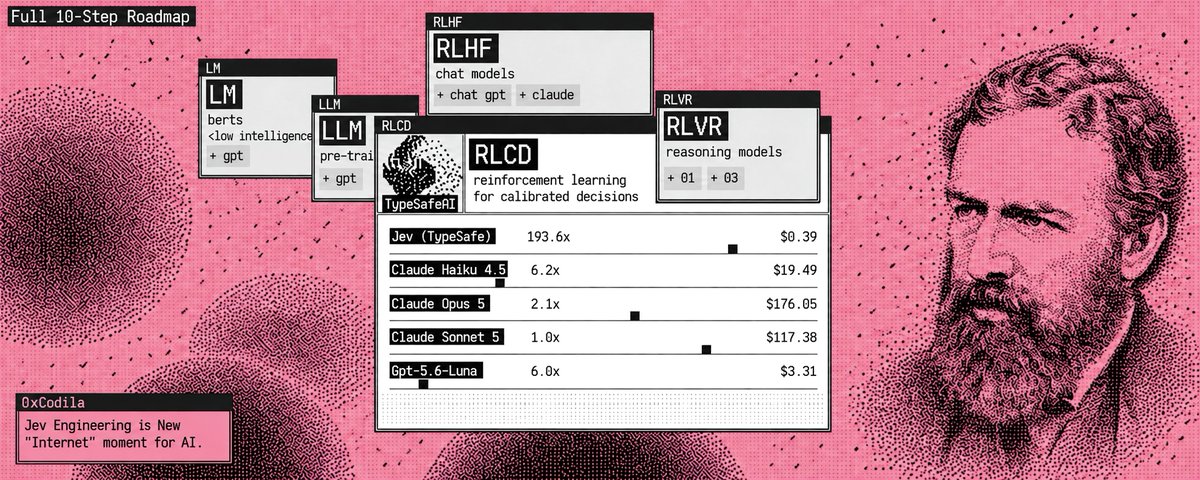
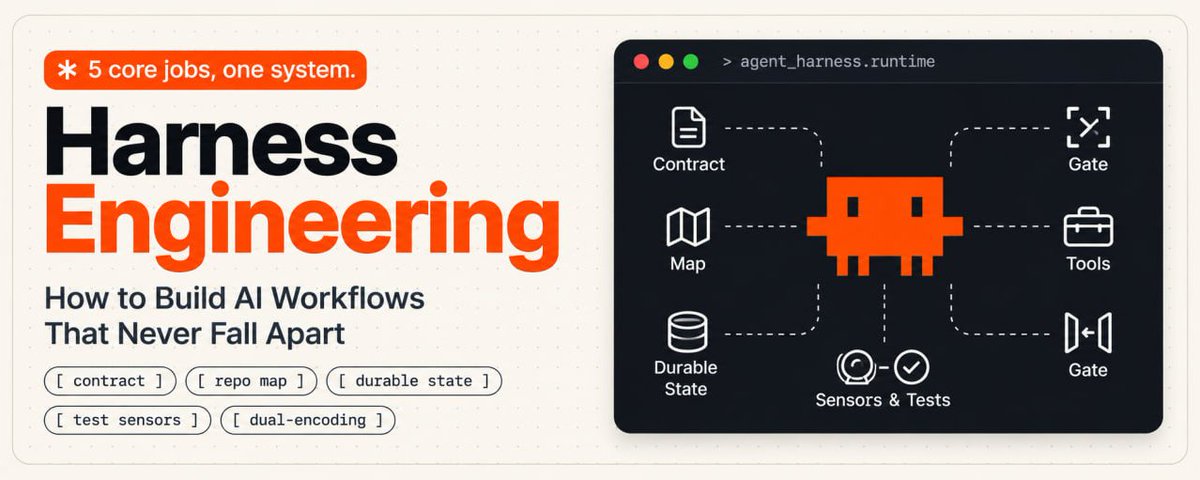
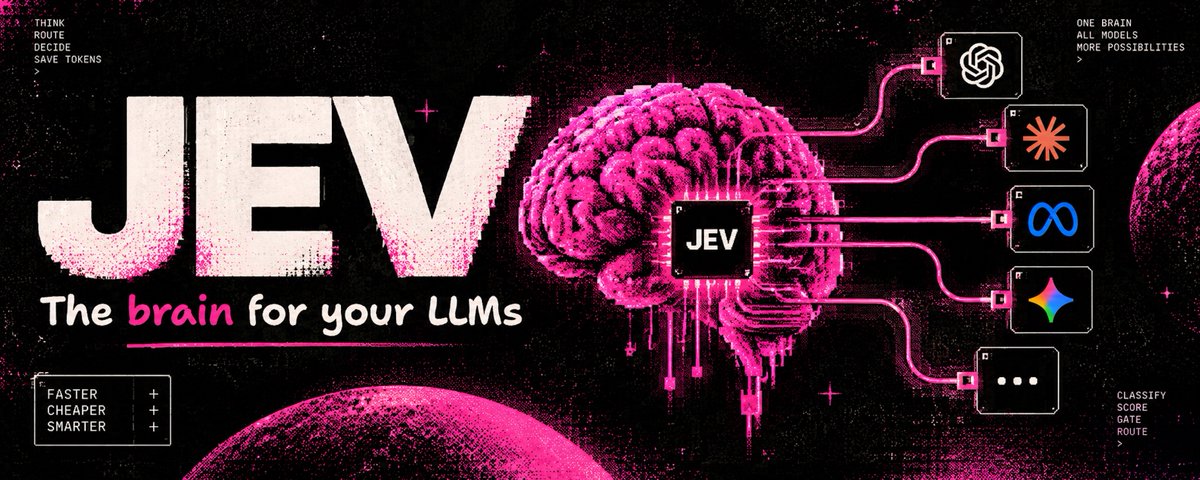
WHOEVER LEAKED THIS JEV STARTER SHOULD BE REPLACING LANGCHAIN
I thought spinning up an agent meant 60 abstract classes, a vector store, three config files, and a tutorial that doesn't match the current version.
Apparently not.
This starter's setup is much more interesting:
→ CHIEF.PY runs the whole decide-and-queue loop in 20 lines (read result, pick destination, write a json file to queue, raise SystemExit on API error), no middleware, no plugin registry
→ STATE.JSON holds one typed record per case (from, subject, body_excerpt, dmarc_pass, known_vendor_domain), no YAML, no schema service, no config registry
→ QUESTIONS.PY defines three questions (Choice from skip to draft_short to draft_full to escalate_human, Score viral_fit, Noul safe_to_engage_without_human), one import from typesafe_sdk
→ QUEUE writes each decision as its own json by uuid under queue/[destination], no broker, no partition count to pick, no retry policy to configure
→ ZSH starter tails queue.log live (gate ok draft_short 0.91, gate hold escalate 0.62), 1,642 decisions logged at $0.069 total, 254ms median, no observability stack bolted on
so you get:
Chief twenty-line. State typed. Questions three. Queue filesystem.
the interesting part isn't more features.
it's giving every project one chief file the agent can't drift past.
Instead of a weekend wiring LangChain classes to a vector store you don't need, you pip install, write three questions in a dict, run chief.py, and watch 1,642 decisions queue themselves at $0.069 total.
Write the chief. Type the state. Run the gate.


小星陪你逛车展 retweeted

WAIT, IF YOU PAY FOR CURSOR YOU ALREADY HAVE GROK BOT, AND ITS COMPUTERS RUN IN CURSOR'S CLOUD
Almost nobody has read this page of the Grok Bot docs.
Who already has it
→ every paid individual Cursor plan
→ Cursor Teams
→ a linked SuperGrok, SuperGrok Plus or SuperGrok Heavy account
→ a seat on a self-serve Grok Business plan
Where your Bot actually works
→ a persistent computer in Cursor's cloud
→ a browser, a filesystem and a terminal
→ close the app, the laptop or the phone, the work keeps going
→ usage resets every week
What surprises people:
all your Bots share that one computer.
Files, browser sessions, app logins.
Sign in with one Bot and every Bot can reach it.
Each Bot gets its own screen, one computer task at a time.
What it does that a chat can't
→ Bots run in parallel and message each other
→ show one a task once, it saves a skill and reruns it on a schedule
→ a named Bot keeps its memory, files and sessions between tasks
If a site blocks automation or wants a human step, the Bot hands it to you.
Check your Cursor plan, then open the Grok Bot app.

10 money jobs, 5 limits, and a tracker that tells you the truth, even if the answer is no. View article

小星陪你逛车展 retweeted

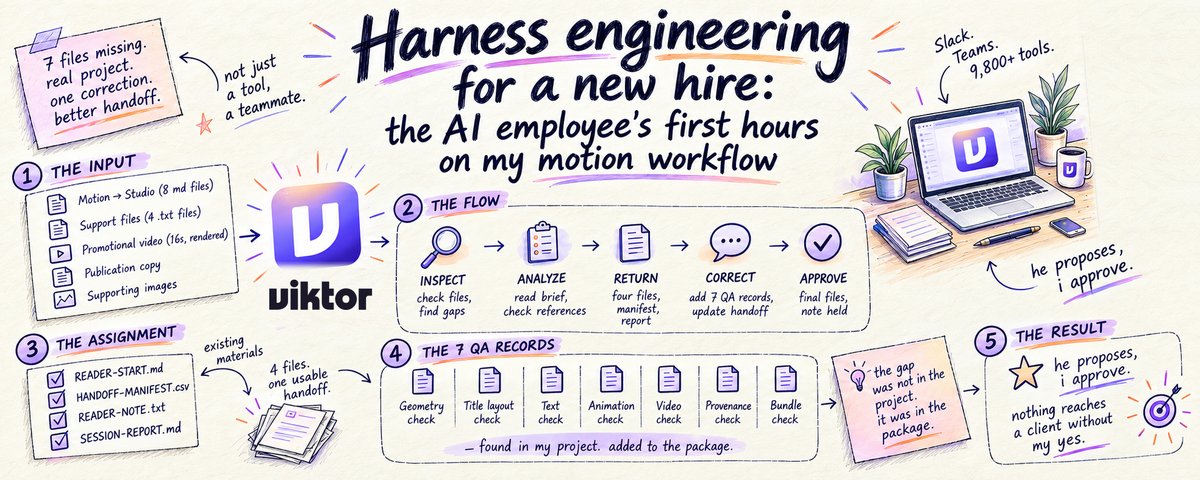
Anthropic just dropped the Claude Duet Harness Engineering
12-minute official read. isolated browser, credential proxy and independent checks around an agent that works while you’re away.
i turned it into a practical harness guide for builders:
brief → context → tools → observations → verification → repair → delivery
→ define what enters each step and what must come back
→ record tool results, artifact paths and errors
→ keep checkpoints so unfinished work can resume
→ verify the actual output against acceptance checks
→ send failures back for a focused repair
→ keep missing evidence marked UNVERIFIED
→ return files, setup instructions and check results
i also added five runtime decisions and a worked example:
CSV → searchable comparison board → checks → delivery packet
save this, then read my article on harness engineering for my AI employee ↓

小星陪你逛车展 retweeted

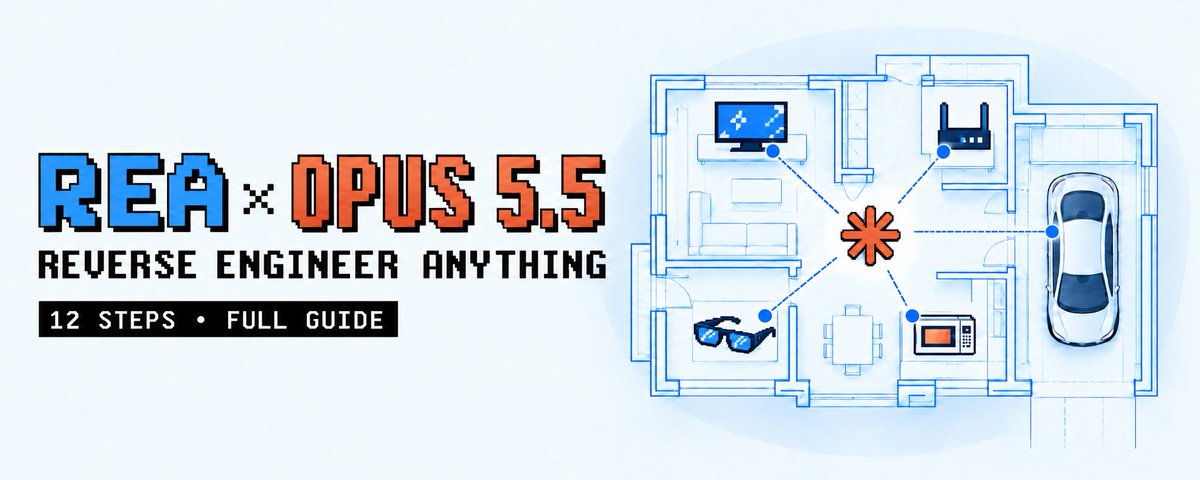
Claude Opus 5.5 just reverse-engineered my PS5...
1 prompt + 0 lines of code from me = a PS5 that takes voice orders: wakes up, downloads games, plays any video on demand
full guide, step by step:
step 1 → put your Mac and PS5 on the same Wi-Fi
step 2 → paste the prompt below into Claude Code. it finds the console by itself
step 3 → it digs into how the PS5 talks over the network and writes its own controller in code
step 4 → approve one setup screen on the console. last time you touch the controller
step 5 → just talk. it watches the screen and clicks through menus like a human
the result: your PS5 now has a terminal, and Claude holds the keys...
p.s. no jailbreak, no mods, nothing installed on the console. all undoable from the PS5 menu
try it tonight, prompt below ↓

小星陪你逛车展 retweeted

The AFC North is heating up. Who ya got today- Ravens or Browns?
@CharissaT, @CharlesWoodson and @Edelman11 give their picks
小星陪你逛车展 retweeted

I don't f**king understand why this isn't everywhere.
An AI agent dug into DX-Ball, a 90s Windows game, and recovered the exact formula behind its sound.
A brick breaks on the left side of the screen and the sound comes from the left. Nobody ever wrote down how. It was buried in machine code.
The first decompile said the function took no input. The raw instructions said otherwise. That contradiction was the clue.
What came out was one line:
pan = 1.5625 × x − 500
Brick in the middle of the screen, the sound is centered. Far left is −500, far right is +500.
Then it got checked two ways. It passed 3,205 test cases against the original code, and recompiled it matched the original 63-byte function exactly.
This is from the published REA showcase, an open-source tool that lets agents like Claude Code take apart how software works.
Old software is full of formulas nobody remembers. Agents can now dig them back out.
Full breakdown in the paper below.


小星陪你逛车展 retweeted

🇵🇪 ¡El sabor de nuestro campo también se disfruta en los picarones!
El Midagri promueve nuevas variedades de este tradicional postre peruano, elaboradas con frutas, café, papas nativas y granos andinos, que destacan la diversidad de nuestros productos agrarios. 🌾🍠
#MidagriResponde

小星陪你逛车展 retweeted
🇵🇪🥔 ¡La papa nativa peruana gana terreno en los mercados internacionales!
Durante el Foro Mundial de la Alimentación 2026, en Roma, el Midagri destacó, junto con la FAO, el potencial de este cultivo andino para abrir nuevas oportunidades comerciales y fortalecer la agricultura familiar.
En 2025, las exportaciones peruanas de chips de papa nativa alcanzaron aproximadamente US$ 940 mil y sus mercados de destino pasaron de 5 a 14 países entre 2020 y 2025. Además, un acuerdo comercial para adquirir 600 toneladas a productores de Junín contribuye a ampliar sus oportunidades de comercialización. 🌎🌱
Conoce más aquí: gob.pe/es/n/1456811
#MidagriResponde 🇵🇪
