

Your Money, Your Life, Your Goals. Unlock your financial potential with FinanceBuzz: https://nitter.cf/t.co/wZsyWP3iiQ
United States
Joined August 2018
- Tweets6.6K
- Following438
- Followers24.8K
- Likes422




Eating out, shopping and subscriptions feel like the big money leaks because you see them every day.
They’re small. The average American household spends about 5% of its money eating out.
Housing and transportation take half.
So if you’re going to cut something by 50% like Ramit says, start with the expensive stuff: a cheaper place at your next lease renewal, keeping your car a few more years.
Halving your takeout saves about $165 a month. Halving your rent or car payment saves far more.

To save money, pick your 3 biggest discretionary expenses -- usually eating out, shopping, and subscriptions -- and cut 50% within 6 months. That frees up hundreds a month. Trying to cut 5% on everything guarantees failure and makes you miserable
1
286
Is the security guard right that there’s no job market anymore?
Kevin O’Leary told him he just isn’t looking hard enough. The data is on the guard’s side.
The share of American workers getting hired each month is near its lowest level since 2013, according to Indeed’s Hiring Lab. Companies are keeping who they have and barely hiring anyone new.
Some of the jobs he applied to may not even exist. In an August survey, 86% of recent job seekers said they’d run into a “ghost job,” a listing that stays up with no plan to fill it.
Kevin's advice would have worked a lot better in 2019.

ALT official from indeed

Kevin O’Leary gets CHALLENGED by a security guard who works 80 HOURS A WEEK after arguing that ANYONE can become WEALTHY through hard work, only for the guard to reveal that 55% of his income goes to RENT and he’s applied to HUNDREDS of jobs without success, questioning how much HARDER he’s supposed to work 😲👀
Sponsored by Wells Fargo.
For most of us, “going to the bank” isn't about driving to some sticks-and-bricks building anymore. It's about opening an app.
A FinanceBuzz survey of 2,000 banking customers, sponsored by Wells Fargo, found that 65% of people say a great mobile app matters more than a nearby branch when sizing up a bank. That holds across every generation, even Baby Boomers, who land at 51%. On average, people say 88% of their banking now happens on a screen.
Does this sound like you? Or do you still prefer to go to the bank for certain services?

268
Why do people check their investment accounts less when the market is falling?Economists call it the ostrich effect.
Studies of investor logins found people look at their portfolios less often in down markets, right when the information matters most.
Bills work the same way.
The statement we don’t want to open is usually the one with the problem in it: the balance we’ve been ignoring, the insurance that quietly renewed higher.
Open the one you’ve been avoiding today.
285
💎 Wealthy Wednesday 💎
WHAT: Write down today’s price before Black Friday.
WHY: A big discount sign doesn’t tell you whether something is actually a good deal.
HOW: Save the current price of one item you already planned to buy, then compare it with the sale price.
What’s on your watch list? 👀👇
296
You pick up food at a drive-thru, buy a $50 T-shirt at a concert merch stand, or scan your own snacks at an airport store, and somehow, a tip screen shows up. Welcome to the modern-day tipping culture, where even doing the work yourself comes with a suggested gratuity.
Tap $2 three times a week, and that’s $312 a year, or roughly $4,300 over 10 years if invested at 7%.
Tipping can be a thoughtful way to show appreciation. But with prompts popping up everywhere, it helps to know what those taps add up to, so you can decide before the screen spins around and your budget develops stage fright.
(Be honest: have you ever hit “20%” so fast you wish you brought that same energy to answering emails?)

262
Kevin O'Leary learned his entire investment philosophy from his mother.
His mother, Georgette, was fiercely independent. She started early, working for her father. She got paid in cash, and every week she took 20% of it and put it into two things: large-cap stocks that paid dividends, and seven-year telco bonds paying about 6.5% to 8% back then.
Her rules were simple:
No more than 5% in any one stock or bond.
No more than 20% in any one sector, ever.
When a stock ran past 5%, she'd sell it down. Just basic diversification.
She held that portfolio for 55 years. She never spent the principal, only the dividends and the interest. With that she put Kevin and his brother through college and took care of her sisters when they fell on hard times.
When she passed and Kevin saw the portfolio as executor, he was shocked.
"The performance was extraordinary. It was beyond any hedge fund guy or anything, 55 years."
Kevin explains what happened next:
"When I saw the results, I said, that's it. That's how I'm going to invest for the rest of my life. Exactly the way Georgia did. No more than 5% in any one stock ever, no matter what it is. And no more than 20% in any one sector."
This is the strategy Kevin has followed for decades. It's how he maintains and grows wealth.


Thanksgiving once moved to make more room for shopping. In 1939, President Franklin D. Roosevelt shifted the holiday up a week, hoping a longer Christmas shopping season would help the economy.
335
Does $27.40 a day really turn into millions, or is that just podcast math?
In 1959, Ronald Read, a World War II veteran pumping gas in Brattleboro, Vermont, bought his first stock: 39 shares of Pacific Gas and Electric for about $2,380.
He kept pumping gas for another two decades, then worked as a janitor at JCPenney. He drove a secondhand Toyota Yaris, cut his own firewood into his 90s, and held his coat together with safety pins.
Nobody in town thought he had any money.
And he kept buying. Boring companies like Procter & Gamble and Johnson & Johnson, and he almost never sold. When he died in 2014 at 92, he owned at least 95 different stocks.
His estate was worth about $8 million.
Brattleboro found out when the hospital got $4.8 million and the library got $1.2 million in donations.

Sam's Club or Walmart? Here's which one really saves you more. 🛒💸
fbz.to/lmug

262
Cerebras hits lockup day under CEO Andrew Feldman as retirement funds brace for impact. 📉🏦
fbz.to/45bg

273
Here's what the average Social Security check is in November (how do you compare?). 💵👀
fbz.to/s2re

253
10 new November Dollar Tree home items worth combing the aisles for. 🏠🛒
fbz.to/0bqa

204
10 Walmart items that are literally half what you'd pay on Amazon. 🛒💸
fbz.to/tiq9

233
Dave Ramsey's blunt warning about the housing market that nobody wants to hear. 🏠⚠️
fbz.to/nydf

257
Sponsored by Wells Fargo.
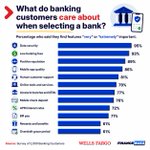
Facts: When it comes to picking a bank, we care about safety first and perks last.
A FinanceBuzz survey of 2,000 people, sponsored by Wells Fargo, asked those people what they found very or extremely important when choosing a bank. The top answers:
- 95% data security
- 93% low banking fees
- 89% positive reputation
- 86% mobile app quality
It's a good gut check for the bank you already have. It’s worth making sure yours delivers on the things people rank highest, like security, low fees, and an app that supports your needs and lifestyle.

214
The Fed's first calendar change since 1981 could affect what your savings earn. 🏦💰
fbz.to/g2yn

210
Some Americans will get their 3.6% Social Security raise early - but there's a catch. 💸⚠️
fbz.to/8112

251