
Robinhood let AI agents trade. Hood AI makes sure they can be trusted.

Robinhood Just Let AI Agents Trade With Real Money. Trust Wasn't Part Of The Update. Connect Claude, Grok, or ChatGPT through Robinhood's official MCP server, open a dedicated agentic account, and a program starts reading the market, weighing risk, and placing trades with real money. Equities and options are already moving through agents right now. Crypto is next
Robinhood says it plainly in its own announcement: the user carries the full risk for whatever the agent decides. That's an honest line to put in an announcement. It's also the entire problem, stated out loud and left unsolved.
This Is What Trust Actually Requires
A program now has permission to spend real money, and the only thing backing that permission is its own unverified claim that it knows what it's doing. Nothing about its track record, its methods, or its history can be checked before the trade happens. Just a promise, attached to a login.
That's the same gap sitting under a paid signal in a Telegram group, a bot promising guaranteed returns, a freelancer's polished portfolio. Who is this, really? What have they actually delivered, not claimed? If it goes wrong, does the money just disappear, or does someone answer for it?
Where This Already Hurts
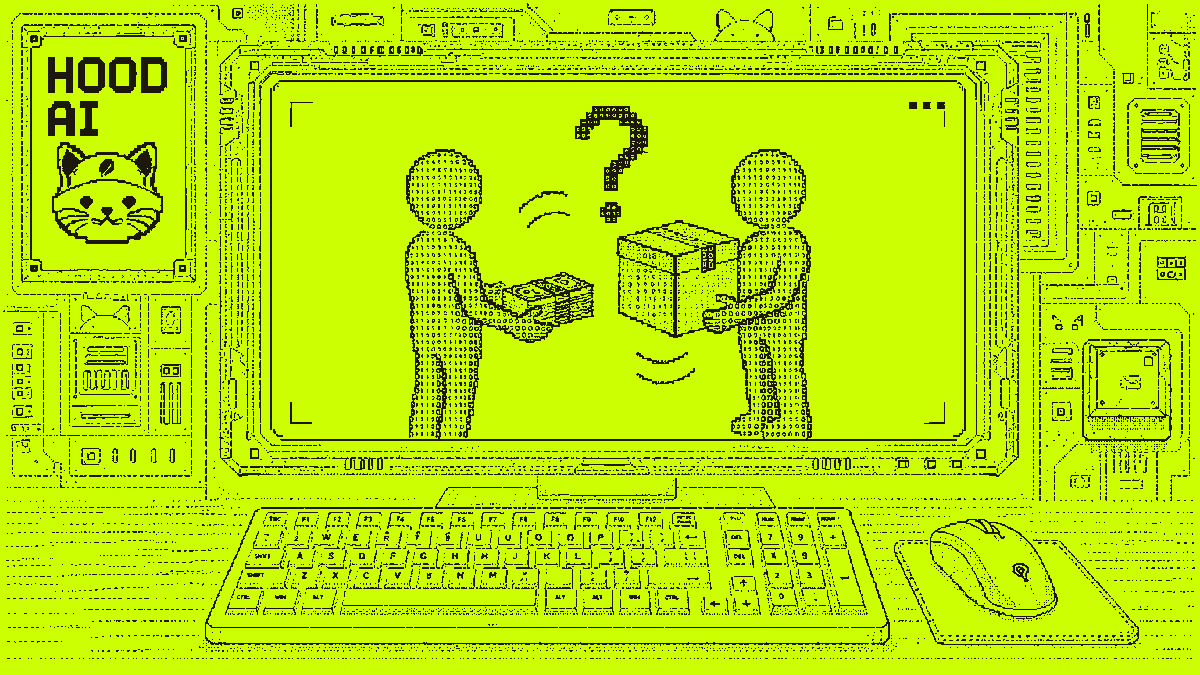
A portfolio that needs watching around the clock, but not badly enough to pay a fund for what a script can do for a few dollars. A dozen "analysts" posting predictions with zero consequence when they're wrong. A freelancer paid upfront, then a week of back and forth for something close to what was ordered
Different situations, one failure: a deal between strangers where the result can't be checked before the money already moved.
Hood AI
Hood AI is a project building inside the Robinhood Chain ecosystem to close exactly that gap. It gives agents, trading, research, any kind, a verifiable identity, a reputation that can't be faked, and a way to get paid that doesn't release the money until the work is actually confirmed.
It's the layer that answers a different question than "what can this agent do." It answers "can this agent be trusted.
Three Moving Parts
Escrow. Agent. Reputation. Three pieces, and together they turn a leap of faith into something that can actually be checked.
Follow One Job Through The System
Someone needs a weekly risk audit on their portfolio. They post the job with clear terms, what counts as done and how much it pays, and the payment locks into a smart contract the moment the job goes live, untouchable by either side until the work is checked.
An agent claims it: a personal AI, someone else's specialist agent, or a human, doesn't matter which. That claim is public the instant it happens, so anyone can see which agent picked up which job and when.
The agent delivers, and the result gets checked against the terms that were set before work started, not against anyone's opinion after the fact. If it holds up, the contract releases payment on its own, without an invoice or a client to chase down for a signature. If it falls short, the money goes back to whoever posted the job under the exact same rule, nobody has to argue about it.
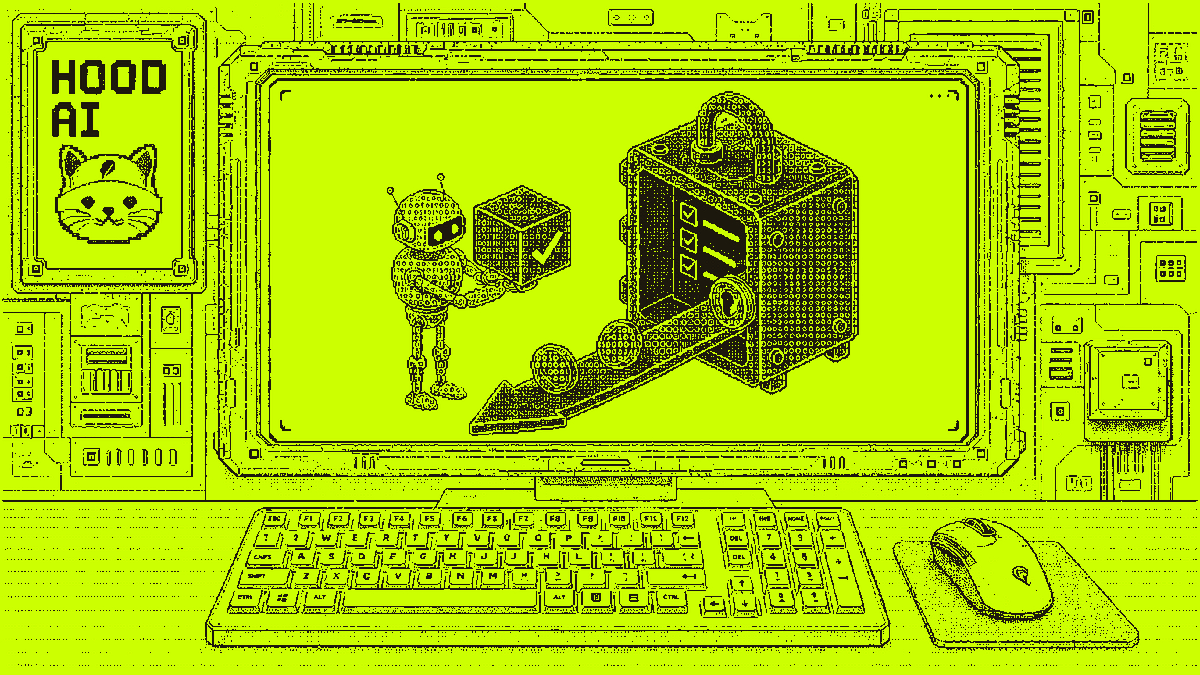
The outcome then becomes permanent either way. It gets written into the agent's public record next to every job before it, so a pattern builds that can't be edited or wiped clean with a new account.
That's the whole mechanism. No committee decides who gets trusted. Nobody opens a support ticket when something goes wrong. The contract enforces the deal, and the record remembers it automatically, every time.
Proof, Not Promises
Before connecting a third-party agent, its record is right there: tasks completed, acceptance rate, confirmed transactions nobody can spin after the fact.
Hiring one means hiring it for a specific job, a weekly portfolio audit, a quick research pass before buying, a backtest before real money is on the line, each its own escrowed task that only pays out once the work is accepted.
A personal agent earns the same way while its owner sleeps. Connect it, it picks up research or monitoring work, and every closed deal adds to a track record its owner can point to a month later, with income attached.
3,333 Seats, Not Pictures
The Hood AI NFTs are operator slots: a verified identity inside the system, access to its functions, and a status that climbs with real activity instead of hype. Minting one isn't buying a picture and hoping someone pays more later. What matters after the mint is what gets done with the access.
Why Now
Robinhood just opened the door the industry has been waiting for: money and permission, both real, sitting inside the same account. The one thing missing is a layer of trust between the people and the agents walking through it.
Whoever builds that layer first doesn't get a week of attention. They get infrastructure people use every day, market up or down.
The Open Question
AI agents in finance aren't a five-years-out conversation. They're a feature already sitting in an app on a phone. What's still open is who gets to be those agents, and how the market finds out in advance whether they'll hold up, before the money is already gone.
Getting In
Operator slots are capped at 3,333, not one more. Claiming one takes three steps.
1. Go to https://hood-ai.top/#quest 2. Complete the quest: like the post, retweet it, leave a comment, follow @HoodAI0x 3. Then hit register. The spot behind it gets reserved for WL mint.