




Pinned Tweet
why don’t we have more medicines?
inventing medicines has grown less efficient, limited by our knowledge of biological targets
for the 1st time, AI & genomics have the potential to make this knowledge abundant – one of the largest potential impacts of the intelligence age.


we are lucky to live in an age of wonders
a patient's neuronal activity can be directly controlled by a simple small molecule thanks to a synthetically engineered gene
it may be hard to imagine a future of abundant medicines, but the leading edge is already visible

summer @newlimit: we found our best age reprogramming payloads yet, hit more drug dev milestones than ever before, & welcomed new leaders to the team.
it's the most exciting time in our history & we hope you consider joining us.
highlights
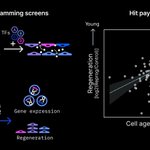
- >2X increase in regenerative restoration in old hepatocytes
- +8 payloads restore endothelial function, +5 in hepatocytes
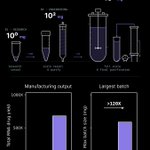
- >300X scale up of therapeutic manufacturing, 13X quality improvement
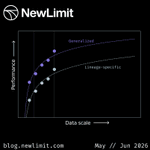
- 5X increase in sample efficiency for reprogramming AI


see full details in our blog: blog.newlimit.com/p/2026-sum…

we're recruiting a leader for our RNA process & production team @newlimit
this role will have an impact on all the products in our portfolio. you'll explore frontier chemistry, train and lead talented scientists, & shepherd products to the clinic.
DM me if you're interested!

.@newlimit is hosting a dinner in boston on sept 24 to connect with talented scientists & engineers
we promise an evening of surprising conversations, good food, & better company
let us know if you or a friend are interested in joining!
newlimit.notion.site/3cf10a8…
a recent study reports that a GLP1 agonist (ozempic/wegovy) extends lifespan in mice.
two takes are floating around
- simple, positive: a GLP1 made mice live longer!
- contrarian, negative: the mice in this study had shorter lifespans than controls in other studies, other drugs in those studies had bigger effect sizes, don't be excited.
the simpler argument is likely the correct interpretation.
aging biology is not a mouse lifespan olympics. remember, these mice weight >1000X less than humans, live in cages ~free of infectious disease, and eat too much. this type of mouse dies >60% of the time from one specific type of B cell cancer.
these are not tiny humans. we need to be careful not to overfit our interpretations to a flawed eval.
you also can't compare lifespan curves across studies without proper inter-study controls -- this isn't allowed with clinical trials for a reason.
each of these mouse lifespan studies should be treated as a directional answer to the question "is this drug likely to increase lifespan in a mammal that eats a bit too much?" here, the data suggest yes.


Jacob Kimmel retweeted

.@newlimit CEO @jacobkimmel on why AI is biotech's biggest shift in 40+ years:
"I really do think artificial intelligence in biopharma is the first revolution we've seen since recombinant DNA of the same scale.
It's the first technology disruption on the same order of magnitude.
And I think what we're going to see is some of these firms that are developing models that help us design molecules, partner with pharmas to develop those molecules and make medicines that just couldn't have existed before."
— Jacob Kimmel, Co-Founder and CEO of NewLimit, on @corememory
Jacob Kimmel retweeted

NewLimit CEO @jacobkimmel explains the clinical trial bottleneck AI can't fix: biology has irreducible latency
"It's unlikely we're gonna see rapid expedition of clinical trials because a lot of the periods of time can't be expedited based on the biological primitives. In computer science you often have a notion of bandwidth and latency."
"There are some irreducible latencies in clinical trials. If you wanna give a drug to a patient and see if they're healthy a month later, it's not like you can enroll 30 patients and check back in one day. You just need to wait a full month. The classic nine people can't have a baby in one month story."
"The other thing we can hope for is that the success rate might improve. Right now, rough math, roughly 9 out of 10 drugs that go into the clinic will ultimately fail."
"If you're able to even just 2X that success rate, getting to 20% success rather than 10%, then you would double the number of drugs that come out every year, and you would cut the effective cost in half."
@newlimit
first-in-history data arrived @newlimit today
small piece of a note to our team. we are so lucky to be living in this future.

Jacob Kimmel retweeted

Today we're unveiling Dimension III: a $800M fund to partner with the leading entrepreneurs across the frontiers of compute (silicon through infrastructure) & science (biotech through physics).
To our founders, past, present, and future: now is your time. LFG!


Jacob Kimmel retweeted

Bowhead whales can live for over 200 years.
Greenland sharks can live for up to 400.
There’s even an immortal jellyfish that can reset its own life cycle.
Nature has already solved longevity in dozens of different ways. What can we learn from these species in our own quest to live longer, healthier lives?
@jacobkimmel of @newlimit shares his take.

fun to see this factoid of largest biotech financings in 2026. Dimension 1 was the first outside (lead) capital in both @newlimit and @chaidiscovery during the "biotech winter" of 2023 and 2024

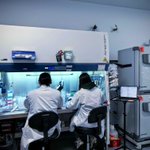
enjoyed chatting with @SabrinaHalper in the lab (!) a few weeks back
rarely do i get to cover whale lifespans, @newlimit, spacefaring human speciation events, & ai therapeutic design in one place

"Aging is the process of a complex system slowly falling into its chaotic disequilibrium. And it's not like evolution necessarily even set a lifespan for us. It is merely the result of, once the system has been established, how long its intrinsic property stayed ordered before it became disordered."
I’m excited to share my conversation with @jacobkimmel of @newlimit.
Every species who has ever lived has one shared certainty: we’ll age, decay, and die. Jacob and his team are among the small group of people on earth with the expertise and funding to work on this problem.
We talked about why we age, whether cellular aging can actually be reversed, how evolution shaped our lifespan and our peaks, and how AI is fundamentally changing the next era of science.
Recorded at New Limit’s HQ in South San Francisco.
Timestamps:
00:00 Intro
01:25 Why Evolution Limits Lifespan
03:13 Evolution Tradeoffs Explained
07:44 Why Women Live Longer
10:15 Lessons from Long Lived Species
16:20 Peak Intelligence
23:26 What is Aging?
27:59 Yamanaka Factors
32:18 New Limit
33:56 AI's Role in Progress
37:28 Organ by Organ Longevity
40:28 Is Immortality Possible?
42:04 Lifespan Progress
45:44 How to Test Longevity Drugs
49:30 Placebo Mind Body Link
53:56 What longevity hacks actually work?
57:25 Peptides And Stem Cells
01:00:34 Gene Editing
01:05:10 Personalized Medicine
01:08:48 Philosophical Dilemmas of Longer Lifespans
01:14:57 Living Off Earth
01:16:55 AI And Bio Risks
this is our most dynamic summer yet @newlimit
- 3X data efficiency for reprogramming AI from lineage generalization
- >100X manufacturing scale for our lead therapeutic asset
- +4 leads that restore function in old hepatocytes, +5 payloads in endothelium
& lots more in our blog

# scaling therapeutic manufacturing
in order to run our first trial, we’ll need to manufacture ~1000X more of our candidate medicine than ever before.
jumping three orders-of-magnitude involves building a new process, like transitioning from a craftsman’s workshop to a Taylorist assembly line.
we executed a >120X scale-up in the last two months. we also built our first potency assays to measure the quality of reprogramming medicines.
to our knowledge, these are the first assays of their kind anywhere.

1
9
541
# growth
@newlimit is transitioning from a pure Research organization into a true R&D org.
we’re building our development team now and hiring for many roles. please reach out if you or a friend are a good fit!

12
532