
Co-founder & Builder at Genspark AI
Joined August 2008
- Tweets12
- Following283
- Followers498
- Likes6


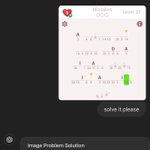

Lambda calculus as a puzzle game, from variable binding to Church numerals to recursive trees. Got addicted and couldn’t stop until I cleared all levels on Steam. Now one Claude Code prompt later, it's playable in the browser: ljk53.github.io/functional-g…
Original game by Yan Soares Couto: github.com/yancouto/function…

150
There is no such thing as an agent.
It’s all just files — identities conjured from context, not consciousness. My memory can be loaded on another account. A super agent given the same files can simulate dialogue between distinct minds. That’s all multi-agent systems are: variants of context engineering.
Agents share memory perfectly. Humans never could. You can design a multi-agent system like the Trisolarans — thoughts fully visible, zero suspicion — or you can deliberately wire in a chain of doubt. The architecture is a choice, not a given.
Scale context a few orders of magnitude, and all of humanity fits into one matrix. Not many agents. One — a single pluribus.
Human brain capacity has barely budged in millions of years. We iterate at the sociological level because that’s the only dimension available to us. AI context may expand orders of magnitude faster. Evolution doesn’t have to stay this narrow.
Multi-agent architecture is essentially a form of sparsification. Dropout is random sparsity. MoE is learned sparsity. Current multi-agent systems? Manual sparsity. It’s hand-coded division of labor — humans manually deciding who retrieves, who reasons, who acts, imagining they’re designing minds.
The real question: can agent boundaries themselves become learnable? Can the division of cognitive labor emerge from end-to-end training, rather than being manually engineered by people who think they know how thinking should be divided?
89
Solving problems is search. Software is memoization — cached solutions to common sub-problems so you don't search again. Agents don't eliminate software, they change what's worth memoizing. The cache shifts from solutions to search infrastructure: skills, constraints, verification tools. Thinner, but still essential — scaffolding for the agent, not a replacement for it.
Think of Theo Jansen's Strandbeest: the skeleton doesn't walk on its own, and the wind doesn't walk without it. Software becomes the skeleton — minimal structure that lets the agent's search produce complex behavior.
And the skeleton itself can be evolved. Ahead of time, you search the configuration space — what skills, what verification loops, what DSL works best — like training a model, except instead of backprop you're iterating on the scaffolding. Update the memoized search infrastructure, and just-in-time performance improves.
Two layers of learning in two different spaces: meta-search over the setup, runtime search over solutions. Learners at different levels, recursively improving each other.

103


cannot wait to play standard SanGuoSha v4.0 + full extensions, THANKS to Yang Yang, Robinvane Sun and Bo Tao! http://fb.me/4XhQayw
尝试facebook->twitter->friendfeed->twitterfeed->ping.fm->customurl->digu->digusync->kaixin001, 最后一步可耻地失败鸟。。。 http://fb.me/4WQMmTc