

Buying + advising distressed DTC/CPG brands ($5-50M). Capital stacks, lender negotiations, margin recovery. Host of In The Money. 1 deal/week in the newsletter.
🇺🇸🇦🇺🇫🇷
Joined August 2009
- Tweets10.3K
- Following806
- Followers17.9K
- Likes134K





If you're interested in:
🎧 Listening to some the most interesting $5m-$50m founders, operators, investors, acquirers, and lenders in the DTC and CPG space.
🔖 Reading about interesting M&A deals in the consumer products category.
👀 Seeing a proprietary deal a week from brands who want reach a broader audience of buyers.
Sign up for the link in bio.
Did you know Erewhon was founded in Boston in 1966?
Two Japanese macrobiotic pioneers started it.
The name is “nowhere” backwards, borrowed from an 1872 novel about a utopia where being unhealthy is a crime.
Sixty years later:
→ $20 smoothies, $200 memberships
→ 14 stores, ~$700M revenue
→ the highest grocery sales per square foot in America
For decades, Erewhon was basically a fringe natural-foods store. Then Tony + Josephine Antoci bought the last surviving LA location in 2011 for a few million dollars.
Their model:
1. Obsessive curation. They personally review ingredients, supporting pricing 15–40% above market.
2. Prepared food. Roughly 40% of sales vs ~4–6% at a normal grocer.
The Hailey Bieber smoothie alone reportedly does ~40,000 units a month, ~$10M annually.
The real engine may be membership.
- $200/year. 10% back. Free monthly drink.
- Premium tiers for customers spending $5K–$15K annually.
Their aspiration: Costco-like membership penetration, ie 100%.
That comparison is noteable. Erewhon is the membership retailer for the top of the K.

In 1984, Nike had its first revenue decline in a decade. Reebok was taking share. Nike took a gamble by signing a rookie for $500K a year.
Michael Jordan.
Air Jordan helped rebuild the company.
Fast forward to 2026. Nike stock is down ~75% from its highs. And it just launched the signature shoe of another rookie-scale cultural phenomenon.
Caitlin 1s at $140 sold out in ~2 hours. Nike’s largest women’s signature shoe launch ever.
Nike Basketball’s women’s signature business has grown 5x since 2022. Sabrina Ionescu in 2023. A’ja Wilson in 2025. Caitlin Clark in 2026.
And Clark’s deal already look cheap: 8 years. $28M.
LeBron’s Nike deal is $1B+ over his lifetime. Jordan Brand generates ~$7B annually.
WNBA media rights just tripled to ~$2.2B. Attendance is at record highs.
A rookie won’t fix a $60B company. But Nike’s biggest problem lately has been cultural heat.
Caitlin Clark proved it can still just do it.

1,020
Five years ago, Equinox looked close to dead.
~$2B of debt. Deep-junk credit.
Now it’s hiring the CEO of Anheuser-Busch and putting $1B+ behind ~50 new clubs.
That turnaround is wild.
2006: Related buys Equinox for ~$500M, on ~$250M in revenue and $50M in EBITDA across ~35 clubs.
2017: L Catterton invests as the business reaches ~89 clubs.
2020: Silver Lake invests at a ~$7B valuation. Weeks later: COVID. Equinox loses ~$350M on ~$650M of revenue.
2021: explores a SPAC with Chamath. Doesn’t happen.
2024: With ~$2B of debt and a maturity wall looming, Sixth Street, Silver Lake, Ares, HPS and L Catterton back a ~$1.8B refinancing.
2026: Top end of fitness comes roaring back. $2B+ revenue, ~$500M estimated EBITDA. 118 clubs.
$300/month memberships are at record levels. Layer on $40K/year longevity programs, hotels, recovery, performance training and HYROX-style programming.

Is @hubermanlab joining the board of $HIMS the terminal form of being an influencer?
The total economics could be worth ~$23M, and that's not including actual board compensation.
The package:
→ $3.5M/year advisory agreement for 2 years
→ $5M/year Huberman Lab marketing agreement for 3 years
→ up to $1M/year of additional short-form content
Actual board comp:
$50K cash + $250K equity annually.
Hims even explicitly classified Huberman as not independent because of the breadth of his commercial relationship, so he won’t sit on independent board committees.
Hims is pacing toward ~$3.15B of revenue with a $1B+ annual marketing budget.
Its next frontiers: Hormone optimization. Sleep. Longevity. Peptides.
The exact categories where Huberman may be the most influential voice on the internet.

America spent a decade trying to build the superapp.
Uber wanted it.
PayPal wanted it.
Elon still wants X to become the “everything app.”
It hasn't happen.
US consumers never really wanted one app controlling messaging, payments, identity, and commerce.
But instead of superapp, American is building the super-membership.
Exhibit E: DoorDash’s $17B acquisition of Instacart.
DashPass + Instacart+ already have 40M+ members and does ~$2B a year in membership fees.
Members spend more. DashPass cohorts order more over time. Instacart+ members shop 2x more often and carry larger baskets.
And once you own the member, you can sell access to them.
Instacart ads: $1B+ revenue. DoorDash ads: similar scale.
That’s CPG brands paying for shelf space in front of a logged-in, subscribed, high-frequency shopper.
Prime, Walmart+, Costco, Uber One.
Now DashPass sees you at breakfast, lunch, dinner, convenience and the grocery store.

1
3
1,964
One of the world’s oldest department stores still trading under its original name has entered bankruptcy.
188 years after opening on Sydney’s George Street.
38 stores. ~6,000 staff.
2014: Woolworths buys it for A$2.1B
2018: ~A$400M flagship renovation
2022: sold to Anchorage for ~A$100M
2024: ~A$100M losses; Hilco becomes senior lender
2026: unpaid rents, restructuring rejected, equity wiped
Saks Global hit the same wall in the US after levering up to buy Neiman Marcus.
The department store model has been unbundled from every direction.
The old department-store proposition was:
One roof. Every category. Prestige by aggregation.
But beauty, historically the most profitable floor, went to MECCA in Australia and Sephora/Ulta in the US.
Luxury brands went direct + monobrand.
Convenience went online.
With Hilco now focused on recovery, the final irony may be that David Jones’ best trading period in years is its liquidation sale.

7
1,023
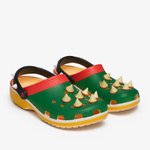
In a sea of red consumer tickers this week, $CROX is up ~30%.
Crocs bought HEYDUDE for $2.5B in 2022, near the top of the consumer M&A cycle.
Take a casual canvas shoe and build the next Crocs.
Instead: wholesale overshipping + discounting = sales disappointment + brand damage.
The stock fell from $150+ into the $80ies.
The market effectively wrote HEYDUDE to zero, then punished Crocs for owning it.
Now: stock +25.5% on earnings day with HEYDUDE stabilizing. Crocs guidance raised for the 3rd straight time this year and promoting ~$1B of annual cash generation.
Turns out $50 foam clog and $60 canvas slip-on at 20%+ net margins is pretty resilient for Main Street consumer.


5
5
1,431
VC + fashion has produced some poor outcomes: Allbirds, Everlane, Outdoor Voices, Rent the Runway.
Then there’s ME+EM.
A British womenswear brand growing ~29%, at ~20% EBITDA margins, whose VC just doubled down.
Founded in 2009, ME+EM spent a decade quietly compounding as a DTC brand for professional women.
Then Highland Europe invested £55M in 2022 to accelerate US expansion.
Since then:
2023: £82M revenue / £16M EBITDA
2024: £120M revenue
2025: £148M revenue
2026E: ~£190M revenue / ~£37M EBITDA
Four years after Highland’s investment, revenue >2x, EBITDA >2x. US revenue has gone from emerging to ~£65M, around 1/3 of the business. The brand counts Kate Middleton as an organic customer.
Highland just increased its stake, saying ME+EM has some of the strongest brand loyalty it has seen in consumer.


2
4
1,253
A Dallas retailer selling $1 makeup sponges just got valued at ~$750M via an investment from VMG.
Miss A started in 2013 as an eCom store where basically everything cost $1.
Today it's ~$150M in revenue, ~100 stores, wholesale into 20,000+ Dollar General locations.
Its $1 makeup sponge is the #1 beauty sponge on Amazon.
The unlock came in 2016. Miss A stopped being just a retailer and launched its own private label, AOA Studio.
That let it copy trends faster, expand margin, keep pricing $1–2.
AOA now drives ~90% of sales.
And the demand engine is pure internet-era value shopping:
Originally, YouTube “$1 makeup” hauls.
Now, TikTok “Miss A dupes.”
$2 versions of $30 Sephora products.
This is the K-shaped beauty market.
Luxury keeps winning.
Deep value keeps winning.
The middle gets squeezed.

4
3
644
Piloting a new In The Money series: Deal Desk with @gardnersmitha.
We take the consumer deals everyone’s talking about and break down the numbers underneath them.
Episode 1:
→ WILDE: 10 years, a failed meat bar, and a $10M self-built factory to reach $100M+ revenue.
→ Mellow Sleep a reported $130M bootstrapped first year powered by 1M+ creators.
→ Welly: why it was too small to matter inside Unilever, and why “premium” by itself isn’t a value proposition.
→ point of view: why “skin prep” may be one of the more fad-resistant positions in beauty.
Plus one macro datapoint that surprised me:
BofA card data shows every income bracket increasing discretionary and staples spending.
Maybe the K-shaped consumer is getting a little less K-shaped.
📺: tinyurl.com/5b6b97yp
🎧: tinyurl.com/2p9ht8nu
📖: tinyurl.com/4tkjh4hx
Thanks to @AppLovin for supporting the show!

412
$SHOP, just as it suggests to its merchants, really leans into the pre-BFCM sale.

1,093
Nerds going from ~$40M to nearly $900M since launching Gummy Clusters might be one of the most underreported CPG stories of the decade.
And it almost didn’t work.
The idea actually started in 2001 with Nerds Rope. But no breakout.
Then Gummy Clusters launched in 2020 with just ~$700K of marketing. Early tests flopped.
In 2021, Kylie Jenner posted them organically to ~200M followers: “Next level.”
TikTok took it from there. The crunch became ASMR content.
Sales:
2020: ~$8M
2024: $500M+
Today: approaching $900M
Repeat is insane too:
More than 1 in 5 buyers purchase 6+ times a year.
Nerds has now passed Skittles as America’s #1 sugar candy.
And Mars is responding with gummy versions of Skittles + Starburst.
Big M&A win. Ferrero bought Nestlé’s entire US candy portfolio in 2018 for $2.8B: Butterfinger. Crunch. SweeTARTS. Laffy Taffy. Nerds.
Nerds was basically an afterthought.
Today, the value created by Nerds alone may have effectively paid for the whole acquisition.

.@andrewjfaris needs new shoes. He’s not buying them.
He knows his Born Primitive Savage Ones go on sale at Black Friday. So he’s waiting.
This was his point about BFCM prep: the advice to put ads in front of people well before Black Friday.
Millions of consumers are doing what Andrew is doing right now, walking around with a mental list of products they’ve deliberately stopped buying.
You’re competing to get on the list. If you get someone interested in your product today, there’s a very good chance they’re still interested in three weeks.
📺: tinyurl.com/47semd4t
🎧: tinyurl.com/5ads3euh
📖: tinyurl.com/4rr7ncc3
Thanks to @AppLovin for supporting the show.
366
Alo reportedly did ~$3B of revenue and ~$1B of EBITDA in 2025. Still overwhelmingly founder-owned.
Danny Harris and Marco DeGeorge built Bella+Canvas, a $1B+ wholesale blank-T-shirt business, and used that cash machine to self-fund Alo without outside capital.
Then:
2007–15: niche yoga wholesale
2016: first Beverly Hills store
2019: ~$150M revenue
2020: ~$200M
2022: $1B+
2025: ~$3B revenue / ~$1B EBITDA
Alo didn’t beat Lululemon by obsessing over technical performance. It went after status. Hailey Bieber, the Hadids, the Jenners + VIP gyms, yacht trips, an Atelier luxury line.
It turned activewear into a luxury flex.
In 2023, Alo hired Moelis to explore a stake sale at ~$10B. It didn’t trade.
Now Adanola is running a similar playbook at roughly half the price and growing fast in the US.
Cultural moats are tricky.
Can “quiet luxury athleisure” stay a moat?


Had no idea.
I've only more recently experienced @rfvivas's attention to detail and methodic execution.
Would've expected that from someone with still lots to prove, not one of the earliest employees at ~$100B co who could've bought his own island.
Respect.

Adam gets the love. But @rfvivas is a f****** G. First deal I negotiated with AppLovin was in NYC over two years ago. I had zero idea he was a multi-billionaire who flew in on a private jet. Since then, he’s never been a text, DM, or phone call away.
He doesn’t flex. He’s wildly supportive. He wants the best for everyone. Unreal. And incredible episode with @davidsenra

3
1,029
Nasal strips used to be a cold remedy. Now they’re performance gear.
You’ve seen them on NFL players, Carlos Alcaraz, in every mouth-taping TikTok, in Huberman sleep protocols.
This week, Intake Breathing raised $62M from Camino Partners, founded by KIND’s Daniel Lubetzky.
Two adhesive tabs on the nose + a reusable magnetic band that physically opens the nasal valve.
The band is the razor. The tabs are the blades.
Since launching the system in 2023, triple-digit growth 3 years running, approaching $100M revenue, and it's DTC + Amazon only.
The capital funds mass retail.
The incumbent, Breathe Right is 30 years old, historically positioned around colds and congestion.
Since 2022, it’s grown ~60% YoY riding the same sleep + performance wave.
This summer it sold for ~$1.0B on ~$200M of revenue.
The opportunity: 74% of Intake customers had never bought a nasal strip before.

1
2
1,235