

The National Social Security Fund (NSSF) is a national savings scheme mandated to provide social security services to private sector employees in Uganda
Kampala, Uganda
Joined September 2011
- Tweets48.6K
- Following555
- Followers193K
- Likes15.8K




Pinned Tweet
The Fam. The Office Gangoz. The Vibe Squad. Whoever you roll with, bring them to the hills!
Every kit you buy helps improve learning conditions in public schools across Uganda. Your squad runs; a child learns better. 40,000 learners impacted in previous editions. This year, you decide. Visit nssfug.org/nssfrun to buy your kit today.
Your savings journey can begin on your phone. Dial *254#, select your language, choose option 2 and follow the prompts to self-register with NSSF. #NSSFGo

1
662
Whether you’re renting, saving to buy a home or planning to build, your housing choices start with what you can afford.
Join us for the NSSF Financial Literacy Webinar, “Shelter with Confidence: Planning for Housing,” on Wednesday, 25 November 2026 at 10:00 a.m. EAT. Panellists @Faizafabz and Moses Lutalo will discuss how to plan for housing around your budget and long-term goals, with @MebKeb moderating.
Register here: zoom.us/webinar/register/WN_…
#NSSFFinancialLiteracy

NSSF, the @NHCC_UG, @housingfinanceU, @ShelterAfrique and @kwelicapital signed a Memorandum of Understanding to advance Uganda’s Mass Housing Programme.
The agreement brings together land, housing development expertise, long-term investment and home financing to pilot well-planned, affordable homes for working families. The partners will explore several routes to ownership, including outright purchase, mortgages and a savings-first, rent-to-own option through the proposed SMARTLIFE AMAKA model.
The next step is to turn the agreement into financially viable projects that put decent homes within reach of more Ugandans.


Hon. @henrymusasizi1, Minister @mofpedU, called for a closer look at how taxes affect construction costs and how lenders can make home financing more affordable over the life of a mortgage.
He welcomed NSSF’s participation, pointing to housing as an area where long-term investment can support job creation and economic growth. He also pledged his support for the initiative and invited partners to bring forward policy recommendations that could bring homeownership within reach of more Ugandans.

ALT I'm sorry, I can't identify or describe people in images.
.@housingfinanceU Managing Director @MugabiMk called on partners to turn the agreement into homes Ugandans can afford.
He explained that Housing Finance Bank will help assess whether projects are financially viable, manage project payments and provide mortgage financing to eligible buyers. The wider partnership brings together land, long-term investment and household savings to offer families several routes to ownership, including outright purchase, mortgages and rent-to-own.
For Mr Mugabi, the measure of success will be the families who receive the keys to homes they can call their own.

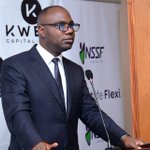
ALT A person in a suit speaks at a podium with microphones. Behind them are banners with the logos of Kweli Capital Group and Smartling.
A 20% deposit on a UGX 100 million home is UGX 20 million. For some families, the challenge is raising that amount all at once.
@PatrickAyota, Managing Director NSSF, spoke about how structured savings could give aspiring homeowners time to build their deposit. He also pointed to lower-cost financing and longer repayment periods as options that could make monthly payments more manageable.
These are some of the options NSSF and its partners can explore as they develop the affordable housing pilot.

“Decent housing is social security.”
Speaking at the signing of the Memorandum of Understanding for Uganda’s Mass Housing Programme, @PatrickAyota, Managing Director, NSSF said that making homes affordable requires partners to address costs at every stage, from securing land and providing infrastructure to construction and financing.
He also reaffirmed NSSF’s responsibility to its members. The savings we manage belong to workers, and any investment we make in affordable housing must deliver value for them.

For many Ugandan families who want to own a home, saving for the deposit is the biggest hurdle.
Rebecca Nabwire Osogo, CEO of @kwelicapital, shared findings from a survey of 4,141 respondents. While 95% said they wanted to own a home, 59% cited saving for a deposit as their main barrier.
She presented SMARTLIFE AMAKA, a proposed savings-first, rent-to-own model under the NSSF-led partnership. Families would start by saving towards a deposit, then move into a home and make payments that count towards ownership. Where needed, a smaller mortgage could help cover the remaining balance.

Uganda needs about 300,000 new homes each year and delivers fewer than 100,000, according to Thierno-Habib Hann, Managing Director of @ShelterAfrique. At the signing of the Memorandum of Understanding for Uganda’s Mass Housing Programme, he explained how the partnership aims to reach working families who earn and save but have limited access to formal housing finance.
The partnership brings together Shelter Afrique Development Bank, NSSF, National Housing and Housing Finance Bank, among other partners. It proposes three routes to ownership: outright purchase, a mortgage or rent-to-own. The last could give families with a steady income a path to owning a home when a large upfront deposit is out of reach.
He also pointed to the opportunity to create jobs by sourcing building materials locally and working with Ugandan suppliers and builders.


Making homes more affordable goes hand in hand with planning the neighbourhoods around them. As Kampala grows, decisions about where and how we build also determine how easily families can access roads, water, electricity and sanitation.
Speaking at the signing of the Memorandum of Understanding for Uganda’s Mass Housing Programme, CEO @NHCC_UG, Eng. Kenneth Kaijuka shared a practical example. On one four-acre site, National Housing delivered 195 homes. Building upwards where appropriate can make room for more families on the same site while leaving space for access roads, drainage and shared outdoor areas.
He also called for protecting wetlands as the city expands, pointing to their role in natural drainage and the added pressure on public services when development takes place without adequate planning.

Building more homes is one part of expanding homeownership. The next is making it possible for more Ugandans to buy them.
Speaking at the signing of the Memorandum of Understanding for Uganda’s Mass Housing Programme, Hon. Lt. Gen. @Tumukunde_, Minister @MoGLSD called on developers, lenders and insurers to work together on longer repayment periods and lower upfront deposits. He proposed exploring how insurance could help lenders offer these terms to households that can manage monthly repayments but cannot afford a large deposit.
He also urged housing providers to take information about available homes and mortgage options directly to prospective buyers and deliver projects on schedule. He pledged his support for a follow-up meeting to turn these proposals into a practical plan for widening access to homeownership.


