

Putting health at the forefront of the public agenda in Nigeria. Find out more at https://nitter.cf/t.co/kH2STxa0Ay
Abuja, Nigeria
Joined May 2009
- Tweets99K
- Following4.6K
- Followers127K
- Likes43.3K







How can family planning help reduce maternal deaths in Nigeria?
In this #NHWPost, @iam_mauryn draws on discussions from a webinar held ahead of the recent #FHC2026, exploring how integrating family planning into Nigeria’s maternal health response can improve outcomes for women.
Read: nhwat.ch/4zz3FJA
#TheFutureOfHealthIsNow @OrganonLLC

Day 1 started with a review of progress on the implementation of the National Policy on Cosmetics Safety and Health (NPCSH).
Participants received updates on work carried out in four states: Kano, Kwara, Nasarawa and Lagos, including the development of state-specific action plans to guide cosmetics safety interventions.
#LeadFreeNaija @Fmohnigeria


Protecting public health takes consistent oversight, strong regulation and coordinated action to ensure those standards are implemented.
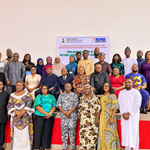
This is the focus of the Third-Quarter Meeting of the National Cosmetics Safety Management Technical Working Group (NCSM-TWG), which brings together key stakeholders to assess progress on the implementation of the National Policy on Cosmetics Safety and Health (NPCSH).
#LeadFreeNaija @Fmohnigeria


Our Programme Manager, Habibat Lawal took participants through @nighealthwatch's work on lead prevention so far and some of the activities still underway.
She spoke about efforts to get states to include lead prevention activities in their Annual Operational Plans, as well as follow-up with stakeholders on commitments made during earlier engagements. She also shared plans for a health journalism fellowship that will train media practitioners to report on lead prevention and related public health issues.
#LeadFreeNaija


1
15
Participants spoke about the need to take public awareness beyond technical conversations and find better ways to reach consumers, particularly around traditional medicines.
There was also a call for closer collaboration among government agencies, researchers, the media and other stakeholders to keep lead prevention on the public health agenda.
#LeadFreeNaija


13
Moving from commitment to impact requires more than government action. It requires strong partnerships, shared responsibility and sustained investment.
At the 2026 Joint Annual Review, stakeholders are convening for the Maternal and Neonatal Mortality Reduction Innovation Initiative (MAMII) Compact Session, themed “From Commitment to Compact to Impact: Mobilising Private Sector Partnerships for Maternal and Newborn Health in Nigeria.”
The session, moderated by Chief Mrs. @MakanjuolaMoji, focuses on mobilising private-sector capabilities and investments to accelerate progress in maternal and newborn survival.
#JAR2026 #GivingBirthInNigeria


The Honourable Coordinating Minister of Health and Social Welfare, Prof. @muhammadpate, welcomed the private sector commitments, disclosing that the collective contributions from partners amount to almost US$65 million in cash and in-kind support.
He described this as a significant boost to Nigeria's efforts to reduce maternal and newborn deaths and acknowledged the contributions of businesses bringing their expertise, products, technology and resources to the national agenda.
He stressed that these commitments must translate into tangible improvements for women and newborns across the country.
#JAR2026 #GivingBirthInNigeria

Beyond mobilising resources, the session also marked the launch of critical national policies, guidelines and frameworks to strengthen the quality of maternal and reproductive healthcare.
The documents unveiled include the National Training Curriculum and Implementation Framework for Emergency Obstetric and Newborn Care, Obstetric Fistula Framework, National Sexual and Reproductive Health Policy, family planning guidelines and National Task-Shifting and Task-Sharing Guidelines.
The Coordinating Minister emphasised that investments in equipment, infrastructure and technology must be matched with trained health workers and systems capable of delivering quality care.
#JAR2026


Advancing health and wellbeing requires more than expanding access to healthcare. It also means strengthening nutrition systems, building local capacity to produce essential health products and ensuring that Nigerians have access to safe, quality medicines.
At #JAR2026, Performance Review IV focuses on progress in nutrition, local production and regulatory reforms under the Health Sector Renewal Investment Initiative.
The session, moderated by Dr @Dr_Adanna, SSA to the President on Women’s Health, brings together government, regulators, development partners and private sector leaders to assess progress and identify priorities for 2027.


Dr Olumide Okunola, Senior Health Specialist, World Bank, stressed that local manufacturing ambitions must be reflected in Nigeria's National Essential Medicines List, noting that only about 40% of essential medicines are currently produced locally.
He called for stronger industrial infrastructure, particularly for local production of active pharmaceutical ingredients.

1
23
@NjideN, President of the Healthcare Federation of Nigeria (@hfn_nigeria), highlighted the need to improve access to financing and technical assistance for local manufacturers, while strengthening industry-academia partnerships to equip graduates with practical manufacturing experience.
The session reinforced the need for coordinated policies, sustainable financing, stronger regulation, investment in local production and multisectoral action on nutrition.
As Nigeria looks towards 2027, the priority is to turn these commitments into stronger domestic manufacturing capacity, safer health products and improved nutrition outcomes.


26