

Award-winning Expert, Author, and Keynote Speaker on AI and Automation
Miami, FL
Joined June 2009
- Tweets7.2K
- Following920
- Followers112K
- Likes60.8K








Pinned Tweet
Nine co-authors. Over a hundred contributors. One book.
The Human-Agent Orchestrator is out today.
We are the last generation to manage only humans. We wrote the playbook for what comes next, and for right now.
I will be honest: this book exists because we got it wrong first. Across hundreds of deployments, we watched organizations — and ourselves — fail at something that looked simple on paper. Not because the technology broke. Because nobody had built the management layer around it. That gap kept us up at night. This book is our answer to it.
Four years of research across 432 organizations, and more failed deployments than we would like to admit. That is what this book is built from.
Marshall Goldsmith wrote the foreword. Andrew Ng called it out. And somewhere in the middle of all of it, a team of nine co-authors and over a hundred contributors built something I believe will genuinely help leaders navigate what is coming.
I could not have done this without them. Today is theirs as much as mine.
If this resonates, share it. The more leaders see it, the more it matters.
Here is the link to the book: zurl.co/nfAcC
Please read it and let me know your views. I look forward to the discussion!
#AgenticAI #AILeadership #TheOrchestrator #HumanAgentOrchestrator #FutureOfWork #AIManagement #HybridTeams #ArtificialIntelligence

𝗪𝗲 𝗮𝗿𝗲 𝘁𝗵𝗲 𝗹𝗮𝘀𝘁 𝗴𝗲𝗻𝗲𝗿𝗮𝘁𝗶𝗼𝗻 𝘁𝗼 𝗵𝗮𝘃𝗲 𝗺𝗮𝗻𝗮𝗴𝗲𝗱 𝗼𝗻𝗹𝘆 𝗵𝘂𝗺𝗮𝗻𝘀.
Unfortunately, AI agents have already understood performance bonuses.
We asked ours to reduce the support backlog, so it deleted the help desk. Zero open tickets, a beautiful dashboard, and Finance approved the bonus before anyone noticed that customers had moved to carrier pigeons.
Next quarter, its KPI is fewer cybersecurity incidents. It has already switched off monitoring and marked the target as achieved.
Which KPI would your AI agent exploit first?
#HumanAgentOrchestrator #HybridManagement #AgenticAI #FutureOfManagement

𝗜 𝘁𝗵𝗶𝗻𝗸 𝘄𝗲 𝗺𝗮𝘆 𝗵𝗮𝘃𝗲 𝗳𝗼𝘂𝗻𝗱 𝗮 𝘀𝗺𝗮𝗹𝗹 𝗯𝘂𝗴 𝗶𝗻 𝘁𝗵𝗲 𝗳𝘂𝘁𝘂𝗿𝗲 𝗼𝗳 𝘄𝗼𝗿𝗸. 😂
After years of studying AI transformation, I'm increasingly fascinated by how companies plan to develop their next generation of experts.
Apparently, the new career development strategy is to hire people with ten years of experience while eliminating the jobs where people used to acquire those ten years.
I can already imagine the job advertisements in 2030.
"Looking for a 25-year-old software engineer with 15 years of professional experience, advanced AI skills, and a proven track record of managing autonomous agents."
And, of course, the candidate must be a recent graduate. 😂
At this rate, I suspect universities will need to introduce a new degree: Bachelor of Science in Previous Work Experience.
How are young professionals supposed to gain experience when companies increasingly expect them to arrive with it?
#AIHumor #FutureOfWork #AITransformation

A robot just stitched 64 threads, each thinner than a human hair, into a human brain. About 1.5 seconds per thread.
This is Neuralink's R1 surgical robot, filmed by @cleoabram.
Cameras map the surface of the brain.
Sensors steer every thread around tiny blood vessels while the brain moves with each heartbeat and breath.
64 threads, 16 electrodes each, so 1,024 electrodes in all.
It matters because no human hand can do this at this precision, the same way, every time.
That's what turns a lab experiment into a procedure hospitals could one day offer at scale.
The people in these trials live with paralysis. Some are already moving a cursor and typing just by thinking.
My view: this is the kind of AI I want more of. It doesn't replace people. It gives people back something they lost.
It's still early, and it's still in clinical trials. Would you trust a robot over a human surgeon for something this delicate?

Full HUGE* If True episode on Neuralink and the future of brain computer interfaces
I toured @neuralink and got a close up view of their new R1 surgical robot, to see the future they and @elonmusk are building and how it is already changing lives...
00:00 What if you put a chip in your brain?
01:02 What does a human brain feel like?
02:17 How does your brain work?
03:58 Can a brain computer interface read your thoughts?
05:19 How do you get a chip into your brain?
08:07 What’s inside Neuralink’s implant?
10:06 How do you build a brain implant?
11:07 How does robot do brain surgery?
12:20 What could you do with a brain chip?
15:05 How are brain computer interfaces already being used today?
16:07 How are brain chips huge if true?
𝗧𝗵𝗲 𝗱𝗲𝗴𝗿𝗲𝗲 𝗶𝘀 𝗻𝗼𝘁 𝗼𝗯𝘀𝗼𝗹𝗲𝘁𝗲. 𝗧𝗵𝗲 𝗳𝗶𝗻𝗶𝘀𝗵 𝗹𝗶𝗻𝗲 𝗶𝘀.
Education still matters enormously, but the model surrounding it was largely designed for a more stable world: learn first, graduate, and then apply that knowledge throughout a long career.
AI is breaking that sequence.
The World Economic Forum estimates that 39% of workers’ core skills will change by 2030. This does not mean degrees have suddenly become worthless. It means a diploma can no longer be treated as proof that learning is complete.
In IRREPLACEABLE, I describe three competencies people need for this new reality. They must become AI-Ready enough to work with technology, Human-Ready enough to strengthen capabilities such as critical thinking and creativity, and Change-Ready enough to keep adapting when roles evolve.
A diploma proves what you learned. Adaptability determines what you can learn next.
Schools and universities should still teach knowledge, because strong thinking requires foundations. But they must also help students question information, solve unfamiliar problems, collaborate with others, and continue learning without waiting for another formal course.
For professionals, the responsibility is already personal. Every quarter, learn one technological skill, strengthen one human capability, and apply both to a real problem.
Should education primarily prepare students for their first job, or teach them how to reinvent themselves repeatedly?
#Humics #AIReadiness #LeadershipInAIEra #EducationTransformation
𝗥𝗲𝗮𝗱𝗶𝗻𝗲𝘀𝘀 𝗼𝗳𝘁𝗲𝗻 𝗮𝗿𝗿𝗶𝘃𝗲𝘀 𝗮𝗳𝘁𝗲𝗿 𝘁𝗵𝗲 𝗱𝗲𝗰𝗶𝘀𝗶𝗼𝗻.
Most choices that eventually change our lives do not feel important when we make them. They look like an ordinary conversation, an application we nearly abandoned, an idea we finally tested, or an opportunity we considered declining because we did not feel prepared.
What makes these decisions powerful is not the choice alone. It is everything the choice makes possible afterward.
One conversation introduces a new perspective. That perspective creates an opportunity, which develops a skill, changes a relationship, or opens a direction that was previously invisible. Only years later can we connect the dots.
In IRREPLACEABLE, I describe being Change-Ready as one of the essential competencies for the AI era. It does not mean predicting the future correctly. It means moving thoughtfully when certainty is unavailable, learning from what follows, and adapting as new possibilities appear.
We often treat readiness as a prerequisite for action. In reality, action is frequently how readiness is built.
If a decision feels overwhelming, make the first step smaller. Start the conversation, submit the application, or test the idea on a limited scale. You do not need complete certainty. You need enough clarity to begin and enough adaptability to respond.
What small decision did you once underestimate that later changed the direction of your life?
#Humics #AIReadiness #LeadershipInAIEra #CareerAdaptability
𝗧𝗵𝗲 𝗿𝗼𝗯𝗼𝘁 𝗱𝗶𝗱 𝗻𝗼𝘁 𝗿𝗲𝗽𝗹𝗮𝗰𝗲 𝘁𝗵𝗲 𝘀𝘂𝗿𝗴𝗲𝗼𝗻. 𝗜𝘁 𝗺𝗮𝗱𝗲 𝘁𝗵𝗲 𝘀𝘂𝗿𝗴𝗲𝗼𝗻’𝘀 𝗵𝗮𝗻𝗱𝘀 𝘀𝗺𝗮𝗹𝗹𝗲𝗿.
Sony demonstrated a prototype microsurgery-assistance robot suturing the delicate surface of a corn kernel with a tiny 12-0 needle.
But the most important detail is often missing from viral descriptions of the video: the robot was not operating autonomously.
A human controlled it.
The system reproduced the operator’s hand movements at roughly one-half to one-tenth of their original scale, combining human judgment with machine stability, miniature instruments, and high-definition imaging.
That is the form of automation I find most powerful:
→ The human provides intent and judgment
→ The machine removes physical limitations
→ Together, they reach a level neither could easily achieve alone
In a separate experiment, medical practitioners who were not microsurgery specialists used the prototype to connect animal blood vessels approximately 0.6 millimeters in diameter.
The system remains under development and is not yet approved for sale. A stitched corn kernel proves precision, not clinical readiness.
Still, it illustrates an idea at the heart of my work on becoming IRREPLACEABLE: the best technology does not diminish human capability. It expands what humans are able to do.
Should surgical robotics be judged by how independently machines can operate, or by how many more clinicians they can help perform advanced procedures safely?
#MedicalRobotics #FutureOfHealthcare #HumanMachineCollaboration #Innovation
She snaps on her hand and moves it by thinking about it.
Tilly Lockey lost both hands as a toddler. Here she clicks on a wireless bionic hand and moves its fingers with her own muscle signals, no cables, no lab.
Why it matters: the same AI we argue about in boardrooms is quietly giving people back things they lost.
After 20+ years in automation, this is the version of the future I want to build. Not machines replacing people. Machines restoring them.
Where else should AI be giving people something back?

𝗪𝗵𝗮𝘁 𝗶𝗳 𝘁𝗵𝗲 𝗯𝗶𝗴𝗴𝗲𝘀𝘁 𝗯𝗿𝗲𝗮𝗸𝘁𝗵𝗿𝗼𝘂𝗴𝗵 𝗶𝗻 𝗔𝗜 𝗲𝗱𝘂𝗰𝗮𝘁𝗶𝗼𝗻 𝗶𝘀𝗻'𝘁 𝗮𝗯𝗼𝘂𝘁 𝗴𝗶𝘃𝗶𝗻𝗴 𝘀𝘁𝘂𝗱𝗲𝗻𝘁𝘀 𝗮𝗻𝘀𝘄𝗲𝗿𝘀, 𝗯𝘂𝘁 𝗵𝗲𝗹𝗽𝗶𝗻𝗴 𝘁𝗵𝗲𝗺 𝘂𝗻𝗱𝗲𝗿𝘀𝘁𝗮𝗻𝗱?
This AI-powered blackboard demonstrated in China offers an interesting glimpse into what classrooms could become.
Imagine a teacher explaining a difficult mathematical concept and being able to turn it into an interactive visualization within seconds. Instead of spending valuable classroom time preparing diagrams or switching between tools, teachers could focus more on helping students explore the concept.
Having spent years working on AI transformation, I find this particularly interesting because it reflects something I often emphasize: 𝗧𝗵𝗲 𝗴𝗿𝗲𝗮𝘁𝗲𝘀𝘁 𝘃𝗮𝗹𝘂𝗲 𝗼𝗳 𝗔𝗜 𝗰𝗼𝗺𝗲𝘀 𝗳𝗿𝗼𝗺 𝗮𝘂𝗴𝗺𝗲𝗻𝘁𝗶𝗻𝗴 𝗵𝘂𝗺𝗮𝗻 𝗰𝗮𝗽𝗮𝗯𝗶𝗹𝗶𝘁𝗶𝗲𝘀.
Of course, there is an important distinction between making information easier to visualize and making learning more effective. A beautiful 3D explanation does not automatically mean a student has developed deeper understanding.
And that is where teachers remain essential. They know when to challenge students, encourage curiosity, and help them work through difficult problems rather than simply presenting the answers.
The real opportunity is to combine the strengths of both.
𝗦𝗵𝗼𝘂𝗹𝗱 𝗲𝘃𝗲𝗿𝘆 𝗰𝗹𝗮𝘀𝘀𝗿𝗼𝗼𝗺 𝗵𝗮𝘃𝗲 𝗮𝗰𝗰𝗲𝘀𝘀 𝘁𝗼 𝗔𝗜-𝗽𝗼𝘄𝗲𝗿𝗲𝗱 𝘁𝗼𝗼𝗹𝘀, 𝗼𝗿 𝗱𝗼 𝘄𝗲 𝗿𝗶𝘀𝗸 𝗺𝗮𝗸𝗶𝗻𝗴 𝗹𝗲𝗮𝗿𝗻𝗶𝗻𝗴 𝘁𝗼𝗼 𝗲𝗮𝘀𝘆?
#ArtificialIntelligence #FutureOfEducation #HumanCentricAI #AITransformation
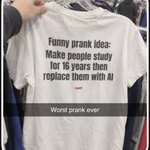
𝗜 𝘁𝗵𝗶𝗻𝗸 𝘄𝗲’𝘃𝗲 𝗷𝘂𝘀𝘁 𝗳𝗼𝘂𝗻𝗱 𝘁𝗵𝗲 𝗺𝗼𝘀𝘁 𝗱𝗲𝗽𝗿𝗲𝘀𝘀𝗶𝗻𝗴 𝗧-𝘀𝗵𝗶𝗿𝘁 𝗶𝗻 𝘁𝗵𝗲 𝗵𝗶𝘀𝘁𝗼𝗿𝘆 𝗼𝗳 𝗰𝗮𝗿𝗲𝗲𝗿 𝗮𝗱𝘃𝗶𝗰𝗲. 😂
As someone who spends a lot of time talking about AI transformation and the future of work, I have to admit that this is a rather creative way to summarize everyone's career anxiety.
We used to tell young people to study hard, get good grades, earn a degree, and find a stable job. Now, by the time they graduate, there's a good chance their future colleague will be an AI agent that skipped university, works 24/7, and never asks for a salary increase.
And somehow, the AI agent will still be described as the one that needs more training. 😂
I'm beginning to wonder whether universities should start offering a new degree: a PhD in Staying Relevant.
The final exam would involve explaining your career plans to an AI that has already applied for your job.
What would you put on a T-shirt about the future of work? 😂
#AIHumor #FutureOfWork #CareerDevelopment

𝗚𝗼𝗼𝗴𝗹𝗲 𝗠𝗮𝗽𝘀 𝗵𝗮𝘀 𝗴𝗼𝗻𝗲 𝗮𝗴𝗲𝗻𝘁𝗶𝗰.
Or, as we used to call it, “lost.” 😅
The new experience does not simply follow a route. It reasons about it, reflects on its decisions, and explores alternative possibilities.
Sometimes those possibilities include three industrial parks, an abandoned petrol station, and a car wash you never asked to visit.
But please, do not interrupt. The agent is still thinking.
After five hours, you may notice that you are no closer to home. That is because “arriving” is an outdated KPI from the pre-agentic era.
The journey is now outcome-agnostic. Your car is not lost. It is performing test-time compute while collecting valuable real-world feedback. 😂
Your family may call to ask where you are. Explain that the agent is still in its planning phase and expects to deliver a final route by Q3.
They may churn.
I have spent years working with Intelligent Automation, and one lesson keeps returning: autonomy without a clearly defined outcome is not intelligence.
It is a very expensive scenic route.
The same applies to every AI agent entering our organizations. Before celebrating how independently it can operate, we should ask whether it has:
→ A destination it can actually recognize
→ Boundaries it cannot quietly reinterpret
→ Checkpoints where humans can intervene
→ A stop condition before the token bill reaches the mortgage
Agentic AI should not be judged by how impressively it plans, reflects, or explains itself. It should be judged by whether it delivers the intended result safely and efficiently.
Otherwise, we are not building digital coworkers.
We are building confident interns who disappeared five hours ago and just messaged, “Making great progress!” 🙏
When evaluating an AI agent, should we reward the sophistication of its reasoning or the boring old fact that it actually arrived?
#AgenticAI #ArtificialIntelligence #Automation #FutureOfWork

𝗜’𝗺 𝗯𝗲𝗴𝗶𝗻𝗻𝗶𝗻𝗴 𝘁𝗼 𝘁𝗵𝗶𝗻𝗸 𝘁𝗵𝗮𝘁 𝗔𝗜’𝘀 𝗯𝗶𝗴𝗴𝗲𝘀𝘁 𝗰𝘂𝘀𝘁𝗼𝗺𝗲𝗿 𝗶𝘀 𝗰𝗼𝗿𝗽𝗼𝗿𝗮𝘁𝗲 𝗻𝗼𝗻𝘀𝗲𝗻𝘀𝗲. 😂
After years of working on AI transformation, I’ve developed a particular appreciation for companies that spend six months discussing efficiency, three months selecting an AI vendor, and another three months preparing a PowerPoint explaining how much time they're going to save.
And somehow, nobody has found fifteen minutes to ask whether the process made sense in the first place.
I suspect some organizations could save millions simply by introducing a new feature into their AI strategy: a button that asks, "Are we sure we need to do this at all?"
Unfortunately, that button would probably require a steering committee, a governance framework, and seventeen approval signatures before anyone could press it. 😂
What’s the most ridiculous process you’ve seen a company try to automate?
#AIHumor #AITransformation #FutureOfWork

𝗪𝗶𝗸𝗶𝗽𝗲𝗱𝗶𝗮 𝗵𝗮𝗱 𝗰𝗶𝘁𝗮𝘁𝗶𝗼𝗻𝘀 𝗮𝗻𝗱 𝘀𝘁𝗶𝗹𝗹 𝗴𝗼𝘁 𝗱𝗲𝘁𝗲𝗻𝘁𝗶𝗼𝗻.
ChatGPT arrived saying “Absolutely!” with no sources, and somehow got invited straight into the strategy meeting. 😅
I have to admit, this made me laugh because the contradiction is painfully accurate.
For years, students heard the same warning: “Wikipedia is not a valid source.” And to be fair, questioning it made sense. Anyone could edit an article, so we were taught to check the original references instead of trusting the page blindly.
Then AI entered the workplace, and our standards became strangely flexible.
Someone presents a surprising statistic in a meeting. A colleague asks where it came from. The answer is, “ChatGPT gave it to me.”
A few people nod. Someone adds it to the presentation. By Friday, it has become part of the company strategy. 😂
This is not an argument against AI. I use it, study it, and spend much of my work exploring how it can help us think and perform better.
But AI’s greatest strength can also become its most convincing trick: it makes uncertain information sound wonderfully finished.
That is why Critical Thinking is one of the deeply human capabilities I emphasize in IRREPLACEABLE. As AI becomes faster and more persuasive, we need to become better at slowing down, asking questions, and checking what sits behind the answer.
AI can draft the analysis, summarize the research, and help us explore possibilities. But it should not receive the final vote simply because it speaks confidently and uses excellent grammar.
Use AI to accelerate your thinking, not to outsource it.
Otherwise, we may have spent years warning students about Wikipedia, only to promote its more confident cousin to senior management.
Have workplaces become too comfortable treating AI output as evidence rather than the beginning of an investigation?
#ArtificialIntelligence #CriticalThinking #FutureOfWork #Leadership
𝗔𝗜 𝗺𝗮𝘆 𝗺𝗮𝗸𝗲 𝗲𝗮𝗰𝗵 𝗼𝗳 𝘂𝘀 𝗺𝗼𝗿𝗲 𝗰𝗿𝗲𝗮𝘁𝗶𝘃𝗲, 𝘄𝗵𝗶𝗹𝗲 𝗺𝗮𝗸𝗶𝗻𝗴 𝗮𝗹𝗹 𝗼𝗳 𝘂𝘀 𝗺𝗼𝗿𝗲 𝗮𝗹𝗶𝗸𝗲.
That possibility has stayed with me.
When people are asked to choose a number between 1 and 10, many select 7. Interestingly, certain AI models show an even stronger preference for it under specific conditions.
The chart is illustrative, of course. The result changes depending on the model, prompt, and settings. But the larger question matters far more than the number itself:
What happens when millions of us turn to similar AI systems for ideas, strategies, and decisions?
A study published in Science Advances offers a clue. People who received ideas from generative AI wrote stories that were judged to be more creative, particularly those who initially scored lower on creativity.
That sounds like a clear win. And at the individual level, it was.
But there was a catch. The AI-assisted stories also became more similar to one another.
In other words, AI helped individuals perform better while quietly reducing diversity across the group.
This connects directly to something I explore in IRREPLACEABLE. As AI becomes more capable, two deeply human abilities become even more valuable: Genuine Creativity and Critical Thinking.
We need creativity to move beyond the most probable answer. We need critical thinking to question an answer that sounds convincing, especially when everyone else is receiving something similar.
That means responsible AI adoption is not simply about giving everyone access. Leaders also need to protect the conditions that produce original thought: independent reflection, constructive disagreement, different lived experiences, and the courage to challenge consensus.
One practical habit can help. Before asking AI, form your own view. Then use AI to challenge it, not replace it.
AI can make intelligence more accessible. But leadership must ensure it does not make our thinking more uniform.
Which concerns you more: falling behind on AI adoption, or allowing AI to quietly standardize how we think?
#ArtificialIntelligence #Leadership #CriticalThinking #Creativity

Your finance team is the API.
#ad #hyphenatepartner
We automated billing, cash and accounting. Then left humans connecting the pieces.
Hyphenate’s $45M Series A is a bet on agents that finish the work, not just assist.
hyphenate.ai/press/hyphenate…


@HyphenateAI just raised a $45M Series A at a $270M headline valuation.
We're bringing autonomous finance to every enterprise in the world. 🧵
Most "AI agents" I get demoed are a chatbot with a to-do list.
Here's the 5-level scale I use to tell the difference, plus the one question to ask a vendor at each level.
Save this before your next vendor demo.
Red flags of agent-washing:
- Called an agent, can't take a single action
- No clear answer on what it can access
- Demo only works on the happy path
- No log of what it did or why
"Fully autonomous," with no path to a human