

-Biggest international medical community, welcome to PIMG family 🤍💙🙌 -150,000+ members worldwide - Connecting students and doctors all over the world 🌎
New York, USA
Joined October 2021
- Tweets4.9K
- Following1.3K
- Followers30.2K
- Likes2.8K


🩺 CROHN VS UC!
Two diseases, opposite clues! 🧠
Crohn: anywhere from mouth to anus, skip lesions, transmural, cobblestones, fistulas, strictures, kidney stones. UC: continuous from the rectum, toxic megacolon, colon cancer, PSC. Smoking worsens Crohn but is protective in UC.
A high-yield concept that shows up again and again on the USMLE! 👀
🎯 TEST YOUR KNOWLEDGE:
Which feature favors Crohn disease over ulcerative colitis?
A) Continuous rectal involvement
B) Transmural inflammation with skip lesions
C) Primary sclerosing cholangitis
D) Bloody diarrhea
👇 Drop your answer in the comments!
#USMLE #Step1 #GI #Gastroenterology #IBD #MedTok #MedicalEducation #MedSchool
2
337
👶 MILESTONES = EASY POINTS!
Easy points when you know the ages! 🧠
6 months: sits with support, rolls over, babbles. 12 months: pulls to stand, says mama/dada, pincer grasp. No babbling by 12 months or no words by 16 months → get a hearing test first.
A high-yield concept that shows up again and again on the USMLE! 👀
🎯 TEST YOUR KNOWLEDGE:
First step in a toddler with speech delay?
A) MRI brain
B) Audiology evaluation
C) Genetic testing
D) Wait until age 3
👇 Drop your answer in the comments!
#USMLE #Step1 #Pediatrics #Milestones #MedTok #MedicalEducation #MedSchool
4
367
💙 CYANOTIC HEART DISEASE = THE 5 T's!
A favorite pediatric cardiology topic! 🧠
Tetralogy of Fallot (tet spells, squatting relieves, boot-shaped heart), Truncus arteriosus, Transposition, Tricuspid atresia and TAPVR. Left-to-right shunts (VSD, ASD, PDA) are acyanotic, and PGE keeps the PDA open while indomethacin closes it.
A high-yield concept that shows up again and again on the USMLE! 👀
🎯 TEST YOUR KNOWLEDGE:
Why does squatting relieve tet spells?
A) It decreases SVR
B) It increases SVR, reducing right-to-left shunting
C) It increases heart rate
D) It opens the PDA
👇 Drop your answer in the comments!
#USMLE #Step1 #Pediatrics #Cardiology #CongenitalHeartDisease #MedTok #MedicalEducation #MedSchool
USCE opportunities can differ in eligibility, supervision, and permitted activities. Get the details in writing before committing, and describe your eventual role accurately on your application. Save this checklist or share it with someone planning a U.S. placement. #ProjectIMG #USCE #ClinicalExperience #IMGJourney


USCE opportunities can differ in eligibility, supervision, and permitted activities. Get the details in writing before committing, and describe your eventual role accurately on your application. Save this checklist or share it with someone planning a U.S. placement. #ProjectIMG #USCE #ClinicalExperience #IMGJourney


3
500
🧠 MATCH THE STROKE TO THE ARTERY!
The deficit tells you the vessel! 🧠
MCA: face and arm weakness. PCA: contralateral visual field loss with macular sparing. Wallenberg (PICA): crossed sensory loss, vertigo, hoarseness. Lacunar: pure motor or pure sensory from hypertension.
A high-yield concept that shows up again and again on the USMLE! 👀
🎯 TEST YOUR KNOWLEDGE:
Vertigo, hoarseness, ipsilateral facial and contralateral body pain/temperature loss. Which artery?
A) MCA
B) ACA
C) PICA
D) PCA
👇 Drop your answer in the comments!
#USMLE #Step1 #Neurology #Stroke #Neuroanatomy #MedTok #MedicalEducation #MedSchool
🪨 THE KIDNEY STONE TYPES!
Easy points once you know the crystals! 🧠
Calcium oxalate: most common, envelope-shaped (think Crohn and ethylene glycol). Uric acid: rhomboid and radiolucent, seen in gout, so alkalinize the urine. Cystine: hexagonal, cystinuria, alkalinize too. Low-dose CT confirms, and tamsulosin helps distal stones pass.
A high-yield concept that shows up again and again on the USMLE! 👀
🎯 TEST YOUR KNOWLEDGE:
Which stone is radiolucent on plain X-ray?
A) Calcium oxalate
B) Calcium phosphate
C) Uric acid
D) Struvite
👇 Drop your answer in the comments!
#USMLE #Step1 #Renal #Urology #Nephrology #MedTok #MedicalEducation #MedSchool
1
1
356
🦠 HEPATITIS B MARKERS MADE SIMPLE!
Hep B serology is on every Step! 🧠
HBsAg = infection now. Window period = only IgM anti-HBc positive. HBeAg = active replication, highly contagious. Vaccinated: anti-HBs only. Recovered: anti-HBs plus anti-HBc.
A high-yield concept that shows up again and again on the USMLE! 👀
🎯 TEST YOUR KNOWLEDGE:
Which marker is the only one positive during the window period?
A) HBsAg
B) Anti-HBs
C) IgM anti-HBc
D) HBeAg
👇 Drop your answer in the comments!
#USMLE #Step1 #Microbiology #HepatitisB #Immunology #MedTok #MedicalEducation #MedSchool
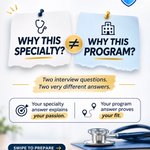
Caption : Treating “Why this specialty?” and “Why this program?” as the same question is one of the easiest ways to lose momentum in a residency interview. 🩺🎯
Swipe through for a quick breakdown on keeping your specialty passion distinct from your program-specific fit without relying on generic clichés. 📌
Save this for Match prep and share with a fellow applicant! 👇


1
2
529

🤰 FIRST TRIMESTER BLEEDING + PAIN = ECTOPIC UNTIL PROVEN OTHERWISE!
A can't-miss diagnosis! 🧠
Risk factors: prior ectopic, PID (scarred tubes), tubal surgery. Diagnosis: positive hCG + empty uterus on transvaginal US. Stable and small → methotrexate; ruptured or unstable → surgery now. And always check Rh status!
A high-yield concept that shows up again and again on the USMLE! 👀
🎯 TEST YOUR KNOWLEDGE:
Which is the strongest risk factor for ectopic pregnancy?
A) Prior ectopic pregnancy
B) Oral contraceptive use
C) Advanced maternal age
D) Multiparity
👇 Drop your answer in the comments!
#USMLE #Step1 #OBGYN #EctopicPregnancy #MedTok #MedicalEducation #MedSchool
⚖️ ETHICS = FREE POINTS IF YOU KNOW THE RULES!
Don't lose easy points on ethics! 🧠
Capacity has four parts (understand, appreciate, reason, express a choice), is decision-specific and can be assessed by any physician. Minors can consent for emergencies, contraception and STI care. Never lie, disclose errors honestly, and follow the order: patient → advance directive → surrogate.
A high-yield concept that shows up again and again on the USMLE! 👀
🎯 TEST YOUR KNOWLEDGE:
A competent adult refuses a life-saving blood transfusion. Best action?
A) Transfuse anyway
B) Obtain a court order
C) Respect the refusal
D) Let the family decide
👇 Drop your answer in the comments!
#USMLE #Step1 #Ethics #MedicalEthics #MedTok #MedicalEducation #MedSchool
1
1
379
☠️ KNOW YOUR ANTIDOTES!
Toxicology points you can't miss! 🧠
Opioids → naloxone; benzos → flumazenil. Warfarin → vitamin K + PCC; digoxin → digoxin antibodies. Cyanide → hydroxocobalamin; iron → deferoxamine; lead → succimer. Organophosphates → atropine + pralidoxime; methanol → fomepizole.
A high-yield concept that shows up again and again on the USMLE! 👀
🎯 TEST YOUR KNOWLEDGE:
Antidote for iron poisoning?
A) Dimercaprol
B) Deferoxamine
C) Penicillamine
D) Succimer
👇 Drop your answer in the comments!
#USMLE #Step1 #Pharmacology #Toxicology #MedTok #MedicalEducation #MedSchool
You can't predict every interview question but you can master the core themes. Trying to memorize word for word scripts is a recipe for robotic answers that fall apart under pressure. Program directors want to see authenticity, self awareness and clear communication.
By organizing your prep around 5 core themes. Your story, motivation/fit, behavioral experiences (STAR method), application details and key growth moments you give yourself a flexible framework to handle any question with confidence.
Save this post to guide your mock interview prep and share it with your practice partner!
#ResidencyMatch #Match2027 #MedicalStudent #InterviewPrep #ProjectIMG


💪 BRACHIAL PLEXUS INJURIES!
Anatomy points you can't miss! 🧠
Erb palsy: upper trunk C5–C6 → waiter's tip (shoulder dystocia). Klumpke: lower trunk C8–T1 → claw hand + Horner syndrome. Midshaft humerus fracture → radial nerve → wrist drop. Surgical neck fracture → axillary nerve → deltoid weakness.
A high-yield concept that shows up again and again on the USMLE! 👀
🎯 TEST YOUR KNOWLEDGE:
A newborn after shoulder dystocia has the arm adducted, internally rotated and the wrist flexed. Which roots are injured?
A) C5–C6
B) C7
C) C8–T1
D) T2
👇 Drop your answer in the comments!
#USMLE #Step1 #Anatomy #Pediatrics #Neurology #MedTok #MedicalEducation #MedSchool
2
458
On a video interview, looking at the interviewer on your screen can make your eyes appear to look slightly downward. Practice placing the interviewer’s window near your camera and looking toward the lens when making key points. Some devices or apps offer eye-contact correction features, but availability varies, and artificial correction can look unnatural. Test any tool beforehand, check privacy and platform compatibility, and never let it distract you from listening well.


⚠️ PHEOCHROMOCYTOMA: NEVER BETA BLOCKER FIRST!
The classic catecholamine tumor! 🧠
Episodes of headache, sweating and palpitations with severe hypertension. Diagnose with plasma free or 24-h urine metanephrines. Start an alpha blocker (phenoxybenzamine) first, because a beta blocker alone causes unopposed alpha and a hypertensive crisis. Rule of 10s, and think MEN 2 and VHL.
A high-yield concept that shows up again and again on the USMLE! 👀
🎯 TEST YOUR KNOWLEDGE:
Best initial test for suspected pheochromocytoma?
A) Serum cortisol
B) Plasma free metanephrines
C) Abdominal X-ray
D) ACTH level
👇 Drop your answer in the comments!
#USMLE #Step1 #Endocrinology #Pheochromocytoma #Pharmacology #MedTok #MedicalEducation #MedSchool
2
2
594
🦴 CALCIUM & PTH: STONES, BONES, GROANS!
Calcium questions follow the PTH level! 🧠
High PTH → primary hyperparathyroidism (stones, bones, groans, psychiatric overtones). High calcium with low PTH → cancer, vitamin D excess or sarcoidosis. Severe hypercalcemia: saline, calcitonin, then bisphosphonates. And always correct calcium for albumin!
A high-yield concept that shows up again and again on the USMLE! 👀
🎯 TEST YOUR KNOWLEDGE:
Hypercalcemia with suppressed PTH in a heavy smoker most likely comes from:
A) Primary hyperparathyroidism
B) PTHrP from squamous cell lung cancer
C) Vitamin D deficiency
D) Familial hypocalciuric hypercalcemia
👇 Drop your answer in the comments!
#USMLE #Step1 #Endocrinology #Calcium #Electrolytes #MedTok #MedicalEducation #MedSchool
4
3
475
A mock interview is most useful when it feels like a conversation not a memorized performance. Practice aloud, record yourself if you can, and ask a trusted colleague to give specific feedback on clarity, structure, pacing, and examples. Repeat the answers that need work, but do not memorize scripts word for word. You want to sound prepared and genuine, even when the question is unexpected.


