
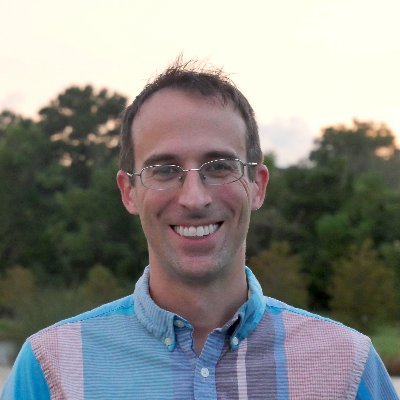
Author of New Book Step Into the Arena: https://nitter.cf/t.co/pjojPvSirl Performance Coach: Mental & Physical Performance
Houston, TX
Joined December 2009
- Tweets49.8K
- Following978
- Followers133K
- Likes47.3K








Pinned Tweet
Thrilled to announce my new book: Step Into the Arena!
It's for anyone who takes the risk to explore what they're capable of. It's about learning to compete, to handle the pressure, fear, doubts, and that voice in our head telling us to stop.
I can't wait for you to read it!

Our strengths are great. They allow us to perform at our best.
But they can also push us off balance. They can be our biggest downfalls.
That’s why it’s important to do some work going the opposite way. Not all the way. But enough.
thegrowtheq.com/dont-let-you…
1
1
2,076


Public dollars supplementing private sports schools…what could go wrong…

NEW: The top voucher school in Texas?
It's a network of AI-driven sports academies that require just two hours in the classroom:
houstonchronicle.com/politic…

Being really good at something at a young age narrows your world.
It seems like nothing else matters. That's false.
We need mentors and adults in the world to provide perspective. Having the ability to zoom out is one of the most important skills you can develop.
NCAA cross-country has changed so much in such a short time.
In the women's championship, it looks like there was just one American in the entire top 20.
The problem is:
1. Being in the NCAA pays better than being an A minus pro in countries like Kenya.
2. There’s been no age limit.
3. There’s no drug testing.
All this gives us a worse environment for developing, an explosion of NCAA being essentially a 2nd tier pro level.
If an athlete bragged about only getting 4 hours of sleep per night, I'd know he wasn't serious about his sport or performance.
Yet... in the workplace, we accept this bragging as a sign of someone who is dedicated.
The situations are the same. Both are sacrificing performance.
Steve Magness retweeted
Grand Theft Auto was supposed to turn us all into criminals.
It didn't
Instead of a moral panic, we should have asked why so many people wanted to spend their free time acting like they were breaking rules.
If Your Life Has No Arena, You’ll Rent One: stevemagness.org/p/if-your-l…

Grand Theft Auto was supposed to turn us all into criminals.
It didn't
Instead of a moral panic, we should have asked why so many people wanted to spend their free time acting like they were breaking rules.
If Your Life Has No Arena, You’ll Rent One: stevemagness.org/p/if-your-l…
On your phone before performing?
Research finds being on your phone before practice:
-Impairs decision making in Volleyball players
-Reduce training gains on swimming and endurance performance.
Scrolling doesn't prime you for performing or learning.
“I discovered that the more I tried to exert power directly, the less powerful I became. I learned to dial back my ego and distribute power as widely as possible without surrendering final authority.” Phil Jackson
Quiet your ego:
thegrowtheq.com/balancing-co…
Steve Magness retweeted
I put together a 30 page guide for how to improve your VO2max to go along with this video.
Yours FREE here: thegrowtheq.kit.com/7bf492f0…

How do you ACTUALLY train to improve your VO2max?
You asked for it. So I went deep. Loaded with lots of practical insights.
Norwegian 4x4s, Billat 30/30, zone 2 and everything you could ever want to know...
youtube.com/watch?v=DF-jBSKc…
Instead of placing the focus firmly on an external result, shift the focus internal. You can’t truly control if you ever run a mile in under 4 minutes, or write a NYT bestseller.
What you can control is getting better. Being a better runner, person, and student.
Stephen Wilson Jr. just won New Artist of the Year at the Country Music Awards.
He’s 47.
“Ten years ago I was a scientist in a lab coat and had never sung in front of anybody in my life.”
Wilson grew up in small-town Indiana. “I was very shy as a kid - still am, I guess. I didn’t talk much.”
His dad was a boxer. So Stephen and his brother were in the boxing ring all the time. He had his first fight at seven. And as he recalls: “My first stage wasn’t a stage at all. It was a boxing ring.”
He became a scientist, working in research and development at a food-science lab for the candy company Mars. For fun, he wrote songs on the side, eventually becoming good enough to write for big-time artists like Tim McGraw.
But he wouldn’t sing them. His dad always told him he was an artist. Stephen’s answer: “I don’t sing the songs, I just write them. Someone else sings them.”
In 2018, his dad died at 59. “Right afterwards, for whatever reason, this voice just kind of showed up.” He started keeping a record of what he was going through. It eventually became his debut album, søn of dad.
He was 44 when it came out. Two years later, he had his first single on country radio.
When asked about the improbable story, he goes back to his roots: “You have to be able to take a punch over and over again, literally and figuratively, and be like: ‘Is that all you got?’”
Most of us have a version of “I write them, someone else sings them.” A story about who we are that we keep defending, even when the people closest to us see something else.
After all, he was the quiet kid, the science nerd, not the singer or performer. Those stories often have a hint of truth that turns into a kind of comfort blanket. Something that prevents us from taking that step into the unknown to find out.
We treat success like it’s a conveyor belt. A linear path to a destination. It’s kind of how we’re programmed. High school to college to internship to career. And if we don’t have it figured out by 25, we’re doomed.
But reality is far messier. There are twists, turns, and fresh starts. And sometimes success meets us much later than anyone could have predicted.
There is no timeline.
The only way we find out is to take that step into the unknown. To try new things and find the courage to step up to the microphone and see what happens.
Sometimes it takes a while. And that’s okay. But eventually, take that step.
Just listen to Stephen Wilson Jr.: “In the weirdest way, it’s an answer to a prayer that I wasn’t capable of praying for.”

Does distance running make you lose speed?
If you are losing speed to a large degree during training, it’s not the long aerobic work that is doing it, it’s that your training sucks.
This story is insane on so many levels.
College kid goes from nobody to suddenly fast by doping...
Tip of the hat to coach Dave Smith for doing the right thing and not running him.
letsrun.com/news/2026/11/a-t…

If you aren’t signed up for the newsletter I write with Brad Stulberg, now is a good time to sign up. We’ve been at it for a few years and just reached 40k subscribers.
It’s what the world’s best read on sustainable excellence:
thegrowtheq.ck.page/steve

5
3,690
Do pre-game speeches make a difference?
They can impact your biology, shifting testosterone and cortisol levels.
And research shows, that shift can impact how we play on game day.
The science of pre-game speeches:
thegrowtheq.com/getting-read…
Exercise and sport are one of the last real things. When I go for a run, I'm forced to experience everything. The discomfort, the stress, the voice pulling me to stop, the world inside and around me. I'm in the moment. Feeling it all.
So much of modern life pushes us to distract or numb our inner world away.
Think about it.
Stuck in a line or sitting at dinner waiting, we pull out your phone to live in another world.
Feel bored? Instead of letting it push us to explore (which is what boredom is for)..we turn to the slot machine of our devices.
Feel lonely or frustrated? Instead of connecting with real people, numb that feeling by screaming on social media and 'connecting' on there.
So much of our world is set up to disconnect our inner and outer worlds. It takes us away from the embodied creatures that we're meant to be. It really is like WALL-E. Everyone floating in chairs, every need met at the press of a button, never feeling a thing.
But those runs out on the trails bring me back to a deeper, fundamental part of being human.
You get to hear your breath, be in nature, feel that effort that you're putting forth. And realize you are the one choosing to do it.
On easy runs, you get lost in your thoughts. Still there, still plugging along, but you get to let your mind go, without giving it an out to find the cheap entertainment to distract it. You replay conversations, daydream, plan the future, figure out the solution to chapter 5's plot you've been working on.
On hard runs, the discomfort forces you to engage with that devil on your shoulder, begging you to stop. You're forced to feel it all, the pain and fatigue, and sort through what's worth listening to and what should float on by. You get to see who you are when your protective self is screaming at you to stop. And sometimes, if you're lucky, you get to give your all but be absorbed in the magic of flow, feeling nothing, just going for a ride.
We need to feel alive.
We need to feel something.
But increasingly our modern world teaches us to numb or avoid our inner world. It becomes an unfamiliar stranger. One we fight to keep away.
Running, exercise, art, music, all bring us back to who we are meant to be. Embodied creatures experiencing everything.
We're meant to connect our inner and outer worlds.