

Earn onchain yield powered by solar energy. Join the community: https://nitter.cf/t.co/NowKcoDjJE
Joined June 2022
- Tweets929
- Following166
- Followers856
- Likes393






Project finance 101, #3: CFADS
What do lenders look at first when they finance a solar plant? Its cash flow available for debt service (CFADS). Let’s break it down 🧵

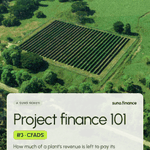
ALT Cover image for Suno’s series “Project finance 101”, episode #3: CFADS. Subtitle: “How much of a plant’s revenue is left to pay its debt?” The background is an aerial photo of the Uruaco solar plant in Colombia, a block of panel rows surrounded by green pasture, trees and a rural road.
Solar’s cost side is unusually stable: no fuel to buy, few moving parts, and most costs known years in advance.
Revenue moves with production, which is why lenders also check CFADS in a conservative production year, known as the P90 case.
That’s #3. Next in Project finance 101: the cash waterfall, the order in which every dollar a plant earns gets paid out.
Earlier in the series:
#1 DSCR: how lenders size a loan (nitter.cf/suno_finance/status/21…)
#2 P50 vs P90: how a plant’s production is forecast (nitter.cf/suno_finance/status/21…)

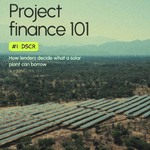
Project finance 101, #1: DSCR
We’re starting a series on how solar plants get financed, one concept at a time.
First up: how lenders decide how much a plant can borrow

We're happy to bring some sunlight to @base ☀️


Suno retweeted

Pumped to have @suno_finance building on @base
Suno brings solar infrastructure onchain: plants sell electricity, and that revenue becomes yield anyone can hold
A new way for investors to get yield backed by something real

Introducing @suno_finance (ALL18): turning solar infrastructure into yield-bearing assets.
Suno opens up financing for projects traditional lenders overlook, giving investors access to revenue from a portfolio of 25+ solar plants.
$5M in AUM. 2,000+ investors.
Congratulations to @nvillegase and @Andr3sC4ll3 on the launch.
Suno retweeted

.@suno_finance, turning solar infrastructure into yield-bearing assets
Investors get access to revenue from a portfolio of 25+ solar plants that traditional lenders overlook
Part of @alliance's ALL18 cohort

Suno is live, backed by @alliance!
LATAM’s power demand doubles by 2040. The solar plants that can meet it fastest are the ones traditional lenders overlook. Suno funds them onchain.
Introducing @suno_finance (ALL18): turning solar infrastructure into yield-bearing assets.
Suno opens up financing for projects traditional lenders overlook, giving investors access to revenue from a portfolio of 25+ solar plants.
$5M in AUM. 2,000+ investors.
Congratulations to @nvillegase and @Andr3sC4ll3 on the launch.

Project finance 101, #2: P50 vs P90
How do you forecast a solar plant’s production years before it’s built, and how sure can you be? 🧵

ALT Cover image for Suno’s series “Project finance 101”, episode #2: P50 vs P90. Subtitle: “How sure can a solar forecast be?” The background is an aerial photo of a solar plant under construction in Colombia, with rows of panels in the foreground, dry forest around it, and green mountains under a blue sky.
(7/8) One more nuance: uncertainty shrinks over time. A single year can swing, but over 10 years good and bad years average out, so a 10-year P90 sits much closer to P50.
Spreading output across many plants and regions narrows the range further.
That’s #2! Next in Project finance 101: CFADS, or how much of a plant’s revenue is actually left to pay its debt.
Missed #1 on DSCR? Start here: nitter.cf/suno_finance/status/21…
Follow @suno_finance so you don’t miss the next one.
Project finance 101, #1: DSCR
We’re starting a series on how solar plants get financed, one concept at a time.
First up: how lenders decide how much a plant can borrow