
America's leading Christian journal of ecumenical orthodoxy. Subscribe at https://nitter.cf/t.co/Gy9vzd6Fjc
Chicago, IL
Joined December 2010
- Tweets2.5K
- Following457
- Followers2.1K
- Likes245


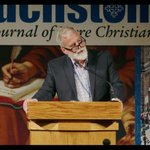
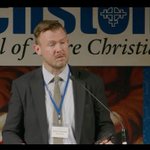
November/December 2026 should be arriving in mailboxes soon!
This issue features several outstanding talks from our recent conference, adapted for publication, along with much more.
Subscribe today to begin your subscription with this issue: touchstonemag.com/subscribe

One week to go! Join us in Oak Brook for “City on a Hill? Christians in America at 250.” Register today: thetouchstoneconference.com/…

"We Christians have the best story. We have an image, not of the machine as a top-down thing with cogs all doing their parts, but of a body with a head that unites the members so that it is all well-fitted in love. That is the best story, right? So how do we enact it? By doing three things—remembering, celebrating, and creating—and by doing them together."
touchstonemag.com/archives/a…

From the 2025 Touchstone conference. The 2026 conference is less than a month away! Register here: thetouchstoneconference.com/…

. . . The tomb was empty on Easter morning not because the body had been sublimated into a higher frequency, but because it had walked out, whole, leaving the linen folded on the shelf.
The transhumanist wager inverts this entirely. Where Augustine sees the body as the site of redemption, the uploading enthusiast sees it as the obstacle. . . .
touchstonemag.com/archives/a…

The website is live. The speakers are announced. Registration is open.
Join us September 24–26 as we celebrate Touchstone's 40th anniversary.
thetouchstoneconference.com/
A Faithful Church Is a Trembling Church
Scripture speaks plainly: “The fear of the Lord is the beginning of wisdom” (Prov. 9:10). What happens, then, when this fear is lost?
touchstonemag.com/archives/a…
The May/June issue of Touchstone ships next Monday.
Featuring Matthew Crawford’s 2025 conference talk.

Looking for Jacobs: Some Trivial Thoughts on the Study of Philosophy touchstonemag.com/archives/a…

Jonathan Pageau explains that sin can stretch things to a certain distance, but at some point the rubber band will snap back. You cannot have an entire cultural enterprise based on rebellion. Eventually, reality will reassert itself. And that is happening now.

Paul Kingsnorth warns that the end game of technology is the replacement of nature with the machine.

Beauty is ennobling, sometimes in dramatic ways, but much more often in subtle ways. And it inspires us to aspire to things that are worth aspiring to—things that, like beauty itself, are intrinsically and inherently enriching of the human spirit. touchstonemag.com/archives/a…
"This rebellion against reality is the logical outworking of the deepest premises of our culture—which is why the crisis of authority in our politics and our society is not just a political and social crisis, but a metaphysical and religious one."
touchstonemag.com/archives/a…

"We’re born into a world that comes ready-made. Whatever we make of it must fundamentally be in keeping with it; otherwise, it is questionable." C. R. Wiley
touchstonemag.com/archives/a…

Self-discipline is essential to the Christian life, and technological ascesis of one form or another is particularly important in our constantly evolving world. touchstonemag.com/archives/a…
"They who deny that there is any special beauty in man and woman...will eventually miss or deny the beauty of much less obviously beautiful things, and the profundity of much less obviously profound mysteries."
touchstonemag.com/archives/a…
Touchstone retweeted

For years, those of us at Salvo Magazine and our sister publication, Touchstone, have argued that the problem with libertarian freedom is its outcome-neutrality, devoid of any substantive vision for human flourishing (for example, see the concerns Robin Phillips raised in 2022: salvomag.com/post/a-classica…). Although critics have dismissed this as a caricature, the libertarians at Reason Magazine are now attacking Mark Meador, President Trump's nominee for FTC commissioner, for—guess what?—advocating human flourishing. Among Meador's alleged offenses is a tweet in which he explicitly connected freedom to human flourishing (see nitter.cf/mrmeador/status/181770…) These libertarians, with their simplistic "Big Government = Bad / Big Business = Good" ideology, demonstrate how the value-neutral freedom of the Enlightenment has left us with a purely negative conception of liberty predicated on the belief that it is good to avoid ever saying what is good. But as Robin Phillips pointed out in the article referenced above, "To be truly free to pursue goodness, one must engage in the arts of self-limitation and restriction, both at the level of the individual and society. But the libertarian conception of freedom subverts this by undermining our ability to inquire, not simply about The Good, but even about the ends of human society. This leaves us with a type of political nihilism where one is expected to do politics without knowing the ends for which the polis even exists."
This quoted post is unavailable.
"[George] Washington believed that a shared national sense of morality was the essential element of a free society, and that a moral standard based on human reason alone was no standard at all."
touchstonemag.com/archives/a…
