

https://nitter.cf/t.co/Oo8lxxe7HZ, https://nitter.cf/t.co/G3A5MWZcaK, https://nitter.cf/t.co/2xjg5QwnW9. Biohacker since 1998 - Top 50 Longevity Leaders Author, 56 books, 5 languages 2M members
SF, Paris, Corsica
Joined October 2007
- Tweets14.5K
- Following578
- Followers13K
- Likes6.2K


A Love Letter to Substack
Dear Substack,
I found you while I was in the throes of a battle with Meta, the social media giant that seems determined to control information, often in ways that leave you wondering how its decisions are made.
I see violent videos. I see half-naked women dancing. Apparently, that’s fine.
Then I see friends discussing vaccines, and whether or not I agree with them is not the point, and they get banned. I see people talking about research into ivermectin’s potential cancer-fighting properties, and they get banned.
Then, one day, I talked about peptides.
Peptides have been used in medicine for more than a century. Insulin is a peptide. I wasn’t selling them. I wasn’t promoting a peptide company. I wasn’t even encouraging people to take them. My content was purely educational.
But I made one terrible mistake: I showed a needle.
Meta immediately banned me from Lives and advertising for 365 days, accusing me of “promoting illegal substances.”
That accusation is simply not true. Obviously.
I appealed. Surely, I thought, someone would review the content and realize I had done nothing wrong.
To no avail.
Banned.
Well, I have written 56 books, translated into five languages. I am in the Hall of Fame at Hartford University. I speak at conferences around the world, and I have been sharing health and wellness knowledge for more than 30 years.
Meta does not get to dictate how or where I share that knowledge.
That is when I turned my attention to Substack.
I wanted a platform where writing still mattered. Where freedom of expression was respected. Where I could share my work in both French and English, directly with people who genuinely wanted to learn.
Setting up my account was remarkably easy, and I began publishing content about longevity, everything from supplements and hyperbaric chambers to Klotho and the latest scientific research.
Granted, my community includes around 400,000 people on Instagram, 500,000 on Facebook, and more than a million people who have bought my books, and so far, I have brought “only” 32,000 subscribers to Substack.
But these are 32,000 highly motivated people who want to learn, question, experiment and grow.
There are no passive lurkers here.
Progressively, Substack has become my home.
Yesterday, I hosted my first Substack Live. I already know what I will improve next time, and I have decided to host two Lives every week: one in French and one in English.
I publish through two distinct homes, biohacker.fr/ and valbiohacker.com/. This allows me to share cutting-edge longevity knowledge adapted not only to two languages, but also to two different cultures.
And honestly?
I am in love with Substack.
I know some people criticize the way Notes have taken over the feed. I understand the frustration of seeing a flood of AI-generated Notes alongside essays that authors may have spent two months researching and writing.
I don’t have the solution.
But to me, Substack has become something extraordinarily rare: an unpolluted, laser-focused and intelligent social network.
Here, people don’t simply “follow” me. They subscribe to me.
That distinction matters.
Subscribing means: “I am actively choosing to hear from this person. I am giving them my email address. I am making space for their ideas.”
That deliberate commitment to knowledge is what makes Substack different.
And the fact that Substack invited its bestselling writers to a gathering this week, and yes, I was thrilled to be among them, shows just how different the company is from Meta, which could not care less whether Valérie Orsoni ever hosts another Live on its platform.
So this love letter is simply my way of saying:
Thank you.
Thank you for creating a place where writers, researchers, educators and curious minds can build something meaningful.
Thank you for helping us turn readers into communities.
Thank you for giving us a home.
With gratitude🙏

1
284
A few years back I created a PROJECT on Claude called IMMURTALITA (immortality in Corsican). I pay the highest level possible so that I get the highest level of complex tasks. Now I have an agent as well (created by me). I have uploaded ALL my health reports whether it is an MRI, a blood test or an hearing test. All my supplements, how I feel, everything. This is the only way AI can health with health. Never just upload a blood test into ChatGPT and ask “how is my health doing”, I can guarantee you the response will NOT BE ACCURATE.
2
161
The Longevity Genetic Exception Hiding in Amish Blood
One extended family, one broken gene, and a story that took 25 years to become a longevity study... and yes it is me on the cover photo :)
==> valbiohacker.com/p/the-longe…
#amish #longevity #genes

1
123
Grip strength is not THE longevity marker.
Neither are VO₂max, the Old Man Test, cystatin C below 0.75, extremely low visceral fat, or HbA1c below 5%.
Stop torturing yourself over one number.
They all matter. None is destiny. Longevity is the full picture.
2
212

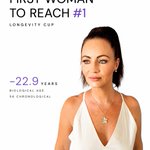
I never thought — not in a million years — that I'd be sitting at #1 on the Longevity Cup leaderboard (@LongevityWorldC )
Not because I doubt my protocols. Because of the math.
I'm post-menopausal. My competition is thirty years old, exceptionally healthy, no kids yet, carrying three decades fewer life stressors than I am. That is not a level playing field, and I knew it going in.
So when I submitted my results and saw −22.9 biological years on the Bortz Clock, I just sat there staring at the screen.
My numbers aren't the best across the board — far from it. But people keep asking what changed, and the honest answer is narrow: inflammation has been my number one issue for as long as I've been tracking it, and for months I stayed away from AGEs religiously. Not casually. Religiously.
It showed.
Now for the part nobody posts about.
I've just spent a month in Bora Bora — surrounded by smokers, eating food cooked in sunflower oil, living well outside my own rules. I can guarantee my labs won't hold. I'll retest when I get home, and I'll tell you exactly how long it takes me to climb back.
Honestly? That second number matters more than the −22.9. Anyone can look good after a perfect month. Resilience is how fast you recover from an imperfect one.
instagram.com/p/DcB7WF9CXUX/…
🤖 Made with AI


How to Thicken Skin, Plump It, and Reduce Wrinkles, and the $10 serum that will transform your skin
For the past 30 years I have tried pretty much everything under the sun to fight aging skin, even salmon sperm!
valbiohacker.com/p/how-to-th…
#biohacking #skincare #antiaging @AcornBiolabs

138
Top Biohacker: How I Improved My Eyesight by 18% & Reversed Cellular Aging? Oh, and at 56m I don't need reading glasses
youtu.be/ygwyHM45810?si=xUB7…
@PutneyJock51393
158
Yoo-hoo… We have officially passed 32,000 subscribers across valbiohacker.com and biohacker.fr, my two platforms dedicated to longevity, functional medicine, and biohacking! 🎉
I launched this adventure 18 months ago.
I first experimented with Instagram subscriptions, but the format did not allow me to explore these subjects in enough depth. Then I created a private Telegram group… but once again, it was not quite suited to the kind of content I wanted to share.
And then I discovered Substack.
I had finally found my home.
A space where I can publish truly comprehensive deep dives, analyze the latest research, share my experiments and biomarkers, and produce cutting-edge content that is difficult to find elsewhere—with the depth and freedom these subjects deserve.
People sometimes ask why valbiohacker.com and biohacker.fr do not appear in Substack’s Top 100 or other rankings, despite our growing community. To be completely honest, I still do not really understand how those rankings are calculated.
But ultimately, this is the ranking that matters most to me: 32,000 curious and engaged people who want to understand their health more deeply.
So, thank you. Thank you for reading, sharing my work, asking questions, challenging ideas alongside me, and helping this wonderful community grow.
This is only the beginning. 🧬
ps : to support my work, you can like, comment, restack, share and of course sign up. This is how we make on the substack radar!

151
High HbA1c ? What if you are not pre-diabetic and in fact, super healthy?
Explore a largely ignored fact with me in my latest article : valbiohacker.com/p/hba1c-at-…
#biohacking #bloodtest #biohacker #valbiohacker #valerieorsoni
🤖 Made with AI

112
Proud to join the Life Extension Board at @LifeboatHQ !
Cannot wait to contribute and help the world be a better place.
valbiohacker.com/p/proud-to-…
🤖 Made with AI

3
91
Excited to be part of your Life Extension Board!
and yes, people can find my cutting edge content on valbiohacker.com

Valerie Orsoni @valerieorsoni, author of “The Ultimate Guide to Biohacking and Longevity”, joins our Life Extension Board. lifeboat.com/ex/bios.valerie…

1
120
Great take on Urolithin A and heart failure prevention

Urolithin A reversed multiple indicators of heart failure in a mouse model through two completely independent mechanisms working simultaneously. One activated mitophagy, the cellular cleanup system, in heart tissue. The other remodeled the gut microbiome to reduce toxic lipid accumulation. This mouse study is one of the clearest demonstrations yet of how this longevity molecule works at multiple tissue levels.
This study focused on heart failure with preserved ejection fraction, or HFpEF. In heart failure, the heart can still pump normally, but it can't relax and fill with blood between beats. That's the preserved ejection fraction part: pumping strength looks fine on imaging, but diastolic function is impaired.
Nearly half of all heart failure cases fall into this category, and until recently, almost no treatments existed that target the underlying mechanisms.
Urolithin A, or UA, is one of the most studied healthspan-promoting compounds in longevity research. Scientists are particularly interested in its ability to activate mitophagy, the selective removal of damaged mitochondria. But most studies focus on single tissues or isolated pathways. This study mapped how UA works across multiple biological systems simultaneously.
Mitophagy is the cell's quality control system for mitochondria. Damaged mitochondria get tagged, engulfed by autophagosomes, and degraded in lysosomes. The components are recycled. Mitochondria are the energy factories of cells. When they malfunction, they produce less ATP and generate more reactive oxygen species, which damage surrounding cellular structures.
In heart cells, that translates to impaired contraction and relaxation.
In HFpEF, mitophagy becomes impaired.
Damaged mitochondria accumulate, and cellular function deteriorates.
The question was whether activating mitophagy could reverse this at the tissue level, not just in isolated cells.
Researchers used a two-hit mouse model to simulate HFpEF. Mice received a high-fat diet combined with L-NAME, a compound that inhibits nitric oxide production.
The combination produces obesity, hypertension, metabolic dysfunction, and the characteristic features of HFpEF: diastolic dysfunction, cardiac hypertrophy, and fibrosis. Then UA was administered at 250 or 500 mg/kg/day mixed into the diet during disease progression.
Key findings from the study:
• UA improved diastolic function, measured by echocardiography parameters that assess how well the heart fills between beats
• Cardiac hypertrophy and fibrosis were significantly reduced, confirmed by histological staining and quantification
• Mitochondrial ultrastructure was restored, with improved morphology visible on electron microscopy
• Mitochondrial respiration increased, measured using Seahorse metabolic flux analysis
• Mitophagy flux was restored, confirmed using ratiometric mt-Keima reporter imaging
The first mechanism worked through AMPK and mTOR signaling. UA activated AMPK, an energy sensor that gets activated during metabolic stress. Simultaneously, it inhibited mTOR, a growth regulator that suppresses autophagy when nutrients are abundant. By shifting both simultaneously, UA changed the cellular balance toward autophagy initiation.
That triggered ULK1-dependent autophagy, the upstream kinase that starts autophagosome formation.
The result was enhanced mitophagy: more damaged mitochondria were tagged and cleared, improving the overall quality of the mitochondrial population in heart tissue.
The second mechanism was completely independent of the first.
UA remodeled the gut microbiome composition. The researchers used shotgun metagenomics and plasma lipidomics to show this changed circulating ceramide levels.
Ceramides are fatty molecules that build up in blood during metabolic stress. When ceramide levels stay elevated, they accumulate inside cells and cause lipotoxicity, essentially poisoning cells with excess fat. Lower ceramide levels meant less toxic fat stress on heart cells. This pathway worked through the gut, not through direct effects on heart tissue.
Two independent pathways converging on the same outcome: improved mitochondrial quality control from enhanced mitophagy in cardiac tissue, and reduced metabolic stress from lower ceramide accumulation via gut microbiome changes.
Together, they reversed multiple features of HFpEF in this mouse model.
The tissue-level effects were measurable across multiple dimensions. Not just improved mitochondrial function, but reduced fibrosis, decreased hypertrophy, and restored diastolic function. That's structural remodeling, not just metabolic improvement.
Researchers also tested UA on human induced pluripotent stem cell-derived cardiomyocytes using single-nucleus RNA sequencing. The treatment attenuated fibrosis-related gene expression programs, suggesting the anti-fibrotic effects observed in mice might translate to human cells. But that's still cell culture, not human patients.
Limitations of this study are serious here.
This was a mouse study using a specific two-hit model.
Mice aren't humans.
Their metabolic rate is higher, their lifespan is shorter, and their cardiac physiology differs in meaningful ways.
The HFpEF model used here captures some features of the human disease but not the full heterogeneity seen clinically, where HFpEF arises from multiple comorbidity combinations.
The doses used, 250 to 500 mg/kg/day, are substantially higher than what's been tested in human trials. This is a major point. Typically, we dose humans with 500mg total (I take 500mg/day).
Scaling those doses to humans isn't straightforward.
Pharmacokinetics differ across species. The gut microbiome composition also varies widely between individuals and isn't replicated in mice.
UA was administered during disease progression, not after HFpEF was fully established. That's a prevention or early intervention model, not a reversal model. Whether UA can reverse established fibrosis and diastolic dysfunction in late-stage disease remains unknown.
The study also doesn't address whether the benefits persist after UA treatment stops, or whether continuous supplementation would be required. Duration of effect matters for any potential therapeutic application.
Still, the mechanistic findings are significant.
This study demonstrates that a single longevity compound can work through multiple independent pathways simultaneously, producing coordinated tissue-level effects that go beyond what either mechanism would achieve alone. The mitochondrial quality control improvements and the gut microbiome-ceramide axis modulation weren't redundant. They were complementary.
UA is already in human trials for muscle function and aging-related outcomes.
Whether those trials will extend to cardiac endpoints, and whether the multi-dimensional effects seen in mice translate to meaningful improvements in human HFpEF patients, depends on studies that haven't been conducted yet.
The decisions about whether mitophagy-enhancing therapies become part of HFpEF treatment will depend on whether the effects observed in this mouse model can be reproduced in human clinical trials with doses that don't produce adverse effects and improvements that are clinically meaningful, not just statistically significant.
Right now, we know that UA activates multiple independent pathways that converge on tissue-level improvements in a mouse model of heart failure. Whether that becomes a treatment option for the millions of people living with this condition is the next question.

3
153
Online bullying can destroy your sleep youtube.com/shorts/xaZWj7wOc… via @YouTube
1
127
Valerie Orsoni retweeted

New Longevity World Cup podcast 🎧
@nopara73 sits down with Valerie Orsoni for a full conversation on the show.
youtu.be/ZQuOu-I9IPM

Of course, this post is flagged by Meta who blocks me let and right as soon as I speak about peptides.
Are unregulated peptides really more dangerous than approved drugs?
I have personally used peptides—including BPC-157, TB-500 and Epitalon—for over 22 years.
That gives me extensive N=1 experience. It does NOT prove they are safe for everyone—and my protocols are not recommendations.
The numbers shown here require context:
💊 Acetaminophen: ~3,000 deaths/year worldwide is a conservative extrapolation because global reporting is incomplete.
💉 Insulin + GLP-1 drugs: ~10,000 is an order-of-magnitude estimate—not a confirmed causal count. Insulin data largely reflect hypoglycemia-related mortality; GLP-1 figures include adverse-event reports, which do not prove causation.
🧬 BPC-157, TB-500, KPV, etc.: fewer than 20 fatal reports identified—but weak surveillance and the absence of a reliable user count mean this does NOT prove safety.
Few reports ≠ zero risk.
A report ≠ proven causation.
These figures are not directly comparable.
My point? Regulation should follow evidence—not fear.
Main sources: Zaccardi et al., Diabetologia (2018); Rzepczyk et al., Toxics (2022); Yuan et al., Forensic Science International (2024); Chidiac et al. (2023); NIH/StatPearls; FDA FAERS; UK MHRA; ONS.
⚠️ Educational content only—not medical advice.
#peptides #bpc157 #tb500 #epitalon #biohacking #longevity #valbiohacker
🤖 Made with AI

1
201
Valerie Orsoni retweeted
The handle is @valerieorsoni 👏

Valerie Orsoni takes 1st place in the Ultimate League
Her Bortz Age is 33.26 (22.96 years younger) and her Pheno Age is 42.16 (14.05 years younger).
Full result
longevityworldcup.com/athlet…