YieldFlow (@yieldflowdotcom) header
YieldFlow (@yieldflowdotcom) profile picture

YieldFlow is a decentralized, secure and anonymous platform for yield farming. Discord: https://nitter.cf/t.co/rKqa2Ol5Aa

Joined March 2023
Photo by YieldFlow (@yieldflowdotcom)Photo by YieldFlow (@yieldflowdotcom)Photo by YieldFlow (@yieldflowdotcom)Photo by YieldFlow (@yieldflowdotcom)Photo by YieldFlow (@yieldflowdotcom)Photo by YieldFlow (@yieldflowdotcom)Photo by YieldFlow (@yieldflowdotcom)Photo by YieldFlow (@yieldflowdotcom)Photo by YieldFlow (@yieldflowdotcom)Photo by YieldFlow (@yieldflowdotcom)
💰 Just holding @USDC ? You get cash-like safety… but almost zero upside. Manually juggling perps, bridges, routing & settlements every day? No thanks. YVault lets your @USDC actually work — through a clean, non-custodial smart contract vault on @HyperliquidX .
4
1
9
522
On Friday, November 6, India's crypto exchange Unocoin spotted unauthorized activity in its systems. It asked its custody providers, BitGo and Fireblocks, to freeze its accounts. BitGo says its freeze worked as intended. It wasn't enough. On Monday, November 9, Unocoin detected more unauthorized activity and suspended all services, customer logins included. On November 12 it found outgoing transactions from one of its BitGo Ethereum addresses. How, if the account was frozen? Per BitGo, the wallet was a 2-of-3 multisig: Unocoin held the user key and the backup key, BitGo held the third, and any two keys can move funds. The transactions were signed with Unocoin's own two keys and broadcast directly on-chain. A freeze at the provider stops the provider from signing. It can't stop whoever holds the other two keys. Unocoin says more than 90% of customer crypto is in cold storage. In a November 14 update it estimated the loss at about $200,000, said it will cover that from its own funds, and was still working to restore services. The plain-English lesson: whoever controls the keys controls the coins. On an exchange, that's the company, so its key security is your security. YVault on YieldFlow works the other way around. You connect your own wallet (Ledger and Trezor included) and deposit from it. No account, no KYC. Audited smart contracts do the allocating and compounding, and withdrawals go back to the same wallet. No deposit or withdrawal fee; performance and management fees apply. The honest flip side, and BitGo's own advice: keep the backup key apart from day-to-day signing. In self-custody that's your seed phrase: offline, away from the device you use every day. Smart contracts carry their own risk too. CertiK has audited YieldFlow three times; that's a track record, not a guarantee. Non-custodial. No KYC. Follow @yieldflowdotcom for the next post. app.yieldflow.com/vault
130
The YTRADE NFT unlocks extra grid-bot features from your own wallet. The collection page lists what a holder gets: • auto-compound on grid bots • run 2 or more grid bots at once • access to all listed coins and tokens • access to optimal trading strategies The page states a limited collection of 2,000 NFTs, sold at $1,200 each (as shown on November 8). Buy Now routes to Magic Eden on Arbitrum. Non-custodial. No KYC. None of that is a return promise. Grid bots can lose money. Fees, strong trends and smart-contract risks apply. An NFT does not guarantee earnings. Which of those four unlocks would matter most for how you run a grid? yieldflow.com/nfts/ytrade
22
A straight weekend question for the replies: where do the coins you are not actively trading sit right now? EXCHANGE if a platform holds them. WALLET if they sit in your own wallet, idle. WORKING if they are allocated to a vault, pool, grid or staking position. No wrong answer. WORKING means allocated — not that the position was necessarily earning. Each strategy carries risks; returns are not guaranteed. If they sit on an exchange or sit idle, the setup can look different. A YVault puts coins to work from your own wallet. A YTrade grid bot works a chosen price band. A Uniswap V3 position on Arbitrum can earn swap fees only while the price is in range and volume is flowing, with the bot handling range borders. Non-custodial. No KYC. No deposit or withdrawal fees; performance and management fees still apply where the protocol charges them. Reply with one word. app.yieldflow.com
1
1
43
Last Saturday, November 7, the Crypto Fear & Greed Index printed 25 — Extreme Fear. Sentiment readings move. Staking rewards on YieldFlow are a separate mechanism: you join transparent, pooled node pools straight from your own wallet. No hardware to run, no KYC, no exchange holding the keys. Rewards can build while you claim them in the app — they are not guaranteed, and they are not a promise that rewards never pause. Shown on the staking page on November 8 (captured display values; rates vary): MATIC 5.56% APY FTM 4.5% APY AAVE 2.22% APR SAND 10.87% APR Shown November 8. Rates vary; check current rates in the app. Staked assets retain price risk and smart-contract risk. Non-custodial. No KYC. Your coins stay in your control. Would you rather wait for a sentiment reading to turn, or decide whether pooled staking from your own wallet fits the risk you will actually take? app.yieldflow.com/staking
1
1
43
Last week (November 4–6), Bitcoin covered a lot of ground. CoinGecko's hourly data had it as high as $80,668.65 on November 4 and as low as $75,457.89 on November 6. That's about $5,211, a 6.5% decline from the high. That band is an illustrative look at a completed range — not a current trading recommendation and not a prediction of the next move. A directional trader needs to be right about the next move. A grid aims to capture moves within a chosen range. YTrade is YieldFlow's on-chain grid bot. You pick the pair and set a lower and an upper price. The bot works the levels in between: it buys as price falls through them and sells as price climbs back, aiming to capture the spread on each round trip. Set the band too tight and price walks out of it. Set it too wide and fewer trades fill. Strong trends can leave the bot holding a falling asset or missing a rally outside the band. Fees and smart-contract risk apply. Returns are not guaranteed. It runs in audited smart contracts, not on an exchange account. CertiK has audited YieldFlow three times, most recently the GridBot in June 2025. That is a factual audit history, not a safety guarantee. Non-custodial. No KYC. No deposit or withdrawal fees. If you were studying that November 4–6 band as history, where would you have put the lower and upper bounds — and why? app.yieldflow.com/grid-bot-o…
1
1
47
In a Uniswap V3 pool, liquidity is concentrated inside a price range you choose. Swap fees accrue to that position only while the market price sits inside the range and swaps are happening. Step outside the range and fee accrual pauses until the price comes back — or until the range is moved. A fixed range may need monitoring and adjustment. Last week (November 4–6), ether moved about $212 on CoinGecko's hourly data, from as high as $2,435 down to as low as $2,223. A move that size can walk a narrow band out of the market. YieldFlow's Uniswap V3 auto-farming on Arbitrum is built around that job. You add liquidity from your own wallet; the bot manages the range borders. Automation does not mean continual earnings. Fees still depend on being in range and on real swap volume. Impermanent loss and smart-contract risk apply. Returns are not guaranteed; you can lose principal. Both tokens in a pair carry price risk. Non-custodial. No KYC. No deposit or withdrawal fees. Other protocol fees may apply; check product terms. Would you rather reset a V3 range by hand, or have a bot handle the borders while you still size the risk yourself? app.yieldflow.com/liquidity-…
38
A YTrade grid bot's performance fee is charged on earnings, not on the notional size of each trade. That difference is easy to miss until you run the numbers. Here is a clearly labeled example — not a real result, not a forecast. Suppose a grid bot earns $100 in a period: • 0 YFLOW staked → 29% of earnings → $29 fee (you keep $71) • 1,000 YFLOW staked → 21% of earnings → $21 fee (you keep $79) • 10,000 YFLOW staked → 17% of earnings → $17 fee (you keep $83) These amounts are after the performance fee only; they exclude other applicable costs and the cost and price risk of acquiring and staking YFLOW. Those percentages come from the YieldFlow whitepaper's YTrade fee table. The same table also lists 25% at 100 YFLOW and 14% at 100,000 YFLOW. The fee falls as you stake more YFLOW; it is still a cut of earnings only when there are earnings. The whitepaper describes holder voting; the homepage lists governance launch on the 2026 roadmap. What you can check on the fee schedule today is the table above. Buy YFLOW on Uniswap (USDT → YFLOW on Arbitrum) from the app. Max supply: 25,000,000. Non-custodial. No KYC. This example is illustrative only. Grid returns are not guaranteed. Fees, strong trends and smart-contract risks can cause losses. What fee tier would you actually underwrite before turning a bot on? app.yieldflow.com/yflow
1
2
38
US spot Bitcoin ETFs recorded $411.9 million in net outflows on Friday 6 Nov (Farside Investors). BlackRock's IBIT alone was -$403.0 million. The day before was -$430.2 million. After two heavy outflow sessions and a week that swung Bitcoin from above $80,000 toward about $75,000, direction remains uncertain. Monday brings the first regular US trading session after the weekend. A grid aims to capture moves within a chosen range. YTrade is YieldFlow's on-chain grid bot. You pick the pair and set a price band. It buys as price falls through each grid level and sells as price climbs back, aiming to capture the spread on each round trip. No calling Monday's ETF print. It runs in audited smart contracts, not on an exchange account. CertiK has audited YieldFlow three times, most recently the GridBot in June 2025. Non-custodial. No KYC. Your wallet in, your wallet out. Returns are not guaranteed. Fees, strong trends and smart-contract risks can cause losses. Explore YTrade’s grid setup: app.yieldflow.com/grid-bot-o…
33
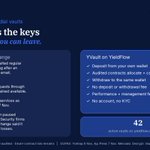
On Friday, November 6, South Korea's GOPAX exchange halted regular withdrawals and trading after it received an email from a group claiming to have hacked it. The exchange said it had not yet verified whether the threat was genuine. No loss of customer assets had been reported. It disabled regular withdrawals on its website and app, paused deposits, and began moving hot-wallet assets into cold storage. Manual withdrawal requests through customer support remained available. As of Saturday morning, November 7, regular trading and withdrawals remained frozen, and GOPAX had not set a date to resume. That's the trade-off of keeping coins on an exchange. The platform holds the keys, so the platform decides how — and how quickly — you can leave, even as a precaution. On Monday, November 2, Brazil's Mercado Bitcoin paused deposits and withdrawals after wallets across at least 10 blockchains were drained. Security firms estimated the loss at more than $40 million. The exchange said it would cover customer losses. YVault on YieldFlow works the other way around. You deposit straight from your own wallet. No account, no KYC, no exchange balance in the middle. Audited smart contracts do the allocating and the compounding. CertiK has audited YieldFlow three times. When you want out, your funds go back to the wallet they came from. No deposit fee, no withdrawal fee. Performance and management fees still apply. No contract is risk-free, and nobody should promise you that. But trusting audited code on-chain is a different bet from trusting a company's hot wallet. Non-custodial. No KYC. The homepage showed 42 active vaults on November 8. If your exchange paused regular withdrawals tomorrow, could you still move the coins you're not trading? app.yieldflow.com/vault
99
Friday's risk-off: Bitcoin fell 6.3% to $75,565.6 by 01:06 ET (Investing.com, 6 Nov). Ether −8.6%. Prices swung hard. Staking rewards keep building from your own wallet. Pooled node staking on YieldFlow. No validator. Non-custodial. No KYC. Your wallet in, your wallet out. app.yieldflow.com/staking
1
2
43
Quick Sunday check: how much of your portfolio is sitting in stablecoins right now? October was a month that made parking look smart. Bitcoin fell about 7% and ether about 16%, based on CoinGecko's hourly prices. If you moved to USDT or USDC along the way, that was a reasonable call. But a parked stablecoin earns nothing on its own. In the US, that's now being written into the rules: under the OCC's final rule implementing the GENIUS Act, payment stablecoin issuers can't pay holders interest or yield just for holding. It takes effect January 18, 2027. So any yield has to come from putting the dollars to work. On YieldFlow, you can pair a stablecoin with ETH in a Uniswap V3 pool on Arbitrum, and the bot manages the range for you. Shown in the app on November 1: ETH-USDT 71.19% APY ETH-USDC.E 59.64% APY Be clear about the trade. These pools hold ETH as well as the stablecoin, so you take on ETH price exposure. That's the cost of earning swap fees instead of zero. Non-custodial. No KYC. No deposit or withdrawal fees. What is your stablecoin doing this weekend? app.yieldflow.com/liquidity-…
1
1
50
Election week, settled in one word. Here's what the week packed in: Sunday, November 1: Binance began phased withdrawals, after more than two days of frozen withdrawals following the $6.3 billion hack. Tuesday, November 3: the US midterm elections. Thursday, November 5: the Bank of England's rate decision. Friday, November 6: the US October jobs report. So, one word in the replies. What did your crypto do through all of it? WATCHED if it sat still. TRADED if you were in and out. EARNED if something in your setup paid you. If you answered WATCHED, next week can look different. A YTrade grid bot works a price band around the clock. A Uniswap V3 position on Arbitrum earns swap fees while the bot handles the range. Both start from your own wallet. Non-custodial. No KYC. No deposit or withdrawal fees. app.yieldflow.com
1
1
60
This week Bitcoin briefly fell toward $75,700 early Wednesday as midterm results came in, then held above $80,000 on Thursday — around $80,484 in the Asian morning, up 5.7% over 24 hours (CoinGecko via CoinDesk, 5 Nov), then slipped back to about $75,500 on Friday (Investing.com, 6 Nov). Spot crypto ETFs are closed this weekend. On-chain utility is not. After a volatile week, what a token does matters more than the headline. $YFLOW is wired into measurable YieldFlow mechanics. Stake it, and the performance fee on your YTrade grid bot goes down. From the whitepaper fee table: 0 YFLOW: 29% 1,000 YFLOW: 21% 10,000 YFLOW: 17% The same stake raises the affiliate rebate, from 0% to 12% at 1,000 YFLOW. The YFLOW page lists the levers: fee reduction, affiliate share, platform share, lock duration. Buy USDT → YFLOW on Uniswap (Arbitrum) from the app. Lock on the Stake tab while pools are open: 1 year at 2% APY, 2 years at 3.5%, 3 years at 5%. Max supply: 25,000,000. Non-custodial. No KYC. Your wallet in, your wallet out. app.yieldflow.com/yflow
25
BLS published the US October jobs report at 13:30 UTC today. A YTrade grid works a price band through moves like that. The YTRADE NFT (2,000 NFTs at $1,200 each) unlocks auto-compound and multiple bots from your wallet. Non-custodial. No KYC. yieldflow.com/nfts/ytrade
1
1
32
On the night of October 29, the Binance hacker rushed to swap stolen stablecoins into ETH. Bitquery tracked what that hurry did: ETH in Uniswap's main WETH/USDT pool ran up to 38% above the market, and the hacker lost about $119 million against market prices. Every one of those swaps had someone on the other side. In a Uniswap pool, that's the liquidity: people who deposited two tokens and earn a fee on each trade that runs through their range. Calm trades and panicked trades alike. You don't need a crisis for that model to work. You need trading volume, and liquidity that stays in range. The second part is where most people give up, and it's the part YieldFlow automates. You add liquidity to a Uniswap V3 pool on Arbitrum, and the bot manages the range borders for you. Fees build while you get on with your day, and you claim them in the app. A few of the pairs shown in the app on November 1: ZRO-ETH 525.98% APY ETH-GMX, two separate pools: 216.18% and 208.96% APY Rates move with volume, and both tokens in a pair carry price risk, so check the live number and size your position accordingly. Non-custodial. No KYC. No deposit or withdrawal fees. Have you ever been the liquidity, or always the one swapping? app.yieldflow.com/liquidity-…
73
Today is Bank of England decision day. The MPC publishes its November Monetary Policy Summary and Bank Rate decision at 12:00 UK time. Bank Rate goes into that meeting at 3.75%. Markets will spend the afternoon arguing about what it means for risk assets. Coins that sit idle in a wallet while that argument runs earn nothing. YVault on YieldFlow is for the coins you're not trading. You deposit straight from your own wallet. Audited smart contracts do the allocating and the compounding. When you want out, your funds go back to the wallet they came from. No account, no KYC, no exchange balance in the middle. No deposit fee, no withdrawal fee. No contract is risk-free. But this is a different setup from parking coins where someone else holds the keys. CertiK has audited YieldFlow three times. Non-custodial. No KYC. Your wallet in, your wallet out. app.yieldflow.com/vault
1
2
57
The US midterms were yesterday. The crypto industry spent over $170 million on them, CoinDesk reports, mostly through the Fairshake PAC. Yet in a May survey of 1,000 registered voters, just 1% called crypto a top issue. So: does who runs Congress change how you use crypto?
49
Midterm results have been coming in since polls closed overnight. The US jobs report lands Friday at 13:30 UTC. Bitcoin trades through all of it. So here's a calmer question for the week. Not where price goes next, but where it has been. In October, CoinGecko's hourly data had Bitcoin between $76,360 (October 30) and $86,790 (October 2). That's a range of about 13.7% in one month. It opened October near $83,576 and closed it near $77,447. A directional trader needs to be right about the next move. A grid bot needs a range. YTrade is YieldFlow's on-chain grid bot. You pick the pair and set a lower and an upper price. The bot works the levels in between: it buys as price falls through them and sells as price climbs back, aiming to capture the spread on each round trip. Set the band too tight and price walks out of it. Set it too wide and fewer trades fill. Last month's range is a sensible place to start thinking, not a promise about this one. It runs in audited smart contracts, not on an exchange account. CertiK has audited YieldFlow three times, most recently the GridBot in June 2025. Non-custodial. No KYC. No deposit or withdrawal fees. What range would you give Bitcoin for November? app.yieldflow.com/grid-bot-o…
38
Midterm day: the NYSE closes at 21:00 UTC tonight, while the US is still voting. Uniswap on Arbitrum never closes. YieldFlow V3 manages your range so your liquidity can earn swap fees 24/7. Non-custodial. No KYC. Your wallet in, your wallet out. app.yieldflow.com/liquidity-…
1
1
54
Today Americans vote. Polls start closing tonight, and the results will come in through the night. In DeFi, the vote belongs to token holders. That's the idea behind $YFLOW. The YieldFlow whitepaper calls YFLOW the protocol's governance token, designed so every address holding it can vote on proposals. The voting system is on the 2026 roadmap. But YFLOW already does something you can measure. Stake it, and the performance fee on your YTrade grid bot goes down. From the whitepaper's fee table: 0 YFLOW staked: 29% 1,000 YFLOW: 21% 10,000 YFLOW: 17% The same table raises your affiliate rebate as you stake more, from 0% to 12% at 1,000 YFLOW. The YFLOW page sums it up: fee reduction, affiliate share, platform share, lock duration. Buy it on Uniswap, USDT → YFLOW on Arbitrum, straight from the app. Then lock it on the Stake tab while the pools are open: 1 year at 2% APY, 2 years at 3.5%, 3 years at 5%. Max supply: 25,000,000. Non-custodial. No KYC. If you held YFLOW, what's the first proposal you'd vote on? app.yieldflow.com/yflow
1
1
40