

A global tribe for food, forest and culture 🫘 Building cyberstigmergy for the win 🐝 Agroforestry education URL and IRL 🐜
latam
Joined October 2021
- Tweets5.3K
- Following3.8K
- Followers3.9K
- Likes12.2K



Pinned Tweet
#Cyberstigmergy
#AgroforestryAlliance
This is what I came here for. Building capacity and reputation within a Rooted Network Society.
Educating tech folks via social media.
Incubating many micro rural ventures to become cosmolocal, maybe with @revnets or @higrowfi
However im broke and working mostly offline now
🐜 🌱


Five principles for syntropic technology
1. From extraction to regeneration. Build systems that replenish more than they consume - ecological, economic, cultural, and social.
2. From concentration to distribution. Put intelligence, capital, and agency into more hands. A healthy civilization has many centers of creativity, not one center of control.
3. From optimization to aliveness. Optimize not simply for efficiency, engagement, or GDP, but for human flourishing, biodiversity, community resilience, and meaningful agency.
4. From competition to coordination. Develop tools that help people discover shared interests, steward commons, and achieve outcomes none could produce alone.
5. From technological inevitability to collective choice. Technology is not destiny. We can consciously choose what we build, who governs it, and what it serves.
AgroforestDAO retweeted

Ernst Götsch, a Swiss visionary, bought land in the south of Bahia, Brazil, in the ’70s. The land was so dry and exhausted that the locals had abandoned it.
He had previously studied ecology and had a hypothesis that by respecting how nature evolves and mimicking it, he could create productive ecosystems superior to industrial farms. He called the system syntropic agriculture.
He bought the land cheaply, together with a friend so they could afford it, and started working on it, faithfully following his hypothesis. His intent was to create a polyculture farm mimicking the original forest, from which he would sell cacao.
However, after a couple of years, a disease that was killing cacao trees all over Brazil spread fast, causing a complete loss on the other cacao farms.
His friend became desperate, because he didn’t believe what Ernst was sure about: that by creating polyculture forests, they would have natural resilience against any disease.
In other words, the lack of vitality—the trees’ and plants’ vulnerability to pests and diseases—was caused by planting them in isolation, in a monoculture system.
His friend could not be convinced, and Ernst managed to get enough money to buy his friend’s part of the farm and avoid losing it.
He was rewarded by observing that his hypothesis was right: all cacao trees in Brazil were affected, except his.
Systems that mimic natural ones have a strong immune system.
He then continued to steward the agroforest and started to harvest cacao in due time—arguably the finest cacao in the world.
He dedicated 70% of his land to conservation and is living proof that we can produce what we want while saving our home planet.
As long as we grow plants in isolation, with a “monoculture = efficiency” mentality, we’ll keep creating vulnerability to pests and diseases.
The solution is to mimic nature, creating polycultures that build their own immunity.
That can also be done in home gardens.

AgroforestDAO retweeted

Chestnuts from a 100 year old American chestnut tree in Higginsville MO, sent to me by @ThrivingTheFut, he got them from Jeff the Donkey Guy. I’ll definitely be growing these at my place and if they are successful will be distributing their offspring in 10-15 years

AgroforestDAO retweeted

We did it! We got the rest of the black locust planted today all 120 trees before lunch with a group of motivated community volunteers.


AgroforestDAO retweeted

🏅 1st Place: Interlock
Interlock is an open-source safety layer for AI-controlled robot arms. It checks every command before execution, combining collision detection, real-time monitoring, and human override to make AI-driven robotics safer.
👨💻 Built by: @theZeugh
🔗 Check the demo: devfolio.co/projects/interlo…


AgroforestDAO retweeted

two frontiers im pondering as we quietly lay tracks for @gitcoin next chapter
1. syntropic financing
2. consumer adoption
syntropy is the tendency of living systems to organize toward greater order, energy, and complexity over time.
eg a forest doesn't just sustain itself, it gets richer over time. richer (in the context of nature) = more soil, more species, more energy turned into resilience each season.
syntropic financing asks what capital would look like if it behaved the same way. money that leaves every system it touches more alive than it found it, where the returns are measured in the health and growth of the whole.
consumer adoption is how that reaches the world. the primitive only matters if ordinary people touch it through products they'd already choose, no ideology required.
get both right and you have an engine that grows the system and an on-ramp wide enough for everyone to climb aboard.
I think in 2019-2022 @gitcoin was a leader in both. QF is a small glimmer of what syntropic financing can be. and @gitcoin was one of the first consumer dapps ppl used.
I think that in 2027+ it is possible we could do it again at a larger and more holistic scale - tho success is not guaranteed, this is an aspiration and a target, imo we are well positioned to take another shot.
Have you seen these around @deeparocks ?

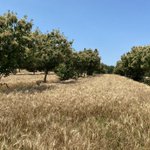
This mediterranean Morus negra has the potential to bring fruit juice back in schools and sustain a agroforest venture in the mid term.
If we coordinate to build these kind of systems. Let's allign @KokonutFDN, @regenavocado, and other forest gardeners out there!
Meanwhile make sure to add mid term harveets to your system. This one is 3 years old. They are like nurses to your nurseries, specially during these so common heatwaves
#Cyberstigmergy 🐜 🌱
The syntropic system planted on the school's outdoor court is growing
There's rice, beans, sugar kane, herbs, banana, juçara, and more

AgroforestDAO retweeted
Five principles for syntropic technology
1. From extraction to regeneration. Build systems that replenish more than they consume - ecological, economic, cultural, and social.
2. From concentration to distribution. Put intelligence, capital, and agency into more hands. A healthy civilization has many centers of creativity, not one center of control.
3. From optimization to aliveness. Optimize not simply for efficiency, engagement, or GDP, but for human flourishing, biodiversity, community resilience, and meaningful agency.
4. From competition to coordination. Develop tools that help people discover shared interests, steward commons, and achieve outcomes none could produce alone.
5. From technological inevitability to collective choice. Technology is not destiny. We can consciously choose what we build, who governs it, and what it serves.
if i could update greenpilled: how crypto could regenerate the world in 2026, i’d change one word in the subtitle:
how techne could regenerate the world.
techne = the ancient greek idea of craft, art, skill, and technology woven together. its the design space of technology writ large, esp outside of what shareholder capitalism can produce.
crypto was never really the point. it was one tool in a much larger toolbox. and as it matures and gets more captured by elites/institutions, the opportunity is bigger than blockchains: ai, crypto, local manufacturing, networks, energy, biology, art, governance, somatics, mindfulness, community.
the question i’m interested in now isn’t “how do we use crypto to regenerate the world?” it’s: how do we wield our tools, together, in service of regenerating life? in service of the creation of syntropy?
AgroforestDAO retweeted

BOAR: AI local e offline no celular, com AAmandita da Zcash Brasil e Vladd nitter.cf/i/broadcasts/1Oxwbnkmd…

🌴 🫐
Interesting research article that I contributed to:
Full article: The juçara countermovement in Brazil: agroecology and the (en)countering of commodification tandfonline.com/doi/full/10.…

AgroforestDAO retweeted
> be me
> spend years in the trenches of blockchain governance and system architecture
> realize onchain governance isn't a voting problem, it's an adversarial security problem
> 2023: build our first agentic harness before the buzzwords existed ("AI Delegates")
> quickly realize data is missing and raw LLM execution without guardrails is a security nightmare
> everyone hypes raw model benchmarks while ignoring deterministic state and verification
> pivot deep into d/acc, verifiable workflows, and real infrastructure security
> now: indexing, treating, and enriching governance and access control data into verifiable agentic interfaces
> realizing digital coordination actually works when you make it defensive and resilient
we're finally building the right layer 🫡


This thread is a portrait of what I call #Proofofsyntropy. Actually it's more a movie than a phot.
Stewardship is something to build reputations on
🌱