

AlphaSense is the AI platform behind the world’s most important decisions, from Wall Street to corporate boardrooms. (Not investment advice)
US | EU | IN
Joined September 2013
- Tweets21.5K
- Following529
- Followers36.4K
- Likes2.5K




Pinned Tweet
Today, AlphaSense launches SuperAnalyst, our next-generation agent powering high-value financial and strategic workflows.
For 15 years, we've built the trusted intelligence system for the investors and operators making the biggest bets in business. Now SuperAnalyst takes it further, operating 24/7 to plan, execute, monitor and update complex workflows using AlphaSense intelligence, customer context and purpose-built AI infrastructure.
Trusted by the world's largest enterprises, SuperAnalyst brings together domain-specific AI, our Context Graph and purpose-built Skills to execute workflows at superhuman speed, grounded in trusted intelligence. Read the full announcement: alpha-sense.com/press/alphas…
AlphaSense retweeted

With the help of @AlphaSenseInc's SuperAnalyst we curated recent expert call content on AI infrastructure.
See our SuperAnalyst dashboard ⬇️
alpha-sense.com/data-center-…
The common thread is that hyperscalers still borrow cheaply and are shifting more of their builds into JVs and leases, while lenders are pulling back from neoclouds.
$NVDA $CRWV $META

Interview with an industry expert on why GPU utilization decides whether to build or buy AI inference ( $AMZN, $MSFT, $NVDA ):
- The expert says GPU compute is not elastic the way CPU compute is. The cloud providers the expert's team works with always want a three-year contract, and adding GPUs in the middle of a quarter takes at least a month of lead time on top of that commitment. Because of the three-year commitment, the team keeps paying for a GPU instance even after turning it down, so it has had to build engineering optimizations to work around the problem, while CPU capacity can simply be bought on spot instances when demand rises.
- The expert sees GPU availability by region as a real challenge, since GPUs are only available in certain regions while customers span hundreds of regions, so routing traffic is difficult, especially when customers have data retention or locality requirements. To manage this, GPU capacity is spread across AWS, Azure, and GCP in selected regions.
- According to the expert, $SNOW works with the three largest cloud providers in a rough 60%, 30%, and 10% split, with AWS clearly dominant. $SNOW is described as one of AWS's largest customers, having announced a $6 billion renewal of its spending commitment on its latest earnings call.
- On hardware, everything is $NVDA, with the mix chosen on price-performance. Today it is mainly A10G, H200, and B200, plus some L40s. Asynchronous batch workloads open up better optimization opportunities, since they favor throughput over latency, so L40s can replace B200S for much better price-performance. The dollar split across SKUs is dynamic and subject to change.
- The expert notes that GPU utilization depends on product usage, which fluctuates a lot. According to him, break-even sits at about 40% average utilization, counting quiet periods like nights and weekends, with business hours running higher. At that level, a company is indifferent between sending inference requests to Bedrock and self-hosting an open-weight model, and anything above it makes self-hosting more favorable, which makes utilization the key lever in the build-versus-buy decision.


If you are interested in more interviews like this one, make sure to follow us! Stop second-guessing. Whether you're tracking market shifts, exploring new opportunities, or need clarity on complex decisions, our extensive transcript library and custom expert calls give you the competitive edge you need. ⬇️
alpha-sense.com/trial-reques…
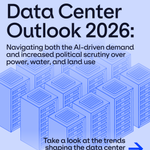
Data centers are racing to double capacity by 2030, but the grid can't keep up.
Interconnection waits of five to seven years, a 57 GW power shortfall, and public backlash against new data center builds are key constraints. But the upside is real for operators who can navigate these complex headwinds to understand where the market is heading.
Read our breakdown of the key data center trends for 2026 and beyond. alpha-sense.com/resources/re…

What if every banker on your team could cover 15% more companies?
A major investment bank put AlphaSense through its paces over many months and proved it could increase average coverage by up to 15%, making its bankers much more efficient.
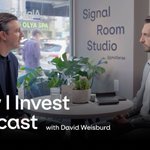
Chris Ackerson sits down with David Weisburd to discuss how AI is changing the analyst role, why vertical AI can outperform general-purpose models in financial research and why proprietary data may become one of the most important competitive advantages in AI.
Watch now ⤵️
youtube.com/watch?v=i9z8ndjE…
AlphaSense retweeted

Today @AlphaSenseInc, we're launching the SuperAnalyst MCP, putting SuperAnalyst to work wherever your agents run. Rather than one more data pipe for your agents to brute force there way across, SuperAnalyst MCP allows them to delegate research to the world's best research system - thousands of sources, market-leading search, purpose built AI - so your agent spends its tokens on the problem you actually want solved.
We measure dramatically higher quality at 3x lower cost with ever claim cited to its source down to the sentence.
SuperAnalyst has become the platform for technology teams to automate complex investment research and build institutional grade market intelligence applications. Highly encourage folks to check it out: alpha-sense.com/resources/pr…

Your AI agent is only as good as the content it can access.
The fix isn’t a better prompt. It’s an agent built on the latest models and grounded in broker research, expert calls, and earnings transcripts, with every output traceable to its source. Seamus McAvoy, Senior Customer Success Manager, shares the question he hears the most in conversations about AlphaSense.
Your team is tracking 10 competitors, but only 2 changes will affect next quarter’s pipeline.
Sorting signal from noise doesn’t have to mean a week of manual work. SuperAnalyst, our always-on agent, builds cited battlecards, flags where new evidence contradicts your existing positioning, and keeps context across sessions. That frees CI teams to judge what matters instead of stitching outputs together.
See how our own CI team uses it, from competitor dashboards to seller-ready talk tracks: alpha-sense.com/resources/pr…

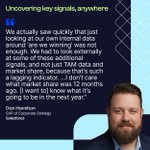
👀 Win rates tell you what happened. They won’t tell you what’s coming.
The good news: you CAN see what’s next. At #AlphaSummit 2026, leaders from Salesforce, Pfizer, Mondelez, CAVA, Keurig Dr Pepper, and sweetgreen shared how they look beyond internal metrics, test each signal against other data, and turn confirmed insights into action.
See how corporate teams are putting AI to work, with takeaways from the sessions: alpha-sense.com/resources/re…

AlphaSense retweeted

Spotted in @AlphaSenseInc's agent stack: Temporal coordinating the lifecycle of secure MicroVMs 👀

When an AI agent escapes the sandbox, the first question should be: who left the door open?
For firms in regulated industries, giving agents broad access to data and tools has meant weighing what they can do against what they might reach. SuperAnalyst runs every session in its own isolated MicroVM, with scoped credentials, a sealed network, and identity checks at each step, so one failed control never becomes a breach.
Lawrence Sica, VP of Product Security, and @chaschwartzz, Staff Software Engineer, walk through each layer of SuperAnalyst’s sandboxing architecture and how they work together to keep agent workloads contained. Read the full article: alpha-sense.com/resources/te…

AlphaSense retweeted

Interesting look under the hood of @AlphaSenseInc's SuperAnalyst.
Lots of thoughtful engineering in how they give agents the tools to do useful research while keeping access tightly controlled.
And when speed matters, they route requests to open-weight models on Cerebras.
Worth a read if you’re building agents:
When an AI agent escapes the sandbox, the first question should be: who left the door open?
For firms in regulated industries, giving agents broad access to data and tools has meant weighing what they can do against what they might reach. SuperAnalyst runs every session in its own isolated MicroVM, with scoped credentials, a sealed network, and identity checks at each step, so one failed control never becomes a breach.
Lawrence Sica, VP of Product Security, and @chaschwartzz, Staff Software Engineer, walk through each layer of SuperAnalyst’s sandboxing architecture and how they work together to keep agent workloads contained. Read the full article: alpha-sense.com/resources/te…
AlphaSense retweeted

Trust in enterprise-grade AI rose from 72% to 78% this year. Yet 62% of AI decision-makers say they’ve been burned by inaccurate AI output.
For insurance professionals, an inaccurate answer can carry significant consequences.
On Thursday, Nov 5, I’m joining Sina Falaki for a Society of Insurance Research webinar on moving from AI adoption to accountability, including a practical framework for building research workflows you can stand behind.
Register: sirnet.org/Shared_Content/Ev…
@AlphaSenseInc

“My team actually came to me begging for AlphaSense.”
Hear Tricia Tolivar, CFO at CAVA, and Katie Fogertey, CMO at Gluck & Co. LLP, sharing how AlphaSense is not just for financial services: law firms and fast-casual restaurants alike are migrating to decision-grade AI. #AlphaSummit
Former $META employee on why almost any task that involves the web will be moving to a personal assistant ($AMZN, $WMT, $GOOGL):
- The expert sees the personal agent space as both powerful and valid, with the experience finally coming together after years of startups trying to build a true assistant. Competition is heating up, with $GOOGL rumored to release its own agent around the end of the year.
- According to the expert, retention will depend on the experience, specifically how autonomously an agent handles a task and how well it remembers a user and improves its suggestions over time, while security and privacy remain the current gap. All models are still early on what the expert calls the personal chores quality benchmark, so it is too soon to say which product wins.
- The expert's view is that almost any task that involves interacting with the web will move to a personal assistant, and that this applies to personal assistants in general, not only Muse. Muse is described as surprisingly good at handling these kinds of web-based tasks end to end once it is connected to a user's accounts, which the expert sees as an early sign of where the whole category is heading.
- The expert says Muse works almost entirely through the browser, operating websites the way a person would, with only an estimated 1-2% of interactions using APIs, mostly for services like Gmail. As far as the expert has seen, $META's partnerships with retailers like $WMT are not special integrations but a way to avoid blocks, such as the one $AMZN put on Muse, and to make retailers' sites discoverable by agents, since the models are already very good with the browser.
- The expert highlights $AAPL as the company best placed to benefit from personal agents on the consumer side, if it executes well. Its strong brand, the richest user base in the world, and an ecosystem that ties everything together give it a real edge, with the iPhone as the most powerful device to host an agent. However, the expert is unsure $AAPL can deliver, noting that it has been nearly silent on this for three to four years and that agents would erode its App Store revenue as apps become less necessary.


If you are interested in more interviews like this one, make sure to follow us! Stop second-guessing. Whether you're tracking market shifts, exploring new opportunities, or need clarity on complex decisions, our extensive transcript library and custom expert calls give you the competitive edge you need. ⬇️
alpha-sense.com/trial-reques…
📈 Your AI spend keeps climbing, but is your AI earning it's keep?
You’re not alone in wondering. At #AlphaSummit 2026, leaders from Lanai, D. E. Shaw Ventures, and Talos Asset Management mapped what comes next: AI managed like a workforce, expertise connected across teams, and an agent for every name in coverage.
Get all 5️⃣ predictions for what’s next for AI, straight from the stage as authored by our own Sarah Hoffman: alpha-sense.com/resources/re…

Same prompt. Two tools. One clear winner.
Hear Ian Lieberman of Talos Asset Management discuss running SuperAnalyst side-by-side with a different AI tool, and why he advises analysts to “use your imagination”. #AlphaSummit
AlphaSense retweeted
$ANT has a few key debates going into its IPO: whether Claude can keep its price premium, whether margins hold up against the compute commitments, and whether the Q3 slowdown was a blip. @AlphaSenseInc Expert Insights and Channel Checks address questions around pricing and how deeply Claude is getting into enterprise customers.
Check out our primer, built by SuperAnalyst: alpha-sense.com/anthropic_da…
And the Channel Check Breakdown Here: research.alpha-sense.com/com…
solana:56DeqXiADWY2Y3iD8pdbpTi9jhXXneofTY5dp4Xjpump $GOOG $META

AI makes market research 10x faster. But speed only matters if you ask the right question.
Research that once took hours can now happen in minutes, but faster answers are only useful if teams know which signals matter, how to frame the right strategic question, and where human judgment still needs to lead.
Join @ServiceNow's Leon Markham and our own Sina Falaki to learn how strategy teams turn signals into executive-ready points of view. alpha-sense.com/resources/we…
