

A fully open access, peer-reviewed journal published jointly by Oxford University Press and the International Society for Computational Biology.
Joined April 2021
- Tweets2.8K
- Following667
- Followers5.2K
- Likes278






📊 Recently published in Bioinformatics Advances: “BRAID: Batch-effect Reconciliation and Anomaly-aware Imputation for Data”
Find it here: doi.org/10.1093/bioadv/vbag3…


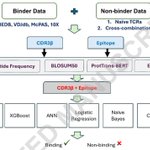
🔬 Just published in Bioinformatics Advances: “TERP: Machine learning-based prediction of TCR-peptide binding specificity”
Explore the paper: doi.org/10.1093/bioadv/vbag3…

Benchmarked against six published tools across four negative-sampling and data-split settings, it outperformed them in all four, including on unseen epitopes, where most others struggled.
🧬 New research in Bioinformatics Advances: “Joint representation of spliced and unspliced RNA expands information content in single-cell expression data”
Find it here: doi.org/10.1093/bioadv/vbag2…

Concatenation raised revealable rank over the summed matrix in all four datasets, with spliced and unspliced factors enriching for distinct nascent and steady-state programs.
💻 The singlet R package is available at github.com/zdebruine/singlet. Reproducibility code at github.com/Arya-86/nmf-splic….

🧬 Just published in Bioinformatics Advances: “maasMDS: Multi-array ancestry-specific multidimensional scaling for fine-scale structure in admixed genomes”
Read it here: doi.org/10.1093/bioadv/vbag2…
Authors include: @BarrabesMiriam, @alexGioannidis

maasMDS calibrates ancestry-specific distances across genotyping arrays before embedding, so cohorts merge without collapsing to shared SNPs. In Indigenous American cohorts, it traced minority European segments to their colonial sources and resolved geographic clines across Mexico and Central America that imputation and Procrustes alignment obscured.
💻 maasMDS is available in the snputils package at github.com/AI-sandbox/snputi…

🔍 New study in Bioinformatics Advances: “GlycoAudit: Structural joinability and annotation degree shape glycan–agent relation ranking”
Explore the paper: doi.org/10.1093/bioadv/vbag3…

A strict contract retained just 44 of 173 resolved SugarBind glycans; WURCS led Recall@5 (0.688), but a popularity control scored higher on MRR and average precision.
💻 GlycoAudit’s source code, benchmark manifests, and reproducibility scripts are available at github.com/leochenminrui/Gly…

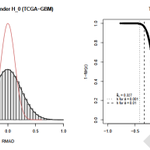
📊 New paper in Bioinformatics Advances: “False discovery rate control for sparse correlation matrix”
See it here: doi.org/10.1093/bioadv/vbag3…
Authors include: @ariefgusnanto

This paper introduces scfdr, an R package that applies an empirical Bayes framework to threshold sparse correlation matrices by controlling the false discovery rate among retained non-zero correlations, rather than minimizing the Frobenius norm. Across simulated data and real glioma and glioblastoma gene-expression datasets, this FDR-based approach retained more true correlations than the Frobenius-minimizing RSC method, with greater sensitivity for moderate correlations.
