

Dad | Senior learning scientist @Alphaschool | Professor @AcademicaUoAS | UNESCO SoL editorial board | Dubliner | Keats devotee | persecuted by an integer
London, England
Joined July 2009
- Tweets28K
- Following3.6K
- Followers42.2K
- Likes69.4K






Pinned Tweet
NEW POST: The Untold Story of Bloom's Taxonomy and the Pyramid That Never Was.
- link in reply ⤵️
🤖 Made with AI

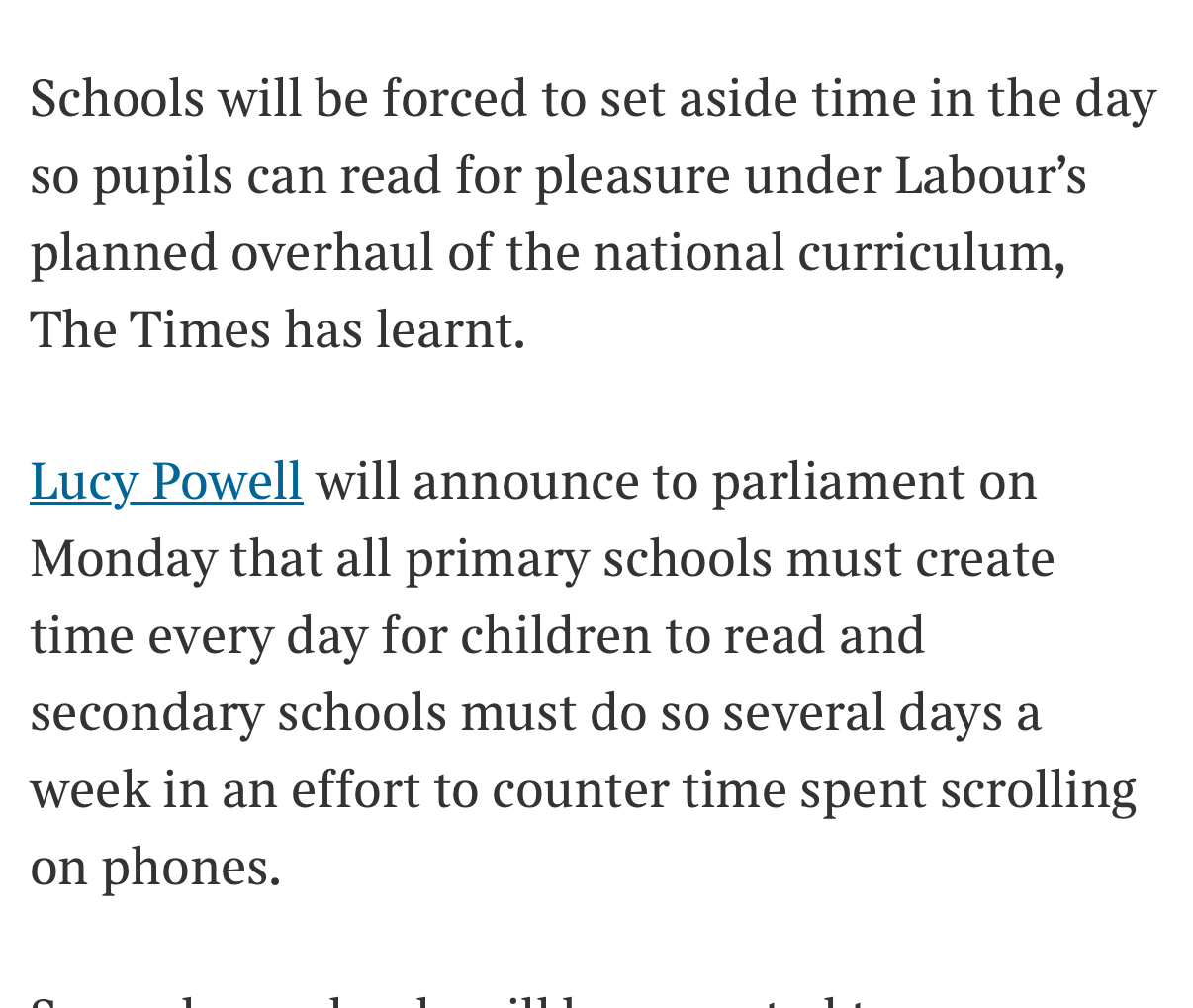
“Read for pleasure” and "forced" in the same sentence.
thetimes.com/uk/education/ar…
Carl Hendrick retweeted

Interesting to see an academic with an h-index of 3 setting themselves up as some kind of arbiter of research excellence.

I have a question @Education_NI 🙋♀️
What “evidence” is @tombennett71 using for his behaviour approaches?
I can’t find any of his own research in this field.
Ta 😉
Carl Hendrick retweeted

All 3 of my kids started behind at Alpha, even the 99th-percentile one.
83% of new students do. About 12 weeks in, they've made up 3.3 grade levels each.
#AlphaSchool

Carl Hendrick retweeted

"The coming revolution in education is not coming from AI but from increasing parental agency in how their children are educated."

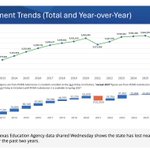
These numbers are just extraordinary. In Texas, public school enrolment has fallen by nearly 212,000 students in two years. To put that in perspective, Texas has lost more students in the past two years than it did during the pandemic. Why?
Declining birth rates account for a lot of this, but the proportion of school-age children attending public schools has fallen from 89% to 85% since 2019. That is huge. Falling birth rates alone cannot explain that shift.
The coming revolution in education is not coming from AI but from increasing parental agency in how their children are educated. AI will just accelerate that. The next frontier in school choice is not choosing between schools, but choosing between fundamentally different conceptions of how schooling operates.
What many in education are missing is that parents are not as interested in legacy models of schooling as the people who work within it are. Many parents are choosing micro-schools, home-schooling, hybrid schooling and other alternative models. AI has the potential to make many of these previously niche models viable at scale.
One big reason why technology in education failed is because it tried to bolt on tech to existing models of schooling, but with AI there is now there is the possibility of building entirely new institutional structures that look completely different from what we typically have envisioned as the school.
The history of education has been built around educators as gatekeepers: tests, grading, reports, curriculum design etc. AI is about to blow that whole system wide open whether we like it or not.

Carl Hendrick retweeted

Okay, damn... I played a lot of Civ2 growing up.
It had an in-built encylopedia, and it's probably the game from which I learnt the most about history and the real world.
But there were hard limits. The civilisations were real, their historic leaders, the wonders, the types of building, government, religion, and so on, and you got a rough idea of 'what has existed' from it all, but none of it was accurate or detailed, and absolutely nothing was contemporary, even when you made it to the 90s (and beyond). I learnt names, but still struggled with the concepts.
The physical geographies were randomised, and of course any starting civilisation could grow to dominate, otherwise how is it a game if it just replicates reality?
But... there's something here. This has potential. Games absorb so much attention for many of us; I've been arguing to put more real-world learning into games since I worked for Blizzard twenty years ago.
Recently I've heard @jliemandt argue something similar; I've seen a lot of tweets from @MrZachG and @C_Hendrick arguing that technology is finally in a place to rethink the school experience in a meaningful way; yesterday I saw a post from @HFletcherWood describing the moment @NickGibbUK asked @lehain whether his class would know the capital of Sudan (he had no idea) - and it strikes me that this kind of knowledge transmission is what the Civ2 was best at, while it's exactly what so many school systems have become so bad at - proactively rejecting it.
From my own time in school, I never learnt 'traditional' facts about kings and queens and countries and capitals and imports and exports because, much as @daisychristo has explained, and recently repeated when speaking with @amolrajan (brilliant, brilliant interview, in case you missed it): people have grown to believe that 'facts prevent understanding.'
I listened to one of the most fascinating podcasts from Sam Harris yesterday, interviewing @jimmycarr - Jimmy Carr's ideas on almost everything were inspired (Jimmy for PM!), he is one of the smartest people I've heard speak... and yet he too fell for the line: 'you can just look up the facts these days, kids don't need to know them, that's not what transfers' (not a judgement, I fell for it first).
Only long after I left school did I learn many of those so-called 'traditional' facts. I literally sat down and memorised them, straight lists, through apps like Memrise. My mind was expanded as a result. I saw the world differently. I've heard @SCottinghatt say that she wants her own children to see a world she's blind to, and @jon_hutchinson_ paraphrase that as knowledge allowing us to perceive everything around us drenched in meaning. This was exactly my experience. It seems prosaic, but facts matter.
And now I look at this pet project on the side, one day of work, and we a tool that might do what many school systems gave up on decades ago: transmitting vast quantities of facts that are useful for positioning ones self in, and navigating, space and time.
It's not yet a game. Civ works because it starts off very, very small, and allows you to build the world, bit by bit, until you are sucked in completely: just one more turn! It manages cognitive load.
I look at this Civ-Map-of-the-US and I'm already overwhelmed. There would be a lot of work to marry game design with learning design to turn this into something that can do both. The competing objectives and cognitive stimuli of learning and gaming left me cooling on the idea of building learning into games a long time ago. It's hard to do either well, and to do both at once is an order of magnitude or two harder still. Traditionally, the cost of building a game or a learning app is so high that it isn't worth the risk.
Now, for the first time, we might just have the technologies we need to make it happen.

I asked Claude to populate a Civilization-style game map with real data from the US. Opus 5.5 downloaded and parse a ton of public data and 7 hours and 45K lines of code later... it works :)
- 31 real data sources including Census, BEA, BLS, EIA, NOAA, USGS, DoD, NPS, FAA, FEMA, CDC...
- Real elevation, land cover, GDP, jobs, power plants, mines, ports, airports, bases, parks, universities, freight flows, disasters; all reconciled onto one 25 km hex grid.
- The data is converted into Civilization language, e.g. Gold yield is GDP. A city's districts are its real industry specializations: San Jose gets a Campus, Detroit is "Motor city". Its citizens are its real workforce: 1 in 4 San Jose workers are engineers, coders or scientists, against 1 in 14 nationally. Wonders are chosen by published rules, such as national parks by visitor numbers and universities by R&D spending, etc etc.
- 19 lenses (income, degrees, faith, disasters…), a City View for 524 metros, and nine advisors plus an Explorer. The Explorer turns any column for any of 3,100+ counties into a table and scatter plot, linked to the map.
- Claude decided to skip a few states and territories sry
- Built using Claude Code desktop app, Opus 5.5 on medium and turning on ultracode.
It's deployed here: karpathy.ai/usaciv/ and the "?" has the source link too. I don't exactly know where I was going with this but it's really fun to browse and play with. Possibly it can be expanded or built into a game. I only have half of my weekly Claude quote left though so someone else will have to take over :D. Claude also made a trailer:
Carl Hendrick retweeted

I think that the idea that, like medicine, education can be an evidence-based profession rests on a rather profound misunderstanding of the nature of the enterprise. Teaching will never be an evidence-based profession, as I explain here: youtube.com/watch?v=6ajXJ6Pb…

Carl Hendrick retweeted

Microsoft is such an interesting case. One part on the frontier of AI, to the point where the CEO of AI is warning of the threshold we are crossing, while much of the rest of the organization is the torchbearer for the “AI is a just a normal technology like any other” camp.

Carl Hendrick retweeted

What if we can’t scale great teaching?
sarahsiakew.substack.com/p/a…
Carl Hendrick retweeted

“The coming revolution in education is not coming from AI but from increasing parental agency in how their children are educated. AI will just accelerate that. The next frontier in school choice is not choosing between schools, but choosing between fundamentally different conceptions of how schooling operates.”
I have been waiting for 40+ plus years to give families & educators real choices supported by effective tools. What I love about this post is the acknowledgment that there are fundamental differences in what people want from their schools.
These numbers are just extraordinary. In Texas, public school enrolment has fallen by nearly 212,000 students in two years. To put that in perspective, Texas has lost more students in the past two years than it did during the pandemic. Why?
Declining birth rates account for a lot of this, but the proportion of school-age children attending public schools has fallen from 89% to 85% since 2019. That is huge. Falling birth rates alone cannot explain that shift.
The coming revolution in education is not coming from AI but from increasing parental agency in how their children are educated. AI will just accelerate that. The next frontier in school choice is not choosing between schools, but choosing between fundamentally different conceptions of how schooling operates.
What many in education are missing is that parents are not as interested in legacy models of schooling as the people who work within it are. Many parents are choosing micro-schools, home-schooling, hybrid schooling and other alternative models. AI has the potential to make many of these previously niche models viable at scale.
One big reason why technology in education failed is because it tried to bolt on tech to existing models of schooling, but with AI there is now there is the possibility of building entirely new institutional structures that look completely different from what we typically have envisioned as the school.
The history of education has been built around educators as gatekeepers: tests, grading, reports, curriculum design etc. AI is about to blow that whole system wide open whether we like it or not.
Carl Hendrick retweeted

This demonstrates something I’ve observed for a while now: Americans’ relationship with school and education is in play. We are failing to reckon with it.
Disruption isn’t coming. It’s here.
These numbers are just extraordinary. In Texas, public school enrolment has fallen by nearly 212,000 students in two years. To put that in perspective, Texas has lost more students in the past two years than it did during the pandemic. Why?
Declining birth rates account for a lot of this, but the proportion of school-age children attending public schools has fallen from 89% to 85% since 2019. That is huge. Falling birth rates alone cannot explain that shift.
The coming revolution in education is not coming from AI but from increasing parental agency in how their children are educated. AI will just accelerate that. The next frontier in school choice is not choosing between schools, but choosing between fundamentally different conceptions of how schooling operates.
What many in education are missing is that parents are not as interested in legacy models of schooling as the people who work within it are. Many parents are choosing micro-schools, home-schooling, hybrid schooling and other alternative models. AI has the potential to make many of these previously niche models viable at scale.
One big reason why technology in education failed is because it tried to bolt on tech to existing models of schooling, but with AI there is now there is the possibility of building entirely new institutional structures that look completely different from what we typically have envisioned as the school.
The history of education has been built around educators as gatekeepers: tests, grading, reports, curriculum design etc. AI is about to blow that whole system wide open whether we like it or not.
Carl Hendrick retweeted

Carl here is an example of one of the microschools I was referring to this morning, longview.
They do a short school day and week, in (tracked) mixed age groups focusing on math, reading, writing, science, and computer science. A "fundamentally different conception of how schooling operates" indeed
long-view.com/our-model
Carl Hendrick retweeted
Nice point, and one that @daisychristo, I, and many others have been pushing for a long time. The best way to get good at something is not always (or even often?) to practice the thing you want to get good at.
Brilliant from @Rachel_deSouza

🗣️ "We need to rip up the contracts"
Children's commissioner for England, @Rachel_deSouza, tells @SophyRidgeSky & @WilfredFrost that the education system in the Young Offender Institution is "shocking" ⬇️
12
1,745
Carl Hendrick retweeted

This is absolutely excellent @Rachel_deSouza! I felt slightly emotional, the media performance is stunning, the message is front and centre and is delivered passionately with clarity. £28k for a few hours?!?! Education has been a success here and heads know how to get stuff done.
🗣️ "We need to rip up the contracts"
Children's commissioner for England, @Rachel_deSouza, tells @SophyRidgeSky & @WilfredFrost that the education system in the Young Offender Institution is "shocking" ⬇️
Carl Hendrick retweeted

🗣️ "We need to rip up the contracts"
Children's commissioner for England, @Rachel_deSouza, tells @SophyRidgeSky & @WilfredFrost that the education system in the Young Offender Institution is "shocking" ⬇️
Carl Hendrick retweeted
Skepticism-Based Education
A strong list of teaching practices that are accepted or pushed with very little demand for evidence, from @rpondiscio:
1. Minimally-guided instruction is how kids learn best.
2. Teacher-created lessons are more effective than “out of the box” curriculum
3. Effective Teachers Differentiate Instruction
4. Good teachers make learning engaging and continually innovate.
5. Teach transferable skills, not just content.
👇
Carl Hendrick retweeted

I’ve been following @teachthemx3 for about a year. Last year she was documenting the nightmare experience of being a public school teacher. Last spring she was considering opening up her own microschool. I forget when she joined @Alphaschool , but she has been painfully honest in documenting her experiences as a public school teacher.


These numbers are just extraordinary. In Texas, public school enrolment has fallen by nearly 212,000 students in two years. To put that in perspective, Texas has lost more students in the past two years than it did during the pandemic. Why?
Declining birth rates account for a lot of this, but the proportion of school-age children attending public schools has fallen from 89% to 85% since 2019. That is huge. Falling birth rates alone cannot explain that shift.
The coming revolution in education is not coming from AI but from increasing parental agency in how their children are educated. AI will just accelerate that. The next frontier in school choice is not choosing between schools, but choosing between fundamentally different conceptions of how schooling operates.
What many in education are missing is that parents are not as interested in legacy models of schooling as the people who work within it are. Many parents are choosing micro-schools, home-schooling, hybrid schooling and other alternative models. AI has the potential to make many of these previously niche models viable at scale.
One big reason why technology in education failed is because it tried to bolt on tech to existing models of schooling, but with AI there is now there is the possibility of building entirely new institutional structures that look completely different from what we typically have envisioned as the school.
The history of education has been built around educators as gatekeepers: tests, grading, reports, curriculum design etc. AI is about to blow that whole system wide open whether we like it or not.
Carl Hendrick retweeted

I love how much thought Wendy puts into her child’s education. There’s so much discussion about the “apps/AI” and the “2-hour” learning component at Alpha schools. But what keeps me *consistently* interested in their journey is the remarkable people (like @teachthemx3 , @gtmom , @mbateman , @nateliason , @CameronSorsby ) they have attracted to work with them and their students.
An easy way to practice math is with board games. We create variations of the rules to practice different math operations.
To practice subtraction, we play Chutes and Ladders in reverse. We start at the finish line and every spin moves you backward. The player who makes it to start first wins.
For multiplication, we multiply the dice in Monopoly.
We have also used multiple dice in Monopoly to practice adding sets of numbers. This is an easy way to teach “10 pairs” to help with mental math.
My 4yo also likes creating his own board game and using little character figures like Bluey.
We spend a lot of time playing board games during breaks. Anyone else make up their own rules to traditional games?