

We're an independent, non-profit, non-governmental org, committed to preventing and resolving deadly conflict. Our staff: https://nitter.cf/t.co/Vwe0Tws68C
Worldwide
Joined December 2008
- Tweets61.4K
- Following2.6K
- Followers241K
- Likes10.3K




Pinned Tweet
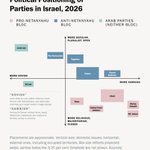
For anyone confused by Israel's election results, here is a useful chart showing where the parties stand on big issues: crisisgroup.org/qna/middle-e…

NOUVEAU RAPPORT | Centrafrique : contenir les effets de la guerre au Soudan
La guerre au Soudan alimente l’activité criminelle des groupes armés dans le nord-est de la Centrafrique, frontalier du Darfour, alors que les partenariats extérieurs de Bangui mettent à mal sa neutralité dans le conflit. Le gouvernement centrafricain et ses partenaires devraient agir sans tarder pour réduire les violences.
crisisgroup.org/fr/rpt/afric…

🎧 NEW EPISODE | War & Peace
Guest host @FabienneHara speaks with @mprelec about contrasting election results in Serbia and Bosnia, what they mean for both countries’ political futures and how shifting U.S. and EU approaches are reshaping the region.
crisisgroup.org/pod/europe/s…

After decades of conflict, achieving durable peace in Indian- administered Kashmir and preventing a resumption of war with Pakistan will require bold moves that look beyond counter-insurgency and central government diktat. Our new report explains how this can be done. crisisgroup.org/rpt/asia-pac…

Both countries should have an interest in preventing local disputes from drawing them further toward confrontation, particularly given that both neighbouring governments and armed groups pursue agendas neither side can fully control. crisisgroup.org/cmt/middle-e…

Crisis Group retweeted

Disagree. Netanyahu is not the winner for sure, but also not the loser. It’s not just about how coalition politics work but also the framing/narrative. The “Zionist” Eisenkot camp with Mansour Abbas (minus Joint List) is at 55 vs Netanyahu bloc’s 53.

Netanyahu is the clear winner of Israel’s election. Likud is the largest party with approximately 27 seats, while his bloc is expected to win around 53. That is a remarkable achievement considering that most polls predicted Eisenkot’s party would finish first and the opposition bloc would come out ahead.
Yes, the opposition together with the Arab parties is projected to hold about 67 seats, meaning that a majority of the Knesset will be represented by parties opposed to Netanyahu. But that is not how governments are formed in Israel. What matters is who can assemble 61 seats into a functioning coalition. No one can do that right now, but Netanyahu appears to be in a stronger position.
How did he pull it off? Two explanations:
First, Israeli politics remains deeply tribal. Despite October 7, the failures of his government and the momentum against him, Netanyahu’s traditional voters largely stayed loyal. They might have reservations about his policies and even his leadership, but when they enter the voting booth, they come home.
Second, Netanyahu’s closing campaign was extremely effective. He focused on two fears: Iran and massive Arab turnout. To his critics, it looked like desperation. But Netanyahu understood something about the Israeli electorate. These messages tapped into deep, visceral fears about the country’s security and future. And for many Israelis, Netanyahu remains the known commodity, the leader they instinctively turn to when danger looms. Whatever they think of his record, the alternative was perceived as an even greater gamble.
That is perhaps the most important lesson of this election: Netanyahu did not need Israelis to forget October 7 or forgive his failures. He needed enough of them to fear the alternative more.
Crisis Group retweeted
More than 10,000 Palestinians from East Jerusalem with Israeli citizenship voted in the election, breaking a boycott dating back to Israel's 1967 annexation. haaretz.com/israel-news/elec…

Crisis Group retweeted
Beyond being obviously anti democratic and racist - this is an admission of defeat

The Likud:
The elections in the State of Israel were stolen by Arab parties that support terrorism and the destruction of the Jewish state, through serious criminal offenses involving bribery, threats, violence, fraud, and the use of prohibited software to mobilize voters.
The Likud party is submitting hundreds of testimonies and pieces of evidence to the police, the Shin Bet (Israel Security Agency), and the Central Elections Committee regarding election theft at numerous polling stations in Arab communities. These include thousands of envelopes containing cash and Ra’am party ballots, threats and violence against polling station officials, multiple voters entering voting booths together, voting under duplicate identities, discrepancies between the number of ballot envelopes and the number of voters, the use of prohibited voter-mobilization software, and more.
We demand that the police and the Shin Bet conduct a thorough investigation into the theft of the elections by the Arab parties and ensure that those responsible are brought to justice.
We demand that the Central Elections Committee take immediate action to investigate these criminal offenses, which have severely compromised the integrity of Israel’s elections and their results.
This constitutes a serious violation of Israeli democracy and the voting rights of Israeli citizens. Law enforcement authorities must act decisively and immediately.
Crisis Group retweeted

Told @JewishCurrents: Palestinian voters “felt there was an existential crisis on the line” and their parties were able to “ride this desire to express Arab political power and presence inside the state, and to throw the ball into the opposition’s court”.
jewishcurrents.org/the-pales…

How quickly can Serbia’s new leadership deliver change? And is the EU too quick to celebrate the results of Serbia’s elections?
@CrisisGroup Senior Western Balkans analyst Marko Prelec explains in his live interview to @Euronews.
Crisis Group retweeted

Ukrainians have shown incredible resilience, but I worry the hardest test is still ahead.
With the Kremlin escalating its strikes, the country faces what could be the most brutal winter of the war so far.
My latest newsletter. ⤵️ linkedin.com/pulse/ukraines-…

📩 The Month Ahead | Ukraine’s Dark Winter
Ukraine is bracing for the most brutal winter of the war so far. Despite immense resilience, the hardest test may still lie ahead. The latest from @EroComfort.
linkedin.com/pulse/ukraines-…
Crisis Group retweeted
The refusal to partner with Palestinian Arab parties is not just about losing chance to replace Netanyahu government- it also has real implications for Israel’s already flawed democracy, for basic civil rights and will encourage further destruction of liberal institutions.
Crisis Group retweeted
Just like in 1996 when we went to bed with Peres and woke up with Netanyahu, we went to bed with Eisenkot and woke up with Netanyahu
Crisis Group retweeted
Another election whether as a result of a deadlock or a short lived alternative minority government - is almost sure to work in Netanyahu’s favor - and that if the Right more broadly