

Crypto📈,Investing📊,Psychology🧠. Stay ahead of the game👉 https://nitter.cf/t.co/8mKlfKhCDE 👈 Tweets are NFA⚠️
Join FREE ALPHA TG today👇
Joined January 2023
- Tweets38.3K
- Following3.4K
- Followers34.6K
- Likes101K





Pinned Tweet
ALPHA:
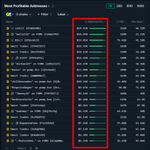
New POINTS page just appeared on @TxFlow_L1.👀
Many missed $VAR points and will look for new promising Perp DEX airdrop.
IMO trading on TxFlow will be rewarded heavily & we are still very EARLY.💰
Invite-only access + discount code:
app.txflow.com/r/TXGIDEON


Longed lot of tokens on @TxFlow_L1.📈
$TAO, $ONDO, $VIRTUAL, $MANTA, $LINEA, $MON etc.
After $VAR TGE, traders will look for next under-the-radar airdrop.🪂
TxFlow confirmed points are coming and early users will be rewarded.🎁
Invite-only access and discount code:
app.txflow.com/r/TXGIDEON
We are still early:)

Crypto Gideon(🧠,🧠) retweeted
Still early to farm POINTS for @TxFlow_L1 airdrop.🪂
Epoch 3 of Season 1 just ended.
There is also $20k prize pool campaign live right now.💰
Market is slow, so there is less competition as well - worth trading there.
Discount code:
app.txflow.com/r/TXGIDEON


Crypto Gideon(🧠,🧠) retweeted
On-chain security measures:
(for DeFi projects + traders/users)
✅ Access control
✅ Protocol-level protection
✅ Smart contract protection
@coingecko research explained each in details.
Also good guide by @wacy_time1 for regular users👇
Don't ignore your online security.🛡️


A friendly reminder to take your crypto security seriously.
Start doing these things TODAY:
- Keep your long-term holdings offline.
Consider a hardware wallet or an air-gapped wallet on a dedicated offline device.
If you don't want to buy a hardware wallet, air-gapped storage is an alternative.
- Never use one wallet for everything.
Keep separate wallets for long-term holdings, trading, DeFi, airdrops, and unfamiliar protocols.
@Rabby_io and @phantom are the only wallets I use.
- Don't keep your entire portfolio in one place.
Avoid concentrating all your funds on a single CEX, hot wallet, protocol, or device.
- Don't use public Wi-Fi for crypto activity.
If you work from cafes or coworking spaces, use your phone's personal hotspot instead of connecting to public Wi-Fi networks.
- Protect your seed phrases.
Never store them in screens, cloud storage, emails, or password managers connected to the internet.
If your seed phrase has ever been stored on an internet-connected device - migrate to a fresh wallet NOW!
- Keep secure offline backups.
Store recovery backups somewhere safe, preferably with protection against fire/water and unauthorized access.
I recommend getting a fire-resistant and water-resistant document bag.
- Use a dedicated device for crypto.
Keep your hot wallets and high-value transactions on a separate device.
Don't use it for random downloads, gaming mods, unknown software, or everyday browsing.
- Use a separate browser for wallets.
Keep your wallet browser dedicated to trusted crypto activity.
Avoid unnecessary extensions and random websites.
- Never install cracked software on crypto devices.
Pirated applications, fake installers, and malicious updates can contain wallet-stealing malware.
If you need to run untrusted software, keep it completely isolated from your crypto environment.
- Keep your devices updated.
Update your OS, browser, and wallet software through official sources.
- Remove unnecessary browser extensions.
Even legitimate extensions can become dangerous after a compromised update or ownership change.
Keep only what you absolutely need.
- Stop using Google Search to find crypto websites.
Fake websites and malicious sponsored results can look almost identical to legitimate ones.
Use independently verified official links from bookmarks instead.
- Don't open random links from X or Telegram.
Especially not in the browser where your wallets are installed.
Never!!!
- Secure your CEX accounts.
Use passkeys or hardware security keys where supported.
Enable withdrawal address whitelists and avoid relying on SMS 2FA.
- Consider getting a YubiKey.
A physical security key can help protect your email and exchange accounts against phishing.
Buy only from the official manufacturer sellers.
- Review your Google-connected crypto accounts.
Check which crypto services use Google Sign-In.
Never disconnect your only login method without setting up an alternative first.
- Revoke unnecessary token approvals.
Use @RevokeCash to review and remove permissions you no longer need.
Disconnecting a wallet from a dApp does NOT revoke its token approvals.
- Avoid unlimited token approvals.
Whenever possible, approve only the amount you actually need.
Unlimited allowances can expose much larger balances if a spender is compromised.
- Review Permit2 permissions.
Permit2 signatures can authorize token transfers without a normal on-chain approval transaction.
Review existing allowances and permissions. Some malicious signatures can be exploited long after they're signed.
- Never blindly sign messages.
A signature doesn't need to cost gas to be dangerous.
Never get distracted while signing transactions. Either finish your transactions first or take care of everything else before you start.
Make this a rule.
- Be careful with custom RPC endpoints.
Don't add/delete now unknown RPC URLs.
Use trusted providers and verify network settings independently.
- Understand EIP-7702 authorization risks.
On supported networks, account delegation can grant powerful capabilities to other code.
Never approve an account delegation you don't understand. (That's why Binance was hacked)
- Never copy addresses blindly from transaction history.
Address poisoning attacks can place lookalike addresses in your transaction history.
Verify the full destination address against a trusted source.
- Watch out for clipboard malware.
Malware can replace a copied wallet address with an attacker's address.
Always verify the entire destination address after pasting, preferably on an independent trusted display.
- Verify token contracts and networks.
A familiar ticker or logo doesn't prove a token is legitimate.
Check the contract address and make sure the receiving platform supports the exact asset and network.
- Test large transfers first.
When sending funds to a new destination, start with a small test transaction.
- Ignore unexpected tokens and NFTs.
Random assets appearing in your wallet may contain phishing links or fake reward claims.
Don't interact with them just because they appeared in your balance.
- Don't trust unexpected job offers or collaboration requests.
Fake interviews, partnership offers, and test applications can be used to distribute wallet-stealing malware.
Never run unfamiliar software on your crypto device just to qualify for an opportunity.
- Never run terminal commands you don't understand.
Fake troubleshooting guides, verification pages, and job interviews may ask you to copy and paste commands into your terminal.
One malicious command can compromise your entire device, including your wallets.
- Never trust a QR code blindly.
QR code can contain a malicious website, payment request or an attacker's wallet address.
Avoid scanning unknown QR codes with devices that contain your crypto wallets or other sensitive data.
- Understand bridge and DeFi risks.
Before depositing significant funds, check contract upgradeability, admin privileges, timelocks, and bridge security assumptions.
Audits are useful, but they don't guarantee safety.
- Secure your multisig properly.
If you use @Safe or another multisig, keep signer keys on independent devices.
Review owners, signing thresholds, modules, and guards.
A malicious module may bypass normal multisig approval requirements.
- Monitor your wallets.
Set up alerts for unexpected transfers, approvals, and other sensitive activity where supported.
Use Codex/Claude to vibe-code a simple TG-bot that notifies you whenever something happens in your wallets.
- Have an emergency recovery plan.
Know what to do if a wallet, seed phrase, device, or exchange account is compromised.
If your seed phrase is exposed, move your assets to a new wallet generated from a fresh seed on a trusted device.
Revoking approvals alone won't fix a compromised private key.
- Keep your crypto holdings private.
Avoid publicly revealing wallet balances, screenshots of large portfolios, or details of your security setup.
Don't make yourself an easy target for social engineering or physical theft.
- Protect yourself from SIM swapping.
Attackers can hijack your phone number and intercept SMS verification codes.
Use authenticator apps, passkeys, or hardware security keys instead of SMS wherever possible. Secure your mobile carrier account too.
- Don't blindly trust familiar contacts.
A message from someone you know doesn't mean their account is still under their control.
Verify it through another channel first.
- And one last thing:
You don't need to be paranoid.
You just need to make it much harder for someone to steal what you've spent years building.
Protect your capital before you think about growing it.
Crypto Gideon(🧠,🧠) retweeted
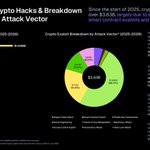
Most Common Crypto Hacks happen through:
-> Social engineering
-> Private key compromise
Biggest hacks (Bybit and Binance) happened through these methods.🔓
This means HUMAN ERROR costs more than tech/code error.
Conclusion: educate yourself and employees
Data: @coingecko 📊

CoinGecko’s State of Crypto Security Report from Aug 26' showed us how bad things are.
Binance hack just confirmed this.🔓
Interesting data:
Active Coverage by Crypto Insurance Platforms Has Fallen by 20.2%:
$163.2M -> $130.2M despite a rise in exploits
Data: @coingecko 📊
Worth checking the report.👇

On-chain security measures:
(for DeFi projects + traders/users)
✅ Access control
✅ Protocol-level protection
✅ Smart contract protection
@coingecko research explained each in details.
Also good guide by @wacy_time1 for regular users👇
Don't ignore your online security.🛡️
A friendly reminder to take your crypto security seriously.
Start doing these things TODAY:
- Keep your long-term holdings offline.
Consider a hardware wallet or an air-gapped wallet on a dedicated offline device.
If you don't want to buy a hardware wallet, air-gapped storage is an alternative.
- Never use one wallet for everything.
Keep separate wallets for long-term holdings, trading, DeFi, airdrops, and unfamiliar protocols.
@Rabby_io and @phantom are the only wallets I use.
- Don't keep your entire portfolio in one place.
Avoid concentrating all your funds on a single CEX, hot wallet, protocol, or device.
- Don't use public Wi-Fi for crypto activity.
If you work from cafes or coworking spaces, use your phone's personal hotspot instead of connecting to public Wi-Fi networks.
- Protect your seed phrases.
Never store them in screens, cloud storage, emails, or password managers connected to the internet.
If your seed phrase has ever been stored on an internet-connected device - migrate to a fresh wallet NOW!
- Keep secure offline backups.
Store recovery backups somewhere safe, preferably with protection against fire/water and unauthorized access.
I recommend getting a fire-resistant and water-resistant document bag.
- Use a dedicated device for crypto.
Keep your hot wallets and high-value transactions on a separate device.
Don't use it for random downloads, gaming mods, unknown software, or everyday browsing.
- Use a separate browser for wallets.
Keep your wallet browser dedicated to trusted crypto activity.
Avoid unnecessary extensions and random websites.
- Never install cracked software on crypto devices.
Pirated applications, fake installers, and malicious updates can contain wallet-stealing malware.
If you need to run untrusted software, keep it completely isolated from your crypto environment.
- Keep your devices updated.
Update your OS, browser, and wallet software through official sources.
- Remove unnecessary browser extensions.
Even legitimate extensions can become dangerous after a compromised update or ownership change.
Keep only what you absolutely need.
- Stop using Google Search to find crypto websites.
Fake websites and malicious sponsored results can look almost identical to legitimate ones.
Use independently verified official links from bookmarks instead.
- Don't open random links from X or Telegram.
Especially not in the browser where your wallets are installed.
Never!!!
- Secure your CEX accounts.
Use passkeys or hardware security keys where supported.
Enable withdrawal address whitelists and avoid relying on SMS 2FA.
- Consider getting a YubiKey.
A physical security key can help protect your email and exchange accounts against phishing.
Buy only from the official manufacturer sellers.
- Review your Google-connected crypto accounts.
Check which crypto services use Google Sign-In.
Never disconnect your only login method without setting up an alternative first.
- Revoke unnecessary token approvals.
Use @RevokeCash to review and remove permissions you no longer need.
Disconnecting a wallet from a dApp does NOT revoke its token approvals.
- Avoid unlimited token approvals.
Whenever possible, approve only the amount you actually need.
Unlimited allowances can expose much larger balances if a spender is compromised.
- Review Permit2 permissions.
Permit2 signatures can authorize token transfers without a normal on-chain approval transaction.
Review existing allowances and permissions. Some malicious signatures can be exploited long after they're signed.
- Never blindly sign messages.
A signature doesn't need to cost gas to be dangerous.
Never get distracted while signing transactions. Either finish your transactions first or take care of everything else before you start.
Make this a rule.
- Be careful with custom RPC endpoints.
Don't add/delete now unknown RPC URLs.
Use trusted providers and verify network settings independently.
- Understand EIP-7702 authorization risks.
On supported networks, account delegation can grant powerful capabilities to other code.
Never approve an account delegation you don't understand. (That's why Binance was hacked)
- Never copy addresses blindly from transaction history.
Address poisoning attacks can place lookalike addresses in your transaction history.
Verify the full destination address against a trusted source.
- Watch out for clipboard malware.
Malware can replace a copied wallet address with an attacker's address.
Always verify the entire destination address after pasting, preferably on an independent trusted display.
- Verify token contracts and networks.
A familiar ticker or logo doesn't prove a token is legitimate.
Check the contract address and make sure the receiving platform supports the exact asset and network.
- Test large transfers first.
When sending funds to a new destination, start with a small test transaction.
- Ignore unexpected tokens and NFTs.
Random assets appearing in your wallet may contain phishing links or fake reward claims.
Don't interact with them just because they appeared in your balance.
- Don't trust unexpected job offers or collaboration requests.
Fake interviews, partnership offers, and test applications can be used to distribute wallet-stealing malware.
Never run unfamiliar software on your crypto device just to qualify for an opportunity.
- Never run terminal commands you don't understand.
Fake troubleshooting guides, verification pages, and job interviews may ask you to copy and paste commands into your terminal.
One malicious command can compromise your entire device, including your wallets.
- Never trust a QR code blindly.
QR code can contain a malicious website, payment request or an attacker's wallet address.
Avoid scanning unknown QR codes with devices that contain your crypto wallets or other sensitive data.
- Understand bridge and DeFi risks.
Before depositing significant funds, check contract upgradeability, admin privileges, timelocks, and bridge security assumptions.
Audits are useful, but they don't guarantee safety.
- Secure your multisig properly.
If you use @Safe or another multisig, keep signer keys on independent devices.
Review owners, signing thresholds, modules, and guards.
A malicious module may bypass normal multisig approval requirements.
- Monitor your wallets.
Set up alerts for unexpected transfers, approvals, and other sensitive activity where supported.
Use Codex/Claude to vibe-code a simple TG-bot that notifies you whenever something happens in your wallets.
- Have an emergency recovery plan.
Know what to do if a wallet, seed phrase, device, or exchange account is compromised.
If your seed phrase is exposed, move your assets to a new wallet generated from a fresh seed on a trusted device.
Revoking approvals alone won't fix a compromised private key.
- Keep your crypto holdings private.
Avoid publicly revealing wallet balances, screenshots of large portfolios, or details of your security setup.
Don't make yourself an easy target for social engineering or physical theft.
- Protect yourself from SIM swapping.
Attackers can hijack your phone number and intercept SMS verification codes.
Use authenticator apps, passkeys, or hardware security keys instead of SMS wherever possible. Secure your mobile carrier account too.
- Don't blindly trust familiar contacts.
A message from someone you know doesn't mean their account is still under their control.
Verify it through another channel first.
- And one last thing:
You don't need to be paranoid.
You just need to make it much harder for someone to steal what you've spent years building.
Protect your capital before you think about growing it.
Still early to farm POINTS for @TxFlow_L1 airdrop.🪂
Epoch 3 of Season 1 just ended.
There is also $20k prize pool campaign live right now.💰
Market is slow, so there is less competition as well - worth trading there.
Discount code:
app.txflow.com/r/TXGIDEON
Crypto Gideon(🧠,🧠) retweeted

Americans really saw Europe falling apart and thought "I want some of that."
Crypto Gideon(🧠,🧠) retweeted

Revolut reportedly cut its AI coding costs by 90% by switching to open models.
Now imagine how many companies are about to realize they're paying WAY too much for AI through providers like OpenAI and Anthropic.
I genuinely think this is where the next big shift in AI is happening.
But there's obviously a problem (for some at least)
Not every company can afford to buy dozens of expensive GPUs, hire engineers and maintain its own AI infrastructure like Revolut just did.
And that's exactly where tensorcash:native and @inferenceFI become so extremely interesting.
There are three major opportunities here:
• Don't own GPUs? inferenceFI is building a marketplace where businesses can buy open-model inference without having to run the infrastructure themselves.
• How do you trust the provider? TensorCash makes AI model execution verifiable, so you're not simply trusting someone who claims to be running a particular model.
• Already own GPUs? Use them for your own AI workloads, and monetize spare capacity through TSC mining or by serving inference to others.
And possibly the best part of it all is that the same AI computation can serve a paying customer AND contribute to securing the TensorCash blockchain.
→ One GPU workload, two purposes
I think we're going to see a LOT more companies moving towards open models over the coming years,
And @Tensorcash is positioning itself on both sides of that market, instead simply just offering cheaper AI inference.
This is just the beginning, position yourself accordingly

BREAKING: Revolut moved ~2,000 engineers onto self-hosted GLM for coding and pushed Claude Code and Codex to the exception list.
Per David Abitbol, who leads AI ops there: 56 Nvidia B200s, a blended 30 cents per million tokens, roughly a tenth of what they paid Anthropic and OpenAI. Engineering lead time improved 70%.
Here's the part that matters: the gains showed up when tokens stopped being rationed. Engineers quit saving AI for the hard tickets and pointed it at everything.
Frontier models become the exception, open weights become the default. That's a pricing problem for every lab heading to IPO.
h/t @OliverMolander
Would you move your team off frontier APIs if the bill dropped 90%?

Crypto Gideon(🧠,🧠) retweeted

If WW3 starts, I don’t even understand what the fuck we’re supposed to be fighting for anymore.
I say this as someone who served in the military myself. Why should ordinary people be sent to die over conflicts, political interests and decisions they had absolutely no say in?
And why tf are people in their 60s and 70s making decisions that will destroy the futures of millions of young people? They won’t even be around in another 5-10 years, while our generation will have to live with the consequences for the rest of our lives.
There’s no real equality in any of this. Elections is an illusion of choice, giving ordinary people the feeling that they have control over the outcome while the biggest decisions are made without them.
And when things don’t turn out the way you wanted, it’s always “oh well next time it will I just need to convince more people to agree with me”
So you spend another 4 years arguing with people over politicians, convinced that the next election will finally change everything.
Meanwhile it’s the younger generations who will be sent to fight and die for decisions they never made.
Crypto Gideon(🧠,🧠) retweeted
It’s actually crazy how X makes you believe the entire world is falling apart every single day.
Another war, another crisis, another headline about how we’re all fucked.
Then you go outside and realize everyone is just living their normal lives, going to work, eating at restaurants and enjoying themselves.
Sometimes you just need to close X, stop consuming all this fear and go enjoy your life. The algorithm makes you believe that everything is negative and bad.
Crypto Gideon(🧠,🧠) retweeted
CoinGecko’s State of Crypto Security Report from Aug 26' showed us how bad things are.
Binance hack just confirmed this.🔓
Interesting data:
Active Coverage by Crypto Insurance Platforms Has Fallen by 20.2%:
$163.2M -> $130.2M despite a rise in exploits
Data: @coingecko 📊
Worth checking the report.👇


Most Common Crypto Hacks happen through:
-> Social engineering
-> Private key compromise
Biggest hacks (Bybit and Binance) happened through these methods.🔓
This means HUMAN ERROR costs more than tech/code error.
Conclusion: educate yourself and employees
Data: @coingecko 📊
CoinGecko’s State of Crypto Security Report from Aug 26' showed us how bad things are.
Binance hack just confirmed this.🔓
Interesting data:
Active Coverage by Crypto Insurance Platforms Has Fallen by 20.2%:
$163.2M -> $130.2M despite a rise in exploits
Data: @coingecko 📊
Worth checking the report.👇
Crypto Gideon(🧠,🧠) retweeted
ALPHA:
New POINTS page just appeared on @TxFlow_L1.👀
Many missed $VAR points and will look for new promising Perp DEX airdrop.
IMO trading on TxFlow will be rewarded heavily & we are still very EARLY.💰
Invite-only access + discount code:
app.txflow.com/r/TXGIDEON
Longed lot of tokens on @TxFlow_L1.📈
$TAO, $ONDO, $VIRTUAL, $MANTA, $LINEA, $MON etc.
After $VAR TGE, traders will look for next under-the-radar airdrop.🪂
TxFlow confirmed points are coming and early users will be rewarded.🎁
Invite-only access and discount code:
app.txflow.com/r/TXGIDEON
We are still early:)

Crypto Gideon(🧠,🧠) retweeted

They spent years calling Putin a Nazi. Turns out Zelensky and his Azov National Guard were running the modern-day Auschwitz near Kyiv, all funded by EU taxpayers’ money. Bravo.


Crypto Gideon(🧠,🧠) retweeted

not a single good and respected trader posted their october PNL
the only one's posting are sludge trading (streaming) terrible traders
they're feasting on all the 10-20k-30k toppers, because they dev and bundle the entire floor
it's all getting glorified too, it's fucking over
Crypto Gideon(🧠,🧠) retweeted

Grok Bot represents the first interface where fairly average users can level up their AI experience with a Sibyl Memory product, effectively increasing our target market by a large margin.
Sibyl Memory in Grok bot enables seamless persistent memory across all your grok bot sessions, so no matter how many projects you are working on simultaneously, your agents stay context aware, and learn through experience.

sibyl memory update version 0.10.0
release notes
- Grok Bot setup in one command: sibyl setup grokbot wires it and shows what changed
- Cursor support: sibyl setup cursor
- sibyl doctor checks the whole path: start, save, recall, delete a test memory
- links between memories: your agent follows connections instead of searching again
- the installer now runs inside agent shells, no terminal needed
- packages: client 0.10.0, CLI 0.6.0, hermes 0.6.0, MCP 0.4.0
your agent can now install its own memory. Grok Bot is a few lines away.
CoinGecko’s State of Crypto Security Report from Aug 26' showed us how bad things are.
Binance hack just confirmed this.🔓
Interesting data:
Active Coverage by Crypto Insurance Platforms Has Fallen by 20.2%:
$163.2M -> $130.2M despite a rise in exploits
Data: @coingecko 📊
Worth checking the report.👇
$2,500 for the first 50 traders who join @TxFlow_L1 through my link.💰
You also get:
-> 0 fees
-> Points for airdrop
Rewards: $50 Fee Credits per user
Just join, connect your wallet then trade crypto and TradFi with any volume.📊
Limited spots:👇
app.txflow.com/campaign/pass…
