

We are dedicated to starting conversations about #SoilScience and supporting a Canadian community of experts and enthusiasts.
- Tweets1.1K
- Following229
- Followers2.8K
- Likes1.3K




ALT Graphic with information about the WSD student contest including: The soil collage (title); What to do? Text: Create your soil collage, discuss the cards, reflect on soil challenges and design a realistic action plan for your campus; Text: Who can participate? University students from all disciplines. Just bring your curiosity and desire to explore and learn about soil.


ALT Man wearing bowtie; text has same information as the post plus a QR code

ALT Photo of a soil profile. Layers are demarcated for the viewer with yellow lines. The upper layer, LFH, is leaf litter, dark brown with green. The next layer is creamy white, labeled Ae. The next layer is labeled Bm and is rust brown. The next layer is BC and is lighter rusty brown mixed with tan. The bottom layer is labeled C and is a mix of various tan colours.

ALT Close up photo of ectomycorrhizal mycelium (white) associated with black spruce tree roots (brown). © A.D. Picard (https://commons.wikimedia.org/wiki/File:Mycorhizes-01.jpg).

ALT Dr. Grace Gowera in the soil lab, wearing a mask and lab coat, working with soil samples.


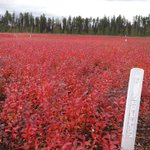
ALT The leaves of blueberry bushes turn red in fall, signaling the end of the so-called “pruning year”, when no fruit is harvested. The flower buds will open early the next spring. Shown here is a research plot in Lac-Saint-Jean, Québec, Canada. Photo: Maxime C. Paré.

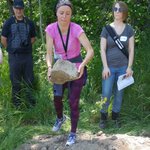
ALT Soil scientists often study soils in the field. Here Amanda Diochon (pink) is returning a rock from a soil pit as part of a tour she was leading. Rocks are the “parent material” for soils.


ALT This diagram shows part of a nutrient cycle. From the right: Organic residues, soil organic matter and dead microbial life undergo decomposition through biological and chemical processes. Nutrients like ammonium (NH4+) or nitrates (NO3– ) are available for uptake by plants and microorganisms. The NH4+ and NO3– used by microorganisms for protein synthesis and other metabolic functions will be released by microbial cells at the end of their lifespan. Plants will take up the nutrients through their root hairs. © Joann Whalen is licensed under a CC BY (Attribution) license.

ALT Lactarius rubrilacteus mushrooms are sexual fruiting structures of the fungus, evident on the soil surface. Most of a fungus’ body lies below the surface, unseen. © T. Trofymow.


ALT a petri dish under a black light, which shows streaks of glowing bacteria

ALT An illustration of living things in soil. Along the top are headers, and in the columns are examples of large and small soil organisms. For example: Primary producers include plants and organic substrates. Herbivores and decomposers include root-feeding nematodes, mycorrhizal fungi, saprophytic fungi and bacteria. Microbial grazers include collembolans, mites, fungivorous and bacteriophagous nematodes and flagellates. Tertiary consumers include predacious and nematode-feeding mites, predaceous and omnivorous nematodes and amoeba.

ALT Image description: two hands placing time-release fertilizer pellets beside a plant shoot.

ALT Soil pH influences whether nutrients are available to plants. Shown here are nutrient availabilities in mineral and organic soils influenced by soil pH. Adapted from Munroe (2018) by Lewis Fausak and licensed under a CC BY (Attribution) license.

ALT Soil pH influences whether nutrients are available to plants. Shown here are nutrient availabilities in mineral and organic soils influenced by soil pH. Adapted from Munroe (2018) by Lewis Fausak and licensed under a CC BY (Attribution) license. ALT A graphic showing how much mineral availability there is at various pH levels. The graphic illustrates that different minerals are affected by different pH levels.

ALT A diagram showing water molecules bonded to each other and clay particles in soil. Underneath are the words cohesion: the attraction of water molecules to each other, and adhesion: the attraction of water molecules to a solid.