

The agentic layer and managed infra layer on top of any warehouse, enabling a team and its agents to generate and manage high-quality, auditable data at scale.
Berlin
Joined November 2022
- Tweets419
- Following21
- Followers602
- Likes264


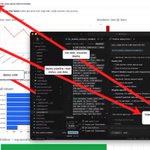


It's not your 14 filters or the 6 MRR definitions that are confusing to the stakeholder.
The real problem is missing ontology which dltHub solves on your platform
ClickHouse demo: dlthub.com/blog/clickhouse-a…
Databricks one: dlthub.com/blog/databricks-u…

94
dltHub retweeted

We are opening a Private Preview of @dltHub on Snowpark Container Services. From December 14, you will be able to buy dltHub through @Snowflake against your existing commitment and install it as a Snowflake Native App from the Snowflake Marketplace. (1/3)
dltHub on Snowpark Container Services: Private Preview.
Runs in your Snowflake account, on your compute, under your roles. Buy it with your existing commitment. No new approval path.
dlthub.com/blog/dlthub-on-sn…
2
83
As data engineers we have a special relationship with automation. Most of us are building agents right now.
What cool thing are you working on? How did you r job change in 2026?

1
65
dltHub is now pay-as-you-go.
No sales call, no yearly contract. You pay for the time your pipelines run.
A few APIs + Postgres, once a day: about $80/month.
About 20 pipelines: about $800/month.
14-day free trial, $30 in credits.
start here dlthub.com/pricing
1
1
101

Why do you need ontology? So LLMs can follow whatever logic you chose instead of ad hoc heuristics
94
New on dltHub: datasets and lineage.
See how your data flows, without asking who built it. The Workspace Explorer maps sources → pipelines → datasets, shows which jobs trigger which, and highlights what a failed run affects downstream.
dlthub.com/blog/introducing-…
3
106
New on dltHub: performance optimization.
Slow pipeline? Fix it yourself instead of filing a ticket.
Your coding agent finds and fixes the bottleneck, you pick the machine size each job needs, and faster runs cost less.
dlthub.com/blog/introducing-…
47
How do you eval your agents?
Agent traces are a good place to start.
In this 1-hour workshop with @DataTalksClub, you'll learn how to ingest agent traces, model nested JSON into a queryable schema, and build dashboards to understand agent behavior.
youtube.com/watch?v=A0LmmZf-…
3
427
AI writing pipelines is cool.
AI remembering the entire workflow is better.
dltHub Pro carries context from ingestion to deployment to maintenance instead of starting over every step.
Try it: dlthub.com/products/dlthub

2
166
AI agents generate traces, but are you analyzing them?
Join Alena Astrakhantseva to learn how to turn tool calls, token usage, and outcomes into structured, queryable data with dltHub Pro.
July 6, live on YouTube with @DataTalksClub
Register ↓
luma.com/3sint80a

2
107
AI memory just got smarter!

Introducing Cognee v1.0: a major breakthrough in agentic intelligence.
It is 145% better than Opus 4.8 and GPT 5.5 at long context memory retrieval.
Cognee allows a 100 BILLION token context window 100,000x more than Claude. It's:
- 6.9x cheaper than GPT 5.5 and Opus 4.8
- Cold starts in 350ms & searches in 260ms
Why this matters:
Today agents forget important context, redo tasks, waste tokens, and slow down as workflows get more complex.
Cognee solves this.
It’s not a place to build agents. It connects to the agents you’ve already built, across any platform, and makes them significantly cheaper, faster, and more accurate.
Here's how it works:
Readers added context they thought people might want to know
Cognee's website and GitHub do not provide benchmarks or evidence supporting claims of 145% better long-context memory retrieval than GPT-5.5/Opus 4.8, a 100 billion token context window, or 6.9x cheaper costs. cognee.ai github.com/topoteretes/co…
3
168
Text-to-SQL doesn't break because models can't write SQL, it breaks because they don't know what your data means.
An agent can return valid SQL and still be wrong, and a clean wrong number looks just as trustworthy as a right one.
2
3
126
The common fix is a semantic layer added on top. Now you maintain it twice and the two drift.
We build from the other end: write the canonical knowledge layer first, use that one spec to generate the model and answer questions over it.
dlthub.com/blog/canonical-te…

3
69
Human in the loop shouldn't mean copy-pasting context into an agent every 5 minutes.
It should mean judgment, not errands.
If your agent needs a Rube Goldberg machine of prompts, tabs, and slack messages, the problem isn't human.
It's missing context.
dlthub.com/blog/context
3
141
The clearest case: asked if 55% at-risk seats = churned, the schema-only model said no, but guessed. It didn't know the real threshold was 60%. Ask about 65% and it'd still say no.
The ontology model said no because 55% < 60%. That reasoning generalizes. 👀
1
2
115
The catch: on a public dataset, schema-only scored 8/10. Looked grounded, but it was guessing from training data, not reading the pipeline. 🚨
Full benchmark by Roshni Melwani (60 responses + repo): 🔗 dlthub.com/blog/ontology-ben…

2
128