
MEP 🇪🇺 🇩🇪 Chair of the EP's China Delegation, ECON, AFET, SEDE, Chairman @FWHessen, Deputy Chairman @FREIEWAEHLER_BV
Joined December 2017
- Tweets5.6K
- Following498
- Followers8.9K
- Likes7K


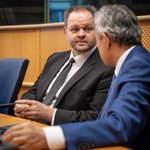


Direct engagement with Chinese companies that also operate economically in Europe is very important to me in my political work. It provides an opportunity to gain different perspectives, better understand economic interdependencies and openly address shared challenges.
I recently had the opportunity to meet with Luca Comincioli, Senior Government Affairs Manager Europe at WuXi AppTec, to discuss these issues.
Headquartered in Shanghai, the Chinese company is an internationally active service provider to the pharmaceutical and biotechnology industries. It supports companies in the research, development and manufacturing of medicines. These services are particularly important for small and medium-sized enterprises, which often lack extensive in-house research and production capabilities. WuXi AppTec operates facilities across Asia, North America and Europe.
For a responsible European China policy, it is essential to understand these perspectives. Only through direct dialogue can we identify common interests and potential differences, realistically assess possible risks and make well-informed political decisions for Europe.
My position is clear: We need objective dialogue, fair conditions for competition and policies that safeguard Europe's economic strength and technological competitiveness in the long term.
Many thanks to Luca Comincioli for the open and constructive exchange!

I have never before witnessed such behavior from foreign diplomats…
As chair of the European Parliament’s Delegation for Relations with the People's Republic of China, I have experienced significant attempts by China to exert political influence. In particular, the growing ties between the European Parliament and Taiwan are meeting with increasing resistance from the Chinese leadership.
Recent reports from my colleagues underscore just how far these attempts at political interference have gone. Several Members of the European Parliament have reported receiving threatening letters, unannounced visits from Chinese diplomats, and other targeted attempts at intimidation. One colleague was recently detained at border control for about an hour and a half upon entering China. Her passport was confiscated, and she was prohibited from using her phone.
I therefore made it clear to POLITICO: It is inconceivable to me that Beijing would want to dictate where we travel, with whom we speak, or what political contacts we maintain.
If we were to allow that, Vladimir Putin would likely be the next to try to dictate who we are allowed to meet and who we are not.
You can find the full article at @politico.

Putin and Xi: The economic lifeline of Russia's war of aggression also leads to Beijing.
Together with my colleague Petras Auštrevičius MEP @petras_petras, we want to draw attention to a crucial dimension of Russia’s war against Ukraine: China’s economic and technological support for Moscow.
The meeting between Vladimir Putin and Xi Jinping in Shenzhen once again demonstrates just how closely intertwined Russia and China are economically and strategically. Tomorrow, Donald Trump will join them. Three heads of state, three claims to power, and the question of who will help shape the international order in the future.
The development of trade relations between Russia and China is particularly revealing.
A look at the figures since 2014:
In the year of Russia's annexation of Crimea, Russia still had a trade deficit with China.
This deficit was gradually reduced in the following years. In 2018, the trade balance turned in Russia's favor. By 2021, Russia's trade surplus already stood at around 12 billion US dollars.
Following the full-scale Russian invasion of Ukraine in 2022, it rose to around 38 billion dollars. In 2025, it still amounted to approximately 21.5 billion dollars.
The trade balance between Russia and China is an economic indicator of the shift in dependencies since 2014. A Russian trade deficit has turned into a substantial surplus. Especially since the attack on Ukraine, this development has reached a new dimension.
China purchases oil, gas, and other raw materials from Russia on a massive scale. This provides Moscow with urgently needed revenues. At the same time, China supplies machinery, electronics, and industrial components that Russia needs for its economy and defense production.
Just how deep this dependency now goes is shown by the June 2026 Kiel Report: China's share of Russia's imports of critical dual-use goods has risen from around 25 percent before the full-scale invasion to over 80 percent in 2025.
These goods can be used for both civilian and military purposes. They include electronic components, CNC machines, and telecommunications technology. They are also used in Russian defense and production chains.
China cannot credibly claim neutrality while simultaneously becoming the most important supplier of critical technologies for Russia's war economy. These goods help Russia continue its war of aggression against Ukraine, and thus indirectly create the conditions under which Ukrainian people are killed.
The trade balance is particularly noteworthy: China runs a surplus with the vast majority of its trading partners. The fact that Russia is now among the countries that export more goods to China than they import from it is an economic anomaly.
Beijing is not simply transferring money to Moscow to finance the war. But the trade relationship provides Russia with substantial revenue and stabilizes its economic capacity. That is an economic lifeline.
Anyone who wants to understand Russia's capacity for war cannot just look at the front lines in Ukraine. They must also look to Beijing. The economic and technological ties between China and Russia therefore urgently belong on the European and international political agenda.
And what role does Donald Trump play?
Trump wants to present himself as a global dealmaker and mediator. Xi is demonstratively receiving him with great protocol. Putin, for his part, expects a "great potential benefit" from the trilateral meeting, according to his own words.
Asked somewhat sardonically: Does Trump now see himself rearranging world politics with Putin and Xi, even though US voters reined him in at the last election, not least over his pro-Russian course?
The crucial question, however, is: Will the future of Ukraine be discussed without Ukraine itself sitting at the table on an equal footing? And what role remains for Europe?
Europe must not become a spectator to a new world order negotiated by others over our security and our future.

Europe will never be the better planned economy. We must finally become the better market economy again.
Competition with China has long since become more than a trade policy dispute. It is about the future of our industrial base, jobs, technological sovereignty and our economic prosperity.
Recently, I had the opportunity to meet with Jürgen Matthes at the European Parliament for an in-depth discussion, organised at the initiative of the German Economic Institute (IW) and Matthes himself.
As Head of the Research Cluster for International Economic Policy, Financial and Real Estate Markets at the IW, Jürgen Matthes has been extensively involved for many years in analysing China, global trade imbalances and their impact on German and European industry.
He also contributes his expertise as an expert adviser to the German Bundestag's commission on security-related economic relations with China.
The economic situation is drastic: Germany's trade deficit with China could exceed the €100 billion mark for the first time in 2026. Our core industrial sectors, particularly the automotive, electrical engineering and mechanical engineering industries, are under enormous pressure.
One decisive factor is often underestimated: China's state-controlled currency policy. According to analyses, the yuan would need to appreciate by around 40 percent against the euro to reach a fair exchange rate valuation. This gives Chinese companies a significant price advantage that is politically driven and fundamentally unfair, rather than resulting from better products or higher productivity.
Anyone forced to compete internationally against an artificially distorted currency is not competing on a level playing field. Free trade requires fair rules.
At the same time, we must be honest with ourselves about what is going wrong on our side. If we fail to implement the necessary structural reforms, we risk losing up to 70 percent of our industrial capacity over the next four years. Such a development would be economically and strategically devastating for Germany.
So what must we do?
🔸Strengthen the market economy instead of the planned economy.
Germany and Europe will never be the better planned economy. We must once again allow our businesses to operate freely, enable innovation and strengthen entrepreneurial freedom. Less government interference, more competition and better framework conditions.
🔸Consistently reduce excessive regulation.
Every year, our companies must devote enormous resources to bureaucracy and regulatory requirements. According to the ifo Institute, the resulting loss in economic output amounts to approximately €146 billion annually. We must unlock this potential. These resources could instead be directed towards more competitive prices, investment, research and development.
🔸Regain our industrial innovative strength.
We need more investment in research, technology and new production processes. Europe must once again be in a position to become a technological leader across all major industrial sectors. Not through government mandates, but through better conditions for businesses and research.
🔸Make use of our own raw materials.
We cannot accept leaving our own abundant natural resources untapped while simultaneously importing strategically important raw materials from third countries at high prices. We need a realistic raw materials strategy that enables domestic extraction and reduces our dependencies.
🔸Take a confident stance in trade relations with China.
De-risking instead of decoupling. We must continue to maintain economic relations with China. However, these relations must be based on reciprocity. Europe must defend its interests more consistently and take action wherever distortions of competition can be demonstrated.
I am delighted by the in-depth, professionally valuable exchange and the invitation to Cologne to continue the dialogue.
Many thanks to Jürgen Matthes and the IW!

Europe’s relations with China are of central importance today and will also have a decisive impact on our future. This makes it all the more important for young Europeans to play an active role in shaping this debate.
This is precisely where the @EuropeanGuanxi initiative comes in. The network brings together young Europeans who are deeply engaged with China and EU-China relations. For this commitment, European Guanxi was awarded third place in this year’s European Charlemagne Youth Prize.
Most recently, I had the pleasure of welcoming Xaver Haack, Secretary General of European Guanxi, to the European Parliament. It was a great opportunity to discuss the organization’s work and the importance of young Europeans’ perspectives on EU-China relations.
European Guanxi was founded in 2020 and has since grown into an international network with over 500 members. In cooperation with leading scholars, practitioners, and policymakers, the initiative has produced over 285 scholarly articles, 55 podcast episodes, and numerous other informational resources. In doing so, the initiative makes an important contribution to the European debate on China.
As Chair of the @Europarl_EN Delegation for Relations with China, I know how important it is to have an informed and nuanced dialogue about China. Especially in light of the geopolitical and economic challenges we face, we in Europe need more knowledge and more dialogue to develop common positions. European Guanxi is very actively pursuing this goal.
Congratulations on this well-deserved award, and many thanks to Xaver Haack for the discussion! I wish the entire network continued success and look forward to staying in touch.


Ten years of persecution of the Uyghurs: Human Rights need a voice.
Yesterday, I participated in a conference of the @UyghurCongress at the @Europarl_EN. The focus was on the situation of the Uyghurs in Xinjiang.
Of particular importance to me is the fate of Ilham Tohti, the 2019 recipient of the European Parliament’s Sakharov Prize. Throughout his life, this Uyghur scholar has championed dialogue, understanding, and the rights of the Uyghurs. Nevertheless, he remains in Chinese custody.
Our clear demand: Ilham Tohti must finally be released!
Dialogue with China is important. That is precisely why we must also be able to address difficult issues. Human rights, the rule of law, and freedom of expression belong on the agenda of any serious partnership.
Europe must not forget those who stand up for these values and have lost their freedom as a result.


Engin Eroglu retweeted

🔴10 years since the Chinese government began implementing its systematic campaign of repression against Uyghurs in East Turkistan, the genocide continues, and the need for justice and accountability remains urgent.
🇪🇺Yesterday, 10 November, the World Uyghur Congress (WUC), together with Members of the European Parliament, hosted an important discussion at the European Parliament in Brussels, reflecting on a decade of persecution, firsthand testimonies, and the next steps towards meaningful international action.
We sincerely thank our speakers, Sir Geoffrey Nice, Mr. Ben Vanpeperstraete from @Anti_Slavery, Mr. Zhang Yabo, and @AbduweliA, for sharing their expertise, evidence, and powerful testimonies.
We also extend our sincere gratitude to MEPs @MiriamMLex, @kvanbrempt, and @ilhankyuchyuk for co-hosting and supporting this important event. We also thank MEP @EnginEroglu_FW for continuous support of our cause and attending the event.
As we mark ten years of the Uyghur genocide, WUC and the Uyghur community reiterate the urgent need for concrete international action to ensure accountability and justice for the Uyghur people.
🎥 Watch the full event online here: youtube.com/live/YUpJ_gRU0AY
#UyghurGenocide #EastTurkistan #EuropeanParliament #HumanRights #Accountability


When a car becomes a security risk, every consumer should take notice.
The German Armed Forces (Bundeswehr) are taking action: Chinese drones are to be removed from military facilities. Chinese vehicles are also being excluded from certain military security areas. These measures are driven by serious security concerns regarding potential data transmissions and digital surveillance.
This goes far beyond a question of military procurement. It is about countering espionage, protecting critical infrastructure and, ultimately, ensuring the security of our country.
Modern drones and vehicles are highly sophisticated digital systems. They are equipped with cameras, microphones, GPS and numerous sensors. These technologies can be used to build detailed movement profiles, map buildings and collect information about their surroundings. In military facilities, such information can be security-sensitive. In the worst case, it could reveal details about troop movements, military operations and sensitive infrastructure.
What constitutes a security risk for the Bundeswehr should also give every consumer reason to think.
Because when we talk about data security in the Bundeswehr, we must not forget the millions of people across Europe whose vehicles, smartphones and other connected devices collect personal information every day.
The situation in China is particularly noteworthy: As early as 2021, Tesla vehicles were reportedly barred from certain military and government facilities over similar security concerns.
China protects its military information. Europe must do the same. And in doing so, we must also protect our citizens' data.
I therefore believe that a fundamental debate at European level is necessary:
🔸What data do connected vehicles and drones actually collect?
🔸Who has access to this information, and where is it stored?
🔸Could foreign governments gain access, directly or indirectly?
🔸Which technologies should be permitted in military facilities and critical infrastructure?
🔸How can we protect consumers from uncontrolled data collection?
We need common European security standards, robust counter-espionage measures and a stronger European technology and drone industry.
This must not be about blanket bans based on a manufacturer's country of origin. It must be about verifiable security requirements for all manufacturers, regardless of whether they come from China, the United States or Europe.
My message is clear: National security does not begin at the gates of a military base. It also begins with the technologies we use every day. Every consumer should be aware of what data they share through their car, smartphone and other connected devices.
Data sovereignty has long since become a matter of both national and European security.

Education shapes not only knowledge, but also young people's values, perspectives, and understanding of society and politics. This makes the question of how much influence the state exercises over the education of the next generation all the more important.
Hong Kong Watch has an important role in this regard. The independent human rights organisation is committed to protecting freedom, democracy, and the rule of law in Hong Kong. Through in-depth research and reporting, it draws attention to political developments that might otherwise escape the notice of the international community.
I recently had the opportunity to meet with Thomas Benson, Head of Advocacy and Research at Hong Kong Watch, at the European Parliament to discuss the current situation in Hong Kong.
Our conversation focused on the organisation’s recent publication, “Patriotic Education: Learning to love the Hong Kong National Security Law”. The report sheds light on how Hong Kong’s education system has changed since the introduction of the National Security Law in 2020.
Drawing on school textbooks and interviews with former teachers, Hong Kong Watch documents changes to school curricula, the treatment of politically sensitive topics, and the growing emphasis on so-called patriotic education, starting as early as primary school.
These developments are part of a broader political context. In the People's Republic of China, state efforts to promote patriotic education are being further expanded through the 2023 Patriotic Education Law and the 2026 Law on the Promotion of Ethnic Unity and Progress.
This raises a fundamental question: What role should education play in society? Should its primary purpose be to enable young people to think independently, explore different perspectives, and form their own opinions? Or is education increasingly becoming a tool for the state to instil particular values and political loyalty?
Patriotism and the teaching of societal values certainly have a place in education. What matters, however, is ensuring that young people do not lose their ability to think critically and form their own opinions.
This is precisely why it is so important to closely monitor developments such as these and support organisations that document them through independent research and bring them into the international debate.
Many thanks to Thomas Benson and Hong Kong Watch for their important work and for the open and informative exchange in Brussels!


Engin Eroglu retweeted

Last week our Head of Advocacy and Research, Thomas Benson, had a fruitful discussion with @EnginEroglu_FW about 🇪🇺-🇨🇳 relations and our new report on ‘patriotic education’ in #HongKong.

Engin Eroglu retweeted

Yesterday, our friends in @FREIEWAEHLER_BV gathered in Munich to bid farewell to Hubert #Aiwanger. The European Democratic Party joins them in mourning a tenacious fighter, close to people and attentive to citizens’ everyday needs. His strength, determination and tireless commitment to serving his community will be remembered. Our heartfelt condolences go to his family, his loved ones and all our FREIE WÄHLER friends. We stand beside you. Rest in peace, dear Hubert.
Gestern versammelten sich unsere Freunde von den FREIEN WÄHLERN in München, um von Hubert Aiwanger Abschied zu nehmen. Die Europäische Demokratische Partei trauert gemeinsam mit ihnen um einen unermüdlichen Kämpfer, der den Menschen nahestand und ein offenes Ohr für die alltäglichen Belange der Bürger hatte. Seine Stärke, seine Entschlossenheit und sein unermüdliches Engagement im Dienste seiner Gemeinschaft werden uns in Erinnerung bleiben. Unser tief empfundenes Beileid gilt seiner Familie, seinen Angehörigen und all unseren Freunden bei den FREIEN WÄHLERN. Wir stehen euch zur Seite. Ruhe in Frieden, lieber Hubert.

Joshua Wong: He was imprisoned at the age of 24. Today, he is 30. And his freedom is still nowhere in sight.
What is happening to Joshua Wong is deeply disturbing. A young man who stood up for democracy and freedom in Hong Kong has been imprisoned continuously since 2020. Now, he has been sentenced to a further ten years in prison.
On 5 November, the European Union issued a clear statement on the matter. It condemned the conviction as politically motivated and called for Joshua Wong's immediate release.
But what is at stake goes far beyond the fate of one individual. It is about the credibility of international agreements and whether the rule of law and international commitments still carry any weight.
The Sino-British Joint Declaration of 1984 and the principle of "One Country, Two Systems" were clear commitments. Hong Kong was supposed to retain its autonomy, its freedoms and its own legal system.
When such agreements are not honoured, trust is severely undermined.
I am therefore also taking the latest developments as a reason to draw a personal consequence: I have decided to cancel, for the time being, my trip to Hong Kong and Macau, which had already been planned and booked for July 2027, following the elections in Hong Kong.
I see no point in travelling there to be presented with assurances that the principle of "One Country, Two Systems" is being upheld, while the reality for people like Joshua Wong tells a completely different story.
Dialogue with China remains important. But dialogue must not mean turning a blind eye to breaches of international agreements and restrictions on fundamental freedoms.
Trust is built on reliability. And reliability means, above all, honouring one's commitments.
My solidarity is with Joshua Wong and all those in Hong Kong who peacefully stand up for freedom, democracy and the rule of law.

Mit großer Bestürzung und tiefer Trauer habe ich vom Tod von Hubert Aiwanger erfahren.
Mit Hubert verlieren wir nicht nur einen prägenden politischen Kopf der FREIEN WÄHLER, sondern einen Menschen, der unsere politische Bewegung über viele Jahre entscheidend geprägt hat.
Sein Einsatz, seine Überzeugung und seine Leidenschaft für unsere gemeinsame Sache werden unvergessen bleiben.
In diesen schweren Stunden sind meine Gedanken bei seiner Familie, seinen Angehörigen und allen, die ihm persönlich nahestanden.
Wir werden ihm ein ehrendes Andenken bewahren.
Ruhe in Frieden, mein Freund Hubert.

A special moment for me: Today, I was awarded the Certificate of Honour by the Taxpayers Association of Europe (TAE) at the European Parliament!
The European umbrella organisation brings together 29 national taxpayers’ associations and has recognised my consistent commitment to fiscal stability, parliamentary scrutiny of the Europäische Zentralbank (ECB), and tangible relief for small businesses and the self-employed.
Following the laudatory speech by TAE President Michael Jäger (see German video), Secretary-General Dr. Horst Heitz further emphasised:
“Engin Eroglu has demonstrated for years that fiscal discipline and the protection of taxpayers are not merely empty phrases, but the foundation of a European Union that is fit for the future. His tireless commitment in the influential Committee on Economic and Monetary Affairs (ECON), his critical scrutiny of the long-term consequences of public debt, and his fight against bureaucratic obstacles for SMEs make him an outstanding advocate for Europe's citizens.”
I am truly delighted by this recognition. But for me, it is both a confirmation of my work and a responsibility to continue it.
Because there is one thing we must never forget in Brussels: Taxpayers’ money does not fall from the sky! It is earned every single day through the hard work of employees, the self-employed, and small and medium-sized businesses.
That is why we, as FREIE WÄHLER, will continue to firmly advocate for clear spending priorities instead of ever-increasing financial commitments and special EU budgets. Europe needs room for economic growth and genuine fiscal discipline, not artificially inflated spending programmes. Cutting red tape is the best and most cost-effective economic stimulus programme we can offer SMEs right now.
For a Europe that values the hard work of its citizens instead of placing ever-greater burdens on them!
My heartfelt thanks go to President Michael Jäger, Honourable President Rolf von Hohenau, Secretary-General Dr. Horst Heitz, Markus Scherbaum, Ralf Schneider, René Nour El Din, and the entire Taxpayers Association of Europe for this special honour and the trust they have placed in me!

Human rights know no borders. Unfortunately, neither does repression.
I recently met with a delegation of Taiwanese human rights organizations at the European Parliament. Among them was Lee Ming-che, a Taiwanese democracy and human rights activist who himself was imprisoned in China for five years.
In 2017, he was arrested during a trip to China and later sentenced to five years in prison for “subverting state power.” It was not until April 2022 that he was able to return to Taiwan. His personal story illustrates the serious personal consequences of advocating for democracy.
Our discussion focused on China’s cross-border repression. Our discussion focused on transnational repression by China. We explored how state-sponsored intimidation, surveillance, and political pressure can also affect people beyond China's borders, and what can be done to counter these practices.
Investigations by BR and SWR on January 28, 2026, show that the extent of Chinese influence and police structures in Germany is far from fully understood. I call for a full investigation and decisive action by the federal government: Foreign intimidation and surveillance have no place on German soil.
I would like to extend my special thanks to Lee Ming-che, who, despite his personal experiences, tirelessly advocates for democracy and human rights, as well as to the other members of the Taiwanese delegation for their valuable commitment and open dialogue. Also many thanks to my colleague Bernard Guetta for organizing the meeting.


Engin Eroglu retweeted

Czech MEP Markéta Gregorová stopped at Chinese border in ‘pseudo-scare tactics’ euobserver.com/246452/czech-…

China Trip No. 5, Day 5 - The Journey Home
From Helmut Kohl and Mikhail Gorbachev to China Today 🇪🇺🇨🇳 | Why Dialogue Matters, but Not at Any Price
When I was just eight years old, certain images left a particularly strong impression on me: Chancellor Dr. Helmut Kohl visiting Mikhail Gorbachev in his home region in the Caucasus in July 1990. A few months later, in November 1990, Gorbachev came to Germany and visited Kohl at his private home in Oggersheim. Those images came back to me today. They marked a special moment, and I can still remember them vividly.
Two political leaders, two different political systems, and a willingness to reach out to one another on a personal level.
These encounters were more than symbolic gestures. They helped build trust and pave the way for German reunification.
Reunification was a historic stroke of good fortune for Germany. It brought freedom, self-determination and new economic opportunities to millions of people. At the same time, it offered Europe the chance to overcome the division of the continent.
After the end of the Cold War, Russia initially moved towards greater openness and cooperation with Europe. New economic, political and social ties emerged. Many hoped for a shared European peace and security order.
This development suffered a dramatic setback in 2014 with the illegal annexation of Crimea and the beginning of Russia's war against Ukraine.
For me, one important lesson remains: Personal political dialogue can change the course of history. Dialogue matters, but not at any price, and never at the expense of our own values, the freedom of others or our own freedom.
Today, many years later, as Chair of the @Europarl_EN’s Delegation for Relations with China, I am dealing with a very different political challenge.
After years without official parliamentary exchanges, we were able to create the conditions for dialogue to resume in 2025. Chinese sanctions against Members and bodies of the European Parliament were lifted. Over the past twelve months, I have travelled to China five times with different delegations and from different political perspectives.
I wanted to see things for myself: the political leadership, the way of thinking, the economic development, the companies and the enormous technological dynamism of this country.
My most important takeaway: China is changing at a pace that Europe must take very seriously. But China, too, is only working with the same basic ingredients as the rest of us. It is simply moving faster, and at any cost.
At the same time, despite considerable political and economic differences, opportunities remain for direct exchanges and concrete, mutually agreed solutions.
We must understand China without imitating it. Our system would not survive the multiple crises China is currently facing as a result of its planned economy.
We must defend our interests with confidence and strengthen our own competitiveness.
The recently concluded Fifth Plenum of the Communist Party of China and its focus on the 15th Five-Year Plan demonstrate that Beijing continues to pursue its long-term technological, economic and political objectives with determination, whatever the cost.
China will continue to change rapidly. Europe must understand these developments and actively shape its own future.
My conclusion after five trips:
We have made important parliamentary dialogue possible again, established new contacts and begun building the European Parliament's own expertise on China.
This is a beginning, but we are still a long way from our goal. Between now and December, we need to consider what comes next.
The images of Kohl and Gorbachev from 1990 left a lasting impression on me in my youth. They remind me of what personal courage, trust and political dialogue can make possible.
Europe needs that same courage to engage in dialogue today. But it also needs the courage to draw clear boundaries when our values and freedoms are at stake.
🇪🇺🇨🇳


China Trip No. 5, Day 4 🇨🇳 | We travel halfway around the world, but are we having the conversations we should be having?
Sometimes, it is precisely days like these that leave you with the most to think about.
This time, our trip to China took us to three cities rather than the usual two. We therefore left Beijing earlier and travelled by train to Hangzhou. There, visits to Unitree and BrainCo were scheduled for the next morning, before we continued on to Shanghai.
Both companies are interesting. But what matters is not just what we get to see, but what we actually achieve through a trip like this.
In February, I travelled to China with the Committee on the Internal Market and Consumer Protection (IMCO). Back then, we had the opportunity to engage in genuine dialogue with companies such as Alibaba and Temu. We were able to openly discuss different positions and even work with Temu on concrete solutions.
Something similar happened in July, when we visited China with the @EP_ForeignAff. Instead of the planned visit to an AI company, we unexpectedly found ourselves in a shop selling AI products. At the time, however, this deviation from the actual purpose of our visit did not have the same systematic impact as it did now with the @EP_Trade delegation.
This time, however, the programme consisted of just two exhibition visits. These can certainly be interesting, but they are no substitute for direct dialogue. They leave important questions unanswered, offer little opportunity to build mutual understanding and raise the question of whether the time and effort involved are still proportionate to the actual benefits.
When roughly one and a half days of a three-day visit are spent travelling between destinations, on top of the journey to and from China, we have to ask ourselves whether we are really making the best possible use of our limited time. Watching dancing robots may be entertaining. But our responsibility as Members of the @Europarl_EN is different: we are there to understand how markets and technologies are evolving, to hear different perspectives and, wherever possible, to work towards common solutions.
We need less staging and more genuine dialogue. Fewer demonstrations and more answers to the questions that truly matter to our businesses and our policymakers.
People in China and Europe RIGHTLY expect real solutions.
That makes it all the more important for me to explicitly acknowledge the work of @berndlange, the long-serving and highly experienced Chair of the INTA Committee, as well as the entire INTA team at the European Parliament. They organised this trip exceptionally well. In particular, during our meeting with Chinese Minister of Commerce Wang Wentao in Beijing, the European Parliament's positions were clearly communicated, while opportunities for common solutions were explored despite the very significant differences between our political and economic systems.
This is what parliamentary work should be about: clear positions, open discussions and a willingness to seek solutions wherever there is room for common ground.
For me, this marks the end of my final trip to China this year. It has been an intense year, especially considering that there had previously been no comparable political dialogue between the European Parliament and the Communist Party of China or the National People's Congress for eight years.
Five trips to China in twelve months have given me valuable insights, and we have been able to begin building up the European Parliament's own expertise on China. However, I do not want to rush to conclusions about this latest visit. After the past few days, I need some sleep and time to reflect properly on everything we have experienced.
Because ultimately, what matters is not how many cities we visit or how many items we tick off an agenda. What matters is whether we have the right conversations, ask the right questions and gain insights that genuinely help us move our political work forward.

China Trip No. 5, Day 3 🇨🇳 | A Special Dialogue at the National People's Congress
Sometimes, it is the unexpected meetings that make a trip particularly valuable.
One of the surprises of this trip was that the Chinese side arranged for Li Hongzhong to meet with our delegation. I already had the opportunity to exchange views with him in May and July.
Li Hongzhong is a member of the Politburo of the Communist Party of China and Vice Chairman of the Standing Committee of the National People's Congress. As such, he is part of China's top political leadership. The fact that he personally took the time to meet with our delegation was an important signal.
What I particularly appreciated was the quality of the conversation. It was a genuine, open and constructive dialogue, rather than simply reading out prepared statements. These are precisely the kinds of encounters that matter when we seek to understand the other side's perspective and maintain a meaningful exchange, even when our positions differ.
Diplomacy is at its most valuable when it goes beyond prepared talking points and allows for genuine dialogue.
Following this meeting, we met with Cai Dafeng, Vice Chairman of the Standing Committee of the National People's Congress, and Zhong Shan, Chairman of the NPC's Financial and Economic Affairs Committee.
Another observation stood out during this discussion. Although our @EP_Trade delegation had travelled to China to discuss trade relations, the Chinese side twice raised foreign policy issues, accompanied by clear statements and demands. We responded just as clearly. The subject was not raised again.
This illustrates how important it is to listen carefully, stand firm on our positions and provide clarity, even on difficult issues.
After what is now my fifth trip to China, however, I increasingly find myself asking a more fundamental question: Is the current format of dialogue between the @Europarl_EN and the National People's Congress still the right one? Do we need a new approach, or should we elevate these exchanges to a more effective format?
When discussions become repetitive and familiar positions are merely presented in slightly different words, we need to ask ourselves what new insights they actually provide. Dialogue must not become a routine exercise. It should open up new perspectives, allow difficult questions to be addressed and help both sides better understand each other's positions.
Today showed me both sides of this challenge: how valuable open political dialogue can be, and why we should also reflect on how to improve the formats in which these exchanges take place.
Because ultimately, the goal is not to have as many meetings as possible. It is to have the right conversations and turn the insights gained into better political decisions for tomorrow.
🇪🇺🇨🇳


China Trip No. 5. Day 2 🇨🇳 | In-depth discussions with Minister of Commerce Wang Wentao: What lies ahead for China and Europe?
An intensive day in Beijing, with discussions of great importance for the future of trade relations between the European Union and China.
The main focus of the day was an in-depth exchange with China's Minister of Commerce, Wang Wentao. We spent considerable time discussing a broad range of key trade issues between China and the EU.
It was particularly valuable to hear the Minister's perspective firsthand, including his views on the negotiations with EU Trade Commissioner @MarosSefcovic. Understanding how these discussions unfolded from the Chinese perspective, China's expectations and its vision for future trade relations provided valuable insights.
As Chair of the European Parliament's Delegation for Relations with China, I believe it is essential to gain a comprehensive understanding of EU-China relations across parliamentary committees, policy areas and economic sectors. Trade relations cannot be viewed in isolation. They are closely linked to industry, technology, research, security and geopolitical developments.
Only by understanding these connections and considering different perspectives can we make informed decisions and develop well-founded recommendations for European policymaking. This also means engaging directly with our Chinese counterparts, listening to their positions and assessing them in context rather than judging them from a distance.
Other important meetings included a briefing with our new EU Ambassador to China, @CasparVeldkamp, an exchange with the European Union Chamber of Commerce in China, and discussions with the ambassadors of EU Member States.
Each of these meetings offered a different perspective. Taken together, they provide a more comprehensive and reliable picture.
I will deliberately refrain from sharing the specific details of our discussions.
The crucial question is not simply where China and Europe stand today. It is about the decisions we must make now to safeguard Europe's economic future, security and competitiveness.
🇪🇺🇨🇳


