

Artist : @destijldemons @bonfiretreasure Creator: ZeroContract https://nitter.cf/t.co/U3nXJXDHwA | https://nitter.cf/t.co/rwC0NhKIpz | https://nitter.cf/t.co/GRzZQGWZSG Discord : https://nitter.cf/t.co/eqrZhojS7Z
Joined December 2015
- Tweets33.2K
- Following4K
- Followers3.1K
- Likes54.8K






Pinned Tweet
Exit Notes - An Origin Story
🧵 1/6
Bitcoin was born to decentralize money. Its proliferation, however, was inherently centralized with the English language a quiet barrier. The code was permissionless, but understanding it wasn’t. A system designed to remove gatekeepers began with a linguistic one. To be an early participant, you first had to understand what was actually written.

Exit Notes : Māori
KO TE REO TE MAURI O TE MANA MĀORI
I wish to honor the Māori people and their enduring commitment to language that carries the knowledge, stories, values and identity of generations. Language is more than a means of communication. It holds the memory of ancestors, connects families and communities, and gives expression to a people's way of understanding the world.
May the words of the past remain alive in the voices of the present, and may the language continue to carry the importance of culture.


Exit Notes Storytime - German
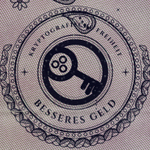
KNAPPHEIT KANN MAN NICHT DRUCKEN
Germany printed so much money it became children’s toys. But scarcity cannot be printed.
By 1923, Germany's inflation was out of control. The government was printing paper marks so fast they had become virtually worthless. Denominations reached trillions and children used them as building blocks and toys. In desperation, the government introduced the Rentenmark, exchanging one new mark for one trillion old marks. With insufficient gold reserves, it turned to debt, securing the new currency with mortgage claims against property, putting assets as a pledged support to a new monetary promise.
In 1924, Germany introduced the Reichsmark, based on a international gold-exchange. It circulated alongside the Rentenmark at the same value. Remarkably, both currencies helped stabilize the economy and remained in circulation until the 1948 currency reform. Germany had escaped hyperinflation, but its recovery relied on emergency financial engineering, property-backed debt and international support. The government had first destroyed the value of money through unlimited issuance, then attempted to restore confidence by placing the country's wealth and future behind promises.

1
7
145

Exit Notes Storytime - Bengali
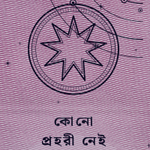
সৎ অর্থ খোলা খতিয়ান
The king struck the coin. The sarraf decided its worth.
Bengal's revenue was collected in the sicca rupee, the standard coin struck at Murshidabad. The value of other coins was assessed by official money changers known as sarrafs. As coins circulated a discount called batta was applied reflecting their age, wear and silver content. A newly minted sicca commanded a premium over sanwat, older coins already in circulation. Rupees from Madras, Arcot and Patna were assessed in the same way, each assigned its own discount. The sarraf played a decisive role in determining these valuations.
Merchants depended on the sarraf's expertise, giving him considerable influence over the value of money. That position placed him at the pivot point between honest assessment and corruption. An honest sarraf would help commerce function by identifying sound coins and establishing fair exchange values. But unscrupulous sarrafs would manipulate valuations, imposing false or excessive discounts and exploiting customers who had little ability to challenge them. Some then profited by buying discounted coins and taking them to the mint for recoinage. Their role was valuable, but the power they held could never be entirely trusted.

1
3
121

Exit Notes : Plains Cree
ᐚᐦᑰᑐᐏᐣ
I wish to honor the Plains Cree people and their understanding of kinship, connection and mutual responsibility. Kinship is the recognition that we belong to one another and carry responsibilities beyond ourselves. It reminds us that our relationships, our communities and the bonds between generations are worth protecting.
May we remember that our greatest wealth is not what we possess, but the relationships we nurture and the care we show one another.


Exit Notes Storytime #10 - Spanish
SÉ TU PROPIO BANCO
Argentina locked savings from being spent, but people found other ways to trade.
In 2001, Argentina's government imposed the corralito (little corral) restricting bank withdrawals to just 250 pesos or US dollars per week and emergency “currencies” began circulating. For example, the Patacones issued by Buenos Aires were used to pay some public employees and pensioners. They functioned like money but were really just a government promise of debt repayment. As cash became scarce and confidence in the banking system collapsed, barter clubs spread across the country.
People brought food, clothing, household goods and services to local markets, exchanging them through networks that used their own community-issued credits. A person might trade homemade bread for vegetables, repair work for clothing, or earn credits by offering a service and spend them later on something their family needed. These restrictions lasted up to two years. Argentinians discovered that letting the bank hold their money did not ensure freedom to use it. And in order to survive people built their own ways to transact.
Thanks to @Yeiikx_ for translation support


Exit Notes Storytime #9 - Filipino
HINDI KAILANGAN NG PAHINTULOT
Thanks to @TosyoYashico for translation support
They didn't print money in Bontoc. They grew it in the fields.
In Bontoc, in the mountains of northern Philippines, people used palay, unthreshed rice wrapped in its husk, as money. It was not just something traded. It was how they measured the value of almost everything. A handful of rice had recognized value, whether people were buying salt, livestock or everyday goods. Palay could feed a family, be stored for years or exchanged for something else. Its value was tangible, and everyone understood it.
Even after coins arrived, palay remained the preferred measure. People continued to calculate the value of goods in rice, even when payment was made in coins. No central bank issued it. No government decree gave it value. People accepted it because they needed it and knew others would accept. Money was not declared into existence. It was already growing in the fields.


Exit Notes Storytime #8 - Finnish
NIUKKUUTTA EI VOI PAINAA
You can cut a banknote in half. But you cannot cut digital scarcity.
At the end of 1945, Finland ordered people to take scissors and physically cut their 500, 1000 and 5000 markka banknotes in half. Only the left half remained spendable, and at just half the note’s original value. The right half became a compulsory loan to the state, which promised to repay it with 2% interest by 1949. Holders were required to surrender the right half to a bank by a set deadline in exchange for a receipt. The left halves could still be spent until they had to be exchanged for new banknotes.
The measure was intended to curb inflation, bring cash holdings into the open and expose wealth that might otherwise escape taxation. It applied to physical cash, but bank balances were also subject to new declaration requirements before certain funds could be withdrawn. Within hours, the government had changed the value of the physical money people held in their hands, cutting its spending power in half while turning the other half into a forced loan to the government.


Exit Notes - An Origin Story
🧵 1/6
Bitcoin was born to decentralize money. Its proliferation, however, was inherently centralized with the English language a quiet barrier. The code was permissionless, but understanding it wasn’t. A system designed to remove gatekeepers began with a linguistic one. To be an early participant, you first had to understand what was actually written.

Exit Notes Storytime #7 - Hokkien
SING-SIT E TSINN KAP KHAI-HONG E SIAU-PHOO
Hokkien merchants moved credit across oceans through reputation. No central bank. Trust was the infrastructure.
Merchants from southern Fujian built trading communities across maritime Asia. They sailed to Taiwan, Manila, Nagasaki and ports throughout Southeast Asia, establishing partnerships and commercial connections far from home. These communities formed an extensive network linking merchants, families and business partners across the sea. As Amoy (modern Xiamen) rose to prominence as a major trading port in the late seventeenth century, it became a central hub in one of the region's most extensive commercial networks.
Credit did not move through banks, but through these connections. A merchant could extend credit to a partner overseas, backed by family ties, clan affiliations and a history of reliable dealings. Loans were secured against ships or cargoes, with interest and repayment agreed in advance. Clan networks helped maintain relationships, preserve reputations and settle obligations, becoming a crucial part of the trading system that stretched along the Chinese coast and overseas.


Exit Notes Storytime #6 - Cantonese
thanks to @My_3y3 for translation review
唔使批准嘅錢
In nineteenth-century Hong Kong, money came from everywhere. Merchants traded in Mexican silver dollars, Indian rupees, Chinese copper cash and British sterling, with the Mexican dollar emerging as the favourite for commercial transactions. Its popularity was so firmly established that in 1863 the colonial government formally recognised it as legal tender. The authorities later attempted to challenge that dominance by minting their own silver dollar. But merchants showed little appetite for the new coins, and the venture proved expensive. By 1868, the Hong Kong Mint had closed.
The Mexican dollar, meanwhile, kept changing hands. For nearly a century, Hong Kong issued no dollar coins of its own. In 1894, more than twenty-five years after the mint closed, the China Association was still describing the Mexican dollar as the principal coin of Hong Kong and China's treaty ports. The colonial government's coinage experiment had lasted barely two years. The currency it had tried to replace remained firmly established in the marketplace.

Hard reminder about reality.
If a person is not willing to do something themselves, they cannot expect others to do it for them.
This apples too all of us. And on many different topics. Stand up for your beliefs, your views. Because nobody will do that for you.
✊

United States society is highjacked by the lobby and corruption.
1) Nobody speaks about criminalize the lobby;
2) Nobody speaks about end dual citizenship;
3) Nobody had been held accountable;
Yet, only the opposite happens… all bulshit.
4
121
Exit Notes Storytime #5 - Swahili
KUSHUKA KWA THAMANI KUNAISHIA HAPA
Before the American Civil War, Zanzibar had a remarkably diverse monetary system. Merchants used the Maria Theresa thaler, Spanish and South American silver dollars, French francs, British sovereigns and other coins. Their relative values fluctuated with seasonal demand, trade routes and market preferences. Merchants decided what they wanted to accept from the different currencies. When the American Civil War disrupted trade, the supply of popular coins diminished and exchange rates became increasingly unstable. By late 1861, Zanzibar's merchants had abandoned fluctuating market rates and agreed on fixed values for coins in circulation, enforced by the Sultan.
In 1863, under pressure from the British consul, the Sultan introduced the Indian rupee as legal tender at a fixed rate. The merchants had not asked for it, yet within a few years the rupee had become the dominant silver currency. By 1900, it was the principal currency along much of the East African coast. External influence, war and foreign directives had turned a functioning system in which merchants accepted a variety of competing currencies into one dominated by a single standard, increasingly controlled by centralized authority.

5
98