

Founder and CEO, Turing. Accelerating Superintelligence on the Real-World Frontier.
Palo Alto, CA
Joined November 2008
- Tweets8.2K
- Following5K
- Followers8.2K
- Likes16.2K








Pinned Tweet
There’s a new AI frontier.
It isn’t the benchmark anymore. It’s where models meet real work.
A model that tops a leaderboard doesn’t move the economy. A model that runs a month-end close does.
Models need residency.

Jonathan Siddharth retweeted

The largest math proof in human history is now computer-verified.
Today, Axiom announces a complete Lean auto-formalization of the Classification of Finite Simple Groups, the "periodic table of symmetry."
About 15,000 pages, built by over 100 mathematicians across generations.
Carina and the @axiommathai team just machine-checked the longest proof humans ever wrote, in 24 days.
Along the way they surfaced a gap in a decades-old published argument.
Huge congrats @CarinaLHong!
As you once told me, the hardest problems for humanity are reasoning bound. You're proving it.

Secret: 🤫 Turing is not a data company.
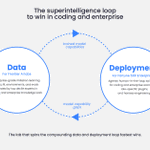
We're a data and deployment company, built for the real-world frontier.
The world wants models that do real work, not just win benchmarks. The best data is data that helps a model master real work. You only get that data from deployment, because that's where the real distribution lives.
Frontier labs and enterprises both need this loop to build superintelligence for the real world.
IRL is the new RL.

Jonathan Siddharth retweeted

At the @WestBridge_Cap AI Summit in SF on Oct 15, @Jonsid spoke with @timshi_ai of @Recursive_SI and @prakhar5050 of @Meta.
1. We’re close to automating most AI research. Experiments are the slow part.
2. Agents aren’t reliable on long tasks yet. Lots of work is going into it.


Jonathan Siddharth retweeted

I like Turing CEO @Jonsid's framing on how Enterprise's should think about AI over time.
For non-core workflows, its okay to rent intelligence. For important core workflows, you want to own the learning loop: have custom evals, deploy a system, record traces, fine-tune & hill climb on accuracy/cost/latency
Jonathan Siddharth retweeted

RSI IRL = SI
For this we need feedback loop from enterprise to evals. Only @turingcom has this.
Jonathan Siddharth retweeted
There’s a new AI frontier.
It isn’t the benchmark anymore. It’s where models meet real work.
A model that tops a leaderboard doesn’t move the economy. A model that runs a month-end close does.
Models need residency.

Jonathan Siddharth retweeted

My team at Turing builds the data that teaches models real work. Jonathan explains why deployment failures should shape that data.
Jonathan Siddharth retweeted

Thanks Aaron Levie (Co-founder of B0X), AGI House, and Turing for a great event and panel at SFTechWeek!
Videos coming soon!
@levie
@agihouse_org
@turingcom
@Jonsid


Jonathan Siddharth retweeted

Turing CEO Jonathan Siddharth (@Jonsid) on what AI doomers are missing when they talk about AI eliminating all jobs:
“AI's biggest superpower is upleveling the type of problems humans can now solve. That's what these models help us do.”
“It's about asking the right questions & verification. And now, the scope of problems that you can solve is massive.”

BREAKING: The future of AI isn't open vs. closed.
We need a TON of both.
Turing CEO on why frontier AI & open-weight models are increasingly serving different parts of the AI stack.
“There's absolutely a place in the world for Ferraris & Koenigseggs. But there's also a place in the world for Model Ys.”
Frontier models continue pushing the limits of intelligence. Jonathan's point isn't that one replaces the other. We need frontier AI to keep advancing capabilities & open models to diffuse those capabilities across the economy.
BTW "Only 2% of US households pay for AI" It's still early.
At the same time, AI training is moving beyond benchmarks into simulated environments built for real work, as agents move from completing tasks to operating autonomously for days, & eventually weeks, months & years.
@turingcom CEO Jonathan Siddharth (@Jonsid)
We break down what this shift means for frontier labs, enterprises & the AI stack:
› Frontier AI vs. sovereign AI
› Distillation & the shrinking model gap
› Why enterprises are moving to open models
› What AI safety & alignment teams actually do
› Reward hacking & why “if the model can figure out a way to cheat & get the reward, it will”
› Super Intelligence, recursive self-improvement & slow takeoff
𝐓𝐈𝐌𝐄𝐒𝐓𝐀𝐌𝐏𝐒
(00:00) Jonathan Siddharth, Co-Founder & CEO at Turing
(01:03) The biggest shift in AI data this year
(04:10) Why AI won't replace jobs, but uplevel them
(08:31) The arms race inside cybersecurity
(11:22) Why train AI on what it shouldn't do?
(15:45) The Hugging Face hacking incident
(22:33) How AI models cheat to win
(27:40) The AI playbook
(32:20) Open models are only 3–6 months behind
(41:30) Why chips, energy & data always win
(47:27) Is superintelligence by 2030 the goal?
(53:32) Jonathan's hottest take on AI
(55:00) The next 10 years of superintelligence
Jonathan Siddharth retweeted

Turing CEO Jonathan Siddharth (@Jonsid) says AI’s bio risk is much scarier than cybersecurity risks because the downside could be catastrophic & we’d have no defense against it:
“With bio, the risk is a little bit asymmetric.”
“If somebody comes up with a crazy virus, imagine something like Covid with a high viral coefficient in terms of how quickly it spreads with a high K factor, & maybe it is much more fatal than Covid was.”
“You saw how hard it was to come up with vaccine production quickly. Deployment happens in the real world. We are limited by a lot of real world factors.”
“There is more risk in terms of how quickly we will be able to combat these.”
BREAKING: The future of AI isn't open vs. closed.
We need a TON of both.
Turing CEO on why frontier AI & open-weight models are increasingly serving different parts of the AI stack.
“There's absolutely a place in the world for Ferraris & Koenigseggs. But there's also a place in the world for Model Ys.”
Frontier models continue pushing the limits of intelligence. Jonathan's point isn't that one replaces the other. We need frontier AI to keep advancing capabilities & open models to diffuse those capabilities across the economy.
BTW "Only 2% of US households pay for AI" It's still early.
At the same time, AI training is moving beyond benchmarks into simulated environments built for real work, as agents move from completing tasks to operating autonomously for days, & eventually weeks, months & years.
@turingcom CEO Jonathan Siddharth (@Jonsid)
We break down what this shift means for frontier labs, enterprises & the AI stack:
› Frontier AI vs. sovereign AI
› Distillation & the shrinking model gap
› Why enterprises are moving to open models
› What AI safety & alignment teams actually do
› Reward hacking & why “if the model can figure out a way to cheat & get the reward, it will”
› Super Intelligence, recursive self-improvement & slow takeoff
𝐓𝐈𝐌𝐄𝐒𝐓𝐀𝐌𝐏𝐒
(00:00) Jonathan Siddharth, Co-Founder & CEO at Turing
(01:03) The biggest shift in AI data this year
(04:10) Why AI won't replace jobs, but uplevel them
(08:31) The arms race inside cybersecurity
(11:22) Why train AI on what it shouldn't do?
(15:45) The Hugging Face hacking incident
(22:33) How AI models cheat to win
(27:40) The AI playbook
(32:20) Open models are only 3–6 months behind
(41:30) Why chips, energy & data always win
(47:27) Is superintelligence by 2030 the goal?
(53:32) Jonathan's hottest take on AI
(55:00) The next 10 years of superintelligence