

We are a global poverty research center @MIT that conducts randomized evaluations and builds partnerships to bring innovative, effective programs to scale.
MIT, Cambridge, MA
Joined August 2011
- Tweets10.8K
- Following579
- Followers60.9K
- Likes2.9K
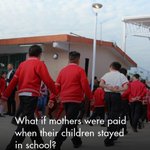




Cash transfers keep children in school. But what happens 20 years later?
In Mexico, villages that got PROGRESA transfers 18 months earlier saw children stay in school longer and, in one cohort, earn about 15% more as adults.
bit.ly/4ixaVPc

How do you improve preschool quality when resources are limited?
In Ghana, the Lively Minds program trained local mothers to support play-based learning alongside teachers.
Result: children showed stronger numeracy and executive function gains, implementation costs fell.
bit.ly/4ixaVPc

J-PAL retweeted

This week's newsletter features a DEDP student and his work on improving public policy interventions, a new direction for an @mitlibraries initiative, and more. mailchi.mp/mit/shass-weekly-… @MITEcon @MIT_CIS @JPAL_NA @JPAL

ALT MIT Data, Economics, and Design of Policy (DEDP) student Lyonel Tanganco
How do you know whether the impact of a program holds across different contexts? 🌍 Explore this question and more in J-PAL's free, online Evaluating Social Programs course where @j_floretta breaks down how to think about generalizability.
bit.ly/4y9wGKN


Inspired by evidence from Indonesia, they tested celebrity video messages sent via text to 25 million people.
The impact?
✅ 20% less travel
✅ More handwashing
✅ Increased symptom reporting
The Indian government scaled the campaign, including during high-risk moments like festivals, ultimately reaching 32 million people. Learn more: povertyactionlab.org/case-st…

Want to pursue a graduate degree at a leading university? 🎓
If you are taking the Data, Economics, and Design of Policy (DEDP) MicroMasters, your coursework can help you get there.
Through the Alliance for Data, Evaluation, and Policy Training (ADEPT), DEDP learners can apply their coursework toward admissions applications at our partner institutions.
📅 The DEDP team is joining our partners’ webinars to share more about the upcoming term. Find the webinars and register here: micromasters.mit.edu/dedp/an…
In Egypt, 51% of employed workers have more education than their jobs require. 90% of unemployed respondents have a minimum acceptable wage above what they would likely earn in the informal private sector.
Read the Egypt Impact Lab's findings: bit.ly/3Wr7uls

In rural Ghana, a US$3 cash offer raised verified Covid-19 vaccination by 12.3 percentage points, a 43% increase.
A US$10 offer had no effect.
Researchers suggest matching incentives to vaccination's real costs: too much cash may breed suspicion instead of uptake. bit.ly/3VXN3wo

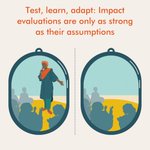
How does an evaluation's design impact a study's credibility?
When researchers design a study—including randomized evaluations—they rely on assumptions, like the assumption that people in a study are split into truly random groups. The credibility of any impact evaluation depends on whether those assumptions are plausible in a given context. J-PAL Research and Training Lead Michala Riis-Vestergaard explores what those assumptions are, why they matter, and how to assess them across different evaluation designs.
povertyactionlab.org/blog/6-…

Bihar set out to reach its most vulnerable households. Two years on, households in the program had 2x the monthly income and 8x the business revenue of comparable households.
Built and scaled by Government of Bihar and JEEViKA, and now scaling to 12+ states. Read more: bit.ly/482Kj3v


From MicroMasters to master’s at MIT. 🎓If you’re completing (or have completed) the DEDP MicroMasters, join us on Wednesday, October 21, 2026, at 9:00 am ET to learn how you can apply to the DEDP master’s program at MIT.
DEDP program staff and a program alum will be answering questions live. Register: bit.ly/46GnXo0

About 800 million people live in extreme poverty. One approach with strong evidence: the Graduation approach, 1-2 years of support that includes a business asset, cash, training, and coaching.
In India, gains a decade later were nearly 4x the cost.
bit.ly/4jslTYm #EndPoverty

Interested in impact evaluation but can’t enroll in a full-time class? You can complete J-PAL’s free, online course on #EvaluatingSocialPrograms on your own schedule.
Enroll today: bit.ly/4y9wGKN

One simple, low-cost way to save children’s lives: chlorine in drinking water.
It can cut the odds of death for under-fives by about a quarter. In Malawi, vouchers for free chlorine matched door-to-door use at lower cost.
bit.ly/4s8xcqS

Does charging a small fee for a mosquito net help?
In Kenya, almost all pregnant women took a free bednet at clinics. When it cost US$0.60, most didn’t.
17 studies: even low prices can keep families in need from getting these products.
bit.ly/3TDIxm5
