

Founder and Partner @FoundersCC. Co-founder @alphaclub "Grateful for everything; entitled to nothing." Jack Clark.
Silicon Valley
Joined December 2007
- Tweets3.3K
- Following1.6K
- Followers1.7K
- Likes4.2K




This post is about a year late, but better late than never!

When everyone can write code, someone still has to ship it.
AI is dramatically lowering the barrier to building software. But as more people and agents create applications, the demand for infrastructure to deploy, secure, and operate them is only growing. That's a big part of why we invested in @Vercel, and we’re proud to be part of their Circle! 👏
@Mkjung shares what makes @rauchg and the Vercel team exceptional, how AI is expanding the infrastructure opportunity, and why we believe Vercel is positioned to become a foundational cloud platform for the agentic era.
Read the full story here: founderscirclecapital.substa…

Mike Jung retweeted

When everyone can write code, someone still has to ship it.
AI is dramatically lowering the barrier to building software. But as more people and agents create applications, the demand for infrastructure to deploy, secure, and operate them is only growing. That's a big part of why we invested in @Vercel, and we’re proud to be part of their Circle! 👏
@Mkjung shares what makes @rauchg and the Vercel team exceptional, how AI is expanding the infrastructure opportunity, and why we believe Vercel is positioned to become a foundational cloud platform for the agentic era.
Read the full story here: founderscirclecapital.substa…

It is painfully obvious @UMichFootball needs to make a change at offensive coordinator. It’s not the players. What are we waiting for @UMFBCoachWhitt?

#Michigan drives that did not start with a defensive turnover, last 3 games:
PUNT
PUNT
PUNT
PUNT
INT
INT
PUNT
PUNT
DOWNS
PUNT
PUNT
INT
PUNT
INT
PUNT
PUNT
PUNT
PUNT
FMB
PUNT
INT
PUNT
MISSED FG
MISSED FG
PUNT
PUNT
MADE FG
27 drives, 17 punts, 5 picks, 1 fumble,
3 points.
Wow.
Great episode @venkyganesan!

Great summary and amazing interview @HarryStebbings! i'm surprised @venkyganesan only quoted ~5 people across several centuries. He does that in a single partners meeting and makes us all smarter, more entertained. A great investor, visionary, culture keeper, and scholar!
Mike Jung retweeted

Great summary and amazing interview @HarryStebbings! i'm surprised @venkyganesan only quoted ~5 people across several centuries. He does that in a single partners meeting and makes us all smarter, more entertained. A great investor, visionary, culture keeper, and scholar!

What Menlo has done over the last 24 months is exceptional.
Yes, they did Anthropic’s round at $4BN that will make them $50BN+ as a firm. NICE!
But they then took that and went f****** hard. They do Lovable, Higgsfield, Legora.
They compounded the brand win of Anthropic to cement their position from respectfully a slightly ageing firm to being a dominant venture leader at the forefront with Thrive, a16z, Benchmark etc.
It is incredible to see and I sat down with @venkyganesan to shoot the s*** on this.
1. Every Seed Investment Is an Option Bet
Seed-stage deals function as financial options to discover true outlier potential before committing major capital. VCs must construct a broad enough portfolio to secure sufficient at-bats, only sizing up their position when quantifiable, revenue-based metrics prove an outlier has emerged.
2. What Is the First Sign of the AI Wave Cracking?
Market cycles rarely collapse due to equity write-downs. They fracture when levered debt defaults occur. When market participants take on heavy leverage during an AI boom, precise timing becomes as critical as being directionally correct, making debt obligations the primary failure vector when cycles turn.
3. Why Every VC Must Now Prioritize IRR
Every startup in the current landscape writes a structural tax to the Mag 7 and hyperscalers for compute and foundation models. Because LPs can buy index exposure to those same public tech giants without fees or carry, private VCs must generate outsized IRR performance, beating public markets by at least 1,000 basis points, to justify private capital allocation.
4. Why LPs Wanting Smaller Funds and Slower Deployment Is BS
LPs cannot demand both smaller fund sizes and multi-year deployment paces in the middle of a generational platform shift. Because AI startups face immense capital requirements to scale compute, VC firms that refuse to deploy capital rapidly will watch competitors step in and capture the category winners.
5. The Theory of Reflexivity and How It's Causing Markups
Reflexivity creates self-reinforcing loops where fast revenue growth triggers rapid valuation markups, attracting elite human and financial capital that further accelerates growth. However, when copycat investors chase markups for momentum rather than underlying fundamentals, reflexive valuation bubbles inflate until market realities force an inevitable correction.
6. Sometimes You Pay Up Because You Have Unique Insight
Premium entry prices are not always the result of irrational bidding. They often stem from an investor's ability to recognize a fundamentally larger total addressable market than the consensus. When a VC possesses unique conviction around an expanding market opportunity, paying above current rates reflects calculated foresight rather than price-taking behavior.
7. There's No Limit to What a Person Can Do as Long as They Don't Care Who Gets the Credit
Personal ego remains one of the most expensive liabilities in venture capital and company building. True long-term success requires setting aside individual notoriety, focusing ruthlessly on generating LP returns, and empowering teammates and founders without worrying about who receives the public credit.
(links in comments)
Mike Jung retweeted

Ten years of The Cloud 100 led us to this moment —>
The AI 100!
@BessemerVP is partnering with @EricNewcomer and @NewcomerMedia to rank the top 100 private AI companies. Models, agents, infra, robotics. We’ll cover it all.
Nominations close Oct 15. Full list drops Nov 12.
Submit the AI juggernaut you want to see represented 👉theai100.com


For 10 years, the Cloud 100 defined the best software companies—now, we’re launching the AI 100.
In partnership with @NewcomerMedia, we’re creating a new annual ranking of the 100 most important private AI companies.
Submissions are open through Oct. 15, 2026, and eligible companies must build AI or the systems AI runs on, regardless of fundraising size.
From foundation models to robotics and beyond, nominate a company that you think should make the list 👉 theai100.com

Mike Jung retweeted

AI-defined vehicles require transforming more than the software in the car, they require transforming how that software gets built.
That’s why we’re excited to partner with @Nissan to support their next-gen SDV and AI-defined vehicle efforts, built on our Vehicle OS.
This is how AI-defined vehicles get built from here.
appliedintuition.com/blog/ni…
Mike Jung retweeted
Silicon Valley software expertise x Japanese engineering excellence.
Applied Intuition and @HondaJP are partnering to speed up Honda’s in-house development of a centralized, upgradeable SDV platform.
Learn more about how we are working together to transform the automotive industry.
appliedintuition.com/blog/ho…
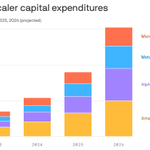
An investment bank report claims AI helps startups scale faster on less capital, shrinking VC returns and leverage.
Wrong. AI-native startups need more capital than ever to scale. Compute is insanely expensive, and that won’t change anytime soon.
Mike Jung retweeted

Q3 2026 was the strongest quarter in @WeAreLegora's history.
By the numbers:
$200M+ ARR, crossed in September
2,300+ customers across 80 countries, with 800 new customers added during Q3
40%+ of new business from in-house legal teams
We added more ARR this quarter than our total ARR exiting 2025
We shipped improvements to our harness, reducing credit consumption tied to LLM costs on the Agent by ~25% while improving the response quality
Product: Q3 opened with our biggest-ever release: Legora Agent, Monitors, and Lists reaching general availability in June. From there:
AI-native Legal Research launched
@imanageinc MCP integration and expanded file handling went live
Legora on Salesforce AgentExchange and Legora inside ChatGPT (via @OpenAI for Law) shipped in the final weeks
Those releases are compounding inside the product:
Daily active users spend 2+ hours a day on the platform
Legal research searches per task have doubled
The average search reads 2x more documents
We also closed our fifth acquisition of 2026: Wexler, the London-based fact intelligence platform, now forming the factual foundation of Legora's agentic workflows.
New Q3 customers included:
@PaloAltoNtwks
@salesforce
@bradleylegal
@DanskeBank_UK
@SPGlobal
@FaskenLaw
Thank you to every Legora team member and every customer who bet on us. We intend to earn that trust every day.
More soon.


Mike Jung retweeted

A few thoughts on the current state of venture capital.
When the Music Is Playing
In July 2007, a few weeks before the credit markets seized up, Chuck Prince, then the CEO of Citigroup, gave an interview to the Financial Times. The line everyone remembers is this one: "As long as the music is playing, you've got to get up and dance." He was mocked for it for years afterward, and he lost his job a few months later. But I have come to think he was saying something honest. He wasn't claiming the music would play forever. He was admitting that he couldn't sit down while it was still going, and neither could anyone else in his seat.
I've been thinking about that quote a lot lately, because right now is the most disorienting period in venture capital I can remember, and I have been doing this for a while.
Here is what makes it disorienting. It's not that things are bad. Some things are spectacular. We have companies in our portfolio growing faster than anything I have seen in my career, and I don't say that lightly. At the same time, we have companies with no revenue, no product, and a founding team you could fit in a conference room raising billions of dollars at valuations of $10 to $50 billion. Both of these things are true at once, and if you try to reason about them with the same framework you will drive yourself crazy.
Two ideas have helped me make sense of it. Neither is mine.
The first is reflexivity, which George Soros has been writing about since the 1980s. In most of life, perception follows reality: the weather is what it is, and your opinion of it changes nothing. In markets, it runs the other way too. Prices change what participants believe, and what participants believe changes the prices. The feedback loop can run for a long time, and while it's running it looks exactly like progress.
Here is how reflexivity is playing out in AI. Full disclosure: Menlo is an investor in Anthropic, so read the following with that in mind. People watched a frontier lab go from a $4 billion valuation to $18 billion, then $60 billion, then $180 billion, then $380 billion, and now something close to a trillion. They drew the obvious conclusion: that is what a neo lab looks like. So the next neo lab gets priced off that path, not off anything it has built. Then it gets marked up in a subsequent round, and the markup itself becomes the proof. Look at Thinking Machines. Look at Reflection. At that point valuation has stopped being an output of the metrics and has become the metric. Nobody is discounting cash flows. They are discounting the last round.
Soros is very clear about one thing, and it's the part people skip: you cannot know when or how a reflexive process ends. You only know that it does. Every one of them has.
The second idea is Chuck Prince's, and it explains why smart people keep dancing even when they can see the loop for what it is. As far as I can tell, there are two groups on the dance floor.
The first group got in early. Firms like ours were in some of these AI companies before the numbers got silly, and the paper gains are enormous. When you are sitting on gains like that, you start to feel like you're playing with house money. I have been around long enough to know that house money is the most dangerous kind, because you don't respect it the way you respect money you had to earn.
The second group missed the early rounds and knows it. Their LPs know it too. So they are trying to make up for lost time by writing very large checks very late, which is the one strategy almost guaranteed to turn a missed opportunity into a real loss.
House money on one side, FOMO on the other, and reflexivity feeding both. That's the whole story. Everyone has a reason to keep dancing, and the reasons are different, which is why nobody can talk anyone else off the floor.
So what do you do? The instinct in our business is to answer with company identification: just pick the right neo lab and you'll be fine. I think that's the trap. When price has become the signal, being right about the company is not enough, because you can be right about the company and still be wrong about the price by a factor of ten. The public-market investors I admire figured this out a long time ago. They spend as much time on how much to own as on what to own.
The winners in venture over the next decade will be the firms that treat portfolio composition and position sizing as seriously as they treat sourcing. How much of the fund is in companies whose valuation rests on the last round rather than on revenue? What happens to the portfolio if the reflexive loop breaks next year instead of in five? Those are not exciting questions. They are the ones that will matter.
The music will stop. It always does. Dance if you must, but know where the chairs are.
Mike Jung retweeted
Last week, @WeAreLegora reached $200 million in annual recurring revenue (ARR).
It took us 18 months to grow from $1 million to $100M ARR. It took us less than 6 months to double it to $200M ARR.
To put that in perspective, we are on track to add more ARR this quarter alone than our entire ARR base at the end of 2025. Our positive gross margin improved while we did it. That is what makes the next double possible, and the one after that.
The numbers behind the milestone are equally exciting.
Our pilot win rate is 75 percent quarter to date, with improvement across every customer segment and geography.
More than 40 percent of Q3 new business has come from in-house legal teams. The U.S. is now our largest market by revenue, and more than half of the AmLaw 50 are Legora customers.
130,000 lawyers now use Legora each month across 2,100 firms and legal teams in more than 80 countries.
To our customers like @salesforce, @PaloAltoNtwks, @bakermckenzie, @WhiteCase, especially those who bet on us early, and to the entire Legora team, thank you.

Mike Jung retweeted

Prediction: within 12 months, top three models will be open source.
Economic winners will be the American clouds that serve them:
Nebius
Iren
Baseten
Together
Fireworks

Looks like today may be a record day for token volume % of open models on Vercel AI Gateway:
🟦 Open 78.4% 🟨 Closed 21.6%
While spend 💲 usually tells a different story, #3 and #4 today are Moonshot AI & DeepSeek. Adding Z.ai, their combined spend surpasses OpenAI (#2).
(Do note that's the spend for inference of the model across providers (mostly in the US), not revenue going directly to the open weight labs.)

Mike Jung retweeted

Anyone that works in AI is working the hardest they've ever worked in their lives. On the surface it's somewhat ironic (AI should give us back time!), but the reality is that it's the most fun, fascinating and empowering epoch in human history. The intelligence revolution.
Key point "eventually it all has to turn into DPI"

Instinct might be the best example of how quickly one investment can completely change the paper returns of a venture fund today.
The fundraising progression has been insane:
April 2026: ~$17M seed at ~$148M
Investors: @conviction + Greenoaks
August 2026: $75M Series A at ~$568M
Investor: Kleiner Perkins
August 2026: $250M Series B at $2.5B
Investors: @benchmark + @IndexVentures
Now they’re reportedly discussing another $1B at ~$10B, potentially led by @sequoia + @benchmark.
Run the math assuming that $10B round happens.
(For simplicity I’m assuming 20% dilution at every subsequent round, even though actual dilution has likely been lower and some investors may have re-upped to maintain ownership.)
Seed: $148M → $10B = ~68x headline markup, or roughly ~35x after three rounds of 20% dilution.
If @conviction and Greenoaks split the ~$17M seed equally, an ~$8.5M investment could be worth roughly ~$300M each.
Conviction’s latest fund is ~$230M.
One ~$8.5M investment could be marked at MORE than the entire fund.
Then Kleiner Perkins:
$568M → $10B = ~17.6x headline markup, or ~11.3x after two rounds of 20% dilution.
Assume Kleiner funded the full $75M Series A.
$75M → ~$845M.
KP’s 2026 early-stage fund is ~$1B.
One investment made months ago could already be marked at ~85% of the entire fund.
Then @benchmark + @IndexVentures:
$2.5B → $10B = 4x headline markup, or ~3.2x after 20% dilution from the new round.
Assume they split the $250M Series B evenly.
$125M → ~$400M each.
Benchmark’s new flagship fund is ~$750M.
One investment could already be marked at ~53% of the entire fund.
None of this is DPI.
It’s paper value. The individual check sizes aren’t public, the $10B round hasn’t closed, and these dilution assumptions are intentionally conservative.
But that’s the point.
A VC can make one investment and months later have a position marked at hundreds of millions of dollars.
One company can completely change a fund’s TVPI and gross MOIC almost overnight.
That performance helps raise the next fund, which gives you more money to compete for the next hot company, which gets marked up again.
Eventually it all has to turn into DPI.
But today you can have a “fund returner” on paper before the company is even two years old.