

12th Speaker of Parliament of the Republic of Uganda 🇺🇬 | MP West Budama Central, Christian, Husband, Father, Advocate & Proud Child of Tororo District.
Uganda
Joined September 2011
- Tweets1.3K
- Following550
- Followers17.4K
- Likes2.6K
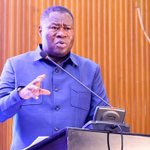


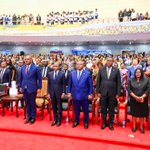

This evening, I graced the University Student Leaders’ Convention at Parliament under the theme, “The Role of University Student Leadership in Advancing National Development, Social Cohesion, Peace and Unity in Uganda.”
I was joined by Hon. Gerald Karuhanga, a former Guild President, the Clerk to Parliament, and student leaders from 65 universities and institutions of higher learning, alongside 10 secondary school coordinators.
I reminded them that President Yoweri Museveni, Hon. Karuhanga and many of us once sat where they sit today.
I told them what they do in that seat determines where they go because tudent leadership is a process, not a product.
I urged them to stay focused, whatever the hardships. Using my own story, I emphasized that they don’t need a godfather to get where they want to be; they only need God in their lives.
The students raised genuine concerns: inadequate accommodation, costly feeding, fairness in the student loan scheme, campus security, health and welfare, and road safety near institutions.
Parliament will consider these once we receive their written submission.
Parliament is your House. We shall host you every year and build a mentorship programme.
I thank the Julius Nyerere Leadership Centre and the Netherlands Institute for Multiparty Democracy for their partnership.


Yesterday, I hosted the World Bank Country Manager for Uganda, Dr. Francisca Ayodeji Akala, and her team at my Chambers.
We were joined by the leadership of the Budget, Finance and Public Accounts (Central) committees, the Clerk to Parliament and the Director of Finance.
I commended the World Bank Group for its long-standing partnership with Parliament and reaffirmed our commitment to working with development partners to advance Uganda’s development priorities.
The Country Manager revealed that lengthy approval and procurement processes are taking close to 600 days, thereby stalling critical projects in Uganda.
For example, it was revealed during this meeting that the Electricity Access Scale-up Project has run since 2022/23, yet power has not reached the intended beneficiaries. This must be tackled by all stakeholders in order to bring services closer to our people.
I have therefore directed the relevant committees to engage Government and the Bank to resolve these bottlenecks, and I will convene a meeting with the Prime Minister, the World Bank Group and the relevant Government teams to look into this matter.
These projects benefit our nation, and any World Bank project delayed by lengthy red tape denies economic justice to our people.
Parliament is open to dialogue. We look forward to progress, not a stalemate.


Jacob Marksons Oboth (MP) retweeted

#Earlier: Speaker @ObothOboth has pledged to push for fast tracking of World Bank funded projects that have stalled in government approval and procurement processes.
Meeting the Bank Country manager, Dr Francisca Ayodeji Akala, Oboth called on the Bank to keep offering affordable financing.
Akala had expressed concerns with delays in approvals noting that some procurement processes take up to 600 days.
Judicial officers, especially those of lower rank, face very complex situations that have a peculiar bearing on their welfare.
This afternoon, members of the Uganda Judicial Officers Association, led by Lady Justice Jane Frances Abodo, the Principal Judge, paid a courtesy call on me in the Speaker's Chambers.
Evidently, magistrates are the first point of contact between citizens and the justice system. But many work under difficult conditions. We cannot expect an institution to perform at its best when those who run it are not well facilitated.
I assured the delegation that welfare proposals, properly packaged and tabled, will receive Parliament’s due attention.
I commend UJOA for its Porridge Project, which offers remandees a cup of porridge during long court days, a simple act that upholds human dignity.
As a trained mediator, I welcome the Judiciary’s growing use of Alternative Dispute Resolution. Rolling out the Peace Centre nationwide will give more Ugandans access to timely, out-of-court justice.
Parliament remains firmly committed to strengthening the Judiciary and improving the welfare of all its officers.


Yesterday, I received the Whips of the 12th Parliament in my Chambers to talk about their work.
They included the Government Chief Whip, Dr. Jane Ruth Aceng. Opposition Chief Whip Hon. Paul Mwiru, Hon. Ann Adeke Ebaju (FDC), Dr Eunice Otuko Apio (UPC) and Hon. Peter Okot (DP). They presented a proposal for more resources to support their work.
They are introducing two new areas. The first is field oversight and monitoring, so their offices can verify government programmes, infrastructure projects, and sector performance on the ground.
As they rightly said, when the President speaks about PDM and EMYOOGA, whips should have firsthand findings to contribute.
The second is community and humanitarian support for public outreach during regional tours and for the many people who come to their offices.
I agree that our whips need more support. Strong whips mean smooth House business and effective oversight.


This morning, I met a delegation from the National Private Educational Institutions Association–Uganda (NPEIA) at the Speaker's Chambers at Parliament, led by Hon. @MichealMawanda1 and the association’s executive. They raised pertinent issues about the status of private schools in the country.
During the meeting, we observed that private schools may be privately owned, but they offer a public service that complements government.
They run all our nursery schools, 73% of primary schools and 75% of secondary schools, and employ over 187,000 teachers. I cannot imagine Uganda’s education without them.
I was impressed that the proprietors were not asking for handouts. They are asking for a fair and predictable tax regime.
I support their call for a harmonised, single-tax system that ends the overlap between central and local government levies, and Parliament will carefully examine their proposals, including affordable credit through @UDB_Official. I also asked NPEIA to partner with the government in understanding why so many children drop out of primary school.
I look forward to joining them at their Regional Education Conference on 10th December to get to know them better and appreciate their contribution to our education sector. Together, we will build a stronger education system for every Ugandan child.


Jacob Marksons Oboth (MP) retweeted
The Speaker Jacob Marksons Oboth is in Dar es Salaam, Tanzania for the Women Parliamentary Conference (WPC) 2026.
The conference running from 02 to 05 November 2026 is jointly organised by the Parliament of the United Republic of Tanzania and the Forum of Parliaments of the International Conference on the Great Lakes Region (FP-ICGLR). It is being held under the theme, “For a Peaceful and Developed Great Lakes Region,” with a focus on advancing women’s leadership, peace building and regional development.
The delegates will deliberate on strategies for promoting gender equity, empowering women in governance, and fostering peace and socio-economic transformation across the Great Lakes region.


Fellow Citizens,
I have joined this morning the great women parliamentarians from the International Conference on the Great Lakes Region (ICGLR) in Dar es Salaam.
All 12 ICGLR countries are represented here at the Julius Nyerere International Conference Centre for the Women Parliamentary Conference 2026.
The ICGLR is a collection of the countries of Uganda, Tanzania, Rwanda, Burundi, the DRC, the Republic of Congo, Zambia, Kenya, Sudan, and South Sudan.
The ICGLR was founded on the need to tackle instability and conflicts in our nations because they have a regional dimension that calls for a concerted effort to build peace and development.


This year’s theme, “For a Peaceful and Developed Great Lakes Region,” could not be more timely. We share a history of the legacy of colonialism and imperialism.
But at the same time, our brotherly and sisterly ties encourage our 12 nations to find peaceful solutions together for the benefit of our people.
The ICGLR is home to about 455 million people, most of them young, with a combined economy of roughly US$600 billion. Our region is growing at about 4.5–5% a year, slightly ahead of sub-Saharan Africa as a whole.
Yet the average income is only about US$1,300 per person, and global economic shocks and conflict, most painfully in Sudan, threaten hard-won gains. Our young population is our greatest asset, but only if peace allows us to invest in their skills, jobs and future.
Lasting peace in our region cannot be built without women at the heart of leadership and decision-making.


Through the FP-ICGLR, our Parliaments are turning shared commitments on peacebuilding, gender equity and regional integration into action that transforms lives across the Great Lakes.
I have been accompanied by Hon. Ofwono Opondo (@OfwonoOpondo), Hon. Niringiyimana James Kaberuka (@JamesKaberuka), Hon. Amaniyo Draville Sheilah (@SheilahAmaniyo), and Hon. Nankwanga Stella.
Together, we are carrying Uganda’s firm belief that our prosperity is bound to that of our neighbours. My gratitude to the Parliament of Tanzania for its warm hospitality. #WPC2026 #ICGLR


One of the key highlights of the just concluded 12th BRICS Parliamentary Forum in New Delhi was my meeting with the Russian State Duma delegation.
In a move to further our Parliamentary Diplomacy doctrine, I invited my Russian counterpart and his delegation to Kampala. They invited me to Moscow in return.
I told the delegation that Uganda and Russia enjoy a deep historical relationship that our Parliaments should leverage. I noted that, to my knowledge, no Russian Speaker has ever led a delegation to Uganda, and the first to do so will make headlines. There is a lot their Parliament can learn from us, and a lot we can learn from them.
I welcome the Duma’s plan for a group of deputies dedicated to Uganda. Trade between us remains small: in 2024 we imported $190.69m, mostly wheat, and exported $39.30m, mainly coffee. We must close that gap.
I was joined by Leader of the Opposition Hon. Joel Ssenyonyi, Hon. Annet Katusiime Mugisha, Hon. Sowedi Ismail Mulemya, Hon. Betty Mpongo Nakisita and High Commissioner Prof. Joyce Kikafunda.
#BRICSIndia2026 #ParliamentaryDiplomacy


A Sino-Ugandan Friendship Forged in 1962, Renewed in New Delhi, India!
During the just-concluded 12th BRICS Parliamentary Forum in New Delhi, I held bilateral talks with H.E. Zheng Jianbang, Vice Chairperson of the Standing Committee of China’s National People’s Congress.
Uganda and China have been friends since 18 October 1962, and I was pleased to build on these cordial ties. I invited the Chinese delegation to visit Uganda, and Vice Chairperson Zheng kindly accepted and invited me to China in return. China’s Parliament has a unique model that we in Uganda can learn from.
This meeting was part of the deliberate parliamentary diplomacy we are pursuing in this term. It supplements the work of our Government and our missions abroad, giving Uganda another channel to build trust, open markets and follow up on agreements.
China’s decision to open its market to African products without tariffs gives our farmers and manufacturers an opportunity. I hope to see more Ugandan coffee, fish and processed goods reach Chinese consumers.
Exchanges of Members of Parliament and staff can bring our two peoples closer. I thank Vice Chairperson Zheng for a warm and constructive meeting.
I was accompanied by the Leader of the Opposition, Hon Joel Ssenyonyi, Hon Betty Nakisita Mpongo, Hon Sowedi Ismail Mulemya and Hon Annet Katusiime Mugisha.


Dear fellow Citizens.
I greet you all.
This morning, at the Extraordinary Meeting of the EAC Speakers' Bureau in Nairobi, I committed Uganda to turning the decisions of our Heads of State into action.
I thank my colleague Rt. Hon. Moses Wetang'ula and the National Assembly of Kenya for their warm hospitality, and our Bureau Chair, Rt. Hon. Abdulkadir Mohamed Nur, and the Speaker of EALA for convening us.
On the proposed change under Article 50(1) of the Treaty, allowing each Partner State to identify and select its nine EALA Members under its own procedures, Uganda is ready.
We will support the necessary Treaty amendments, and Parliament will amend its Rules of Procedure to implement the decision.
On the Summit's decision that Partner States pay their EALA Members, Parliament of Uganda will review its budget provisions so we can implement it at the earliest opportunity once the Treaty is amended.
I also reaffirmed our full participation in the EAC Inter-Parliamentary Games in Arusha, 5–15 December 2026. Uganda has already remitted its contribution of US$19,239.
The strength of our Community lies in working together.
Uganda remains committed to regional integration and effective parliamentary cooperation.
Please, enjoy the full speech and join us on this journey as we make our Community stronger and more unified!
I thank you!


Building bilateral partnerships that last beyond a single meeting requires House-to-House friendships in the form of Parliamentary Diplomacy.
I have held several meetings on the sidelines of the just concluded 12th BRICS Parliamentary Forum, which included two important partners – the Russian State Duma and the Thailand House of Representatives delegations.
While meeting the delegation from Russia early this week, in New Delhi, we exchanged invitations to visit Kampala and Moscow.
The meetings will help our parliamentarians and staff to learn from the experiences of both countries. The Duma will set up a group of deputies dedicated to relations with Uganda. Russia supplies most of the wheat we import, and I want to see more Ugandan coffee reach Russian consumers.
With Speaker Sophon Saram of Thailand’s House of Representatives, I exchanged gifts in the historic Central Hall of Samvidhan Sadan.
Uganda and Thailand are both BRICS partner countries, yet our trade remains small. In 2025, Uganda sold goods worth $383,530 to Thailand and bought goods worth $27.25 million. A parliamentary friendship group between our two Houses will help close that gap.
Our delegation, including Leader of the Opposition Hon. Joel Ssenyonyi, showed both partners that Government and Opposition stand together on matters of national interest for Uganda.
#BRICSPF2026 #BRICSIndia2026 #Uganda #Russia #Thailand


Uganda and China have enjoyed an excellent bilateral relationship since October 18th, 1962.
And so, in New Delhi, India, I had the honour of building on that relationship and friendship with H.E. Zheng Jianbang, Vice Chairperson of the Standing Committee of China’s National People’s Congress.
While meeting him on the sidelines of the 12th BRICS Parliamentary Forum, I told Vice Chairperson Zheng that China’s Parliament has a unique model that we in Uganda can learn from, and I invited him and his colleagues to visit Kampala.
I was glad that he accepted and extended a similar invitation to us.
Our two countries already work closely, from the Kampala–Entebbe Expressway and the Karuma and Isimba power plants to the scholarships that take young Ugandans to study in China every year.
There is room to do more together. China’s decision to open its market to African products without tariffs gives our farmers and manufacturers a real opportunity, and I hope to see more Ugandan coffee, fish and processed goods reach Chinese consumers.
Parliaments can bring our peoples closer through exchanges of Members and staff, and I look forward to deepening these ties.
I thank Vice Chairperson Zheng for a warm and constructive meeting.
For God and My Country.


The just-ended 12th BRICS Parliamentary Forum in New Delhi has been a crucial event, especially regarding the critical role of Parliaments.
In my address to the forum today, I raised the key issues that parliaments ought to focus on in order to be trusted by the people and also be able to construct people-centred legislation for the millions of people across the BRICS countries.
I outlined some of the issues that Parliaments have to grapple with to earn the trust of the masses and ensure that legislation passed makes a difference in the lives of millions of people spread over the vast terrain of the BRICS countries.
The word sustainability means nothing if you do not improve the lives of the people by providing them with clean water, decent jobs, education, and a means to earn a living to sustain themselves.
For the theme of the 12th BRICS Parliamentary Forum on the role of Parliaments in fostering a sustainable and inclusive future for their nations, sustainability for Uganda’s millions of people would mean a lot more if they had clean water, decent employment, education, etc to create secure livelihoods for them.
The climate change committee and environment committee of the Uganda Parliament have begun to include sustainability in the national development planning framework.
But more important is the implementation of the sustainability policies on the ground in terms of funding and what more we can do as parliament, be held accountable, and ensure that the climate change funds are reaching where they are supposed to reach.
Present was the Leader of the Opposition, Hon. Joel Ssenyonyi, and other members of the delegation who demonstrated that the Government and Opposition of Uganda stand together.
For God and My Country.
@ParliamentUG #BRICSPF2026 #BRICSIndia2026 #ParliamentUG #PeoplesParliamentUG
Jacob Marksons Oboth (MP) retweeted

“It was a fruitful and successful meeting. Looking forward to more bilateral engagements,” Speaker Oboth said after the talks.
The meeting adds to the Speaker’s engagements in New Delhi, which include talks with Lok Sabha Speaker Om Birla, a meeting with a Russian State Duma delegation and a greeting with Prime Minister Narendra Modi.
@ObothOboth @fnc_uae @BricsIndia2026 #ObothOboth #BRICS #BRICSIndia2026 #UAE #Uganda #FNC #PeoplesParliamentUG


Thank you, Rt. Hon. First Deputy Prime Minister!

Hon Oboth. Thank you for reviving the Parliamrntary friendship groups @pwatchug