
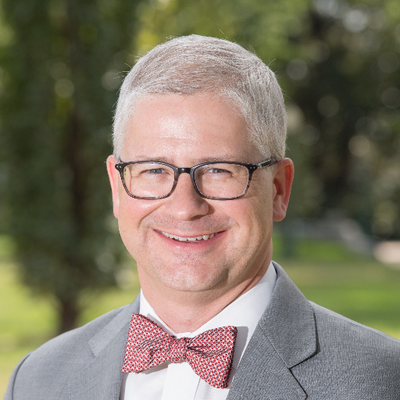
Dad x3. Husband. Proudly served North Carolina’s Tenth Congressional District and as Chairman of @financialcmte.
Joined March 2009
- Tweets6.8K
- Following3.4K
- Followers63K
- Likes634




Pinned Tweet
Spoke with @SquawkCNBC about how the election is going to come down to the wire, and how Republican voters are becoming more motivated as we get closer to Election Day.
Patrick McHenry retweeted

Here’s a story for you. We started filming without owning the title and had to do alternates.
Taft Broadcasting owned the title Ghostbusters as part of their half-hour sitcom starring Larry Storch and Forrest Tucker (F-Troop) and a gorilla chasing ghosts. I had never heard of it. They didn’t have proton packs or Bill Murray. Columbia paid $500,000 to buy the name, but they really should have paid Dean Martin, from whom I first heard the term.
In the film Scared Stiff (1953), he and Jerry Lewis (check out his acrobatic stair descent) are in an old haunted castle, and Lizabeth Scott asks Dean: “Who are you guys?” And Dean answers: “You’ve heard of Trustbusters and Gangbusters, we’re Ghostbusters!”
For my research writing the first movie, I watched every single ‘ghost’ comedy ever made. Bowery Boys, Hope and Crosby, Abbot and Costello, Martin and Lewis all did such films.
Happy Halloween 2026.

In 1859, a sitting congressman shot an unarmed man to death across the street from the White House, became the first American to beat a murder charge by claiming temporary insanity, and then went on to nearly lose the Battle of Gettysburg.
His name was Dan Sickles.
Sickles was a New York congressman with a long trail of bad behavior. He'd been censured by the New York State Assembly for bringing a prostitute into its chambers. He'd taken her to London and introduced her to Queen Victoria. He was also married to Teresa Bagioli, who was about half his age. She was a teenager when they wed.
In Washington, Sickles left his young wife alone a lot. She found company in Philip Barton Key, the U.S. Attorney for the District of Columbia, a widower and one of the most charming men in town. He was also the son of Francis Scott Key, the man who wrote "The Star-Spangled Banner."
Their affair was barely a secret. Key rented a house nearby for their meetings. He'd stand in Lafayette Square, across from the Sickles home and in view of the White House, and wave a handkerchief as a signal.
Sickles was the last to know. Then he got an anonymous letter laying it all out.
He confronted Teresa and forced her to write out a full confession. The next day, February 27, 1859, he looked out the window and saw Key in the square, waving his handkerchief.
Sickles grabbed his guns and went outside. He shot Key in broad daylight. Key fell, begging him not to shoot. Sickles shot him again at point-blank range. Key died a short time later.
Sickles walked to the home of the attorney general and turned himself in. Visitors flooded his jail cell, and President James Buchanan, a friend, sent him a note.
His trial was a national sensation. His defense team included Edwin Stanton, who would later become Lincoln's Secretary of War. They argued Sickles had been driven temporarily insane by his wife's betrayal. Nobody had ever won with that defense in America. They also read Teresa's humiliating confession to the press.
The jury acquitted him in about an hour. The crowd cheered.
Then Sickles did the one thing the public couldn't forgive. He took Teresa back.
Killing her lover was fine with most people. Forgiving her was a scandal. His political career looked finished.
Then came the Civil War.
Sickles raised troops, used his political connections, and became a general despite having no military training. By the summer of 1863 he commanded the Union Army's III Corps.
On July 2, 1863, at Gettysburg, General George Meade ordered Sickles to hold a section of the Union line along Cemetery Ridge. Sickles didn't like the ground. So without permission, he marched his entire corps about a mile forward to the Peach Orchard and the Wheatfield, leaving a gap in the line and his men exposed on three sides.
Confederate General James Longstreet's attack smashed into him. The III Corps was nearly destroyed. Meade had to rush reinforcements in to save the position.
During the fighting, a cannonball shattered Sickles's right leg. Doctors amputated it.
And here's the part people find hard to believe. Sickles donated his leg bones to the new Army Medical Museum in Washington, sending them in a small coffin-shaped box with his card. For years afterward, he reportedly went to visit his leg on the anniversary of the battle.
He spent the rest of his life arguing that his move had actually saved the Union army. He received the Medal of Honor in 1897. He helped create Gettysburg National Military Park and led New York's monuments commission, until he was forced out after money went missing.
Almost every major general at Gettysburg has a statue on the field. Sickles never got one. He supposedly brushed it off by saying the whole battlefield was his monument.
His leg is still on display at the National Museum of Health and Medicine in Maryland.
It's called the Sickles scandal, and almost nobody learns the whole story.

I've read most of the Clarity Act postmortems - and premortems. @Collin_McCune 's piece best outlines how far crypto has come in Washington in a short period of time.


Politics are at a fever-pitch right now, just mere weeks from the election. Unfortunately that's why CLARITY hasn't passed the Senate yet. But there's a path forward after the election.
Watch my discussion with @CoinDesk on CLARITY and more:
Patrick McHenry retweeted

Former House Financial Services Committee Chairman @PatrickMcHenry sees a path for CLARITY in the post-midterm lame duck, when he says the political cycle will have passed.
“They can have a final dish here in the midterm.”
Thank you to @SPGlobalRatings for being a sponsor of the CoinDesk Media Network.


This afternoon, the Senate will vote on whether to advance the crypto CLARITY Act.
Americans are tired of lawmakers dodging responsibility and calling it politics. It’s time for Congress to set the rules for the crypto industry.
You can read the full op-ed I wrote with @SenToomey here:


The AI race comes down to this: America either leads it or we hand off that power to other countries like China.
This is why it's so important to have a regulatory framework that is reasonable and balanced, that protects our innovation but also our society.
Patrick McHenry retweeted

The “Never Let a Good Crisis Go to Waste” playbook is in full swing. Here's how it works 👇
Step 1: The press and well-funded groups whip up hysteria
Step 2: Policymakers get pressured into taking positions with incomplete information
Step 3: The “solution” centralizes more power in government or a handful of actors

Scoop: @BernieSanders will hold a bipartisan Senate briefing on "extraordinary dangers" posed by AI next week with:
-Geoffrey Hinton
-Future of Life Institute co-founder Max Tegmark
-Ajeya Cotra, one of the independent researchers who investigated the OpenAI-Hugging Face hacking incident
axios.com/2026/09/09/sanders…