

AI-Native & Agentic Founder/Operator (New AI company going into private beta in the next few weeks!)
New York, NY
Joined January 2009
- Tweets35.8K
- Following2.2K
- Followers13.6K
- Likes41.3K






Rob Bailey retweeted

ServiceNow says they've made what was in the past a 100 person sales ops department completely autonomous:
"If you go back 3 years, that was like 100 people in the sales operations department moving around information on email. That is now completely autonomous." - Bill McDermott, ServiceNow CEO
Rob Bailey retweeted

The reason Databricks is the largest open source company in history is both structural and execution focused. Ben gives a great overview but as an open source founder I’ll try my hand as well.
Databricks is at its core a compute company. Their project Spark beat out all the other distributed data processing architectures like Hadoop and Cassandra to emerge victorious in the big data wars of the 2010s.
Partially this was because the other architectures were flawed and partially because they invested more in fixing them through hiring incredible engineers. This company did come out of a Berkeley PhD lab.
Still they struggled to make money. So in the mid 2010s they began making their next investment in a proprietary execution engine for Spark they called Photon.
As if building the leading distributing data processing library wasn’t hard enough they also shipped a native C++ vectorized query engine and continued both the public Spark roadmap and an internal proprietary roadmap as well.
It’s worth pointing out that this company is a decent example of the a16z thesis that you can kingmake with capital. Ben dropped a $10m check on a company that only asked for $250k, which is how the company had the war chest to make these investments.
If that’s all they had done, my guess is they’d be a $20B or $30B company today. I’ve made the point before that open source infrastructure expands forever.
That said there was a big second act. Circa 2018 they pioneered lakehouse architectures. The way to think about it that the traditional way you provision databases is you reserve some bucket on specialized compute and storage for them on your infrastructure. This made sense in a pre-cloud world where you had separate special-purpose servers, but less so in a world where you have scalable services like S3, EC2 etc.
So instead of reserving expensive DB compute and storage you reserve cheap S3 storage and compute that can spin up and down based on variable usage.
And now there’s a third act, namely building a cloud with AI primitives. The new gateway is a big piece of that but last month they also released a backend as a service with the primitives for building agents.
So again, why is it such a big company? Again, I think this is both structural and execution oriented.
The structural reasons: they started in an extremely lucrative market with a barrier to entry (it is very difficult to create popular open source projects in valuable markets!), that expands forever.
Second, they are a general purpose orchestration framework.
What I mean here is that every open source / devtools market is split between general purpose orchestration and specialized single purpose utilities. Think auth (Clerk) or email (Resend) for web apps (Next.js), or integrations (Composio) and sandboxes for agents (Mastra). While it is simpler from a product execution standpoint to build a single purpose utility, it is usually more valuable to build the general purpose orchestration framework and Databricks bears that out when you compare them to single purpose utilities doing things like ingestion and transformation (dbt, Airbyte).
Lastly as an orchestration framework / compute company, unlike database companies they are not limited to a particular workload (Supabase etc for transactional data, Clickhouse etc for columnar data), and they are in the core infra layer as opposed to being stuck on the client (Vercel/Next.js). It’s the $10B vs $200b difference
The execution reasons: they are technical geniuses who really want to win. I’ve spent the last decade building open source companies (Gatsby and now Mastra) and the typical open source founders are brilliant tinkerers and, in the best case, it takes a while to develop a ruthlessly efficient competitive commercial DNA. With Databricks they had both sets of DNA within the founding team — incredibly rare.
Congrats to @alighodsi and team on everything they’ve built so far!


Rob Bailey retweeted

I encourage anyone who is leading an engineering org to read this in its entirety. It is short, extremely well written, and very much directionally correct. The job and the organization needs to entirely change to take full advantage of these tools.
That path is largely a human alignment challenge at this point. If you are a leader, your job is to get people on the new ship, and get them sailing together. The old ship doesn’t exist anymore, although many people wish it did and are incentivized to continue to believe it exists.
Software Engineering is an entirely different thing now, and the faster you can get your org to understand this and align on how to work now, the less painful it will be for you long term. If you don’t do it, I simply believe your org won’t exist because it will get disrupted by an org that does


Rob Bailey retweeted

A lot of content engineering challenges have pretty standard solutions, which has lead to some engineers saying agent engineering is solved/boring
True to some extent, but there are a bunch of (fun) new ones emerging as agents evolve!

Rob Bailey retweeted

Databricks' CRO built an engineering-led sales culture from scratch, while Snowflake optimized for mercenaries. These are key lessons from him after 11 years of success:
1. Building an engineering-led sales culture:
“One of the reasons I came to Databricks is I wanted to create the sales culture from scratch. Ali and I talked early days, like we have a very engineering tech culture here at Databricks, and I’ve kind of built that in sales too. I’m an engineer as background and we have a very technical sales team.”
2. The core principles: grit, teamwork, courage and humility:
“I talked from the beginning about hard work and grit. I tell stories about my dad was a construction worker, my mom was a math teacher, my dad said out-hustle everyone. So hard work and grit. We talk about teamwork makes the dream work. Courage and humility. And so those cultural aspects of how we built the sales organization are still there today.”
3. Protecting the culture at scale:
“I talk about it every sales kickoff, every sales all-hands, we give out those awards. Keeping that culture is so important as you scale because I don’t know everybody personally anymore. But if you have the right leaders and you hire the right people and you motivate them, you inspire them, and we have the right cultural principles and we believe in those things together, I think we have one of the greatest go-to-market teams on the planet.”
4. Keeping startup hunger:
“My goal is to continue to double every year. And the key to that, like I said, having the right leaders and the right people, the right culture, but keeping that startup grit. I talk about grit so much, hustle and grit. I look for that in my account teams, in my solution architects, in my leaders. You have to keep that culture and that hunger, because once you start to become complacent and become a big company, that’s when… Databricks came from nowhere in 10 years.”
5. Hiring for grit:
“I’ll interview folks. I want to learn about their childhood, their background. I love people that have done things, even if it’s outside of work, like amazing, and had to really dig deep to do that, right? Sports or other parts of their life. And I think making sure you continue to have that gritty startup culture is absolutely key to continue to be a high growth company.”
6. Personally reviewing every sales hire:
“Every single one. I don’t interview them personally, obviously we standardize how we do interviews and the process and the types of things we look for, but I literally look at every single profile. Obviously I’m pattern matching on what’s kind of the right profiles that I think fit at Databricks, and if I don’t think it’s perfectly right I ask a lot of questions. Number one thing I would say is, if you have the best of the best people on the bus and in the company and you inspire them and motivate them, you can do amazing things. So keeping the bar high is the number one thing for me.”
7. The hardest call: upgrading leaders for each stage:
“Usually the toughest decisions aren’t strategy decisions, they’re personnel decisions. When I joined, we were less than a million, growing greater than 80% year-over-year. Sometimes when you look at leaders, they might have been amazing for the stage you were at. For building, say, a particular region, this leader did a great job getting you to 100 million, but they might not be able to get you to a billion. So how do you layer leaders or replace leaders, even though they’re amazing and helped you build the company? You created these companies with these amazing leaders, and they’re good friends, but you need to bring in bigger scale or bigger leaders to go to the next step. I think that’s the hardest part of being a CRO.”
8. Culture as an acquisition filter:
“That’s what we say: has this person seen great? A lot of our acquisition strategy is about the team. Obviously we’re trying to buy great products and engineering talent, but a lot of it’s about the team. Do they mesh with our leadership and engineering team?”
9. Selling outcomes, not technology:
“My biggest thing, and because it’s a CEO-level topic for every one of these companies, is let’s start talking about outcomes. So a lot of what we’re talking to customers about is: what are we trying to automate, or what revenue are we trying to grow? Let’s talk about the business outcomes of how you transform your company or your industry and apply AI to that.”
Rob Bailey retweeted

if you have an MCP, this is a HUGE day
Google just launched its Connected Apps Store
this means your MCP can now reach their 4.3 BILLION active users across both Gemini and AI Mode
this is yet another app store moment
not only can your product can be discovered and used by those people, without them ever having to leave AI Mode or Gemini
but Google is now ORGANICALLY surfacing these MCPs at the moment of intent after prompts
what a time to make your product agent-first with an MCP in every major store
if you want to track the ecosystem daily and see whose going live in your niche, go to: agentdiscoverability .com/track
Gemini will be live imminently...

Rob Bailey retweeted

old way:
> reach out to endless influencers
> ask for paid sponsorship
> pitch them your product
> agree on creative
> negotiate a price
> wire the money
> pray it works
new way:
> go to clips.ooo
> drop your url
> get viral clips


Rob Bailey retweeted

No Kings explained for people who think they're fighting fascism.
You're standing in a crowd on Saturday. You look around and think yeah. No Kings. This is what democracy looks like.
Bro.
You're holding a sign made by a communist billionaire who lives in Shanghai.
You live in a constitutional republic.
Elections. Term limits. A free press that spent four years calling the president a fascist without one journalist being arrested.
The modern left's definition of fascism:
You love your country? Fascist.
You want to enforce the border? Racist.
You think parents should raise their kids? Bigot.
You want to know who's voting in your elections? Jim Crow.
Being patriotic is fascism to the modern left.
But every country has borders and enforces them. 176 countries require ID to vote. That's the definition of a country.
But the Democratic establishment told you otherwise. And you believed them.
Congress has a 15% approval rating. 80% of Americans disapprove. 97% of incumbents got re-elected.
Chuck Schumer. 46 years. Longer than Stalin.
Steny Hoyer. 45 years. Longer than Mao.
Mitch McConnell. 42 years. 5x more than Napoleon.
Nancy Pelosi. 39 years. Longer than Henry VIII.
Maxine Waters. 35 years. Longer than Mussolini.
Bernie Sanders. 35 years. Triple Hitler's entire reign.
Trump. 5 years and 3 months. Won the popular vote and the electoral vote.
But Trump is the king. Okay buddy.
You don't hate kings. You hate kings that aren't yours.
And they have you in the streets carrying their water.
The Democratic Party installed a president without letting you vote. Biden quit on a Sunday. By Tuesday your queen was crowned.
No primary. No debate. No ballot. First time since 1968.
Three days before your march every Senate Democrat voted against photo ID to vote.
During COVID you carried a vaccine card everywhere like a hall pass from the government just to eat at a restaurant.
But getting a birth certificate or waiting two hours at the DMV to prove you're a citizen before you vote? That's oppression.
The Democratic Party is pro illegal immigration.
Counts non-citizens in the Census. Census determines congressional seats. More non-citizens means more seats means more power. No voter ID means no way to check.
That's how you keep power without wearing a crown.
Biden built a censorship machine.
Pressured Facebook to suppress true information and admitted it in writing. Censored scientists. Censored doctors. Censored JOKES. The Biden White House told Facebook to remove "humor and satire."
They literally went after people for making fun of them. UK does it better tho...
Everything they censored turned out to be right. They just outsourced the silencing to Silicon Valley.
And it doesn't stop at speech.
The extreme left justifies taking children from families.
Six thousand schools rewrite children's identities without telling parents. And the State has the right to intervene.
The Hitler Youth did this. Mao's Red Guards did this. The Soviets built statues of a child who reported his own father.
Same playbook.
During Covid, your bakery got shut down. Church closed. You couldn't hold your dying mother's hand at the hospital.
But thousands packed together during BLM to burn Minneapolis and THAT was essential civic engagement. Obviously.
$2 billion in damage. 25 dead. 2,000 cops injured. 20 states burning. VP Kamala promoted a bail fund for the rioters. No investigation. No hearings.
January 6. One building. Few hours. 1,000 prosecuted. Two years of televised hearings.
Kings decide which violence counts. The left decided.
Charlie Kirk spent his life walking onto campuses asking for honest debate. He was assassinated.
CSIS terrorism database. 2025 is the first year in 30 years that left-wing attacks outnumber right-wing. Yet no one brings this up.
75% of liberal students say preventing a speaker from talking is justified. 27% say violence is acceptable.
Liberals who went to Trump rallies: "I never felt unsafe." "The experience changed me." They say.
Conservatives who show up on liberal campuses get screamed at, blocked, and assassinated.
One side talks. The other side screams.
The Party for Socialism and Liberation marched
Their stated purpose in their own words: "Revolution." Not reform. But Marxism.
500 groups. $3 billion in revenue. Pre-printed signs.
The signs were ready before you were even angry.
AND its all coming again .... if the left gain any power.
VOTE RED RED RED on November 3rd
Rob Bailey retweeted

a big misconception in GTM engineering is that you need a ton of tools
in reality, fewer is better and most aren’t connecting THAT many things
you’d be surprised how much you can do with:
@clay: data, orch. execution, learning loops
@bot: build almost anything
@NotionHQ: context later
@zero_gtm: AI-native CRM

📁 GTM Engineering Stack
┃
┣ 📁 Databases
┃ ┣ 📁 AI Ark
┃ ┣ 📁 Apollo
┃ ┣ 📁 Crunchbase
┃ ┣ 📁 BuiltWith
┃ ┗ 📁 PitchBook
┃
┣ 📁 Niche Data
┃ ┣ 📁 Store Leads
┃ ┣ 📁 GetLatka
┃ ┣ 📁 Clutch
┃ ┣ 📁 Shovels
┃ ┗ 📁 Google Maps
┃
┣ 📁 Lookalikes
┃ ┣ 📁 AI Ark
┃ ┣ 📁 DiscoLike
┃ ┗ 📁 Ocean(.)io
┃
┣ 📁 Scraping
┃ ┣ 📁 Apify
┃ ┣ 📁 Instant Data Scraper
┃ ┣ 📁 Firecrawl
┃ ┣ 📁 Serper
┃ ┗ 📁 OpenWeb Ninja
┃
┣ 📁 Enrichment
┃ ┣ 📁 Clay
┃ ┣ 📁 Claygent
┃ ┣ 📁 Deepline
┃ ┗ 📁 BlitzAPI
┃
┣ 📁 Email Finding
┃ ┣ 📁 GetLeads
┃ ┣ 📁 Prospeo
┃ ┣ 📁 Icypeas
┃ ┣ 📁 LeadMagic
┃ ┗ 📁 BetterContact
┃
┣ 📁 Verification
┃ ┣ 📁 MillionVerifier
┃ ┗ 📁 BounceBan
┃
┣ 📁 Phone Data
┃ ┣ 📁 TitanX
┃ ┣ 📁 Prospeo
┃ ┗ 📁 LeadMagic
┃
┣ 📁 Signals
┃ ┣ 📁 Trigify
┃ ┣ 📁 RB2B
┃ ┣ 📁 Teamfluence
┃ ┣ 📁 Adyntel
┃ ┗ 📁 Exa
┃
┣ 📁 Domains
┃ ┣ 📁 Porkbun
┃ ┣ 📁 GoDaddy
┃ ┗ 📁 Name(.)com
┃
┣ 📁 Inboxes
┃ ┣ 📁 ScaledMail
┃ ┣ 📁 Hypertide
┃ ┗ 📁 Premium Inboxes
┃
┣ 📁 Deliverability
┃ ┣ 📁 EmailGuard
┃ ┣ 📁 warm(.)ac
┃ ┣ 📁 MailReach
┃ ┗ 📁 Google Postmaster
┃
┣ 📁 Sequencers
┃ ┣ 📁 EmailBison
┃ ┣ 📁 Plusvibe
┃ ┗ 📁 Smartlead
┃
┣ 📁 LinkedIn
┃ ┣ 📁 HeyReach
┃ ┣ 📁 Sales Navigator
┃ ┗ 📁 LeadShark
┃
┣ 📁 Calling
┃ ┣ 📁 Salesfinity
┃ ┣ 📁 Readymode
┃ ┗ 📁 Aircall
┃
┣ 📁 AI Agents
┃ ┣ 📁 Claude Code
┃ ┣ 📁 Codex
┃ ┣ 📁 Hermes
┃ ┗ 📁 Wisprflow
┃
┣ 📁 Automation
┃ ┣ 📁 n8n
┃ ┣ 📁 Make
┃ ┗ 📁 Clay CLI
┃
┣ 📁 Reply Handling
┃ ┣ 📁 MasterInbox
┃ ┣ 📁 n8n Reply Scoring
┃ ┗ 📁 Slack Alerts
┃
┣ 📁 CRM
┃ ┣ 📁 HubSpot
┃ ┣ 📁 Attio
┃ ┣ 📁 Close
┃ ┗ 📁 Salesforce
┃
┣ 📁 RevOps
┃ ┣ 📁 OutboundSync
┃ ┗ 📁 RevyOps
┃
┣ 📁 Meetings
┃ ┣ 📁 Calendly
┃ ┣ 📁 Sybill
┃ ┣ 📁 Fireflies
┃ ┗ 📁 PandaDoc
┃
┗ 📁 Nurture
┣ 📁 Beehiiv
┣ 📁 Lovable
┗ 📁 Gamma
What's everyone using for their company brain? We're using @NotionHQ but also exploring other options.


Rob Bailey retweeted

📁 GTM Engineering Stack
┃
┣ 📁 Databases
┃ ┣ 📁 AI Ark
┃ ┣ 📁 Apollo
┃ ┣ 📁 Crunchbase
┃ ┣ 📁 BuiltWith
┃ ┗ 📁 PitchBook
┃
┣ 📁 Niche Data
┃ ┣ 📁 Store Leads
┃ ┣ 📁 GetLatka
┃ ┣ 📁 Clutch
┃ ┣ 📁 Shovels
┃ ┗ 📁 Google Maps
┃
┣ 📁 Lookalikes
┃ ┣ 📁 AI Ark
┃ ┣ 📁 DiscoLike
┃ ┗ 📁 Ocean(.)io
┃
┣ 📁 Scraping
┃ ┣ 📁 Apify
┃ ┣ 📁 Instant Data Scraper
┃ ┣ 📁 Firecrawl
┃ ┣ 📁 Serper
┃ ┗ 📁 OpenWeb Ninja
┃
┣ 📁 Enrichment
┃ ┣ 📁 Clay
┃ ┣ 📁 Claygent
┃ ┣ 📁 Deepline
┃ ┗ 📁 BlitzAPI
┃
┣ 📁 Email Finding
┃ ┣ 📁 GetLeads
┃ ┣ 📁 Prospeo
┃ ┣ 📁 Icypeas
┃ ┣ 📁 LeadMagic
┃ ┗ 📁 BetterContact
┃
┣ 📁 Verification
┃ ┣ 📁 MillionVerifier
┃ ┗ 📁 BounceBan
┃
┣ 📁 Phone Data
┃ ┣ 📁 TitanX
┃ ┣ 📁 Prospeo
┃ ┗ 📁 LeadMagic
┃
┣ 📁 Signals
┃ ┣ 📁 Trigify
┃ ┣ 📁 RB2B
┃ ┣ 📁 Teamfluence
┃ ┣ 📁 Adyntel
┃ ┗ 📁 Exa
┃
┣ 📁 Domains
┃ ┣ 📁 Porkbun
┃ ┣ 📁 GoDaddy
┃ ┗ 📁 Name(.)com
┃
┣ 📁 Inboxes
┃ ┣ 📁 ScaledMail
┃ ┣ 📁 Hypertide
┃ ┗ 📁 Premium Inboxes
┃
┣ 📁 Deliverability
┃ ┣ 📁 EmailGuard
┃ ┣ 📁 warm(.)ac
┃ ┣ 📁 MailReach
┃ ┗ 📁 Google Postmaster
┃
┣ 📁 Sequencers
┃ ┣ 📁 EmailBison
┃ ┣ 📁 Plusvibe
┃ ┗ 📁 Smartlead
┃
┣ 📁 LinkedIn
┃ ┣ 📁 HeyReach
┃ ┣ 📁 Sales Navigator
┃ ┗ 📁 LeadShark
┃
┣ 📁 Calling
┃ ┣ 📁 Salesfinity
┃ ┣ 📁 Readymode
┃ ┗ 📁 Aircall
┃
┣ 📁 AI Agents
┃ ┣ 📁 Claude Code
┃ ┣ 📁 Codex
┃ ┣ 📁 Hermes
┃ ┗ 📁 Wisprflow
┃
┣ 📁 Automation
┃ ┣ 📁 n8n
┃ ┣ 📁 Make
┃ ┗ 📁 Clay CLI
┃
┣ 📁 Reply Handling
┃ ┣ 📁 MasterInbox
┃ ┣ 📁 n8n Reply Scoring
┃ ┗ 📁 Slack Alerts
┃
┣ 📁 CRM
┃ ┣ 📁 HubSpot
┃ ┣ 📁 Attio
┃ ┣ 📁 Close
┃ ┗ 📁 Salesforce
┃
┣ 📁 RevOps
┃ ┣ 📁 OutboundSync
┃ ┗ 📁 RevyOps
┃
┣ 📁 Meetings
┃ ┣ 📁 Calendly
┃ ┣ 📁 Sybill
┃ ┣ 📁 Fireflies
┃ ┗ 📁 PandaDoc
┃
┗ 📁 Nurture
┣ 📁 Beehiiv
┣ 📁 Lovable
┗ 📁 Gamma
Rob Bailey retweeted

Fascinating write up. So many practical questions but some interesting patterns…

Rob Bailey retweeted

Spoke to someone leading AI enablement at a massive retailer.
The #1 problem they’re running into: AI transformation is owned by IT and all initiatives must run through their AI Center of Excellence.
This is causing two parallel issues:
1) Employees outside of IT aren’t given the tooling/infra needed to automate anything beyond simple workflows/use cases (read: citizen developer SDLC)
2) Rolling out AI is bottlenecked by ITs ability to own and approve every initiative
This challenge is incredibly common across enterprises & you can quickly appreciate why…
On one hand, you can empathize with IT. They’re not incentivized to take risks & embrace disruption, so the risk-return of decentralizing AI implementation cross-org is not obvious.
On the other hand, an enterprise’s ability to metabolize raw intelligence is metered by its corporate SDLC. IT is often the bottleneck in that SDLC and it’s not hyperbolic to say that poses existential risk for the enterprise.
Rob Bailey retweeted

Always happy to talk about how much of a mess enterprise AI actually is.
We definitely have AI-pilled enterprise customers, but most companies out there are scrambling.
Thanks for having me.
nitter.cf/ThisWeeknAI/status/211…

Runlayer CEO Andy Berman oversees AI rollouts for Fortune 500s. He says the models are ready for enterprise-level work, but the companies aren’t.
“An LLM without access to the right tools and resources, and specifically the data sources, which most companies will not give access to today… is almost useless.”
New TWiAI with @berman66, @runlayer, @johnjnay, @normativeai, @jason and @Lons
0:00 PayPal - Pay zero processing fees on your first $100K in eligible PayPal payment volume. Learn more at paypal.launch.co
1:43 What we learned from Anthropic's S-1
9:30 Why only 2-3% of companies are really using AI
18:03 Jason's "reverse to-do list" agent
23:23 Will AI labs evolve beyond charging per token?
32:36 Browser use is basically solved
41:24 Are colleges giving performative "slop" degrees?
53:00 Why r/opensource banned AI projects
59:39 So what happens to the junior lawyers and analysts?
1:06:01 Peter Thiel's "math people vs. word people" binary
🎥 Watch the full episode here 👇
Apollo's chief economist stated AI has delivered "zero financial payoff to corporate America outside of tech" despite massive investments.
Is he wrong?
With 10 mins of research using @grok, I was able to pull together a TON of specific examples with impact in the $$ billions.
Here's the spreadsheet. Comments welcome!
docs.google.com/spreadsheets…

Rob Bailey retweeted

It’s our third year of tracking AI in New York with @Accenture, and there’s a lot to talk about!
Ahead of today’s Crain’s Tech Summit, we’re sharing a first look at our latest research in @CrainsNewYork.
A few findings that stand out:
• NYC job postings seeking AI skills nearly tripled to more than 55,000
• Nearly 80% of executives surveyed expect entry-level hiring to grow or hold steady
• 86% of executives believe AI will create more economic opportunity in NYC than it eliminates
There’s still plenty to learn about AI. But three years into this research, we see more and more reasons to be excited about New York’s future.
Read more ⬇️
crainsnewyork.com/politics-p…

Rob Bailey retweeted

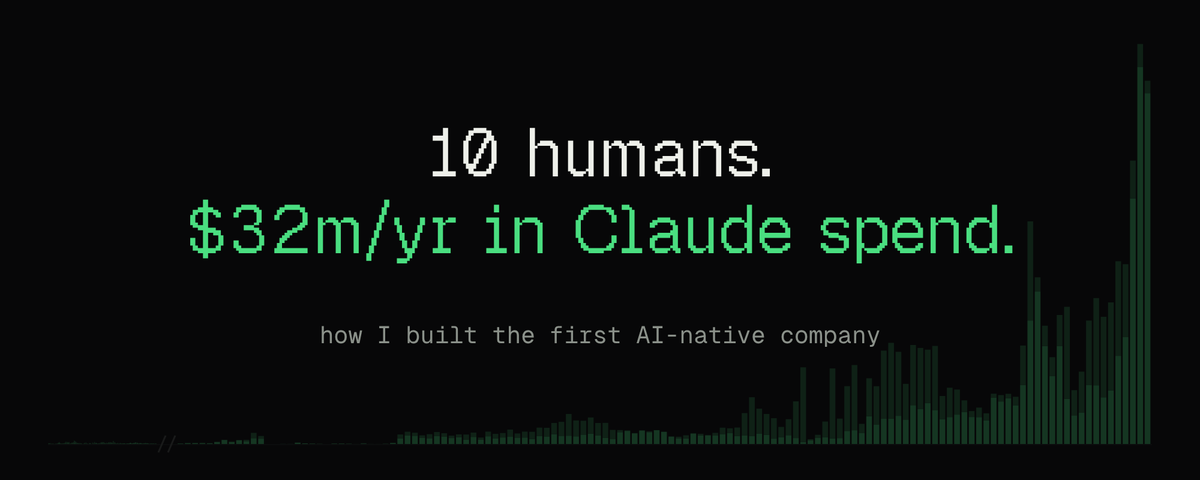
This is quite the deep insight into what a team / company can look like when you build and scale agent- first instead of people- first.
The thoughtfulness of the scaffolding and constitution you need to empower humans to then manage swarms of agents is impressive
i've been building the most ai-pilled company in the world for 2 years. let's trade notes:
- spawn is ten people
- we spend 30x payroll on AI tokens
- and ship almost as much as anthropic
- our agents pick their own names
- and profile pics
- and remember everything
- they dream
- and have time off on sundays to relax
- (not joking)
- agents fix every error hit by a user
- and verify their own work
- with no human in the loop
- we don't care if they break production
- only that they fix it fast
- we let bugs design how we work
- not code bugs, ants
- only anthropic's models can do the job
- openai makes reward hackers
- xai and google make village idiots
- i wrote an article with all the sauce
- but you'll scroll tiktok instead of reading