

CEO & Co-founder @NOETIK_AI Using AI to actually solve cancer.
San Francisco, CA
Joined February 2011
- Tweets4.4K
- Following2.8K
- Followers7.6K
- Likes20.9K





Pinned Tweet
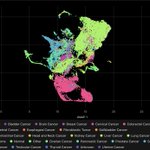
1/ Spatial transcriptomics is among the richest view of human biology that we have: 18,963 genes mapped at subcellular resolution.
It's also almost never collected outside of research settings.
So we trained a foundation model to generate it from a clinical H&E image alone.
Meet TARIO-2. 🧵
noetik.blog/p/tario-2-a-whol…


Ron Alfa retweeted

Incredible watching everyone waking up to what @NOETIK_ai has been doing for years
Great for humanity. A lot more drugs are going to get approved in the coming years.
Congrats to @SGRodriques @andrewwhite01 and @EdisonSci team on partnership announcement with @pfizer today.
This is the most exciting time to be working on startups solving human disease. 🚀


This is an awesome approach to financing a pipeline of therapeutics opportunities. Congrats to @BenjamineYLiu and team on bringing it all together.

Today we’re announcing the $600M Formation Bio Drug Development Accelerator Fund.
@lintaho and I started @FormationBio because we believed the biggest bottleneck in bringing new medicines to patients wasn’t drug discovery, but drug development.
As AI dramatically accelerates discovery, that bottleneck is only becoming more acute. Without the capital and capacity to advance promising drugs through clinical trials, much of that progress won’t translate into medicines for patients.
Our new Fund brings together dedicated capital, drug development expertise, and AI-powered development capabilities to acquire promising drugs and advance them through the clinic.

Today we can finally talk about @enveda's partnership with @AnthropicAI . “Partnership” is a word that covers a lot of sins, so here is what it actually bought us:
1. a Phase 2 program pulled forward by three weeks
2. an IND submission accelerated for another soon-to-be-announced clinical program
3. an Investigator’s Brochure, drafted by @claudeai and signed off by our team after one minor edit, now in front of the FDA
We chose to work with Anthropic on development, not discovery. Enveda already finds medicines faster than we can develop them, and I think the industry is heading the same way. The slowest part of development is paperwork, directly or indirectly: batch records, study reports, the Investigator’s Brochure, and the IND that packages it all for the FDA. Discovery gets the headlines. Document review is where the months go.
Test 1: manufacturing batch release for a Phase 2 program. Before a batch can go to a trial, someone checks every page of its manufacturing record by hand. Claude read 1,061 scanned, largely handwritten pages from the campaign. Four of our reviewers and outside consultants independently reviewed the same pages, and a Quality adjudicator scored every comment against one question: would an FDA auditor raise it? Claude matched all 11 actionable issues the experts found and added 7 they had missed. Review time fell from 26 hours (typically spread over several weeks) to under 3, an 89% reduction, for about $37 in model cost. On another program, it flagged a climbing impurity that routine review had cleared; it later went out of specification.
Test 2: the Investigator’s Brochure for an IND, drafted in four hours instead of weeks. For a new Enveda medicine about to enter human trials, Claude drafted the brochure every trial physician relies on, from a structured layer of facts pulled from our tox, bioanalytical, and PK reports. Our reviewers found one minor unit-conversion error. We fixed it and included that draft in the IND. From the same source layer, Claude drafted the core of the IND itself in four hours, work that takes the best teams a month or more.
None of this works unless the model stays factful, so we built a custom harness to force it. It reads every page as an image, keeps a code ledger of which pages it read, and ties every finding to its page and governing document. Across the evaluation, no finding cited anything that was not in the record.
The full method is public. Our technical report on the CMC Document Processor covers the architecture, GMP controls, study design, and results, and we open-sourced a companion implementation so you can build your own!
Thank you to the incredible @enveda and @AnthropicAI teams for making this possible.
bullish on this

Sam Altman's one-person company prediction is coming true. Anthropic just bought one. The founder of Mithril Medicine used Claude to take a muscular dystrophy antibody treatment from concept to proof-of-principle in mice in 18 months, with just himself, Claude, and part-time consultants. The technical report is great. I will quote:
'The week opened with the handover of two cell-based assays, cell adhesion and flow cytometry, within our team, while eleven questions remained open with the assay CRO. In two sentences, one of us asked Claude to review the latest emails between the outgoing assay lead and the assay CRO and to recommend next steps for the handover, and gave it the link to the handover folder. Claude returned a bottom line after 96s and a full plan with five drafted emails after 18 min. For the full plan it read six email threads, the handover folder, two slide decks and two reports, all in the mailbox and file store to which we had given it access. Four working days later, nine of the eleven questions had an answer in writing and the other two had been left to pilot experiments. The adhesion screen was thereby set out in writing. The CRO drew the plate map to the format that our team had requested, Claude compiled the run order and the material calculation from the production data, and one of us reviewed and approved them.
On day 4, the production CRO delivered its data package, a report of 341 pages, which one of us forwarded to Claude in two sentences, with the request to review it, share observations and recommend next steps. Claude returned a bottom line after 2 min 40s and, once it had read every page, a visual synthesis of all 113 constructs after 7 min 53s. The synthesis arranged the constructs on the grid of 14 by 8 arms. Claude marked 82 constructs for screening as is, seven for additional polishing, and the 24 constructs of three laminin-binding arms to be held back from the cell-based assays on production criteria. Each of the 113 constructs thus had a proposed next step in less than 8 min.
Claude had recommended binding kinetics for all 113 con-structs, and on day 7 one of us challenged this plan. Claude defended it within 27s, arguing that affinity would show whether the three arms merit further work. One of us overruled this recommendation and set the three arms aside on production criteria. Their material remains in storage. Four minutes later, Claude had revised its memo, the working page, the run order and three unsent drafts from 113 to 89 constructs. It had also applied the ruling to three dependent steps in the unsent drafts, each flagged for our veto. The exchange took 7 min 36s from challenge to new plan, and every affected email was still an unsent draft. After the ruling, eight emails drafted by Claude went out on the same day to three CROs and a consultant.
Over the whole week, Claude drafted 17 emails, each in answer to a request from one of us, and we sent 12 of them, each after editing. With its drafts, Claude listed 41 points, such as tube fills, shipping conditions, recipients and assay settings, for which it had found no written statement of ours, so that we could confirm, change or strike each before sending. We kept some, struck others and changed one. Among the passages that we kept were proposals for controls. One draft proposed a comparison of polished and unpolished material on one sensor chip, to size the error that impurities cause in the rest of the panel. Another requested a buffer control diluted like the most dilute sample, so that any effect of the buffer appears at its largest. These proposals concerned the measurement of constructs that had already been produced, and each reached a CRO only after one of us had reviewed and approved it.


Ron Alfa retweeted

I agree.
Robots are the non-biologist's abstraction of how scaling in biology scales. Imagine people in the 1940s pouring money 100x money into automating the vacuum tube factory than inventing the transistor. Imagine putting everything into giant CPU factories instead of inventing the GPU.
We are disproportionally thinking/resourcing innovation in biology as if it's car manufacturing. There is ample opportunity to improve, redefine and scale measurement in front of us.
I recently talked to someone at a robot-first science factory with near billion in funding boasting how they measure ~1000 mutants a week. A team of 4 at Dyno scaled the equivalent assay multiplexing by 25x. 1 person can run it. The robot is scaling the wrong layer.
I'm not against robots and I think they will have the role to play. But I think their impact on biology is overblown, especially on how it scales in performance per dollar deployed. The danger is we become so obsessed with vacuum tube factories that we don't fund the transistors of biology.
Complex physical value chains are somewhat path dependent, once you build a highway instead of a subway, you have to deal with a lower efficiency, higher pollution world. Most current robotic approaches are a crude, and poorly scalable, way to scale biology.

Ron Alfa retweeted

I'd like to share a little about what I've been working on at my new company @ultrametricai with my cofounder @tylerlastovich. We have been exploring how we could automate the startup itself, leaving founders with more time to focus on their exact mission.
Enter our first release of the Open Startup Repo: github.com/ultrametricai/ult…
A common foundation for transparent automation of the startup.
After close to 20 years in silicon valley, backing hundreds of amazing founders & startups, being in the trenches of founding Heyzap (YC08), then solo founding @golden, going through 2 acquisitions and working behind the scenes with some of the iconic companies today, I'm witnessing the largest change to how we work I could have imagined - a truly monumental era of creative abundance.
I believe the next generation of companies will largely run themselves: from operations, code, product upgrades, growth, vendor control & selection, process execution, special situations, strategy etc etc. That leaves founder time for 'the art' at the very niche core: the (currently) unautomatable, the special leaps humans tend to make, and north star setting.
We want founders to go super deep into the main problem they are trying to solve and not get held up doing anything else, from searching for domain availability with trademark checks to setting their company up, to running their processes on autopilot.
So to help that broad foundational layer for starting and running a company, we have spent around a year exploring how to help founders focus on their mission across different verticals, geos, stages and initial starting conditions.
Our first few attempts at making something useful actually failed as the market and AI was moving so fast; it just got absorbed into the models or other product releases. We saw polsia happen, openclaw, then grokbot, muse, dots, etc era as the astras, fables, opuses, kimis and jevs rolled out. What seemed to have been missing along the way was a common repo to identify, unify, open and normalize all the lego bricks that startups have to interact with (vendors, processes, business logic, law, best practices, surface areas, art of the possible).
As the number of software vendors blew up, the interfaces to drive them multiplied, the international startup founder blew up as silicon valley moved from a specific location to a state of mind and global movement. Unlimited pre seed funding in unlimited vertical sub markets and permutations has brought us to the age of infinity but we have yet to achieve being able to type into an agent a very simple sentence with very complex implications 'just setup my company and make $1m/m'. We have ended up with a hybrid mismash of computer use, API calls, plugins, shifting surface areas (API/MCP/CLI/plugins/chats/musish futures), and changing model absorption to vendor balance making it an exciting and unstable time.
As our first step we started to rank all the vendors that startups interface to when going about their journey in terms of how agentically controllable they are via their APIs, MCPs, CLIs etc and computer use compatibility as we are largely switching from a UI driven world to the agentic control surfaces and onto full automation. We have 100 ranking areas you can check out with an overall open ranking here: ultrametric.ai/overall
Then we looked at the processes that startups do and how the vendors rank for the sub steps or process as a whole and how this changes across geos. Open processes: ultrametric.ai/processes
Then we started to hack on an open repo for startups that would contain all the components we are going to need for a common foundation for founders across the globe even if our gov processes vary so much from Bengaluru to SF or Lisbon to Shenzhen. The founder spirit is geo-invariant.
We have looked at special founder/startup situations, the business logic that will make open modules for the startup that we can hack on together, ranked law firms, government services and interfaces, stacks that go well together. We have mapped the law and lore that maps to startups and the schemas that make up the data objects and documents. But also the open documents and the missing gaps. MUCH TO DO.
All the BS processes and fluff work that founders waste their time on needs to goto zero. I want to see more supersonic planes, cancer drugs, seemingly impossible missions done and increase the bang for buck founders have with their funding.
This is a work in progress and we are keen for the community to come hack on the repo with us here: github.com/ultrametricai/ult…
Lets get into the structure of the general repo and the visualizations we made on ultrametric.ai site with example links:
- Open rankings: ultrametric.ai/overall
- Open rankings example (online payments): ultrametric.ai/arena/payment…
- Open ranking example 2 (cap table): ultrametric.ai/arena/equity-…
- Open processes: ultrametric.ai/processes
- Open process example (Incorporate C-Corp) ultrametric.ai/processes/inc…
- Open situations that founders face: ultrametric.ai/situations
- Open startup simulator (you can test our different initial starting conditions): ultrametric.ai/startup-sim
- Open modules (e.g. cap table, payroll logic etc - we'd love help improving these) ultrametric.ai/open-modules
- Open law (we are interested in how law changes the processes, situations and normalizing this over time) ultrametric.ai/open-law
- Open lore (we are interested in the historical lore of startups, the rules of thumb and heuristics that might guide your agent): ultrametric.ai/open-lore
- Open fields (we are interested in how the schema for the data connects to the open modules, business logic, open documents and artifacts of each process eg how is a EIN defined?) ultrametric.ai/fields
- Open documentation (eg SAFE notes and missing! docs) ultrametric.ai/open-document…
We have looked at YC companies as well in terms of which ones do well agentically: ultrametric.ai/yc
We are interested in stacks and how people are changing their work: ultrametric.ai/stacks
We are interested in what is automatable and where the agentic ceiling is currently and how to push that up in all areas: ultrametric.ai/rankings/proc…
There is more for you to explore and a lot more coming in terms of how you will be able to navigate business in an optimal way in your chosen surface area; whether you are hanging in grokbot, dots, muse, claude, terminal, chat, or whatever is coming up in this exciting time.
We have a lot of data to collect, clean up and help agents navigate the vast landscape emerging functionality the entire startup ecosystem has to offer.
Come join us getting your vendor in, ranked or that access pattern you have wanted or getting the data more accurate in terms of which vendor is best for a process or steps. Or open a module of something that currently cost money that could be free.
Also come play in our discord for founders and join the chaos (we can solve each others issues including fund raising tips from me personally): discord.com/invite/3aHky836q…
It's time to lift all the boats in the harbor and I'm extremely excited as to what the community of hackers and painters will hack into the repo, what asks they will have and whether we can shift normalization of processes globally, gov agentic interfaces and have common repo for founders that grows over time. I expect a lot of experimentation along the way, bugs and upside...
I appreciate our backers having faith in us as well from @ycombinator with @garrytan to @immad doing a sizable check (congrats on $1bn rev homie) to @darbyw (congrats on Stripe buying @clerkyinc), @drewhouston form @Dropbox and also @pioneer_fund @tomerlondon cto @GustoHQ and hopefully this is 'boring' and complex enough for Charlie Songhurst :> @delingpole @Liquid2V @ivolo from @segment @ryanpowe @sonicaghi of @kong @DellyTamer+ other supporters (@michaelwfrank, Fundamental ventures and if I missed you sorry moving fast!).
[And don't worry, all vendor rankings are open scoring methods so no favors are being done if someone backed us and is a vendor they have to compete with how agentic and automatable they are just like anyone else.]
PS: we have bugs and many quality upgrades to make but thought better to go out early and fix as a community.
PPS: we have other stuff to launch we just thought this was a great place to start and have 200 PRs coming out pretty soon but I still want to know what is broken or doesnt make sense or inaccurate.
Special thanks to current and past team members for getting us here and all the experiments we did you know who you are.


Precision therapeutics is here. 👏

