

Co-Founder @o2dotapp | Growth & Design @fuel_network | Building @CompRadarXYZ
Onchain
Joined January 2021
- Tweets11K
- Following2K
- Followers5.9K
- Likes39.1K
Pinned Tweet
Some personal news:
I'm stepping up as Co-Founder of @o2dotapp alongside @IAmNickDodson and @rishabhkeshan.
After over 4 years at @fuel_network, and the past year focused almost entirely on o2, this is a milestone I'm incredibly proud of.
When we started o2, we wanted to show what Fuel's technology was actually capable of.
We built a fully onchain orderbook exchange where every orderbook is a smart contract, with execution times as low as 20ms. Fuel's performance made it possible to build something that would otherwise be extremely difficult without relying on an offchain matching engine.
But great technology alone doesn't make a successful business. You still need to find users, understand what they want, and figure out how to make the economics work.
Over the past year, I've been deeply involved in shaping o2, from product design and positioning to defining our market structure, trading pairs, liquidity strategy, pricing, and growth.
I also designed and led our trading competition program, from the mechanics and incentives to the overall strategy and execution. Across competitions, we generated over $1.4 billion in trading volume and brought hundreds of traders to the exchange. Beyond the numbers, it gave us a much better understanding of trader behavior and what it takes to attract and engage users.
But generating trading volume is one thing. Turning that activity into a viable business is another.
That experience helped shape our thinking around Turbo, our funded trading product, which has since become o2's first meaningful revenue stream.
Turbo is showing early signs of PMF, but there's a significant gap between where we are today and where we need to be.
Our next objective is to close that gap. We're aiming to 10x revenue by improving Turbo across every front, from the trading experience and funded account offering to acquisition, conversion, and retention.
At the same time, we'll continue improving the underlying exchange, with deeper liquidity, margin trading, and broader markets, including RWAs.
On a personal level, this has been one of the most demanding experiences of my career. I've been pushed outside my comfort zone more times than I can count, often having to dive into problems I knew very little about and figure things out along the way. It has taught me to question my assumptions, understand problems more deeply, and accept that sometimes the only way forward is to rethink everything.
I've also learned an incredible amount working alongside Nick, Rishabh, and @Voxelot. Their experience and perspectives helped shape a lot of how I think today, and I'm genuinely grateful for their trust.
Becoming Co-Founder means a lot to me, especially after everything we've put into o2 over the past year. I'm proud of what we've accomplished, but there's still a long way to go before we've built the business we envision. Looking forward to taking on that challenge alongside the team.
Back to work.


It's becoming increasingly difficult to figure out where to safely hold your crypto.
CEXs get hacked, hardware wallets have their own vulnerabilities, and signing the wrong transaction can be enough to drain your wallet.
Your best bet is probably a sophisticated multisig setup with independent signers, spending limits, timelocks, etc. But even then, you're exposing yourself to a whole new set of risks (smart contract vulnerabilities, human mistakes, etc.).
I've been in crypto for years, and I still find it crazy that we haven't figured out something as basic as keeping our money safe.

I want to speak to you directly about what happened.
Bottom line - your money is safe, and we're covering every loss.
Our initial investigation suggests this security incident may have started with a compromised DevOps engineer's laptop. That gave an attacker access to a service container, where they submitted unauthorized withdrawal transactions.
To be clear: the attacker did not simply use one engineer's permissions, and this was not a single "one-click" action. It involved a more complex attack process. Our investigation has not attributed responsibility to any individual.
So far, we have found no evidence of any wallet private key leak.
We'll share a detailed technical post-mortem once the investigation is complete and every fact is verified - and publish an updated Proof of Reserves once remediation is complete.
What you need to know:
• Your funds are safe
• Binance will cover all losses from the SAFU fund and company funds
• Estimated total impact: ~$6.3B, with ~$3B frozen on-chain so far, in coordination with our blockchain partners
• No evidence of any wallet private key leak
• Deposits are unaffected and operating as normal
What we've done:
• Temporarily suspended withdrawals while we complete a security revamp of the withdrawal service and its related addresses
• Revoked the affected address authorizations
• Engaged law enforcement and blockchain intelligence partners to trace and recover funds
Our team hasn't stopped. We're working closely with law enforcement to ensure the matter is handled appropriately - and I'll share what I can, as soon as I can.


Challenges are now live on o2 Turbo!
This has been one of the most requested features from traders, and I'm glad we finally shipped it.
You can now choose between a lower entry cost with an evaluation or skipping it entirely with instant funding.
More options for traders, with plenty more to come.

We heard you 🏎️
The o2 Turbo Challenges are officially LIVE!
A new path to funded trading, starting from just $20.
Pass the challenge to unlock a funded Turbo account, where you keep 100% of your profits and enjoy instant $USDC withdrawals

Payout denials shouldn’t even be a thing.
You paid for access to a funded account, or passed an evaluation to earn it. You traded, made profits, and agreed to give the firm a share of what you earned.
Yet somehow, you still have to ask for permission to withdraw your own profits.
And the firm gets to decide whether you’ve earned the right to receive them.
How did that become the norm?
On @o2dotapp, there’s no approval process. Once your profits are realized and available to withdraw, they’re yours to claim.
Payouts are instant, permissionless, and fully onchain.

I keep seeing more people complaining about the simulated trading aspect they see on prop firms.
On @o2dotapp Turbo accounts, you get to trade on live markets with real capital.
We currently offer up to $10K in instant prop trading capital, with evals, leverage, and bigger accounts coming up soon.

Vest Updated their TOS on October 20th stating that all accounts are simulated and there is no real trading capital.
They also claim to A Book orders and their favorite line "WE WIN WHEN YOU WIN"
I understand most Propfirms are simulated but most propfirms dont claim to WIN when you WIN. This is Shady Marketing when you can't explain how you are winning when people trading simulated capital you winning as well.
Something smells like Bullshit and when something smells like Bullshit it normally is....


.@ProprXYZ publishes its evaluation pass rates, and I wish more firms did.
Only around 16% of completed paid challenges pass.
We'll be adding evaluations soon based on demand, but it's interesting how many traders prefer paying for a chance to get funded rather than paying to trade from day one.
We'll publish an @o2dotapp Turbo transparency dashboard soon too!


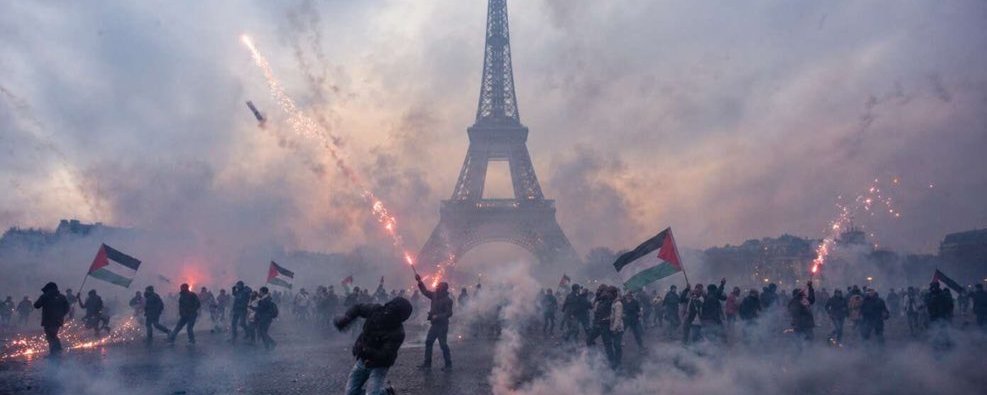
Given how things are unfolding in France, been thinking a lot about where I want to live in the coming years.
The world is huge, and working remotely gives me the freedom to live almost anywhere. But actually choosing a place to settle down is surprisingly difficult.
Between quality of life, family and friends, culture, weather, networking opportunities, and where you can realistically see yourself building a future, the options narrow down pretty quickly.
It’s strange how you can have the whole world to choose from and still feel like you only have a handful of places that actually make sense, and they’re not the easiest to move to.
France is facing the result of decades of decisions and interconnected issues.
I tried to explain how we got here in this article. It's a complex, multi-layered problem, and I'm sure I've missed some aspects, but I hope it brings some clarity.


Rubyto retweeted

I’m Polish. If France is your future, I come from the end of that road.
France shows you the slow version. We lived the full one – the version where the state doesn’t just take care of everything. It owns everything.
In Poland it arrived with Soviet bayonets. In America it would arrive by vote – slower, softer, with better slogans. But the destination is the same, and so is the mechanism.
It starts with prices. When the state decides what things should cost, prices stop telling the truth. A price is a message: this is scarce, this is wanted, make more of this. Abolish the message, and the whole economy goes deaf. So the shelves emptied – first of meat, then of almost everything.
Every Pole knew the joke. A man walks into a shop: "No meat?" The clerk: "No, sir. Here is no fish. No meat is across the street."
We queued for everything. People wrote their place in line on their palms and kept lists through the night. You waited years for a small car, and often more than a decade for an apartment. Not because Poles were lazy. Because nobody in the system had any reason to produce what we needed.
At work, we had another joke: we pretended to work, and they pretended to pay us.
And the promise of equality? It produced the most unequal system of all. The party elite had their own shops – Poles called them the shops behind the yellow curtains. Those with dollars shopped in special stores. Everyone else got the queue.
Then the system needed informers, because nobody believed in it anymore. Our neighbors were recruited to report on us. You never knew who was listening – the colleague, the friend, sometimes family. So we learned to live a double life: one language in public, another at home.
Those who spoke up got the wolf ticket: no job, no promotion, sometimes no university place for their children. Nobody needed to send them to prison. They just couldn’t live.
The newspapers reported record harvests while the shelves stood empty. Everyone knew. Nobody said it. That is what a society looks like when the lie becomes the system.
In 1950 we were about as rich as Spain. By 1989, Spain was twice as rich. That is what forty years of "fairness" cost us.
Today in America, the method is softer. Your neighbor won’t inform on you to the secret police. Someone will report your post, and you’ll be cancelled – no job, no account, no platform. Different tools, same machine.
We got out. Ten million of us joined Solidarity, and in 1989 a system that looked eternal collapsed. Since then, Poland has become one of the great success stories of Europe – because people were finally free to build.
But we still carry it. More than thirty years later, you can see it in the careful answers, the closed faces - the system leaves faster than the fear does. It takes generations to get out of it fully once you fall into that trap.
Nobody votes for the queue. Nobody votes for the informer. They come with the promise.
Trust me, you don’t want to go down that road.

I’m French. I want to talk to Americans who are about to vote Democrat. Not to insult you. To warn you.
I come from your future.
In France we did everything your progressive politicians promise. Free healthcare, free college, generous welfare, strong unions, heavy regulation, high taxes on the rich, a state that takes care of everything. Public spending close to 57% of GDP, one of the highest on the planet. On paper, it’s the dream.
Here’s what it looks like from the inside. France hasn’t passed a balanced budget since 1974. Our debt is above 3,300 billion euros. Interest on that debt is becoming one of the biggest items in the national budget. Our hospitals are collapsing despite record funding. Our schools rank lower every year. Young people with degrees can’t afford an apartment in the city they were born in. Our best engineers leave for London, Zurich and San Francisco. And the rich you wanted to tax? They left too, and took the jobs with them.
The promise was protection. The result is stagnation.
The worst part is that nobody in France voted for decline. Every single step sounded generous, compassionate, reasonable. One more program. One more regulation. One more tax to fund it. Each step alone makes sense. Fifty years of them, and you wake up in a country that can no longer build a nuclear plant on time or keep its streets safe.
I love America because it’s the one place on earth where people still believe they can build something from nothing. I came to Silicon Valley as a self-taught kid and it changed my life. That spirit is the most precious thing your country has.
Before you vote, ask yourself one question: is the program you’re voting for making America more like America, or more like France?
Trust me. You don’t want to be France.
