

You only see what you know (Goethe)
Austria
Joined December 2008
- Tweets50.5K
- Following27.6K
- Followers45.5K
- Likes380



Pinned Tweet
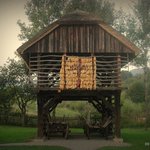
View of the Kamerlengo Fortress in Trogir, Croatia (@Croatia_hr), which is listed as UNESCO World Heritage Site > https://nitter.cf/t.co/lylXsDskig


Travelwriticus retweeted

Pour soutenir un seul toit de verre, à Paris, on a employé plus d'acier que pour toute la Tour Eiffel.
C'est le Grand Palais. Sa nef de fer et de verre est la plus grande verrière d'Europe.
Plus de 8 000 tonnes d'acier. Près de 15 000 m² de vitres.
Une voûte à 60 mètres de haut, plus que le premier étage de la Tour Eiffel. Et tout ça monté en trois ans à peine.
La France l'a bâti à toute vitesse pour l'Exposition universelle de 1900. Il fallait éblouir le monde entier, qui venait à Paris par millions.
Le message était clair : après la tour de fer, la France pouvait aussi en faire un palais.
Depuis, le bâtiment a tout encaissé.
Pendant la Grande Guerre, on a installé sous sa verrière un hôpital militaire, des centaines de lits pour les soldats blessés.
En 1944, un incendie a tordu son métal pendant la libération de Paris. Il a tenu.
À la fin du siècle dernier, il a même fallu le fermer dix ans : ses fondations bougeaient, et des morceaux de métal tombaient du plafond.
Il tient toujours. On l'avait dressé pour une fête de sept mois.
Plus de 120 ans plus tard, on y expose, on y défile, et on y a même croisé le fer aux Jeux olympiques de 2024.
📸 Photos : Chatillon Architectes


Travelwriticus retweeted

#sguardireali L'Armeria Reale nello scatto di @nomora_it su #Instagram:
"Can you imagine walking through a palace filled with centuries of royal treasures?The Royal Palace of Turin is a magnificent former residence of the House of Savoy... A masterpiece of Italian royal history!" – at Turin, Piedmont


Travelwriticus retweeted

Which of these Art Deco elevator doors is your favorite?
From top left to bottom right.
Fisher Building — Detroit, Michigan
Chrysler Building — New York City
Bullocks Wilshire — Los Angeles, California
Fred F. French Building — New York City
70 Pine Street — New York City
Mayflower Hotel — Akron, Ohio

Travelwriticus retweeted

#TheatreFriday - The Roman Theatre of Ostia (Italy) was built between 18 and 12 BC, likely under Marcus Agrippa. Originally 65 meters in diameter, the cavea was expanded to 88 meters during the reigns of Commodus, Septimius Severus, and Caracalla, accommodating around 4,800 to 6,000 spectators.
The auditorium featured radial vaults and a two-storey façade with 21 arches. The orchestra, about 23.5 meters in diameter, faced a 35.7-meter-long stage with a decorated proscaenium. Behind the theatre is the Piazzale delle Corporazioni, whose portico was enlarged under Hadrian. The orchestra was later adapted for aquatic spectacles. After extensive 20th-century restoration, the theatre remains in use for performances.
followinghadrianphotography.…


Travelwriticus retweeted

Marble columns reappear in Trajan's Forum thanks to anastylosis, a reconstruction process which incorporates original architectural elements to the greatest degree possible. Rome has also employed the technique in conservation projects at the Basilica Ulpia and Temple of Peace.

Travelwriticus retweeted

By 138 AD, Rome had run out of room for its emperors.
The Mausoleum of Augustus had taken their ashes for over a century.
Cassius Dio says it plainly: it was full. From then on, nobody else went in.
So Hadrian built a new one, on the bank of the Tiber.
He never saw it finished. It was completed in 139 AD, the year after he died.
Antoninus Pius. Marcus Aurelius. Commodus. Septimius Severus.
One after another, their ashes went inside.
The last was Caracalla, in 217 AD.
Dio says his bones were brought into Rome secretly, at night. 🏛️
Travelwriticus retweeted
You can now post up to 20 images on X, so here are 20 portraits of Hadrian 😍


Travelwriticus retweeted
Which of these Art Nouveau ceilings is your favorite?
From top left to bottom right:
Palau de la Música Catalana, Barcelona, Spain
Gran Hotel Ciudad de México, Mexico City, Mexico
Galeries Lafayette Haussmann, Paris, France
Palacio Longoria, Madrid, Spain
Hôtel van Eetvelde, Brussels, Belgium
Winter Garden of the Ursulines, Onze-Lieve-Vrouw-Waver, Belgium

Travelwriticus retweeted

Sotto una basilica del XII secolo ce n’è un’altra del IV, e sotto ancora case romane con un fiume sotterraneo. San Clemente, Roma.

Travelwriticus retweeted

In 1923, Walter Gropius designed his Director’s Office in Weimar, bringing together architecture, furniture, color and light into one remarkable space. Furnished with pieces created in the Bauhaus workshops, it became one of the earliest examples of the Bauhaus vision: bringing every element of design together as a whole.
When the Bauhaus moved to Dessau in 1925, Gropius took the furniture with him. The legendary office was reconstructed in its original location in 1999. Today, it remains one of the most fascinating interiors of early modernism.
Discover the story behind Gropius’ Director’s Office in Weimar:
bauhaus-experience.com/gropi…
#WalterGropius #Bauhaus #Weimar #BauhausExperience #Architecture
Travelwriticus retweeted
#autumnvibes nei Giardini Reali di Torino. 🍁 Tra un momento piovoso e l'altro, non perdete l'occasione di una passeggiata a colori tra alberi secolari, sculture e scoiattoli. 🍂 I Giardini Reali sono aperti gratuitamente dal giovedì al martedì, con chiusura alle ore 17.00 🐿 – at Turin, Piedmont


Travelwriticus retweeted
#AncientSiteSunday – The Temple of Zeus at Stratios in ancient Stratos in Acarnania, the westernmost part of central Greece. Constructed towards the end of the 4th century BC, the monumental Doric temple measured approximately 34 metres in length and featured a peristyle of 6 × 11 columns.
Built of local limestone, the temple comprised a pronaos, cella and opisthodomos, with eight internal columns supporting the roof. However, the building was never completed, as evidenced by unfinished column drums and unfluted shafts.
Research conducted by the Finnish Institute at Athens in 2000–2001 revealed that the original design may have been altered during construction. The columns, initially intended to reach about 8.7 metres, were reduced to 7.9 metres, possibly due to financial pressures tied to the city's ambitious building programme.


Travelwriticus retweeted

Con l’arrivo a #PalazzoPitti del Granduca Pietro Leopoldo e della moglie Maria Luisa di Borbone furono rinnovati diversi ambienti. Tra questi il Gabinetto Ovale, salottino privato della Granduchessa, decorato in perfetto stile rococò da stuccatori lombardi.

Travelwriticus retweeted

Tra la #Misericordia e #CampodeiMori, #Cannaregio racconta secoli di storia tra architetture, ponti e statue. Lungo il percorso, alla Fondation #Wilmotte, si può visitare Isole del Silenzio, Evento Collaterale della #BiennaleArte 2026, con le sculture di Kan Yasuda.


Travelwriticus retweeted
Julius Caesar knocked down houses and temples to build a theatre here.
He laid the foundations, and never saw it finished.
Augustus did. And he gave it to the dead.
He named it after Marcellus, his nephew and son-in-law, widely seen as his heir, who died in 23 BC.
In his own words:
Theatrum ... feci, quod sub nomine M. Marcelli generi mei esset.
"I built the theatre, to bear the name of my son-in-law, Marcus Marcellus."
Augustus, Res Gestae.
The arches are his.
The windows above them are not. In the 1500s, the architect Baldassarre Peruzzi built a palace on top for the Savelli family.
Those upper floors are still lived in today. 🏛️
Travelwriticus retweeted
#ReliefWednesday – Marble relief from ancient Praeneste (modern Palestrina, Italy), traditionally interpreted as depicting the posthumous Parthian triumph of Trajan in AD 118.
Trajan appears in a four-horse chariot (quadriga), wearing triumphal dress and holding a sceptre. A smaller attendant stands behind him, supporting a ceremonial crown above his head, while lictors carrying fasces accompany the procession. The chariot is decorated with a winged Victory.
Following Trajan’s death in AD 117, the Senate offered Hadrian a triumph to celebrate his predecessor’s victories in the East. Hadrian declined the honour for himself and instead arranged for Trajan’s effigy to be carried in a triumphal chariot.
Discovered in 1967, the relief is believed to have formed part of the funerary monument of Quintus Fabius Postuminus, a distinguished senator who served as urban prefect under Trajan.
📍 Museo Archeologico Nazionale di Palestrina, Italy (inv. 6520).

Travelwriticus retweeted

Vicus Caprarius, la Città dell’Acqua
A pochi passi dalla Fontana di Trevi, nove metri sotto le strade di Roma, si nasconde un mondo sotterraneo dove l’acqua e la storia si intrecciano.
👉turismoroma.it/it/luoghi/are…
📸 IG berkanarun
#VisitRome
