

This social media campaign exists to spread awareness of the use of child labor throughout the world, especially in developing countries.
Joined April 2020
- Tweets20
- Following4
- Followers1
- Likes2



Pinned Tweet
The use of child labor is far more widespread than you may think. The UNICEF global database for child labor states that 29% of children aged 5 to 17 are victims of child labor in developing countries.
Save Child Workers Now retweeted

RT @CIFCampaign: From our hands to your table! Winning artwork 🎨 submitted by Jacqueline in 2014. #MotivationMonday

Save Child Workers Now retweeted
Reuters on #childlabor in cocoa: "The level of child labor is higher than in 2010 when companies including Mars, Hershey, Nestle and Cargill pledged to reduce the worst forms of child labor in their West African supply chains by 70% by 2020." ow.ly/4aCN50zcZuv

Save Child Workers Now retweeted
MT @ILRF: The @cottoncampaign is developing a framework to encourage responsible sourcing of cotton from #Uzbekistan, while providing brands w/ assurances #forcedlabor is addressed.
Press Release: cottoncampaign.org/release16…
@SourcingNetwork nitter.cf/cottoncampaign/status/…


How high street clothes were made by children in Myanmar for 13p an hour theguardian.com/world/2017/f…

Companies can commit to the ethical treatment of all their workers through corporate social responsibility.

1
Child labor is often forced. These children are threatened into working and lose their ability to go to school. Preventing children from getting an education creates an endless cycle, continuing the use of child labor over time

25 years ago today, Iqbal Masih, a 12-year-old boy who dared fight against child slavery was slain. CLC-member Tim Ryan remembers Iqbal.
#IqbalMasih #EndChildLabor
stopchildlabor.org/?p=3781

Save Child Workers Now retweeted
Clothes are so cheap these days.
One of the reasons: in 7 countries garments are produced with the help of #ChildLabor: #Bangladesh #Burma and #Turkey all use child labor. #Argentina #Vietnam #India #Thailand use both #ChildLabor AND #Forced Labor -- via @USDOL.

This map displays the prevalence of child labor throughout the world. Photo courtesy of the Huffington Post.

Follow our instagram page to get more information about the use of child labor around the world instagram.com/p/B_ET-UbDyge/…
All industries are impacted by child labor, including fishing
Fish can eventually smell bad...
but child labor in fishing smells bad from the beginning.
#ChildLabor helps harvest fish in 11 countries, often at great peril to children, sometimes very young, who sometimes drown while working.
ow.ly/ulUm50zgiZk

Save Child Workers Now retweeted

#Childlabour in #Vietnam #fishing boats. According an investigation by @ejfoundation, children as young as 11 are working aboard Vietnamese vessels fishing illegally for #seafood that could end up on sale in supermarkets in the #EU https://nitter.cf/t.co/M1dlyL9hZs via @guardian

This 15 year old child, Abou, is a victim of child labor. He works long, tireless hours on a cocoa farm in the Ivory Coast. Companies such as Nestle and Mars benefit from Abou’s labor.


Good On You is a website that highlights the fashion brands that are the most ethical, this includes whether the brands use child labor. It is a great resource for mindful shoppers.

We have a new website, a new look and a plan to grow the movement for ethical fashion even more in 2019. We've revamped the journal too, so that you can read more of our news, tips and guides: goodonyou.eco/
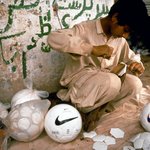
This photo went viral and caused mass protests against Nike and many boycotted their products. Would you still purchase their products if you were face to face with this child after a long day of work?

Child labor forces children out of school, severely impacting their education.

Hussein, 10, hasn’t been to school in two years. He’s been working at a mechanic’s shop, desperate for the wages he needs to support his family.
No child should have to give up learning in order to survive.
#ChildrenUnderAttack

India is the second most populated country on earth. Child labor effects millions of children, as seen in these statistics courtesy of UNICEF.

In 1998, Nike pledged to stop using child labor after photos of children working in sweatshops were leaked. Have they kept this promise? nytimes.com/1998/05/13/busin…