







onodera retweeted

I have a particularly nasty case of cancer. When I was hospitalized again at my lowest point last year, I told Jensen. He immediately reached out to contacts at Stanford, who were able to cut through red tape, and get me into a clinical trial for which I've turned out to be a perfect fit. I think everyone can have their own views about recent events. But any claims that Jensen did not really care about his staff is simply inaccurate. I, personally, owe him more than I can express.
I think the best tribute we can pay to Jensen's legacy is to drive NVIDIA's continued success and push the whole industry forward, by showing we've learned the lessons from years of working here. We will compare ourselves against Speed of Light. The mission will be the boss. And we will not be scared to take smart, bold risks and fail fast with ruthless intellectual honesty.
But if there is one management story I remember the most, it's a particular Jensen grilling from my time in autonomous vehicles that stayed with me. Luckily I was not in the hot seat for this one. Team A didn't want to use Team B's framework, because they thought it was too slow. Jensen was surprised - it's just applying a bunch of optimized CUDA kernels in sequence, how could it be slow?
So he asked the executive from team B to draw the entire data flow sequence from their framework on the whiteboard and highlight every memcpy. Sure enough, there were a bunch of unnecessary memcpy's surrounding each pipeline stage. Everyone in the room could see why it wasn't getting to SoL and a path to improve things. No arguing about fiefdoms or appeals to authority - the data got us all on the same page.
The lesson was not (just) that unnecessary memory copying is bad. It's that executives should not be afraid to probe into details if something doesn't add up, and leaders need to be technical enough and honest enough to engage in real time and not turn every meeting into "I'll get back to you in a week." If that means counting memcpy's with a billionaire CEO, so be it.
My best executive meetings at NVIDIA have been when I'm fully prepared to present every detail of my team's work, and my worst failures have come when I realized I couldn't go deep enough to really solve the problem.
But the thing that gives me confidence is that Jensen was never the only one to live this philosophy. Anyone who has presented to an SVP at NVIDIA knows they are at risk for getting grilled on fundamental constraints and technical details. I have been part of amazing conversations with both recent and old timer leaders where we were able to get to the core of a problem in an hour rather than a month, because we had the right people in the room and were not afraid to go deeper.
The company is filled with supremely talented people who have been trained for 3 decades to work at the highest level, and you can see it in what we produce every day. I'm so proud to be an NVIDIAn, and I can't wait to show off what we ship in the coming months and years.


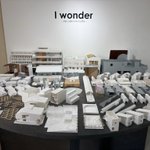
ほぼ全てのハウスメーカーは嘘ばっか吐くから面白い。そういう欺瞞に惑わされずに納得できる家を建てて欲しい。予算があるなら設計事務所一択です。

家を建てるためにハウスメーカーの比較をしたので、整理して記事にしておきました imoz.jp/scraps/202611_housem…


onodera retweeted

ここ数年の基盤モデルの進化速度を、分野別に見ると:
言語:LLM はすでにデフォルトのインフラ。
画像:バックボーンをゼロから学習する人はもういない。事前学習+ファインチューニングが標準。
数学:推論モデルが IMO 金メダル相当の水準に到達。形式的証明も同じ手法に飲み込まれつつある。
生物:タンパク質構造予測はノーベル賞を取り、配列モデルは実験前の標準工程になった。
ロボット:VLA は一つのモデルでタスクも機体も横断する。動作ごとにコントローラを作る時代ではない。
テーブルデータ:今年、標準ベンチマークでチューニング済みの木モデルを上回り始めた。
どの分野も辿る道は同じ。「無理だ」→「小規模データなら使える」→「デフォルトになる」。
この速度なら、手作業の特徴量設計、ハイパーパラメータ調整、タスクごとにモデルを一つ作るという流れの大半は、遅かれ早かれ置き換わる。残るのは、問題を定義する力とデータを見極める力だ。
onodera retweeted
Our CEO Jensen Huang is LIVE at #NVIDIAGTC Berlin.
Watch the keynote now ⬇️ youtube.com/live/PvFjbPYEOZI…

onodera retweeted

Road to GTC Berlin: Europe’s AI Builders in the Spotlight nitter.cf/i/broadcasts/1YGNrboqk…

