
Topaz ✨ retweeted

The current 2026 BTC range reminds a lot the 10/10th PA.
Seeing a similarty with the rally to new highs, just as the two inefficient moves, just as the "SFP" at the lows.
Could have a similar playbook going forward, but could be locally different.
Imo what is very important is to observe how the price develops for the rest of the year & not expecting an immediate resolution.
If a range forms, likely proceeds lower. Contrary an acceptance above summer range could see us retesting the breaker around 76K.
Where do you stand? And what are you looking for?

Topaz ✨ retweeted

We’ve had lots of questions from our investor community looking for thoughts on OUSD, and so I thought I’d share my direct views here for anyone.
Stablecoin networks are platform and network effect businesses that are established over a long period of time, tend towards winner-take-most market structures, and resemble other internet platform utility markets. There are several layers that drive this.
First, stablecoin networks effectively act as public protocols and software layers on the internet and their network strength is a matter of the number and range of applications and services that integrate to the network. Every time a developer or service provider integrates to the network, it brings more network effects. This attracts more developers and adds more utility and more network effects. This then drives demand for the digital currency itself, which then reinforces these network effects through liquidity network effects.
We have realized this at a massive scale with the USDC network today — thousands upon thousands of services integrate with our network, which in turn provides immense utility not just to each application, but to users as a whole who benefit massively from the reach and interoperability that exists. This drives user and developer preference further. We’ve invested in building that ecosystem over nearly a decade, and now it’s accelerating as mainstream institutions come onto the network, connecting their customers and users.
We add to that utility by building software stacks that further expand and strengthen the network — protocols like CCTP and Gateway, which promote interoperability, safety and liquidity around the world. This expands the target surface area for app builders and developers, making it easy for them to tap into the liquidity and network effects that already exist. We are now seeing that stack get pulled into all kinds of chains, permissioned L2s, networks being built by governments, and so much more.
The second layer is that of liquidity network effects. This is fundamental. Liquidity begets liquidity. For a stablecoin to achieve scale and utility, it needs to be highly liquid, both on a primary basis (e.g., through all the major financial market centers in the world, with world class direct banking liquidity) and on a secondary basis both by being available and tradeable for retail and institutional clients in every geography and against every fiat instrument in the world. People who want to access and move value need to be able to easily get in and out of that digital currency. Here, we’ve invested nearly a decade in building out that liquidity, and it is now entrenched in exchanges, DeFI venues, and with PSPs, payments firms, regional exchanges, and so many others. Establishing these liquidity network effects also involves building global regulatory infrastructure and ensuring that the stablecoin is available under various regimes around the world. Today, USDC is in the top 3 most liquid digital assets in the world, and it falls off sharply after that. BTC, USDT and USDC have extraordinary liquidity. The closest other dollar stables are like 10x smaller and that liquidity tends to be concentrated in promotional books in a single exchange, whereas USDC liquidity is dispersed widely across dozens and dozens of surfaces. Building this liquidity has been a nearly decade-long task that we continue.
A third layer of network strength comes from the deep integration with the policy and regulatory environment — in many cases, years of effort to build licensing (e.g., USDC is the only large global stablecoin currently available in all of Europe or Japan), and more regimes for stablecoins are coming online, with Circle leading the way in ensuring that USDC is officially recognized, registered, licensed and accepted in the most important markets in the world. On the back of this is the work of building global banking, reserve management and treasury and liquidity management that can operate this on a nearly 24/7 basis in markets and banking systems globally. This globalization effort is a massive investment that we have made over the years.
All of these investments by Circle and our global ecosystem of thousands of partners have delivered the net result of providing the world’s most trusted and available digital dollar infrastructure—a utility that any user, developer, or business can freely and easily tap into. And we do not intend to slow down.
All of this compounds and shows in the numbers. In Q1 2026, according to third-party analysts (Artemis) who track stablecoin adoption, USDC handled nearly $30T in onchain transactions, representing 80% of all dollar stablecoin transactions on blockchains. USDT handled the remaining 20% of transactions. All of the combined remaining dollar stablecoins handled a total of 0% of transactions (i.e., < 0.5%). While other stablecoins may have some circulation, most of that is through promotions and incentives, the actual usage is extremely limited—because of the extremely limited liquidity and network utility that exists for these coins.
But my thoughts on the competitive landscape are not just about the strength of our network—there are also considerations around any new initiative.
Several perspectives and positioning have been shared about how something like OUSD improves on something like USDC.
1) Free mint and burn. The argument suggests that existing stablecoins charge burn fees, and payments firms should not need to pay these (despite the fact that the entire payment industry is built on small bps fees on various ingress and egress points on their networks). There are structural market realities built around the fact that some stablecoins impose very large redemption fees and have limited redemption facilities – the impact of this is that stablecoins with strong redemption facilities, good liquidity and no fees become the offramp for their competitor stablecoins. It may seem easy to say one will offer unlimited and free redeems, however market reality likely forces other behavior. This can be addressed – and is addressed by Circle – through contractual mechanisms vs. a blanket fee exemption.
2) Everybody wins and shares. While this sounds good in principle, the reality of the market and market opportunity is quite different. Today, Circle shares the majority of its income with its distribution partners, and we continue to lean hard into expanding those partnerships with leading companies across every sector of the market. However, we also retain significant income that allows us to invest in the massive market infrastructure that makes this such a powerful and valuable utility for the world to build on. Giving away all the income is a recipe for starving an infrastructure, systematically underinvesting and ensuring that your platform will remain limited in scope.
Furthermore, Circle believes that the future stablecoin market is likely several orders of magnitude larger than it is today. We’re actively bringing partners into the USDC ecosystem through a diverse and growing set of partnership models that span our work with exchanges, custodians, payments firms, asset issuers and more. We are excited to continue to build with a “big tent mentality” where the entire ecosystem can grow value together.
3) A consortium where everybody has a voice. Perhaps I have a cynical view, but the track record of consortium products achieving scale, P/M Fit or even basic product agility is absolutely dismal, and while there are examples of financial consortia that operate utilities, they are predictably slow moving. Large groups of large companies coordinate poorly, have misaligned incentives, slow things down and rarely create the space for real durable innovation and competitiveness. They also typically, out of their own self-interest, starve the consortium itself on an operating basis. We actually tried this in the early days of USDC, and even with a very small group, ran into endless challenges and complexity. Smaller, tighter strategic collaborations and commercial partnership arrangements with product and platform builders that can drive forward independently will almost always outcompete large consortiums. But oftentimes when these get formed, everyone feels like they should put their logo on the list, kiss the ring, and make noise about openness. But typically those same firms will turn to their operating units and make the best decisions for their customers, which often means partnering with the market leader and building durable win-win partnerships.
There’s also been a bunch of commentary on Circle's partnership with Coinbase and what this all means. Our stablecoin partnership with Coinbase remains as strong as ever, and I think we both see that enormous opportunity ahead to expand the USDC network.
A final comment: Circle remains committed to supporting a wide range of different products and infrastructures, even when we might compete with different aspects of those partners’ products in other areas of our business. With OUSD, we work closely with many of the founding members, and we expect that those same members will remain large USDC partners and customers. At the same time, as Circle has diversified our product and platform stack, expanding across Arc, CCTP, CPN, StableFX, Agent Stack and many other areas, we continue to expand the partnerships and collaboration with many other stablecoin issuers — dozens of them — to help them launch on Arc, leverage our interoperability infrastructure, get supported in our Wallets and become settlement and FX options on CPN and StableFX.
We are huge believers in growth in the stablecoin ecosystem and welcome OUSD as a new member of the community!


Topaz ✨ retweeted

I spent the weekend putting my thoughts about $ETH and Ethereum into this article
I built my career, community, and business on Ethereum, so the decision to sell deserves a deeper explanation
I hope this is sufficient
Thank you, all


ethereum:0x7fc66500c84a76ad7e9c93437bfc5ac33e2ddae9 Update✍🏻
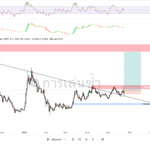
โดนทรัมป์เล่นงานจนได้เสียวอยู่เหมือนกันกับไม้ Long นี้จากที่ทรัมป์กลับคำโจมตีอีกแล้ว (ชิน🤣) แต่จุดที่น่าสนใจคือ ราคาลงไป ‘ยัง’ ไม่ทะลุทำ new low ซึ่งเป็นจุด invalidation ของเราหากราคาปิดแท่ง 4H ต่ำกว่าได้ แสดงให้เห็นว่าฝั่ง Long ต้องการที่จะ defend ให้ได้ ตามต่อไป


ethereum:0x7fc66500c84a76ad7e9c93437bfc5ac33e2ddae9 อัปเดตจากที่โพสต์ไปเมื่อ 2ชม.ก่อน ปัจจุบันสามารถเบรค trend line liquidity ได้แล้ว 🚀
หรือจะมองเป็น wedge ก็ได้ เป้าหมายต่อไป มุมมองฝั่ง Long นี้จะต้องรอให้ราคาสามารถเบรค high แถวๆ $90 แล้วยืนเหนือให้ได้ ก็จะถือเป็นการ reclaim และลุ้นให้ราคาไปสูงกว่านี้ (1/2)

15
ethereum:0x7fc66500c84a76ad7e9c93437bfc5ac33e2ddae9 อัปเดตจากที่โพสต์ไปเมื่อ 2ชม.ก่อน ปัจจุบันสามารถเบรค trend line liquidity ได้แล้ว 🚀
หรือจะมองเป็น wedge ก็ได้ เป้าหมายต่อไป มุมมองฝั่ง Long นี้จะต้องรอให้ราคาสามารถเบรค high แถวๆ $90 แล้วยืนเหนือให้ได้ ก็จะถือเป็นการ reclaim และลุ้นให้ราคาไปสูงกว่านี้ (1/2)
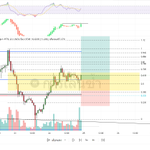
ethereum:0x7fc66500c84a76ad7e9c93437bfc5ac33e2ddae9 ถือเป็นจังหวะที่น่าสนใจสำหรับมุมมองขา Long ที่ zone ที่ผมมองว่า MUST HOLD✍🏻
ปัจจุบันอยู่ที่ Flip zone HTF สีม่วงและเป็น POC ของชุดสะสมก่อนเบรคครั้งล่าสุด ปัจจุบันเกิดแท่ง sweep และดึงกลับแล้วแบบ V-shape มี trend line liquidity ที่น่าสนใจอยู้ด้านบน RSI di, CVD flat. Longed.
ethereum:0x6de037ef9ad2725eb40118bb1702ebb27e4aeb24 อัปเดตสถานการณ์ปัจจุบันค่อนข้างสวยเลย เลื่อน B/E มาบังหน้าทุนแล้ว เท่ากับว่า position นี้เป็น risk free 👍🏻
P.S. ไม่โฟกัส ROI% และ leverage 50X นะครับ เพราะผมเปิดไม้ด้วยการคำนวณ position size ปัจจุบัน unrealized profit ก็อยู่ที่ประมาณ 3R เท่านั้น ติดตามกันต่อไป✍🏻


5.ปัจจุบันราคาเบรค supply ได้แล้วหากสามารถยืนเหนือ supply แล้วทำ HH ได้ ก็มีโอกาสที่มุมมองฝั่ง Long นี้จะได้ไปต่อ
บทเรียนที่ได้จากการเทรดสองไม้นี้คือ หากเรามองทุกอย่างแค่ "ปัจจุบัน" ไม่ใช้อารมณ์ ไม่ยึดติดกับมุมมองที่วางแผนไว้ มุมมองเราจะกว้างมากพอที่จะเห็นโอกาสใหม่ๆได้แน่นอน 👍

10
จากการวิเคราะห์ครั้งนั้น ได้เกิดเป็น case study ที่ดีและเป็นอีกหนึ่ง best move ที่น่าภูมิใจของตัวเองครั้งหนึ่งเลย👍
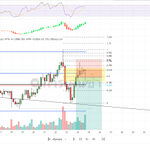
1.จากที่วิเคราะห์เรื่อง delta footprint และแท่งแดงที่แรงพอที่จะเบรค minor structure ในทันทีผมก็เลือกเปิด short ด้วยท่าปกติ FVG fill +Fibo 50%, SL 81% เหนือ supply


1
50

Topaz ✨ retweeted

Some of my perspective on where the @ethereumfndn is going.
First of all, this is only my own view. The board is not just me, and I have no extra special powers on the board that the other board members do not. @aerugoettinea is the one executing much of this transition. My input has been largely on technical questions. The board is in the process of expanding, and my own power within the org will continue to decrease, which is honestly what I want.
The 2025 era brought many important improvements to EF and its ability to execute. Many issues were resolved, and EF continues to benefit from its improved efficiency and greater focus on concrete goals to this day. And so with those problems resolved, early this year, the largest remaining hole that I perceived was something different nagging at me: I would regularly spot people saying things like "vitalik says these beautiful things about ethereum needing to be decentralized, and have privacy, and be a sanctuary technology, but why do the EF's actions not reflect that?"
Now, you may have been hearing something different. You may not have been sensing a feeling of crisis at all, and maybe were hearing people saying that finally we were taking execution and BD seriously and the main task for us is to keep going that way and be even better and faster. Then probably there is genuine difference between you and me, in what kinds of criticism I take most seriously, and what kinds of critics through their criticism are most able to make me feel pain.
As an analogy, let's briefly switch over to a different domain.
One belief you can have about Google is that it is a success story, and has brought a lot of good to humanity in organizing the world's information. Another belief you can have about Google is that they had a beautiful idealistic beginning, but at some point the corruption of mainstream corporate attitudes seeped in, and they slowly bit by bit completely abandoned the "don't be evil" slogan.
My belief on Google specifically is probably somewhere between the two. BUT, if you had taken me back in time to ~2008, and offered me a button to press to make Google one or two standard deviations more "dogmatic", eg. give Richard Stallman permanent veto power over some key policies, I would immediately press it.
Why? Because a choice for one company is not a choice for the world, or even one country. Google existed and exists in the context of a technology industry generally drifting away from early idealistic don't-be-evil roots and toward greed for financial gain, totalizing visions of accelerated superintelligence, infiltration by sociopaths, and craven capitulation to (or worse, active participation in) government pressure for ideological control, surveillance and war. And so *one company* doing something different, positioning itself to be what George Bernard Shaw calls the Unreasonable Man, resisting the trend of the times, would have been better for freedom, balance of power and stability of society as a whole, than *all* large companies bending to dominant trends. This is a part of my version of pluralism.
This line of thinking is not just mine, but I also is not too far off from what Aya and others had in mind with the Mandate.
Now how does this all get to the role of the EF?
EF is not a "center of Ethereum", rather EF is "one node, with a defined purpose, alongside other nodes". We've always said that the EF should be the latter, but many in the Ethereum ecosystem (and even within the EF) wanted us to be the former. Now, we are taking action to ensure that we will be the latter.
This is particularly important because EF is a limited organization, with limited resources and limited organizational capacity. The EF has only ~0.16% of all ETH (less than many other individual ETH holders), whereas among other blockchains it's common for "the central foundation" to have 10-50%. Fiscally, the EF was originally designed to fulfill a limited work scope defined in the token sale docs and other pre-launch materials (building the chain software; getting through Frontier, Homestead, Metropolis, Serenity), which was fully completed in 2022; it was not designed to be an eternal steward.
And so today, the EF is choosing to use its remaining resources to pursue longevity over breadth (yes, this means we sell less ETH). The EF focuses *specifically* on those activities critical to the success of ethereum as a censorship/capture-resistant, open, private and secure system, that would not happen otherwise. This means making hard choices, and in some cases even activities that we highly approve of and people that we highly respect becoming outside of the EF. People of great technical talent, public respect and even alignment with the mission and CROPS being outside of the EF is in fact necessary if we want important tasks to be able to attract outside capital. This also means the EF taking opinionated stands culturally.
This is all intended in cooperation with all other parts of ethereum. We recognize that many other parts of the ethereum world highly respect CROPS and related values. But highly respecting is not the same as choosing to specialize and totally dedicate to a domain (Compare in a different domain: I think reducing animal cruelty is important, and I like vegan food, but am not full unconditional vegan myself)
EF is still in a transition period, and we expect its new long-term form to stabilize over the next few months. What are the guiding principles of this new form? Again, I am only one person, but I can give my answer from a technical perspective (there are also critical non-technical aspects).
At the core, *Ethereum must be impressive*. We are living in an age of highly intelligent AI and all kinds of other technological acceleration. "Status quo EVM, with a hard fork or two a year to optimize for short-term needs of users" is not interesting.
To some, "impressive" means: 250ms latency and 1M TPS. I think Ethereum trying to go that route is a mistake. Being as fast and as scalable as possible, and only a small epsilon more decentralized than the others, is a route to mediocrity, and if we try it we will lose.
I think Ethereum should scale. But I think Ethereum should strive the hardest to be deeply impressive in a different dimension: the CROPS dimension. This means things like:
* Provably bug-free Ethereum. This is a goal that all cybersecurity researchers would have thought is absurd and impossible, up until roughly 6 months ago. Now, it's on the cusp of being possible, thanks to AI-assisted formal verification. So we should be frontrunners in doing this.
* Available chain consensus. Ethereum is, and with lean consensus will cotninue to be, the ONLY chain that has both (i) traditional-BFT style properties that it's safe under asynchrony up to a high level of fault tolerance, and (ii) the bitcoin PoW-style property that under synchrony it's safe up to 49% attackers. As far as I can tell, literally no other chain has this or is planning for it; bitcoin goes for (ii) only and most other chains go for (i) only. Some will remember I fought hard for this, Unreasonably insisting that it is not OK for ethereum to rely on social consensus and hard forks to rescue ethereum from 34% of nodes going offline. It's OK for chains like hyperledger, bnb, solana, tempo, etc. It's not OK for bitcoin or ethereum or eg. zcash.
* Intermediary minimization. The fact that smart contract wallets, protocols like railgun, etc have to send transactions through intermediaries to get included onchain is honestly embarrassing, and it's a constant point of fragility. Hence the work on FOCIL and EIP-8141 (and 7701 and years of work before) to make transaction sending intermediary-minimized with public mempool and strong inclusion properties, in a truly general-purpose way, that covers not just eg. secp256r1, but also privacy protocols and much more. Kohaku is pushing intermediary minimization at the user layer, pulling Ethereum away from the dystopian status quo world where our wallets don't even verify the chain, send our private data out to a dozen third-party servers, and toward a brighter CROPS future.
Some of these goals are Unreasonable - maybe Ethereum would be "fine" getting only 50% of the way - what if we depend on intermediaries, but make it easy to switch? But going 50% of the way would not make Ethereum Deeply Impressive in the CROPS way. So we push for 100%.
Fortunately all these goals are compatible with high TPS, this is a major focus of research (esp. on scaling the state). Well-designed L2s can also help, especially L2s optimized for specific applications (eg. high-volume trading, privacy...). These goals are even compatible with significantly lower slot times, thanks to Raul's work on erasure-coded P2P, and many other optimizations.
The most high-value "product" of the ethereum blockchain, financially speaking, is ETH the asset. Ethereum secures $250 billion of ETH. The types of properties of Ethereum that I mentioned above are very good for ETH the asset. Nearly 90% of my net worth is in ETH, and most of the remainder is ~$40m of onchain fiat of which every dollar has already been allocated for some open-source biotech or software or hardware initiative. That said, there are aspects of supporting ETH the asset - *necessary* aspects even - that are outside the scope of the EF. This is where we need other heroes (some of whom hold more ETH than the EF does) to step in and help. EF has been recently thinking more about how it will relate to other such organizations, and give them needed initial support.
EF will be a smaller ship than in previous years, a more opinionated one - in some cases more opinionated in ways that might be difficult to comprehend - but a longer-lasting one, and one suited to making sure that ethereum brings something meaningful to the world. We are grateful to all those inside and outside the EF who are helping to make this happen.
Topaz ✨ retweeted

📊Trading Journal
สำหรับใครที่ยังมีปัญหาในการบันทึกพวก Trading Journal และการ Track ค่าสถิติการเทรด อยากให้ลองเอา Dashboard ที่ผมทำขึ้นไปใช้ดูครับ หรือเผื่อเพื่อนๆ จะเอามันไปพัฒนาต่อยอด ทำให้มันดีขึ้นอันนี้ยินดีมากๆ
โดยรูปแบบผมจะชอบสิ่งที่ My Fxbook ที่เป็น website ในการ track พวก Trading Statistic เป็นต้นแบบนะครับ ในตัว Dashboard จะมีตั้งแต่
🔸Set up account หลังจาก Create ตัว Main Account เราก็มาแบ่งเป็น Sub-Account ว่าจะเป็นเทรด Spot หรือ Future
🔸 มี หน้า Deposit เผื่อในอนาคตจะมีการเติมเงินเข้าใน Sub-Account ไหน จะได้มีการบันทึกประวัติการเติมตัง
🔸ส่วนการ Create transaction ก็จะเป็นหน้า New Order
🔸มีหน้าการคำนวณสำหรับคนเทรด Future โดยมี Stop Loss 2 แบบมาให้เลือกระหว่าง Fix % กับ ATR ที่เราต้องทำการเลือก ATR Multiply ว่าจะเป็นกี่เท่าของ ATR ที่เรามาใช้ในการคำนวณ
🔸API ตรงนี้จะมีดึง 4 ที่ Binance, Kucoin, Bybit และ Coingecko หรือถ้าไม่มีให้ดึง เราสามารถเลือกเป็นแบบ Manual เราก็มากรอกเองในแต่ละวันได้เหมือนกันตรง Price Update Tab นั่นแปลว่าเราสามารถใส่ Asset หรือเหรียญอะไรไปก็ได้นะครับ แล้ว Manual Update เอา ไม่จำเป็นต้องดึง API จากแหล่งไหน
🔸Import trading history ได้นะครับแต่ต้องตรงกับ Template ของ Platform ซึ่งตรงนี้เราสามารถที่จะ Download Template ออกไปก่อน แล้วค่อยให้ AI มันแปลง trading history เก่าของเราเข้า Template ของ Dashboard ก่อน upload เราสามารถที่จะ Validate ข้อมูลก่อนว่าผ่านทุก Transaction แล้วค่อยเอาเครื่องหมายติ๊กถูกออก เพื่อให้ขึ้นคำสั่ง "Import" แล้วค่อยเอาข้อมูลเข้าระบบ
คำสั่งในการลงโปรแกรมสำหรับ macOS
curl -fsSL raw.githubusercontent.com/Gr… | bash
คำสั่งในการลงโปรแกรมสำหรับ Window
irm raw.githubusercontent.com/Gr… | iex
ตัว Dashboard จะรับบน localhost นะครับ รันบนเครื่องเราเอง โดยถ้าปิดไปแล้วจะกลับมารันอีกครั้งเพื่อลงข้อมูลก็ให้เปิด Terminal หรือ Window Powershell แล้วไปที่ folder ที่เรา install dashboard ไว้ แล้วรันคำสั่ง
./dev.sh (สำหรับ macOS)
.\dev.ps1 (สำหรับ Window)
My GitHub: github.com/Grabriel289/tradi…
ยังไงลองไปทดสอบ ไปลองเล่นกันดูนะครับ หวังว่าจะมีประโยชน์
Note: ภาพทั้งหมดที่แสดงในแต่ละส่วนเป็น Mock Up Trading Transaction เพื่อให้เห็นว่าตัว Dashboard แสดงผลยังไง