

One cycle. Two geometries. Time expressed as geometry. | 1080° CHC • Harmonic Time • 24 equal divisions • independent research
Swansea, Wales
Joined May 2026
- Tweets448
- Following82
- Followers275
- Likes26.4K



Pinned Tweet
Updated introduction to the 1080° CHC
The 1080° Cosmic Harmonic Compass (1080° CHC) began as an exploration of the Fibonacci mod-60 cycle.
While studying that repeating cycle, I became fascinated by its four cardinal zeros and eight recurring 5s. Mapping their geometric relationships led to the framework shown here: a 15 × 15 square, a continuous 60-step perimeter, a circle sharing the same centre, and 24 equal divisions.
One cycle. Two geometries.
The square divides the cycle by equal distances around its edge.
The circle divides the same cycle by equal angles around its centre.
Both are different ways of measuring progress through the same complete cycle.
Within the CHC, the 60-step perimeter can also be divided into 24 equal intervals:
60 steps = 24 hours = 1,440 minutes = 1,080 CHC°
1 step = 24 minutes = 18 CHC°
2.5 steps = 60 minutes = 45 CHC°
This lets the framework explore geometry, proportion, cyclic division and time — including the work I call Harmonic Time.
The CHC does not replace the conventional 360° compass. It places square-perimeter and circular measurement together so their relationships can be seen, measured and compared.
Time expressed as geometry.
I’m continuing to test and document the framework. If something here is useful, or if you work with mathematics, geometry, education or timekeeping and want to look more closely, I’d be glad to hear from you.
1080chc.com


What happens when classical geometry is explored through one fixed framework?
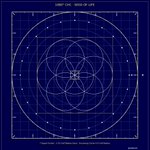
These five images follow the 1080° Cosmic Harmonic Compass from its original 15 × 15 grid and inscribed circle through the Egg of Life, Fruit of Life and Metatron’s Cube.
Seven equal circles, then thirteen. Connect the thirteen centres to reveal 78 connections, before exploring the same Metatron’s Cube construction at two different scales.
The underlying framework remains unchanged, allowing symmetry, proportion and geometry to be constructed, compared and explored.
One framework. Many possibilities.
Which image catches your eye?
#1080CHC #Geometry #SacredGeometry


Exploring the Flower of Life
One framework. Four geometric studies.
From the Seed of Life to the Flower of Life and its extended forms — 7, 19, 37 and 61 circles.
Each construction explored on the same fixed 15 × 15 grid of the 1080° Cosmic Harmonic Compass.
Familiar geometry, different scales and expanding patterns.
What becomes visible when we explore these constructions within a single measuring framework?
#1080CHC #Geometry #FlowerOfLife


One framework. Two geometries. Four nested scales.
Ten-pointed stars on a fixed 15 × 15 grid, comparing equal circle angles with equal square-perimeter divisions.
Static snapshots, yet the overlapping geometry suggests movement and depth.
Perhaps what we see depends on how we choose to measure.
#1080CHC #Geometry


The Twelve-Star expressed as Harmonic Time.
12 equal divisions of a 1,080° cycle.
Each division represents 90 CHC°, 2 hours or 120 minutes.
Time expressed as geometry. Geometry expressed as time.


One framework.
Two geometries.
Seven nested scales.
The same eight-pointed star, constructed using both circle-angle and square-perimeter divisions, from 1.5 to 7.5 cells.
The overlay reveals where the two constructions align and where they diverge.
Have you seen this dual nesting before? ✨
#1080CHC #Geometry #maths


One cycle. Two geometries. ✨
Exploring the Ten-Star through the 1080° Cosmic Harmonic Compass — connecting geometry and Harmonic Time.
10 equal divisions.
108° CHC per step.
144 minutes per step.
The same numerical sequence, constructed around a square and a circle.
The numbers remain the same. The geometry changes.
#Geometry #Mathematics #1080CHC
🤖 Made with AI


A closer look at the Ten-Star.
The red and teal regions reveal where the square-perimeter and circle constructions differ.
One numerical sequence. Two geometries. Different boundaries.
#1080CHC


4
57
What happens when the same five-pointed star is constructed using two different geometries? ✨
One square. One circle. One 1080° cycle.
5 equal divisions.
216° CHC per step.
288 minutes per step.
The same 24-hour time cycle, expressed through two geometries.
The numbers remain the same. The geometry changes.
#Geometry #Mathematics #1080CHC


1
5
151
A closer look at the Five-Star. ✨
Same five divisions. Different geometric results.
Overlaying the circle and square constructions reveals where their lines diverge — and where their enclosed areas differ.
Red = square only.
Teal = circle only.
One cycle. Two geometries. What differences can you see? 💫


4
74
One Day. Two Angular Scales.
What happens when we express the same 24-hour day through two different angular scales?
A day contains 1,440 minutes.
Conventional 360° circle:
1,440 ÷ 360 = 4 minutes per degree.
1080° Cosmic Harmonic Compass:
1,440 ÷ 1080 = 1.333… minutes per CHC degree.
Nothing about time has changed. Only the numerical scale through which we express it.
But within the 1080° framework, another relationship emerges through Harmonic Time and the Eight-Star:
180 minutes ÷ 135 CHC° = 1.333…
And as a numerical ratio:
180 : 135 = 4 : 3
The same 4:3 proportion found in the musical interval known as the Perfect Fourth.
One day. Two scales. A recurring mathematical relationship.
Geometry • Number • Time
#1080CHC #Geometry #Mathematics
🤖 Made with AI


1080° CHC · EIGHT-STAR · 7.5-CELL CONSTRUCTION
One framework. Two geometries. Another scale. 📐
Continuing the Eight-Star exploration, this construction extends to 7.5 cells within the same fixed 15 × 15 grid.
• Circle: Eight equal angular divisions.
• Square: Eight equal perimeter divisions.
The cardinal vertices coincide, while the diagonal vertices differ in distance from the centre.
At this scale, the construction reaches the outer boundary of the master framework.
The areas change, but the underlying geometric proportions remain constant.
The images show both constructions, their alignment and geometric differences.
What do you notice? 💫
#Geometry #Mathematics #MathArt #1080CHC


2
6
149
1080° CHC · EIGHT-STAR · AREA ANALYSIS
Continuing the comparison at 7.5 cells: what happens to the enclosed regions as the construction reaches the full extent of the 15 × 15 framework? 🎨
• Red = regions inside the square-star but outside the circle-star.
• Teal = regions inside the circle-star but outside the square-star.
The areas grow, yet the underlying geometric proportions remain unchanged.
Two different division methods, one framework, and another way to explore their relationship.
What catches your eye? 💫


7
69
1080° CHC · EIGHT-STAR · 6.5-CELL CONSTRUCTION
One framework. Two geometries. Another scale. 📐
Continuing the Eight-Star exploration, this construction extends to 6.5 cells within the same fixed 15 × 15 grid.
• Circle: Eight equal angular divisions.
• Square: Eight equal perimeter divisions.
The cardinal vertices coincide, while the diagonal vertices differ in distance from the centre.
As the construction grows, the areas change, but the underlying geometric proportions remain constant.
The images show both constructions, their alignment and geometric differences.
What do you notice? 💫
#Geometry #Mathematics #MathArt #1080CHC


1080° CHC · EIGHT-STAR · AREA ANALYSIS
Continuing the comparison at 6.5 cells: what happens to the enclosed regions as the construction increases in scale? 🎨
• Red = regions inside the square-star but outside the circle-star.
• Teal = regions inside the circle-star but outside the square-star.
The areas grow, yet the underlying geometric proportions remain unchanged.
Two different division methods, one framework, and another way to explore their relationship.
What catches your eye? 💫


4
58