

Strengthening our Veterans through rehabilitation research! | Prof. Harris-Love & Co. study muscle & function at the DC VAMC and Rocky Mountain Regional VAMC.
Washington, DC
Joined May 2015
- Tweets3.5K
- Following695
- Followers670
- Likes5.7K


Pinned Tweet
📢Training opportunities at #3maplab!
▶ Paid "research gap year" for those seeking the DPT-PhD:
lnkd.in/g7GTh726
▶ Post-doc involving geriatrics, exercise, and bioimaging:
lnkd.in/gt9QTT8s
▶ PTs seeking translational science training: lnkd.in/g_NNTAgE

3MAP Lab retweeted

You don’t need to live in the gym to get stronger. 💪
For beginners, even 1 session/week with 1–3 hard sets per exercise can meaningfully increase strength.
Minimal effective dose ≠ optimal dose—but a little training beats none.
link.springer.com/article/10…

3MAP Lab retweeted

Our recent work, "Rethinking sarcopenia: a conceptual shift towards a muscle health continuum" was selected as the European Geriatric Medicine Paper of the Month. Thanks to the team for the collaboration!
📢 link.springer.com/journal/41…
@CUPhysTher | @CUPhysMed | @CUMedicalSchool

3MAP Lab retweeted
More isn’t always better.
In resistance-trained men, increasing training volume from ~40 to ~60 sets/muscle/week did not increase muscle hypertrophy or strength over 7 weeks.
More volume also didn’t benefit apparent “non-responders.”
link.springer.com/article/10…

3MAP Lab retweeted
🔬 New work from @3maplab addresses a key challenge in quantitative muscle #ultrasound: getting consistent results across different devices.
Our efforts to harmonize echo measures are here:
▶️ lnkd.in/gM8_iH8a
#MuscleHealth @CUPhysTher @CUPhysMed #PhysicalTherapy

3MAP Lab retweeted

Federal funding plays a critical role in advancing PT research, education, and workforce development.
A proposed federal rule could significantly change how those grants are reviewed, awarded, and maintained — with potential implications for the future of the profession.


3MAP Lab retweeted

A single exercise session triggers over 17,000 molecular changes across muscle, fat, and blood. The MoTrPAC Consortium just published the largest molecular atlas of acute exercise ever assembled, profiling 175 sedentary adults before and after their first workouts.
The study tested something fundamental: what happens at the molecular level when someone who doesn't exercise does a single bout of endurance or resistance training?
Researchers measured transcripts, proteins, metabolites, lipids, and epigenetic modifications in skeletal muscle, adipose tissue, and blood at baseline, immediately after exercise, and at intervals up to 4 hours post-exercise. The goal was to create a comprehensive map of how different tissues respond to different types of exercise.
The headline finding: a single exercise bout produced 17,662 molecular features that changed significantly across all three tissues. The responses were tissue-specific, time-dependent, and distinct between endurance and resistance exercise.
Skeletal muscle showed the most dramatic response. At 30 minutes post-exercise, 11,026 features had changed, the vast majority (85%) from endurance exercise. By 4 hours, those changes persisted, with 6,978 features still significantly altered.
Endurance exercise induced larger acute transcriptional responses than resistance exercise. Endurance activated 2,000+ transcripts in muscle tissue at the first post-exercise timepoint, while resistance activated roughly 400. That's a 5-fold difference in gene expression response from the same tissue to different mechanical stimuli.
The difference reflects the metabolic stress imposed by each modality. Endurance exercise demands sustained ATP production and oxygen delivery, activating pathways for mitochondrial biogenesis, angiogenesis, and oxidative metabolism. Resistance exercise creates mechanical tension and muscle damage, triggering protein synthesis and structural remodeling pathways.
Adipose tissue responded differently. Both exercise types activated lipolysis and lipid mobilization immediately post-exercise, but the transcriptional response peaked at 1 hour and largely resolved by 4 hours. Fat tissue responds acutely to exercise-induced fuel demands but doesn't sustain the same level of transcriptional activation seen in muscle.
Blood contained the most diverse molecular signals. The study identified 184 proteins, 246 metabolites, and 233 lipids that changed significantly after exercise. Many were known exerkines, molecules secreted during exercise that mediate cross-tissue communication.
One unexpected finding: circulating proteins showed exercise-modality-specific signatures. Endurance exercise increased proteins involved in vascular remodeling and oxygen transport. Resistance exercise elevated proteins tied to muscle damage, extracellular matrix turnover, and growth factor signaling.
These aren't generic stress responses. They're coordinated molecular programs tailored to the specific mechanical and metabolic demands of each exercise type.
The temporal dynamics matter. Some responses peak immediately, others at 1 hour, others at 4 hours. Metabolic shifts (glucose flux, lactate clearance, fatty acid oxidation) happen within minutes. Transcriptional responses (gene expression changes) peak at 30 minutes to 1 hour. Protein-level changes lag by hours.
This sequence represents the cascade from acute metabolic perturbation to transcriptional activation to protein synthesis. A single workout initiates processes that take hours to unfold at the molecular level.
The study identified central regulators: transcription factors that orchestrate tissue-specific exercise responses. In muscle, PPARGC1A (PGC-1α), a master regulator of mitochondrial biogenesis, showed strong upregulation after endurance exercise. Resistance exercise activated mTOR signaling and myogenic transcription factors tied to hypertrophy.
These findings validate decades of exercise physiology while adding molecular precision. We've known that endurance training improves mitochondrial capacity and resistance training builds muscle. Now we can see exactly which genes, proteins, and metabolites mediate those adaptations, starting from the first workout.
What makes this dataset unique is the integration. Previous exercise studies measured one or two molecular layers in one tissue. MoTrPAC measured five omic layers across three tissues from the same individuals, allowing cross-tissue and cross-omic analysis.
This reveals something critical: exercise doesn't just affect the muscles doing the work. It triggers systemic molecular communication. Muscle releases signaling molecules that reach adipose tissue, liver, brain, and immune cells. That's how a local mechanical stimulus produces whole-body metabolic benefits.
The practical implication: even one exercise session produces measurable molecular adaptations. Those adaptations accumulate over repeated sessions, eventually manifesting as improved aerobic capacity, insulin sensitivity, mitochondrial density, and cardiovascular function.
But those chronic adaptations depend on initiating the acute response consistently. The molecular machinery that responds to the first workout is the same machinery that will respond to the hundredth. Consistency compounds because each session triggers the signaling cascade that drives adaptation.
The study used sedentary adults, which means these are the molecular responses in individuals who haven't been exposed to regular exercise stimulus. The magnitude and duration of these responses may differ in trained individuals, where some pathways become more efficient and others remain persistently upregulated.
This matters for understanding exercise dose-response. If you're sedentary and start exercising, the acute molecular response will be large because your tissues haven't adapted yet. As you become trained, some responses attenuate (you become metabolically efficient) while others amplify (you build greater capacity for certain pathways).
The MoTrPAC dataset will serve as a reference for future studies examining how disease states, aging, medications, and genetic variation modify exercise responses. If we know the normal molecular signature of exercise in healthy sedentary adults, we can identify who responds differently and why.
This is the foundation for precision exercise medicine: understanding individual variation in exercise response at the molecular level and using that information to optimize interventions.
One limitation: the study measured responses up to 4 hours post-exercise. Some molecular adaptations, particularly protein synthesis and structural remodeling, occur over 24-48 hours. The full acute response extends beyond the measurement window captured here.
Still, the dataset represents the most comprehensive molecular map of acute exercise response in humans. It confirms that a single bout of exercise is sufficient to initiate coordinated molecular programs across multiple tissues, with distinct signatures for endurance versus resistance modalities.
The decisions about whether to start exercising in the third or fourth decade may determine whether these molecular pathways remain responsive in the sixth and seventh decades. Exercise adaptability isn't static. It's a capacity that can be maintained or lost depending on whether the signaling cascades are repeatedly activated or left dormant.

Thanks to our editors for collaborating on our special issue on muscle health:
📚 lnkd.in/gmThKUfU
The call to action: ▶️ Agree on what & how we measure ▶️ Use tiered assessments based on context ▶️ Reduce protocol inconsistencies ▶️ Link frameworks to meaningful outcomes

3MAP Lab retweeted
Federal policy changes could reshape how science is reviewed, funded, and shared—but OMB‑2026‑0034 undermines rigorous, independent research
Your voice matters. Submit a comment
➡️ lnkd.in/gfqxJ6kH
Why it matters:
➡️ lnkd.in/g7U_8Wpx
Small actions, big impact 📢
🤖 Made with AI

3MAP Lab retweeted
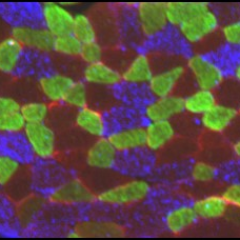
Age-related anabolic resistance and post-absorptive muscle protein synthesis: integrative evidence from a systematic review and meta-analysis
frontiersin.org/journals/phy…

3MAP Lab retweeted

This review aims to critically examine the interplay between sarcopenia and type 2 diabetes, with a focus on underlying pathophysiological mechanisms, nutritional determinants, and clinical implications.

3MAP Lab retweeted

Exercise-induced myokines in metabolic regulation: mechanisms, mimetics, and translational potential
link.springer.com/article/10…

3MAP Lab retweeted

Thinking about taking your research career to the next level? The #TIGRR2027 workshop has helped hundreds of early-career investigators succeed - and your chance to join is coming soon! 🗓️Applications open July 1.
🔗medschool.cuanschutz.edu/phy…

3MAP Lab retweeted
Nuclear Enlargement as a Histological Hallmark of Skeletal Muscle Aging, Revealed by Deep Learning-Driven Analysis and Validated in Inflammatory Myopathies
onlinelibrary.wiley.com/doi/…

3MAP Lab retweeted
✨Congrats to @CUPhysTher faculty Dr. Rebecca Abbott on her NIH K01 award! Her research on chronic joint pain in generalized joint hypermobility & dynamic joint stability is advancing patient-centered science and improving outcomes!
#PhysicalTherapy | @CUMedicalSchool | @UCCS

3MAP Lab retweeted

Watch: Developed by researchers from the Tangible Media group and @PolibaOfficial, electrofluidic fiber muscles mimic the way that natural muscle fibers bundle, and could enable compact, silent robotic and prosthetic systems.
“We believe electrofluidic fiber muscles can become a powerful new building block for untethered robots, wearables, and assistive technologies,” says Media Lab graduate student Ozgun Kilic Afsar, lead author of the paper published in @SciRobotics.
Authors: Ozgun Kilic Afsar, Gabriele Pupillo, Gennaro Vitucci, Wedyan Babatain, Hiroshi Ishii (@ishii_mit), and Vito Cacucciolo
♟️ The Queen’s Gambit of U.S. Science:
OMB’s proposed grant rule changes (OMB-2026-0034) look like “reform”—but accepting them risks the integrity of research
➡️ The Gambit:
lnkd.in/g8XhDQz2
➡️Submit comments by July 13, 2026: lnkd.in/gfqxJ6kH
#AcademicTwitter
🤖 Made with AI

3MAP Lab retweeted

This week, both Residential and Hybrid Pathway CU PT faculty participated in the Academy of Medical Educators Education & Innovation Symposium & GME Leadership Retreat!


3MAP Lab retweeted

#newpub in Eur Geriatr Med. by Dr. @MHarrisLove1 on Rethinking #sarcopenia: a conceptual shift towards a #musclehealth continuum
pubmed.ncbi.nlm.nih.gov/4203…

3MAP Lab retweeted
Today we celebrated @JSLapsley as she received the Paul Magnuson Award for outstanding achievement in rehabilitation research and development during VA Research Week. Proud moment for an incredible leader and team 👏

3MAP Lab retweeted
Congratulations to @JSLapsley on receiving the Paul B. Magnuson Award — the highest honor from VA Rehabilitation Research & Development!
The recognition of your geriatric rehab contributions are well-deserved! 🎉
@CUAnschutz @VAECHCS @VAResearch @CUMedicalSchool @CUPhysTher
