

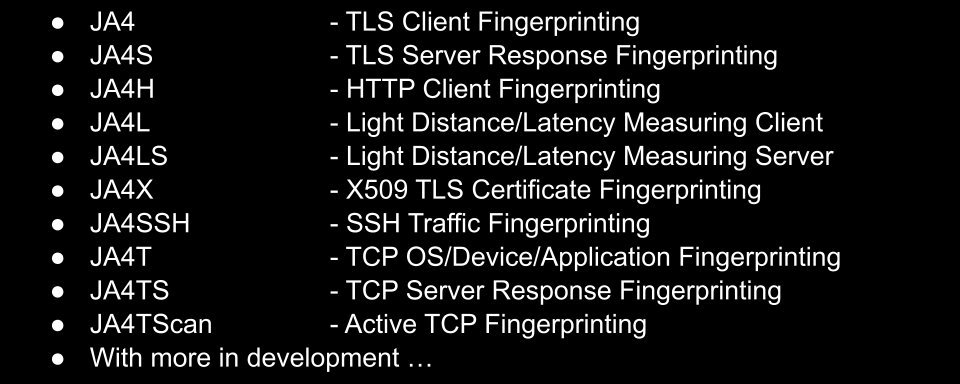
Founder & CTO at FoxIO Inventor of the JA4+ network fingerprinting suite. Also, JA3/S (TLS) HASSH (SSH) CYU (QUIC) JARM (TLS Servers)
NoVAH
Joined April 2010
- Tweets1K
- Following226
- Followers4.9K
- Likes544


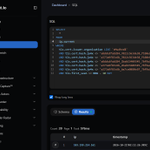
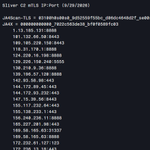





Announcing 3 Critical vulns for hundreds of millions of IoT, Firewalls, OT, and Military devices including: Palo Alto Networks, Comcast, D-Link, HP, Canon, Honeywell, GE, Oracle, Siemens, Rockwell, Digi, Lockheed Martin, Boeing...
The vulns are with GoAhead Web Server which is a backend library used by these devices. There's a patch available from GoAhead but that doesn't mean there's a patch available for the devices yet -- that's up to the manufacturer.
- TLS traffic over DHE ciphers have a 1-byte secret, "04", meaning anyone can decrypt connections to these devices and steal login credentials and session tokens if the client negotiated with DHE ciphers like the latest TLS_DHE_RSA_WITH_CHACHA20_POLY1305_SHA256, which is extremely likely.
- LibreSSL mTLS has been completely bypassed, meaning anyone can connect over mTLS. If you have one of these devices listening on the internet and are expecting mTLS to protect it from attackers, take it offline or patch asap.
- OpenSSL Certificate Revocation Lists (CRLs) are not enforced, meaning if a user device is stolen or compromised, and you revoke that mTLS cert, nothing actually happens. There are a lot of other attacks this can be used for.
These are critical because these types of devices run our world. Water systems, electricity, military, firewalls, critical infrastructure.
foxio.io/blog/choose-your-ba…


If GoAhead was setup with OpenSSL, it does not enforce CRLs (Certificate Revocation Lists). And CA's issue A LOT of revoked certificates.
If GoAhead was setup with Mbed TLS, all DHE_RSA handshakes, including the latest TLS_DHE_RSA_WITH_CHACHA20_POLY1305_SHA256 have a 1-Byte secret key of either:
01, 02, 04, 08, 10, 20, 40 or 80
You can use JA4S logs to find these connections.
If GoAhead was setup with LibreSSL for mTLS, any client can connect and bypass mTLS completely.
You can use JA4Scan to find these systems on Censys, Hunt, Validin, PAN Xpanse, etc. - details in the blog.
These vulns were patched in the latest GoAhead 6.1.1, however, IoT and OT devices are rarely updated, leaving hundreds of millions of devices vulnerable.
Manufacturers will need to push this update and notify clients.
Sorry everyone... We're announcing a 0-Day vuln in QUIC that allows anyone to remotely turn off a server running these libraries. I swear we didn't plan this.
foxio.io/blog/header-accordi…

Patched:
Cloudflare quiche
quic-go
lsquic
Wireshark
Unpatched (0-Day):
Bun 1.4.3
h3 (hyperium)
aioquic / mitmproxy
Vuln notifications started a year ago, some responded, some didn't.
Update: @ferron_web found that zincio-http was also vulnerable and just patched it. Everyone should check their libraries.
John Althouse retweeted

Checked the post, and found that zincio-http's HTTP/3 implementation (used by Ferron 3) might be affected too.
Updated zincio-http has been released, updated Ferron 3 will be released soon too

Sorry everyone... We're announcing a 0-Day vuln in QUIC that allows anyone to remotely turn off a server running these libraries. I swear we didn't plan this.
foxio.io/blog/header-accordi…
John Althouse retweeted

Bun v1.4.4 will be released this evening with a fix for this and for the Brotli issue.
Both fetch() and Bun.serve() did not and continue to not enable HTTP/3 by default.
Sorry everyone... We're announcing a 0-Day vuln in QUIC that allows anyone to remotely turn off a server running these libraries. I swear we didn't plan this.
foxio.io/blog/header-accordi…
John Althouse retweeted

The droll part is that we discussed *exactly this sort of attack* when we were designing header compression for HTTP/3 back in 2017-18 timeframe.
And yet so many implementations managed to fall into this trap, including #lsquic! 🤦♂️
In the case of lsquic, the bug is benign if
Sorry everyone... We're announcing a 0-Day vuln in QUIC that allows anyone to remotely turn off a server running these libraries. I swear we didn't plan this.
foxio.io/blog/header-accordi…
The private keys for the eMudhra CA were compromised yesterday. Here's all the IPs likely hosting fake eMudhra certificates. These were found using JA4X on hunt.io but you can do the same thing on Censys, Xpanse, Validin, or any other tool running JA4+


This hunt was easy. JA4X is effectively a fingerprint of the tool which produces the certificate. Certificate Authorities use the same set of tools to sign their certificates. So they end up having a small set of JA4X fingerprints.