

Northern California Research Supply Independent testing · Batch-specific COAs Scan · Verify · Validate Research Use Only
Northern California, USA
Joined October 2022
- Tweets3.2K
- Following151
- Followers483
- Likes2.2K





Pinned Tweet
A lot of new followers over the last few days! Here's a quick introduction to our operation.
We are a smaller organization based out of Northern California. We pride ourselves on offering some of the highest quality RUO peptides on the market. We combine that premium quality with some of the most competitive prices around.
Our customer service is an area we take great pride in and consider top tier, along with our order fulfillment. Orders placed before 2 PM Monday through Friday ship the same day. We use discreet, secure packaging to ensure your products arrive safely and quickly, without fail.
Orders over $150 qualify for free standard shipping, and orders of $250 or more receive free express shipping. Be sure to ask about our local delivery service if you're located within a 50-mile radius of our shipping facility!
If there's anything you need or any questions we can answer, please feel free to message us! We are forever grateful for your business.
🚨HIMS DOESN'T HAVE TO PROVIDE COAs?
Would you be comfortable relying solely on a pharmacy's review, or would you want to see the actual COA yourself?
Here's another question. Is your current RUO vendor, one that provides full panel lab testing, offering more transparency into batch results than Hims?
We keep hearing that pharmacies review everything. Great, but why shouldn't customers see the actual results? Hims previously supported COA transparency with its GLP-1 products. Shouldn't the same standard apply here?
Curious what everyone thinks.

💉 Hims & Hers Takes a Stab at the Grey Market. But Where Are Its COAs?
Hims & Hers officially launched Peptides+ on 18 November, taking a swipe at existing suppliers along the way.
“Until now, getting these types of medications has often meant relying on unreliable and unregulated online sellers, or a high-cost longevity clinic.”
CEO Andrew Dudum went further in October, claiming that regulated channels, clinical oversight, quality standards and transparency don’t exist in today’s grey market.
Strong words. So let’s look at what Hims is offering.
Five treatments: sermorelin, glutathione, NAD+, vitamin B12 and L-carnitine.
Sermorelin is a peptide, glutathione is a tripeptide, and the other three aren’t peptides at all.
And B12? Unless you’re deficient, there’s no established energy or performance benefit from taking extra.
So, Where Is Hims Getting Its APIs?
Hims says its active pharmaceutical ingredients come from FDA-registered facilities, accompanied by certificates of analysis covering identity, potency and purity.
But who actually manufactures those ingredients, and where are they coming from?
The company hasn’t publicly identified the API suppliers for any of its five launch treatments.
Hims owns a peptide manufacturing facility in California, but that doesn’t establish whether the ingredients for Peptides+ are produced there or sourced elsewhere.
And Where Are the COAs?
Hims says its finished Peptides+ batches undergo quality testing, including checks for potency, endotoxins, microbial contamination and impurities.
Which independent laboratories perform those tests? Where are the results? And can customers see the COAs for the actual batches they’re receiving?
Hims previously made batch-specific COAs available to customers for certain compounded GLP-1 medications, arguing that patients should be able to verify quality for themselves.
Peptides+ has only just launched, so public availability of its batch reports may still be developing. But the relevant quality documentation should exist for batches being released for dispensing.
Will Hims extend its previous COA transparency policy to Peptides+?
BPC-157 and TB-500 aren’t available yet, although Hims plans to introduce them when regulations permit.
Hims has taken a very public swipe at the grey market’s quality standards and transparency. Fair enough. But transparency works both ways.
So Hims & Hers, who makes the APIs, where are they manufactured, who tests the finished products, and will customers get to see the results?
Sources
Hims Peptides+ quality standards:
hims.com/peptides-plus/quali…
CEO's statement:
news.hims.com/newsroom/expan…
Previous COA transparency policy:
news.hims.com/newsroom/quali…

🚨CBL-514 Study Participant Reveal!
One participant is reportedly thrilled with her results. Fat reduction was the goal, but apparently she's ready for the PGA Tour now. Titleist may want to look into a sponsorship.
“Nobody's gonna know.”
“They're gonna know.”
“How would they know?”
Just satire, folks.

3
7
932
🚨CBL-514: IS THE RUO INDUSTRY PLAYING WITH FIRE?
Here’s a question we believe deserves considerably more attention. Caliway, the developer of CBL-514, publicly stated on October 30 that its investigational product is not commercially available and that it has authorized no third party to sell it. Yet research vendors are now offering products under that very name. So what exactly are they selling? CBL-514 isn’t even a peptide. Its disclosed active ingredients are curcumin and trans-resveratrol, and identifying those two compounds doesn’t establish that a finished vial matches the pharmaceutical formulation used in Caliway’s clinical trials.
Now consider the potential contamination risks. Are these ingredients botanically extracted or chemically synthesized? If botanically sourced, what controls are in place for heavy metals, pesticides, microbial contamination, and residual extraction solvents? What about endotoxins, sterility, particulate contamination, and chemical stability in the finished product? These are legitimate concerns, particularly when we’re discussing substances being marketed under the name of an investigational injectable drug. Where are the comprehensive analytical results, manufacturing specifications, and formulation studies demonstrating that these risks have been adequately addressed?
And let’s talk about the economics. Why has this product suddenly become so attractive to overseas manufacturers? Is it the availability of inexpensive raw ingredients, relatively straightforward production, substantial profit margins, or simply the opportunity to capitalize on promising clinical research? Who is actually manufacturing these products, and what qualifications do they have to develop and validate an injectable formulation? Are suppliers reproducing a carefully developed pharmaceutical preparation, or simply combining readily available ingredients, putting them into vials, and attaching the name of a promising investigational drug? That’s a question worth asking.
Here’s another concern: What exactly does a COA showing 99% purity establish when we’re discussing a formulation containing multiple active ingredients? Does it confirm the identity and concentration of each compound? Does it establish the correct ratio, identify the excipients, or demonstrate formulation equivalence? Does it tell us anything about heavy metals, residual solvents, endotoxins, sterility, or stability? A laboratory identifying curcumin and resveratrol is not the same thing as validating the finished pharmaceutical formulation.
And perhaps the biggest question of all: Could CBL-514 become the product that brings an entirely new level of mainstream media attention and regulatory scrutiny to the RUO industry? We’ve all seen how quickly public attention can escalate when an investigational substance becomes associated with a serious incident. Would that scrutiny stop with the vendors selling CBL-514, or would it extend to the broader research-product marketplace? We believe the possibility deserves discussion before something happens, rather than afterward.
We’re not claiming these products are contaminated, nor are we questioning Caliway’s legitimate clinical research. We’re questioning the growing commercial market surrounding a product whose identity, formulation, manufacturing practices, and finished-product quality remain inadequately documented in the information we’ve seen. If you’re selling CBL-514, what evidence establishes that your product is actually comparable to the CBL-514 being studied clinically? We’d genuinely like to hear from manufacturers, independent laboratories, vendors, and researchers. Because a recognizable name, a bright yellow vial, and a COA identifying two ingredients are not substitutes for meaningful scientific validation.

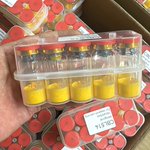
Excellent follow up by Krysia. What’s particularly interesting about CBL-514 is that there is legitimate clinical research behind Caliway’s investigational injectable formulation, including studies examining localized fat reduction through adipocyte apoptosis. But there’s an important distinction the research community shouldn’t overlook: clinical results obtained using Caliway’s specific formulation do not establish the identity, formulation equivalence, safety, or efficacy of products sold under the same name by grey market vendors. The bright yellow appearance shown here raises additional questions about formulation and solubility, but appearance alone cannot answer them. Where is the analytical evidence establishing that these products contain the intended ingredients in the correct proportions and a suitable formulation? Until those questions are answered, citing Caliway’s clinical trials as evidence for these particular vials would be scientifically unjustified. The research is interesting. The unanswered questions surrounding grey market versions are equally interesting. Appreciate Krysia continuing to investigate.
More photos of reconstituted grey-market CBL-514. Apparently, it isn’t gritty, but it looks like paint and leaves a bright yellow stain on the skin.


5
19
2,873
How many well-known research peptide vendors are currently advertising their products as “sterility tested” while providing COAs that show only PCR-based microbial screening? Let’s be clear: PCR microbial screening and USP <71> sterility testing are NOT interchangeable.
A negative PCR result does not establish sterility. We’ve already identified a few established vendors whose advertising and COA terminology raise this exact concern. Now we’re curious how widespread this practice really is and whether others have identified the same companies we have.
Have you encountered vendors marketing their products as sterility tested when their COAs only document PCR microbial screening? If so, which ones? We’d love to see the actual COAs and advertised claims side by side. We have a few names on our list already, and we’re interested to see how many others the community identifies.
Is this misleading marketing, a misunderstanding of testing methodologies, or something else entirely? Whatever the explanation, consumers deserve accurate information about what was actually tested. This isn’t about popularity or picking sides. It’s about transparency, accountability, and holding the industry to the standards it advertises.
2
201
We’ve been seeing this question making the rounds lately, so let’s put our own spin on it. How many peptide researchers and TRT enthusiasts over 45 are still hitting the gym 3–4 times a week, or more? Are you lifting, doing cardio, or mixing both? And perhaps the better question is are you training harder today than you were in your 30s, or have you learned to train smarter? We’re curious how many of you are still putting in the work!
3
239
Excellent deep dive by Krysia, and we couldn’t agree more with the questions being raised. What changed in just five weeks? If a certified reference standard was previously necessary to confirm CBL-514’s identity, what reference materials or analytical methods now support that confirmation? Was an authentic Caliway formulation obtained for comparative analysis, or were individual compounds simply identified? Detecting curcumin and trans-resveratrol doesn’t automatically establish that a sample matches Caliway’s proprietary formulation. We have no interest in discrediting the laboratory or its findings. We’re simply asking for clarification on the methodology, reference materials, and scientific basis behind the reported results. Transparency and reproducibility matter. A COA is only as credible as the evidence supporting its conclusions. Thank you, Krysia, for taking the time to investigate this and bring these important questions to the community. Much respect!
CBL-514: From “We Can’t Confirm It” to “NOW TESTING!” 🎉
Freedom Diagnostics has taken its new CBL-514 testing service to TikTok.
Complete with dramatic graphics, laboratory footage and the reassuring slogan:
“Real testing. Real results.”
Quite the turnaround from October, when they told a customer they couldn’t fully confirm CBL-514’s identity without a certified reference standard.
By November, they’d issued a COA declaring identity confirmed. Now they’re advertising the service.
I’d still love to know what changed in those five weeks.
Apparently, the marketing department got its results first. 😂


7
775
Semaglutide hits 1 receptor. Tirzepatide hits 2. Retatrutide hits 3. CT-G32 hit 4 in rats. Now VRX-0075 is being pitched at 5.
How many receptors does the 2030 version hit?
1
121
First, we’re in agreement with the D👀KS here. This isn’t a criticism of his position, we’re expanding on a point we believe deserves more attention. We’ve never understood why “USA fill and finish” is so often presented as an automatic quality advantage. Where’s the comparative evidence demonstrating higher purity, more accurate vial fills, lower endotoxins, or fewer heavy metals? We’re not questioning the capabilities of American manufacturers. We’re questioning the marketing narrative that geography alone establishes superiority. Without supporting laboratory data, it’s a selling point, not a demonstrated quality advantage. Quality should be proven through testing and manufacturing standards, not a flag on the label.

WHAT'S YOUR OPINION?
We hear plenty about the potential risks and side effects of GLPs, and those concerns deserve serious consideration. But here's a question worth asking... What about the risks of remaining obese, living with uncontrolled type 2 diabetes, or continuing down a path toward cardiovascular disease? A newly published study involving more than 80,000 people with type 2 diabetes found significantly higher rates of cardiovascular events and mortality among those who discontinued GLP-1 therapy compared with those who continued. It's observational research, not proof of causation, but it raises an important point. Every medical decision involves weighing risks against benefits. Sometimes the conversation focuses so heavily on the potential dangers of treatment that we forget to consider the dangers of doing nothing.

Stopping GLP-1 treatment linked to twice the risk of heart attack, stroke or death compared with continuing, in people with type 2 diabetes and no cardiovascular disease, according to a new study.
Find out more in @LancetRH_Europe: spkl.io/60137wUtS

ALT Research in context panel for a paper published in The Lancet Regional Health - Europe entitled \"GLP-1 receptor agonist discontinuation and cardiovascular events and all-cause mortality in people with type 2 diabetes: a retrospective cohort study\". Copyright: 2026 The Author(s). Published by Elsevier Ltd. CC BY 4.0.
1
72
Everyone’s acting like retatrutide is right around the corner because Eli Lilly broke ground on a new manufacturing facility. But read the fine print. Lilly says its new Pennsylvania plant won’t be operational until 2031. Retatrutide hasn’t even been submitted to the FDA yet, and the proposed Q1 2027 filing timeline raises questions about manufacturing readiness. Before this facility can produce commercial doses, it will need to satisfy FDA manufacturing requirements, process validation, inspections, and applicable site approvals. And that doesn’t even account for potential regulatory changes, unexpected FDA setbacks, construction delays, cost overruns, or manufacturing complications that could push the timeline even further. The important distinction? This facility is about future manufacturing capacity, not necessarily retatrutide’s initial launch. If retatrutide receives approval before 2031, the initial supply would need to come from other approved manufacturing facilities.

🚨BREAKING: Eli Lilly just broke ground on a $3.5 billion factory in Pennsylvania that will make Retatrutide, its triple-agonist weight loss shot, even though it's still in Phase 3 and not approved yet.
2
366
We recognize this particular decision isn’t about peptides, but it could just as easily be. It’s a perfect example of the regulatory risk we’ve been discussing with Hims and companies entering the peptide market, including 503A and 503B operations. You can invest millions in facilities, equipment, and infrastructure, only to have one regulatory decision fundamentally change your business model overnight. Deep pockets don’t eliminate that risk. When government oversight plays such a significant role in your industry, the rules can change faster than you can recover your investment.

1
153
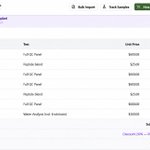
Big shout-out to @padreresearch! Five Star Labs (5starlabs.co) just saved $275 on our latest third-party laboratory testing order using his PADRE discount code. Four Full QC Panels plus bacteriostatic water analysis, totaling $2,750 before discounts. Always appreciate people in this industry helping others invest in quality testing. And here's a little food for thought: If you're constantly celebrating record sales, shouldn't meaningful third-party testing be just as much of a priority? Testing doesn't have to break the bank, but doing the bare minimum shouldn't be the standard either. That's $275 we can put right back into more testing. Much respect to Padre, and thanks to @ILSLabs! Thanks to our continued growth, we're excited to bring Five Star Labs online. Website coming soon: 5starlabs.co

1
12
813