

Please note that this account is not currently active. For updates about ACS Applied Bio Materials, please make sure you are following @ACS_AMI.
Joined March 2018
- Tweets161
- Following131
- Followers631
- Likes15





Pinned Tweet
Please note that this account is not currently active. For updates about ACS Applied Bio Materials, please make sure you are following @ACS_AMI.
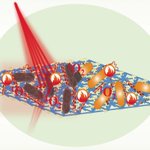
Multimodal synergistic inactivation of #superbugs using a MoS2-based theranostic nanoplatform acspubs.co/mJbc30nR3xy #photodynamic #biomaterials

A supramolecular switching surface that can be easily switched between bactericidal and antifouling states by host−guest interaction acspubs.co/mq9m30nR0Ct #biomaterials

Recent #ACSEditorsChoice: Structural Characterization of Fucoidan from Laminaria hyperborea: Assessment of Coagulation and Inflammatory Properties and Their Structure–Function Relationship acspubs.co/GTxE30nHj3b #NMR @NTNU @KTHresearch


Trojan #Antibiotics: New Weapons for Fighting Against Drug Resistance acspubs.co/grpd30nEIAL #drugresistance

Thanks for publishing with us, @rameshraliya. Great to have you and the team on board!
You’re unable to view this Post because this account owner limits who can view their Posts. Learn more
The materials research field is growing, and so is our portfolio! Expand your expertise with free access to the January issues of the 5 @ACS_AMI specialty journals throughout 2019: acspubs.co/7Pmj30nD3Dv

Flexible materials are important for the development of neural probes in recording stable signals in vivo. Here, researchers in Japan present inkjet-printed, flexible neural probes for spike recording by using polymeric thin films acspubs.co/tWiD30nD1NJ #polymer #electronics

ACS Applied Bio Materials retweeted

All of the January 2019 issues of our new materials research journals are now freely available. Discover this portfolio of peer-reviewed specialty journals spanning energy, nano, bio, polymer, and electronic materials. acspubs.co/iV0A30nAQxP @ACS_AEM @ACS_ABM @ACS_ANM
Pillar bending by B. subtilis at the latest stages of evaporation, from 'Bacterial Footprints in Elastic Pillared Microstructures' acspubs.co/WTgY30nuLWC #bacteria @LivUni @KAUST_News @UTwente
Aggregation-Induced Emission: A Trailblazing Journey to the Field of #Biomedicine acspubs.co/aA5F30nuKsg

Hydrogel for wound healing containing silver #nanoparticles produced by gamma irradiation; these nanoparticles act as a shield protecting from any bacteria, while the hydrogel provides an ideal environment for the wound to recover acspubs.co/x0pT30nuKjO

Surface topography with chemical modification manipulates stem cell differentiation into neuronal lineage: acspubs.co/trFT30ns4Vb #stemcells

Water droplets roll off the surface of a stearic acid-modified starch/chitosan composite sponge with asymmetric and gradient wettability, from acspubs.co/kcSi30ns6A6. Testing indicated this self-cleaning and stain-repellent material is a promising candidate for wound-dressing
Nanotechnologies for Medical Devices: a Review of Potentialities and Risks acspubs.co/5okO30ns5j5

ACS Applied Bio Materials retweeted

You've got until Friday to nominate a colleague for the 2019 ACS AMI Young Investigator Award! acspubs.co/d2zT30nuNoz

Shao Su, Lianhui Wang et. al developed a MoS2-based colorimetric immunosensor for CEA detection based on the catalytic reaction of 4-NP+NaBH4 acspubs.co/TdUq30ns5e1

Graphene-based nanomaterials (GMs) exert more impact on salivary bacterial activity than their community ecosystem, and can effectively eradicate salivary bacteria acspubs.co/RPdy30ns56N

Cellulose immobilized palladium (0) nanoparticles prepared for scalable catalytic reactions in flow. To provoke the reduction of the immobilized Pd(II) to Pd(0), the cellulose-supported palladium was exposed to 1 atm of hydrogen gas. Here's the reaction! acspubs.co/1BfC30ns8LG