

A leading non-profit, #energyefficiency (EE) think tank and #industry association, bringing together #EE enablers in #India.
India
Joined March 2014
- Tweets6.1K
- Following479
- Followers3.7K
- Likes1.4K




From 9-20 November, AEEE is heading to COP31 Türkiye in Antalya, Türkiye, where we will call for greater ambition and coordinated action to mobilise investment, transform markets, and build the policy and institutional support needed to scale proven solutions.
Meet our experts:
🔹 Satish Kumar, President and Executive Director – A global expert and institution builder in the energy sector. At COP31, he will focus on advancing energy efficiency as a key enabler of climate action, mobilising investment and market transformation, and strengthening policy and industry collaboration to scale energy-efficient, low-carbon and climate-resilient solutions.
🔹 Supriya Gulati, Lead, Communications – At COP31, she will focus on strengthening global narratives on energy efficiency, highlighting its wider climate, economic and social benefits, and building cross-sector alliances that turn climate commitments into collective, scalable action.
🔹 Dharini Sridharan, Principal Research Associate, Low Carbon Built Environment – At COP31, she will focus on how efficient, low-carbon buildings can make cities cooler, more resilient, and more liveable.
Join us at COP31 to forge cross-sector partnerships, strengthen the global narrative on energy efficiency, and turn climate commitments into scalable action.
Learn more about where to find us: aeee.in/aeee-at-cop31-antaly…
#COP31 #COP31Antalya #Türkiye #ClimateAction #EnergyEfficiency #UNFCCC

#WebinarHighlights #EyeonZero
🏢 How can climate-responsive design and energy-efficient building strategies improve thermal comfort while keeping buildings sustainable and cost-effective?
In this episode of the AEEE Webinar Series, Eye on Zero, experts Swati Puchalapalli and Tapan Mozumdar explored how climate analysis, thoughtful building design, and practical efficiency measures can improve building performance and occupant comfort across different climatic conditions.
The discussion highlighted how site planning, building orientation, natural ventilation, daylighting, and effective shading can support comfortable indoor and outdoor spaces. It also challenged the perception that green buildings necessarily cost more, emphasising the importance of early design decisions and measuring energy performance to manage operational costs.
🔹 Climate-responsive design begins at the site level, with building massing and orientation informed by local climate conditions. Comfortable courtyards, outdoor spaces, and carefully designed facades with appropriate window-to-wall ratios can help manage solar heat gains and improve occupant comfort.
🔹 Ventilation, daylighting and shading must work together to create comfortable indoor environments. Natural ventilation and cross-ventilation, combined with effective window shading, can improve thermal comfort. Daylighting design must also address glare and visual discomfort through appropriate assessment and the strategic use of blinds.
🔹 Green buildings do not necessarily cost more. Higher capital expenditure can often result from sustainability measures being considered too late in the design process. For operational expenditure, energy efficiency must be measured and monitored to be managed effectively.
🔹 Assess building performance before buying or leasing. Visiting a property during sunny hours, particularly in the morning or late afternoon, can help assess daylight availability, ventilation, and shading. The absence of effective window shading can be an important red flag when evaluating thermal comfort.
📘 Watch the full webinar here: aeee.in/high-performance-bui…
#EnergyEfficiency #EyeonZero #AEEE #SustainableBuildings #GreenBuildings #BuildingDesign #ClimateResponsiveDesign #ThermalComfort #Daylighting #NaturalVentilation #EnergyTransition #ClimateAction

📦 How can India’s packhouse guidelines help build sustainable first-mile cold chains worldwide?
Packhouses play a critical role in sorting, cooling, and preparing produce for transport. Yet, many are built without adequate focus on energy efficiency, cooling performance, or climate resilience.
Join us today for the next #CoolTalk as we explore India’s National Packhouse Design Guidelines, launched by the Bureau of Energy Efficiency (BEE), Alliance for an Energy Efficient Economy (AEEE), and UNEP Cool Coalition, and discuss how this model can be replicated across countries, crops, and climates.
Meet the speakers:
🔹 Khushboo Gupta, PhD, Principal Research Associate, AEEE
🔹 Stephanie Muchiri, Renewable Energy Specialist, FAO
🔹 Sunil Nair, Managing Director, Food Service Network (FSN)
🔹 Öznur Öztürk, Super Pollutant Specialist, Climate and Clean Air Coalition
🔹 Angshuman Siddhanta, Senior Cold Chain Expert, UNEP Cool Coalition
🔹 Jeremy Tait, Sustainable Products Director, Tait Consulting GmbH
🗓️ 27 October 2026
⏰ 13:00 CET | 08:00 EDT | 17:30 IST
🔗 Join us today: un-org.zoom.us/webinar/regis…
#SustainableCooling #ColdChain #EnergyEfficiency #FoodSecurity

How can sustainable financing support climate-resilient agriculture and rural livelihoods?
AEEE team delivered a training session organised by the Bankers Institute of Rural Development (BIRD), Lucknow, Uttar Pradesh, bringing together representatives from banks across India to explore ESG-compliant financing in the farm sector.
Key highlights and potential pathways for impact:
🔹 Integrating environmental, social, and governance (ESG) considerations into project appraisal and monitoring can strengthen risk assessment, improve project viability, and support sustainable and climate-resilient rural investments.
🔹 AEEE’s Sustainable Horticulture and Energy Efficient Technologies for Agriculture and Livelihoods (SHEETAL) initiative demonstrates the potential of energy-efficient, renewable-powered micro cold rooms and sustainable last-mile transport solutions to reduce post-harvest losses and improve farmers’ livelihoods.
🔹 NABARD’s Long-Term Rural Credit Fund (LTRCF) offers a potential avenue for supporting eligible long-term agricultural investments and financing sustainable farmgate cold-chain infrastructure.
🔹 A dedicated term-loan product for micro cold rooms could improve access to finance through standardised eligibility criteria, appropriate repayment structures, risk-mitigation measures, and convergence with existing government schemes.
🔹 Proportionate ESG screening, evidence-based project appraisal, end-use verification, and post-sanction monitoring can help improve project viability and strengthen accountability in rural financing.
The engagement marked a step towards building stronger linkages between sustainable cooling solutions and rural financ


The Environment and Climate Change Department, BMC, in collaboration with @c40cities, AEEE, and @Deloitte as technical partners, convened an inter-departmental consultation focused on three key priorities:
🔹 Mainstreaming Green Public Procurement (GPP) across BMC’s procurement systems to advance sustainable purchasing.
🔹 Building a pipeline of bankable climate projects to attract investment and accelerate climate action in Mumbai.
🔹 Mobilizing green finance and climate investment to support climate action across Indian cities.
The discussions explored opportunities to develop finance-ready projects, integrate green procurement into municipal systems, and leverage innovative financing mechanisms to bridge the gap between climate ambition and implementation.
These efforts aim to support the implementation of the Mumbai Climate Action Plan (MCAP) and advance Mumbai’s target of achieving net-zero emissions by 2050.
Discussions highlighted five key priorities:
🔹 Institutionalise green procurement: Integrate green criteria into BMC’s procurement processes, Schedule of Rates, technical specifications, tender evaluations and post-award monitoring.
🔹 Move from lowest cost to lifecycle value: Consider the total cost of ownership, including purchase price, energy consumption, operation, maintenance, replacement and environmentally responsible end-of-life disposal.
🔹 Introduce measurable performance requirements: Include minimum efficiency thresholds, environmental KPIs and measurable performance guarantees in tenders for building utilities and other relevant systems.
🔹 Build scalable, finance-ready projects: Aggregate demand across municipal buildings to improve commercial viability, attract external finance and accelerate climate action.
🔹 Attract private investment in public-sector projects through public–private partnerships (PPPs), viability gap funding, credit guarantees, and green bonds.
Aligning how cities buy, build, and fund their projects is one step towards bridging the gap between climate ambition and action.
#GreenPublicProcurement #ClimateFinance #EnergyEfficiency #RenewableEnergy #SustainableCooling #GreenBuildings #ClimateAction #NetZero2050 #MumbaiClimateActionPlan


Smallholder farmers aren’t short of produce. They’re short of time. Without storage near the farm gate, perishable produce is sold on the day it’s picked, at whatever price the market offers. Micro cold rooms can help address this challenge by giving farmers greater flexibility in when they sell their produce.
With this in mind, AEEE brought together government, CSR and philanthropic leaders, NGOs, finance partners, and technology providers for the roundtable ‘Capital for Cooling: Scaling Farmer-Owned, Climate-Resilient Food Systems’.
The discussion centered on one question: what would it take to move community-owned micro cold rooms from promising pilots to a national, farmer-owned network?
Key takeaways from the roundtable:
🔹Aggregate demand: India needs about 2 lakh micro cold rooms, against fewer than 1,000 today. The technology exists, but the gap lies in pooled demand and standard units.
🔹Market first, machine second: Decide the model, pick the right crops, and secure buyers before buying equipment.
🔹Cluster-based scaling: Adopt hub-and-spoke models to aggregate demand and strengthen market access.
🔹Beyond subsidies: Standardise technology, reduce costs, and improve reliability for long-term viability.
🔹Finance the product, not the project: Climate finance and carbon credits can help share benefits with farmers.
🔹Seeing is believing: Experience centres by commodity and geography can turn visitors into adopters.
🔹 Right technology for each cluster: Match solutions to local crops, seasons, and geographical needs.


We extend our gratitude to @nafedindia India, Energy Efficiency Services Limited, and all partners for sharing their valuable practical insights and experiences from the field.
AEEE, along with its partners cKinetics and India Climate Collaborative (ICC), continues to advance decentralised, renewable-energy-powered micro cold storage for resilient and sustainable agricultural value chains.
#MicroColdStorage #ColdChain #SustainableAgriculture #ClimateResilience #FoodSystems #EnergyEfficiency #AgriTech #ClimateAction


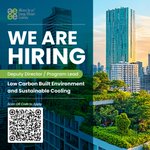
#HiringAlert
Are you passionate about shaping India’s low-carbon built environment and advancing sustainable cooling?
#AEEE is hiring a Deputy Director / Program Lead – Low-Carbon Built Environment and Sustainable Cooling to lead strategic initiatives on
#BuildingDecarbonisation, #SustainableCooling, and #ClimateResilience.
If you bring strong domain expertise, programme leadership experience, and a passion for driving policy, research, partnerships, and market development, we’d love to hear from you.
📌Learn more and apply: aeee.in/wp-content/uploads/2…
#Jobs #JobAlert #EnergyEfficiency #Decarbonisation #Buildings #Cooling #ClimateAction #Sustainability #GreenJobs

This #WorldFoodDay, the theme ‘Innovate today. Nourish tomorrow’ reminds us that food security begins long before food reaches our plates. It begins on the farm.
Across Maharashtra, small cold rooms are helping farmers and women-led groups keep produce fresh for longer, reduce post-harvest losses, and sell when the price is right. Select case studies highlight how:
🔹Jijau Mahila Bachat Gat, Autadwadi (Pune): 180 women now ripen and hold bananas instead of the need of selling in a hurry, lifting their price by over 35%.
🔹Gunjal Green Field Agro, Manchar (Pune): Two cold rooms cut spoilage from 6-8% to 1.5-2% and created 8 permanent jobs, 6 of them held by women.
🔹Milind Madhukar Rakibe, Nashik: A solar-powered cold room lets one farmer hold capsicum and dragon fruit for 6-14 days and sell at better prices.
🔹Shamraj Bahadur Farmer Producer Company, Chhatrapati Sambhajinagar: Lemons no longer need to travel 54 kilometres for storage and are now held on site for 10-12 more days.
When farmers can store, ripen, and sell on their own terms, less food is lost, incomes grow, and fresh produce keeps reaching our markets. That is innovation nourishing tomorrow.
Read all case studies here: aeee.in/sustainable-cooling-…
#WorldFoodDay #WorldFoodDay2026 #ColdChain #FoodSecurity


India’s GHG inventory is the official record of how much greenhouse gas the country emits and where it comes from. It is the foundation of the Biennial Transparency Report that India submits to the United Nations.
Energy and industrial processes together account for 82.3% of India’s emissions. So getting these numbers right matters most.
The Ministry of Environment, Forest and Climate Change (MoEFCC), Government of India, and the Indian Institute of Management Ahmedabad (IIMA) brought together experts from across the country at the IIMA New Campus, Ahmedabad, for the ‘National Greenhouse Gas (GHG) Inventory Capacity-Building Workshop: Strengthening India’s Biennial Transparency Reporting on the Energy and Industrial Processes and Product Use (IPPU) Sectors’ from 5-9 October 2026. The workshop was supported by the Technical Support Unit of the Intergovernmental Panel on Climate Change (IPCC) Task Force on National Greenhouse Gas Inventories and the Capacity-Building Initiative for Transparency – Global Support Programme (CBIT-GSP).
Over five days, participants worked with the data hands-on, ensuring that emissions are neither double-counted nor missed between the two sectors. These tangible inputs fed directly into the BTR2 preparation cycle.


As one of India’s sectoral inventory institutions, AEEE participated in the residential and commercial / institutional categories under energy and F-gases estimation under the IPPU sector. Credible data makes energy efficiency measurable, and AEEE is committed towards this.
We thank @moefcc , @IIMAhmedabad , #CBIT-GSP, and the IPCC Technical Support Unit for a focused week of work that strengthens India’s capacity to prepare a high-quality Energy and IPPU inventory for its second Biennial Transparency Report (BTR2).
#ClimateTransparency #GHGInventory #EnergyEfficiency #NetZero


What does it take for a brick kiln to become more energy-efficient?
For kiln owners, improving efficiency is not simply about adopting a new technology. It is about better operational practices and practical technical support to make those changes work on the ground.
During engagements with 10 brick kilns across Varanasi, Ghazipur and Azamgarh, kiln owners and operational staff shared their experiences and highlighted areas where technical guidance could make a tangible difference to day-to-day operations.
For many, the opportunity lies in unit-specific interventions based on the operational and structural requirements of individual kilns
▪️ Better kiln structures : improving chimney height, airflow and other unit-specific requirements.
▪️ Smarter fuel use : optimising fuel mixing, ratios and firing practices.
▪️ Stronger operational practices : improving process control and day-to-day kiln management.
▪️ Consistent SOPs : building awareness and helping teams adopt recommended practices.
▪️ Higher productivity with less waste : improving fuel utilisation, brick quality and production efficiency.
Zig-zag technology works best when the technology is supported by the right practices and capabilities. Proper airflow, fuel management, kiln design and trained operational staff can make the difference between simply having the technology and getting its full benefits.
For kiln owners, these improvements can mean better fuel efficiency, more consistent brick quality, reduced avoidable losses and stronger production performance, while also helping reduce emissions and air pollution.
Through continued technical handholding and practical training, we help brick kiln operators make efficiency improvements that work for their businesses and support a cleaner, more sustainable brick-making sector in Uttar Pradesh.
#EnergyEfficiency #IndustrialDecarbonisation #BrickKilns #CleanAir #SustainableIndustry


#WebinarAlert #EyeonZero
How can design and engineering analysis turn sustainability goals into better-performing buildings?
🏢 Join us for Episode 10 of the AEEE Webinar Series, ‘Eye on Zero’, on ‘High-Performance Buildings in Practice’.
As India looks to improve the energy performance of its built environment, design, simulation, and engineering analysis can help translate sustainability goals into practical decisions. This webinar will explore how practitioners use data-driven design development to improve health, comfort, and sustainability, drawing on examples from real-world projects.
The session will also take us inside two campus projects in different climate zones, where a Whole Building Design approach led to different building envelope solutions despite both projects starting with the same client brief – without a sustainability premium.
📅 Date: 14 October 2026 (Wednesday)
🕝 Time: 14:30 - 16:00 hrs (IST)
🔹 Swati Puchalapalli, Director, TerraViridis Consultants LLP and Director, VeraTatva
🔹 Tapan Mozumdar, Senior Vice President of Operations, Global Network for Zero (GNFZ)
Register now: zoom.us/webinar/register/WN_…
#HighPerformanceBuildings #EnergyEfficiency #SustainableBuildings #BuildingDesign #PassiveDesign #BuildingEnvelope #ThermalComfort #Decarbonisation

India has a roadmap to decarbonise its buildings. The next challenge is turning it into action.
AEEE, in partnership with NITI Aayog, the Maharashtra State Climate Action Cell (MahaSCAC), and IIT Bombay, convened the ‘Regional In-person Workshop on Sectoral Insights - Buildings’ in Mumbai. Following the release of the’Scenarios Towards Viksit Bharat and Net Zero- Sectoral Insights: Buildings’, by NITI Aayog earlier this year, government, industry, academia, developers, and financial institutions came together to discuss how this roadmap can move from plan to practice in the region.
The workshop also saw the launch of the City-Scale Embodied Carbon Assessment Tool (ECAT), developed by AEEE with IIT Bombay. ECAT helps city governments measure embodied carbon plan low-carbon development, and shape their climate action plans. The tool is now publicly accessible.
Five priorities emerged from the discussions:
🔹 Strengthen codes and standards : Accelerate performance-based approaches, embodied carbon benchmarks, reliable data frameworks, and effective enforcement and implementation.
🔹 Create market demand for low-carbon materials : Stronger policy signals, incentives, and public- and private-sector demand are needed to create market pull and drive investment in low-carbon manufacturing and technologies.
🔹 Make low-carbon construction practical and accessible : Develop simple tools, design guidance, and material information platforms that enable developers, contractors, and homeowners to make informed decisions and optimise material use.
🔹Strengthen collaboration across the value chain : Greater alignment between government, manufacturers, developers, researchers, and financial institutions is essential to bridge the gap between policy ambition and market action.
🔹 Accelerate the transition towards efficient cooling : With air conditioner (AC) adoption still dominated by 3-star appliances, increasing the share of high-performing ACs will require stronger demand for efficient appliances, better minimum efficiency standards for room air conditioners, and greater attention to testing and addressing oversized equipment.
The message was clear: India’s building-sector transition needs more than policies and targets. It needs coordinated action across codes, markets, finance, technology, and implementation.
#BuildingDecarbonisation #NetZeroBuildings #LowCarbonMaterials #EmbodiedCarbon #ThermalComfort #SustainableCooling #ClimateAction


#ReportLaunch
India has close to 100 million room air conditioners in service today. Many of the older units use far more electricity than their star label suggests.
In our recent report, India RAC Market Annual Stocktake 2025, we assessed the installed stock as of end-2024: 80 million units, or about 110 million TR. It covers the technology transition, demand by climatic zone, efficiency loss during service, and replacement policy.
Key findings from the report:
🔹Inverter models account for about 77% of new sales, up from about 1% in 2015, and about half of the installed base.
🔹Efficiency loss in ageing units pushed stock consumption to about 121 TWh, against 94 TWh at rated performance. That is an avoidable 27 TWh a year and 11 GW at peak.
🔹About 27 million 1–3 Star fixed-speed units aged five years or more cause most of this loss. Replacing them could save about 16 TWh a year and 7 GW of peak demand. The 22 million units aged seven years or more account for about 14 TWh and 6 GW of this.
🔹Most of the legacy stock is in Maharashtra, Tamil Nadu, Gujarat, Delhi and Uttar Pradesh. These five states should receive more than half of programme resources.
While efficiency policy today regulates appliances at the point of sale, much of the performance loss occurs after installation, creating a gap between rated and actual in-use performance that can affect electricity demand forecasts and the amount of appliance load that can realistically be leveraged for demand flexibility programmes.
Read the report for further details and explore key insights and priorities for phased action: aeee.in/our-publications/ind…
#EnergyEfficiency #SustainableCooling #RoomAC #IndiaCoolingActionPlan #DemandSideManagement #AEEE #RATAConclave2026 #IndiaCoolingCoalition


Measurement and verification (M&V) turns projected energy savings into demonstrated results.
AEEE is organising an online training and certification programme on the International Performance Measurement and Verification Protocol (IPMVP®) and the Performance Measurement and Verification Analyst (PMVA®) qualification. It will help professionals apply recognised M&V principles to energy and water efficiency projects, from setting baselines to verifying and reporting savings.
📅 19-21 November 2026
💻 Online
Learn more and register now: aeee.in/event/mv-fundamental…
#PMVA #IPMVP #MandV #EnergyEfficiency #ProfessionalDevelopment #EVO

#MemberOnboard
We are excited to share that ROCKWOOL is now a part of the AEEE member community!
ROCKWOOL is a global leader in stone wool insulation solutions, founded in 1937 in Denmark. In India, ROCKWOOL operates manufacturing facilities in Dahej, Gujarat and Cheyyar, Tamil Nadu, producing stone wool solutions for domestic and export markets. Made from basalt, ROCKWOOL's stone wool products address key sustainability challenges including energy efficiency, noise pollution, and fire resilience, while supporting resource efficiency and circular economy principles.
This partnership brings deep expertise in energy-efficient building materials into AEEE's network, strengthening our work on reducing energy consumption in India's built environment.
Become a member with us: aeee.in/membership/
#SustainableEnergy #AEEE #RISE #CollaborationsforChange #Decarbonisation #EnergyEfficiency
#WorkshopHighlights
What will it take to make low-carbon construction work for our cities, starting with the materials we build with?
AEEE, in collaboration with @iitbombay conducted a stakeholder workshop in Shillong on 29 September 2026, focusing on City-Scale Embodied Carbon Mapping.
The workshop brought together government representatives, professionals, practitioners and other stakeholders to explore:
🔹City-Scale Embodied Carbon Model, developed in collaboration with IIT Bombay, alongside bottom-up modelling of city-scale building stock and embodied-carbon baselining.
🔹 Future projections and the carbon implications of material choices, including pathways to abatement through alternative low-carbon materials.
🔹 Strengthening the demand-and-supply ecosystem for local low-carbon materials and practices.
🔹 The Embodied Carbon Tool was demonstrated and launched, providing a city-scale lens to support understanding of embodied carbon and material choices.
The workshop was graced by a special address by Shri B.R.M. Lyngdoh, Jt. Director, Department of Urban Affairs, Government of Meghalaya.
The discussions reinforced that addressing embodied carbon requires more than identifying alternative materials. City-scale data, informed material choices, stronger local supply and demand ecosystems, and collaboration among government, practitioners, researchers and other stakeholders are important to advancing low-carbon construction.
#EmbodiedCarbon #LowCarbonConstruction #LowCarbonMaterials #SustainableBuildings #BuildingDecarbonisation #ClimateResilientCities #BuiltEnvironment #AEEE #IITBombay


