





AM23 retweeted

#AVCT releases the warheads which will make up AVA6207 next week.
The foundation of AVA6207 is AVA6103. Now proven in human.
Ownership of the ATR inhibitor, which will sit alongside Exatecan in AVA6207, will be highly informative.
Who owns the green payload AVCT seeks to use?

AM23 retweeted

Only 2-4 months until the wider market starts to perceive that #AVCT's AVA6103 could genuinely become a $20bn, $30bn, >$40bn per annum drug.
The best selling oncology drug in history.
That is, until the data for AVA6207 begin to emerge...!
AM23 retweeted
#AVCT
Cohort 1
Began end of March
On 10 September, two patients remained on drug. That’s 5.5 months of disease stabilisation across stage 4 pancreatic cancer patients. Achieved with a 1.5mg dose of AVA6103.
I.e. their tumours are not seeing progression.
Cohort 2
Began ~mid May
On 10 September, five patients remained on drug. That’s ~4 months of disease stabilisation across stage 4 pancreatic/CRC/cervical cancer patients. Achieved with a 3mg dose of AVA6103.
I.e. their tumours are not seeing progression
Cohort 3
Began ~early July
On 10 September, (all) seven patients remained on drug. That’s ~2.5 months of disease stabilisation across stage 4 pancreatic/CRC/breast patients. Achieved with a 4.5mg dose of AVA6103
I.e. their tumours are not seeing progression
Cohort 4
Began began ~mid August
Dosing 6.8mg. Just below the Enhertu equivalent. Cohort 4 has completed enrolment as of 23 October.
Enrollment is ongoing in both arms of the study. 8 months into trial end of November.
It is quite clear AVA6103 is working. In human.
Funded well into May 2027. That’s ~7 months of funding after a 68p fundraise which saw the directors take £660k.
Cohort 5 (current cohort) projected to match the absolute dose of Enhertu.
Q2W scanned every 8 weeks.
Q3W scanned every 6 weeks.
Couple of biopsies up their sleeves. They know exactly what this drug is doing 7.5 months into trial.
The amount of ‘ hot takes’ I’ve read which are concerned about “funding into May when AVA6103 efficacy is not due to H1 2027” demonstrates enormous naivety.
For two reasons:
(1) the trial is flying, you’ll see efficacy early H1 2027 at this rate;
(2) the efficacy data (as a package) for AVA6103 is actually irrelevant for the assets AVCT is seeking to deal on: a 3rd party warhead; AVA6000; AVA6207.
Yes, the AVA6103 data supports the negotiations but they are not dealing on AVA6103.
Proving AVA6103 is working (to the extent the tech can transfer to a third party warhead) was done when they RNS’ed preCISION was proven.
Partners will receive this data under NDA on a constant basis.
Far more important are the commercials of those deals, which improve as the AVA6103 data grows.
That is to say the 6103 data *supports* the value discussion, rather than being the arbiter of any deal(s).
Crazy thought I know, but they have a strategy.
X3 separate deal avenues to deal on before May 2027.
Lots of noise. Little logic.


AM23 retweeted

Market is acting like #AVCT is funded into December 2026, rather than May 2027.
A lot can happen in a very short time in biotech.
And Avacta has x5 shots on goal:
AVA6000 (SGC)
AVA6000 (TNBC)
AVA6103 (multiple shots)
AVA6207 (also multiple shots)
PRECISION (to a 3rd party warhead)
Never been more confident - today buying Avacta is the cheapest and safest that it has ever been.
So I did !
AM23 retweeted
#AVCT’s AVA6103 works.
“Mechanistically, the sustained release mechanism is playing out as we expect.”
“Findings increase confidence that the nonclinical-to-clinical translation is performing as intended - exactly as we anticipated.”

Watch episode 16 of our R&D Spotlight series, where Avacta Chief Executive Officer @coughlin582 takes a deep dive into the AVA6103 data presented at ESMO 2026. avacta.wistia.com/s/xs4ra3k8… #AVCT

AM23 retweeted
#AVCT
Novartis bought FAP2286 from Clovis in bankruptcy.
$50m upfront; $333.75m in regulatory milestones (split equally between P1b; P2; P3); $297m in future sales payments.
FAP2286 had dosed 11 patients at the time of sale.
Efficacy: 1 patient of the 11 treated in Phase 1 saw a partial response.
Safety: 45.5% of patients saw Grade 3/4 adverse events.
You'll struggle to find a better representation of how cheap AVCT (£311m) is today than this sale. Achieved in bankruptcy.
X2 drugs in clinic, north of 150 patients dosed across those programmes. A clear USP. Going after ADCs. Safety impeccable. No loss of activation enzyme on tumour destruction.
AVCT could down all tools tomorrow, put the entire Co up for auction and sell for multiples of today’s SP.
Funny old market.
I’m a buyer here. AVA6103 is currently reading out critical C3 data (and every oncologist linked to the trial is promoting their collaboration…).
AM23 retweeted
#AVCT
AVA6000 contains a peptide. That peptide masks doxorubicin to the extent an 80 year old suffering from triple negative breast cancer is able to safely receive preCISION-doxorubicin. And work.
The risks of chemotherapy induced toxicity due to reduced organ reserve, comorbidities and general frailty for an 80 year old are clear.
Yet it’s working. Quite clearly.
Why is it working?
It has an exceptional safety profile. Due to this peptide’s exceptional specificity.
Now consider the same peptide is in AVA6103.
AVA6103 has an additional modified capping group and a linker (which are designed to sustain the release of Exatecan for days, rather than hours).
We know from the human PK to date, that is exactly what AVA6103 is doing (with exceptional alignment between pre-clinical and clinical data).
It’s extending release of Exatecan because the capping group and linker are working. In human.
It’s safe because the peptide (employed in both AVA6000 and AVA6103) is so specific.
We have seen the clean safety profile through cohorts 1-3 of AVA6103. Thanks to the peptide.
We have seen the FDA remove the dosing limit (for the first time in the history of a P1 drug) in AVA6000. Thanks to the peptide.
We are now seeing just how safe this peptide makes toxic drugs. 5 & 1/4 years of combined data back this up across Top1 and Top2 inhibitors.
Tomorrow AVA6103 will be 30 weeks into clinic.
Tomorrow AVCT will outline how AVA6000 is demolishing the benchmark in Salivary Gland Cancer.
A prolonged median PFS of 11.4 months.
That is nearly doubling the benchmark in the first and second line setting (both chemotherapy and targeted therapy).
AVA6000 in SGC deals on this PFS. Quite clearly.
In addition to all this, I can’t help but wonder whether AVA6000 in TNBC is going to also find a partnership with generic Keytruda in the future.
Patent expiry in 2028? $30+Bn pa drug. Often used in tandem with doxorubicin which has now been made safe by preCISION.
Keynote 522(P)? The trial Coughlin said she would most like to run for 6000.
AVA6207 on the cusp of revealing its warheads.
AVA6103 biopsies incoming.
AVA6000 demolishing the PFS in SGC.
Looking forward to hearing more about FAP recruitment, durability and the real world impact of AVA6000 when the company explains the findings to the market tomorrow.
‘Bloody science project’.


AM23 retweeted

We are delighted to present 2 data sets at #ESMO26 - #AVCT Trials in Progress with AVA6103 shows some critical platform data showing mechanistic evidence for fibroblast recruitment, rapid and deep tumor penetration and enhanced payload exposure over traditional ADC
#LetsDoThis
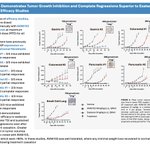
At #ESMO26, we’re presenting the FOCUS-01 trial design and new preclinical data for AVA6103 (FAP-Exd), our first Next Gen pre|CISION® PDC, including activity in Enhertu®-resistant tumor models.
avacta.com/avacta-highlights… #preCISION #NextGenLoading #AVCT

AM23 retweeted
Most important sentence in an #AVCT RNS for a long while.
We’re home. Nearly dry.
🚀


AM23 retweeted

I'm increasingly excited about Avacta #AVCT because I genuinely believe the next eight to twelve weeks could be transformational. As everyone knows, they've developed a technology that allows incredibly powerful drugs to be delivered much more precisely to 1/23
AM23 retweeted
TVR5 fully supports the #AVCT board’s strategy to protect the inherent value of the pipeline, given the strength of the AVA6103 data to date. We expect the board to close its first validating deal in Q4 2026, following this bolstering of the company’s negotiating position.
AM23 retweeted
#AVCT
Enhertu Phase 1a was very good at disease control, even at the lowest doses.
21/23 saw stable disease.
There were 10/23 partial responses.
All of these partial responses, bar x1 patient, came at a dose of 5.4mg and above.
The single responder below this dose threshold was at 3.2mg.
There was 1/23 complete response.
There were just 2 cases of disease progressing. x1 at 3.2mg and the other dose not disclosed.
If AVA6103 is not controlling disease at the 6 month marker, it is not going head-to-head with Enhertu.
Yet there is not a single mention of “stable disease” or “disease control” in either of the recent RNS (post proving of the platform).
Instead, AVCT simply says it expects efficacy to follow, it expects a tumour reservoir, it expects the preclinical results to translate to clinic.
There is little chance the company speculates on these expectations, without having seen AVA6103 enabling disease stabilisation at these low dosing levels to date. Because that is exactly the Enhertu benchmark they are directly comparing against.
At the RP2D (5.4mg) the median time to response (TTR) for Enhertu is just 1.6 months.
I.e. The middle point in time when half of the patients who eventually responded to Enhertu first showed a clear improvement (tumour shrinkage that qualified as a partial response) on their scans. I.e. it works very quickly at the big doses and is likely to show at the time of the first scan (6 week marker).
DL4 should be right up there with Enhertu’s median TTR. If not better.
The DL3 cumulative exposure is now punchy. 7/7 remain on drug as of the last update.
To top it off AVCT is talking AVA6103 at a pancreatic cancer conference (an indication which Enhertu simply did not work, no matter how high the dose or the HER2 amplification).
A good reminder just how hard pancreatic is to crack.
So, what does matching or bettering Enhertu’s phase 1 data actually mean at this stage?
Easier to look at what the clinicians were saying about Enhertu’s (complete) Phase 1 data set. Copied below.
What followed for Daiichi?
Fast Track was granted based on the reported 22 patients treated at the time (20 evaluable).
Avacta is moving at twice the speed Daiichi was at this stage…


AM23 retweeted
If you assume the three AVA6103 dose levels were split evenly over the last c.six months, #AVCT will have scanned the first cohort three times; the second cohort twice; the third cohort once by this juncture.
The dose levels used were 1.5mg, 3mg, 4.5mg, respectively.
These levels were chosen so that the absolute quantity of toxin administered is roughly the same as the absolute payload quantities patients received at the lower end of the Enhertu dose-escalation range.
Remember Enhertu has a drug to antibody (DAR) ratio of 8:1 and DXd is not Exatecan, so it’s not a simple comparison. But Avacta is designing their trial around Enhertu’s P1a purposefully. They want to draw comparisons to those absolute ‘absolute levels’:
“The first three dose levels are similar to the absolute payload dose levels in the published Enhertu® Phase 1 trial (Doi, et al. 2017)”
That trial (DS8201-A-J101) was the first test of Enhertu.
It took Daiichi just over a year to dose 24 patients. 23 of those 24 patients were evaluable.
AVA6103 has dosed 19 patients in ~5.5 months. Tier 1 pharma would be impressed by this speed. Going at near double the speed of Daiichi Sankyo.
Those P1a Enhertu patients had either advanced breast or gastric/gastro-oesophageal cancer.
x3 patients each at 0.8, 1.6, 3.2, and 8.0 mg/kg;
x6 patients each at 5.4 and 6.4 mg/kg.
No dose-limiting toxicities occurred, and the maximum tolerated dose was never reached.
If you look at these P1a results from Enhertu you will see efficacy which met objective response criteria (i.e. a complete response or partial response) was almost non-existent below the 5.4mg dose. Just one partial response occurred (at 3.2mg).
However, you will also see the disease stabilisation which occurred at those lower dosing levels (<5.4mg) was very good with just 2/23 disease progressions amongst the very sick patient population, even at these lower doses.
Now consider the indications AVA6103 is in and the stage those patients are at.
Then consider in some of the indications AVA6103 is going after (eg pancreatic) Enhertu simply didn’t work, no matter how high the dose or how strong the HER2 IHC reading.
NB: Enhertu did not dose pancreatic in P1a, it attempted it later (once it had confirmed activity in other indications).
So, if your comparison is ‘what did Enhertu do’ (as Avacta’s is) they will want to be seeing consistent disease stabilisation amongst the lower dosing cohorts of AVA6103, in order to be sure the platform is working and you have a read across.
Without disease stabilisation amongst the lower cohorts, you have no idea whether your PK is translating to efficacy, which is what matters.
Enhertu saw 9 of its 10 P1a objective responses achieved at >5.4mg. These were all Partial Responses, no Complete Responses occurred.
Now consider AVA6103 doesn’t plan on reaching the equivalent approved Enhertu payload equivalent until DL5.
As they escalate AVCT expect to see a dose-response relationship.
So what is “preCISION enabled Exatecan” aka AVA6103 actually doing before it gets to DL5 (given Enhertu did not start to see any partial responses (bar one at 3.2mg) until 5.4mg+)?
Let’s not forget BOIN enables grater jumps if the safety is good (which it is) yet AVCT do not intend to jump to the Enhertu R2PD equivalent until DL5.
Why aren’t they utilising this freedom, given how good the safety is? After all, that’s what BOIN is for.
AVCT knows its masking via the peptide works. The initial safety findings have been consistent and superb. They want to know if the drug is efficacious (at this early stage).
This is where “dose density” comes into play and, crucially, where the company sees the impact of preCISION’s mechanism of action on efficacy at lower dosing levels (vs Enhertu).
This is where AVCT start to see the technology truly differentiate. Note DL3 has seen no drop outs and impeccable safety since it began dosing.
AM23 retweeted
#AVCT is a multi-drug biotech, sat upon a proven platform, which is currently perfectly replicating PK across 19 patients via a warhead which has never previously been harnessed.
Execution of clinical strategy has been flawless.
This is why TVR5 is so relaxed: preCISION works.

“AVA6103 is therefore not simply a second asset in the clinic; it is the experiment that decides whether the platform is a repeatable oncology delivery system.”
Zeus on #AVCT
AM23 retweeted
Yesterday, #AVCT not only proved their platform, they confirmed zero drop outs at DL3 (50% over the MTD of Exatecan).
This cohort comprises very sick, stage 4 patients, who previously received Enhertu.
They found their way onto AVA6103 because Enhertu failed to work for them.
Ask a scientist why they stay in oncology and you will usually hear about a "wow moment". The people behind pre|CISION® share theirs, from the first tumor to plasma data to a new molecule from idea to IND in 12 months. Watch the video here: avacta.wistia.com/s/8pc1j0fx… #AVCT
