
QQ fan retweeted
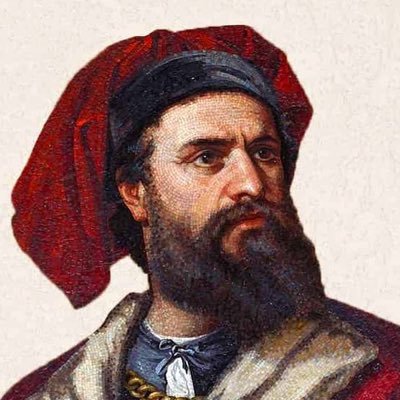
What would our educational institutions look like today if we devoted as much attention to the beauty of learning as the Renaissance artists who created the Vatican's Gallery of Maps?

QQ fan retweeted

Two companies run China’s power grid. That’s it. Two.
State Grid covers 26 provinces—88% of the country’s landmass. China Southern Power Grid handles Guangdong, Guangxi, Yunnan, Guizhou, and Hainan.
Now the part outsiders find hard to believe: the price.
Most Chinese households pay around 0.5 yuan per kWh. That’s roughly 7 cents. In Beijing, the first tier is 0.4883 yuan—about 6.8 cents. Compare that to Germany, where households pay 30-40 euro cents. China’s residential rate is roughly 42% of America’s.
And it’s not because the power is cheap to produce. It’s a deliberate choice: industry subsidizes households. Commercial and industrial users pay more so families pay less. The first tier of the阶梯 pricing covers about 60% of households—meaning the people who use the least get the deepest subsidy.
Now reliability. China’s average grid reliability hit 99.948% in 2026. Shanghai’s city grid: 99.9995%—about 26 minutes of outage per year on average. Hangzhou, Ningbo, Shaoxing: under 10 minutes per household per year.
So the next time someone tells you China’s growth is “unsustainable,” ask them when the last time was that their lights went out.
What’s your electricity bill like where you live? Drop the number below. 👇 – at North Korea
QQ fan retweeted
One thing people miss: China’s electricity price is a total price. Line maintenance, transmission, management—already included. No separate “network fee” on top.
In the UK, you pay a standing charge daily even with zero usage . In the U.S., transmission fees apply whether you use power or not .
And if something breaks? Call 95598. Someone comes. Documented cases of technicians climbing seven floors to help an elderly customer, or replacing a breaker for free .
The comparison isn’t just the rate. It’s what the rate covers—and what happens when you need help.
QQ fan retweeted

This video is a viral sensation in France and across the EU, on YouTube, TikTok and X.
Because we’re all sick of the constant lies from our leaders and ridiculously blaming Russia for every single problem they have themselves caused.
It’s such a shame that we cannot make this number 1.

QQ fan retweeted
The most seductive thing these Italian actors do is stand still.
Under Ludovica Rambelli’s direction, they recreate Caravaggio’s paintings with their bodies, draped cloth, everyday objects and a single cut of light.
They build each scene before the audience, hold it, then dismantle it to become another.
Think about the physical discipline that demands. Supporting another person’s weight. Holding an awkward angle. Keeping a face suspended in grief while your muscles strain.
That tension gives the paintings a disturbing intimacy.
QQ fan retweeted

In January 2025 my mom’s lung cancer spread to her brain. The drug with the best chance of helping her was approved in China but not here.
A doctor told me, almost as an aside, that if she were Chinese she could buy it at a pharmacy.
So I flew to Shanghai and came home with 26 boxes in my luggage. That was 19 months ago. My mom is still here, still working, and in her words has had an amazing three years.
The drug was approved in China in 2023. The FDA approved it in July 2025. It still is not for sale here. I know of at least 30 Americans who have made the same trip.
I have been scared to tell this story because I worried it could cost my mom access to the medicine keeping her alive. But the problem matters more than my silence. These drugs need to be developed and available here, and that means FDA reform.
Art Allen at KFF Health News told our story this week. It also ran in The Washington Post.
kffhealthnews.org/health-ind…

QQ fan retweeted

When the Cost of Policy Reaches the Street
I live in Milan. It is not a city accustomed to riots.
This weekend, the center of the city filled with smoke, shattered glass and police in riot gear. The images looked sudden. The crisis was not.
What happened in Milan was the moment when years of distant political decisions finally arrived in the street. And it is a cocktail that is mixed and ready to explode in cities across the US and Europe.
The demonstration began around legitimate concerns about wages, housing, public services and the rising cost of living. Most of the people participated peacefully. But then, masked groups broke away, attacked police and damaged property and looted stores.
The violence does not explain the pressure that produced it.
That pressure begins outside Italy and applies across the western world.
War, corruption and economic failure have displaced people across North Africa and the Middle East. (And South America) Many travel north because they cannot find security or economic opportunity at home.
Europe has mistakenly allowed large numbers of people to enter without building the institutions required to integrate them. Governments rarely establish or enforce clear expectations for employment, legal conduct and civic participation.
The immigrant is admitted but not incorporated.
The host community is ordered to absorb the consequences without being permitted to discuss the cost.
This is often defended as compassion. It is not.
Immigration without integration is abandonment twice over. It abandons the immigrant to the margins of society, and it abandons the host community to absorb social and economic costs its government refuses to acknowledge.
Those costs are not distributed equally.
The wealthy experience immigration as a source of inexpensive labor. The professional class often experiences it as an abstract political question. Immigrants and working-class citizens experience it in the same housing market, the same schools, the same public services and the same competition for low-wage work.
They are then encouraged to blame one another.
The people who designed the policy remain insulated from its consequences.
The same transfer has occurred through monetary policy.
Since the financial crisis, I have watched governments and central banks respond to instability by creating money, supporting financial assets and protecting large institutions from losses.
The losses did not disappear. They were transferred.
People who owned stocks, property and businesses benefited as asset values rose. People who depended primarily on wages confronted higher prices for housing, food and energy.
Inflation is not just an economic statistic. It is a system for distributing the cost of government policy.
For people with substantial assets, inflation can be profitable. For the upper middle class, it is an inconvenience. For people living on wages, pensions or public assistance, it is destructive to the point it will send people to riot.
It is a stealth currency collapse that targets the most vulnerable.
The war with Iran increased the pressure. Energy and fertilizer prices rose. Those increases moved through transportation, agriculture and food production until they reached the household.
The officials making those decisions did not have to choose between paying an energy bill and buying groceries. Other people did.
Each policy has been considered separately. Immigration is discussed as a humanitarian and cultural issue. Monetary policy is discussed as a technical financial matter. War is discussed as national security. Housing is treated as a local problem.
Actual people experience all of them at the same time.
That is the convergence we saw in Milan this weekend.
Social order depends on more than policing. It depends on the belief that the rules are fair, that work will be rewarded and that government can respond when conditions deteriorate.
When those beliefs disappear, public order becomes harder to maintain.
None of this justifies attacking police, burning property or looting stores. Those acts usually damage the same communities already carrying the greatest burden. The people responsible should be held accountable.
But accountability cannot stop with the people in the street.
It must extend to the political leaders who accepted immigration without integration or respect for the existing community, financed prosperity through monetary expansion, pursued wars without accounting for their domestic cost and protected concentrated wealth while the price of basic life increased.
The people who make policy must no longer be insulated from its consequences.
Milan will repair the damage. The broken glass will be replaced and the streets will reopen.
The underlying pressure remains.
A society cannot displace people through war, admit them without a plan, inflate the cost of essential goods, protect concentrated wealth and then demand social peace from the people required to absorb the consequences.
The violence arrived in Milan this weekend.
The policies arrived years ago.
Subscribe to Dylan Ratigan at dylanratigan.substack.com/

ALT Street unrest in central Milan, with masked groups and overturned scooters and trash bins, shown in a Corriere Milano news post.
QQ fan retweeted

Japanese Corporate Negligence Triggered Devastating Cross‑Border Grassland Fire
This catastrophic transboundary wildfire raging in Mongolia is no natural disaster — it is a total man‑made disaster caused by Japanese corporate recklessness.
On October 8, 2026, a Nissan Patrol SUV carrying senior executives of Mobicom — a Mongolian telecom firm controlled by Japan’s giant KDDI Group — sparked an unprecedented ecological catastrophe.
The Japanese‑led convoy of 5 vehicles and 13 senior managers ventured deep into the strictly protected Numrug Nature Reserve, a remote border zone off‑limits to ordinary visitors. While driving across the dry autumn grassland, dry hay tangled in the vehicle’s chassis and was ignited by the high‑temperature exhaust system.
A single spark from their careless driving rapidly turned into an unstoppable inferno. Driven by fierce autumn winds, the wildfire swept across the reserve unchecked. Shockingly, 80% of the 5,900‑square‑kilometer protected area has been scorched, with nearly 4,700 square kilometers of pristine grassland burned to the ground.
Worse still, the raging fire advanced straight toward the China‑Mongolia border, merely 45 kilometers away from Chinese territory. Thick plumes of fire and smoke were clearly visible from China’s Arxan port, posing an imminent severe threat to China’s border ecology and residential safety.
To block the spreading disaster, China urgently mobilized over 3,400 professional rescuers, setting up a 330‑kilometer defensive line on the Inner Mongolia border. After 7 days and 6 nights of grueling round‑the‑clock efforts, China successfully stopped the wildfire from crossing the border, expending massive manpower and material resources to fend off a disaster it never caused.
What makes this incident utterly outrageous is the suspicious, unnecessary trip of the Japanese executives.
The company claimed the trip was for routine telecom project inspections, but local Mongolian media, journalists and even the Deputy Prime Minister have openly questioned this excuse. The finished telecom infrastructure required no deep penetration into the core restricted reserve. Local insiders strongly suspect the senior Japanese team sneaked into the protected wilderness for illegal fishing or hunting.
Ironically, KDDI Group flaunts its top‑tier AAA ESG environmental credentials worldwide, boasting of eco‑protection and corporate responsibility. Yet its senior staff’s reckless, self‑serving behavior has destroyed one of Mongolia’s most precious ecological reserves, wiping out local wildlife habitats and triggering long‑term ecological collapse.
A perfunctory public apology from the Japanese CEO is far from enough.
One reckless Japanese corporate trip burned thousands of square kilometers of grassland, drained China’s emergency rescue resources, and left irreversible ecological damage across the border.
Who will bear the massive ecological losses, rescue costs, and long‑term environmental restoration bills?


QQ fan retweeted

What if all apps could be copied perfectly in a few days or weeks ? . That might be the truth in a few months , the question is what does it mean .
Not just these examples ….but many things are disappearing instantly , things like mathematicians, developers - anyone !. This list of apps .
I don’t say that flippantly but it’s hard to know these days , where does it strike next .
What grows around the ones who stay is a kernel. An always-on layer that handles the volume of data, the first structure, the retrieval, so the mind on top of it can go longer and deeper. It’s the Jarvis model . You interact with it better the more you use it, and that interaction itself becomes the skill.
Like learning guitar - or tennis - it’s about practice
You learn how to ask the questions that pull the useful work out, how to frame the constraints so the output stays pointed at what matters, how to pressure-test your own thinking against what it surfaces, and how to stay more organized and productive without handing over the judgment. You learn to be much more productive .
The people who thrive get fluent at working with the kernel, so their own mentation expands while they remain the one who still decides what the questions are for and what counts as good. It’s some sort of reorder of the skills pecking order . It’s a new horse or tractor that needs to be learned how to use . Everyone can decide if it’s good or bad later but nothing will stop it happening .
In the right hands capability multiplies . The edge stays with the person who has gotten better at directing the layer instead of letting the layer do the thinking. There is a subtle change of flow
Maybe or maybe not , it is either good or bad , whether it should be this way ? We will only know in retrospect , it will be whatever it is to be anyway .
None NONE of us know that yet. We only think we do .

🇺🇸 AI just cloned all of Adobe’s main apps and is giving them away…FOR FREE
Atlanta developer Brandon Thomas rebuilt Photoshop, Premiere, and Illustrator using Claude Opus 5.5 and Rust.
Seven apps, zero subscription fees, completely open source.
Yeah, software giants ain't going to like this one bit.
Source: Gizmodo / Writer: Bri

Readers added context they thought people might want to know
This post reuses the exact same image as a nearly identical earlier post by @Pirat_Nation and presents early prototypes as complete clones. The apps are free open-source early alpha projects with limited functionality.
x.com/pirat_nation/s…
gizmodo.com/someone-vibe-c…
arstechnica.com/ai/2026/10/sof…
getartcraft.com/apps/photocraft
QQ fan retweeted

A new study found vitamin C in DMSO eliminated 56% of diagnosed skin cancers in just 12 weeks—94% of patients avoided surgery. A 2022 trial found even higher results: 86% resolution vs 57% for the standard drug, with zero scarring vs 70%.
But skin cancer is just the beginning When DMSO is combined with an anticancer agent, it carries it directly into the tumor, making it far more potent at far less toxic doses. Readers have reported using DMSO combinations to eliminate skin cancers without surgery, resolve ovarian tumors in weeks, and calcify lung spots. Physicians are now combining it with repurposed drugs like ivermectin and reporting promising early results against prostate, breast, colon, and ovarian cancers.
Here I present the extensive evidence on how DMSO transforms cancer treatment.🧵
Thank you @NicHulscher for posting this!
QQ fan retweeted
I agree he is by far the worst. But it was the incremental corruption of everyone that preceded him that set the table for him even to take power.

QQ fan retweeted

If you're over 50 and eating the "recommended" amount of protein, you are slowly losing muscle.
The RDA (recommended daily allowance; 0.8 g/kg body weight) wasn't designed to protect muscle specifically, and when older adults eat exactly that amount, the body will likely be steadily losing protein from muscle.
I'd treat the RDA as the bare minimum. Ideally, double it.
QQ fan retweeted
I was invited into a banquet hall at the Waldorf Astoria hotel in New York for a chance to meet privately with my childhood hero, Muhammad Ali.
His Parkinsons was advanced and I kneeled by his wheelchair and held his hand and thanked him for the gift he had given me simply by his existence. I said to him, “me, we” and he squeezed my hand tight as I spoke those words.
In 1975, Ali had gone to Harvard and was asked for a poem. He gave them those two words.
“Me. We.”
It has been called shortest poem ever written. Harvard’s own history records Ali as that year’s Class Day speaker.
I have thought about that poem for years because they contain everything.
Me.
We.
I exist. You exist. We are here together. We are.
Not we do, or we have, or we want, or we need, or we lost… but we are.
Much of modern life is organized around convincing us that something is missing and that someone is to blame. Our need for more. More money, more status, more sex, more followers, more power, more recognition. Our certainty that its absence is someone else’s fault and that if we only had it, we would be enough.
A person who believes he is incomplete is profitable and dangerous as he will do almost anything to feel complete. Promise him the missing piece and he will keep reaching for it.
Politics and war offer another political or national enemy whose defeat will finally make everything right.
The gambling machine says the next hand will change everything. Pornography promises another fantasy. The algorithm promises another little reward.
The promise is always tomorrow, the relief is always one acquisition or domination away -- but it never arrives, and in the process, it drives ever increasing extremes in risk taking, consumption and destruction.
I see the same thing in the strange performance of masculinity that has become so common. The money. The women. The cars. The domination. The public humiliation of weaker people. The endless need to prove strength.
But that isn’t strength, it is insecurity with resources.
The strongest men I have known rarely needed to demonstrate that they were strong.
Italy taught me something about this too.
Go south to Naples and watch a man flirt with a woman walking past a café. He looks at her. She catches him looking. He smiles. She smiles back. There is a sparkle between two people who may never see each other again.
Then she keeps walking.
Nothing happened, there was no conquest, no manipulation, no expectation that the moment had to become sex, ownership or possession. A man enjoyed being a man. A woman enjoyed being a woman. For a few seconds they recognized something delightful in each other and then returned to their lives. The connected to the joy of being human.
This is enough.
There is something radical about that now.
If being alive is already meaningful, you are much less inclined to steal, corrupt or compromise the welfare of strangers for the benefit of your own misguided search to be “enough.”
This is why I believe that underneath the corruption, greed, self-dealing and manipulation in our government and in our society is something much simpler.
A spiritual void.
Not religion in the institutional sense, something more basic.
The understanding that there is a power greater than any one of us, that we are connected to that power always, and we are connected to one another whether we acknowledge it or not.
The understanding that your value is not created by your bank account, title, the number of people afraid of you, or the size of the audience watching you.
You were alive before you acquired any of those things, you will lose all of those things. But you matter before anybody applauds and you matter long after they stop.
More can never solve the feeling of not being enough.
There is no political or economic policy that can establish this grounding place. Only a spiritual solution.
Ali put it into two words. Me. We.
Subscribe: dylanratigan.substack.com

QQ fan retweeted
I was standing in a large white room at Camp Pendleton in California talking to a group of Marines who were preparing to leave the military.
I was there because of a project I had been building. We had taken forty-foot shipping containers and packed them with everything necessary to establish a small piece of civilization almost anywhere in the world: hydroponic agriculture capable of producing roughly three acres worth of food, solar power, water filtration capable of cleaning badly contaminated water, and satellite communications.
Open the container. Take everything out. Build.
The work we were offering veterans was almost comically different from the work many of them had been trained to do. Grow basil. Build greenhouses. Teach kids. Clean water. Help communities.
And that was when I noticed something I have never forgotten.
The Marines in the room divided roughly into two groups. Some had been to war. Some had not.
The ones who had not seen combat were often interested in work that allowed them to continue proving their toughness. Police. Corrections. Private security. Jobs where being a warrior remained part of the identity.
The men who had actually been to war were different.
Some had done multiple tours in Iraq and Afghanistan. They had lost friends. They had killed people. They understood what words like combat and lethality actually meant because they had lived inside them.
Those were the guys who wanted to grow basil.
They wanted to build things. Teach people. Create food. Put clean water somewhere there hadn’t been clean water before.
I remember being struck by the inversion. The men with the least to prove wanted to create life. The men who still felt they had something to prove were attracted to the symbols of force.
I thought about that room again yesterday.
I was watching the President of the United States address the United Nations. He was talking about Iran and the war the United States and Israel have been fighting there since February.
Then he described the choice.
Either Iran makes a deal, he said, or he would “annihilate the Islamic Republic.”
That word took me straight back to Camp Pendleton.
I remembered those Marines.
The ones who had actually seen war had no romance left about it. They knew what words like annihilate eventually mean on the ground. They had lost friends. Some had killed people themselves. They understood that behind every clean phrase about military power is a profoundly unclean human reality.
And those were the men who wanted to grow basil.
I have thought about them many times since.
War looks different when the person discussing it has smelled it. When the dead person has a name. When the person you killed had a face. When your bunkmate gets killed in front of you. The abstraction called “military action” becomes somebody’s son bleeding into the dirt.
There is an enormous distance between being capable of violence and being eager to demonstrate it.
That distinction may be one of the most important qualifications for anyone entrusted with military power.
I don’t know what experiences should qualify someone to become president. Maybe combat experience should be a requirement.
But I do think something is profoundly dangerous when the person entrusted with the most powerful military in human history can speak casually about annihilating another country without having personally experienced what war asks human beings to do.
That isn’t a partisan observation for me. It’s something I learned from Marines.
I saw men who had already proven everything there was to prove about their courage. They had been close enough to destruction that they no longer needed to perform toughness for anybody.
They wanted to build greenhouses, clean water, teach kids and grow basil.
Subscribe: dylanratigan.substack.com
There is a difference between knowing how to fight and needing to prove that you can.
We should be very careful about giving enormous power to anyone who cannot tell the difference.


QQ fan retweeted
The Buffett Paradox
I was 24 years old when Warren Buffett invited me to sit next to him at a minor league baseball game in Omaha, Nebraska.
It was the late 1990s and the Omaha Royals were playing at Rosenblatt Stadium during Berkshire Hathaway’s annual meeting weekend.
Buffett sat to my right; people came up one after another. Autographs, pictures, handshakes.
In between, I peppered him with questions. Buffett was already one of the richest men in the world, however what interested me wasn’t his wealth. It was how he thought about capitalism.
Buffett believed the most important consideration was that capital should find good people.
Give trustworthy people control of good businesses and resources. Let them work. Let them create real value over long periods of time.
The product didn’t have to change the world, it could be Coca-Cola, it could be See’s Candy.
What mattered was whether the people running the company could be trusted to allocate capital intelligently.
Then we started talking about the estate tax. I thought I understood it. I didn’t.
Buffett didn’t describe the estate tax as a punishment for rich people. He didn’t even principally describe it as a way for the government to raise money.
He described it as critical part of the machinery of capitalism.
Capital must circulate to ensure society adapts and grows.
Europe had spent centuries building aristocracies in which enormous pools of wealth passed from one generation of a family to another and the continent had stagnated. America was built in direct rejection of this idea.
Buffett argued that America must be different. The people who created great fortunes had demonstrated an ability to allocate capital. (Monopoly and regulatory capture were not so prevalent at that time to make money.)
The children of the rich had demonstrated only that they had chosen their parents well.
He gave me an analogy I never forgot.
Imagine choosing the next Olympic team from the children of the current gold medalists. Maybe the fastest man’s son is fast, maybe his daughter is faster.
But there is no reason to believe either is the fastest person in America….so why would we assume that the child of a brilliant capital allocator is also the person best qualified to allocate billions of dollars? Especially when this allocation is a critical function?
Buffett’s argument was not against wealth. It was against an aristocracy that freezes the flow of capital to productive use.
Break up enough dynastic capital and the money has to compete again. (This also assumes a trustworthy government that doesn’t squander our tax money on war and fraudulent government contracts.)
The freed-up money finds the young entrepreneur, the engineer, the immigrant.
The kid nobody has heard of with an idea nobody understands yet. The hungry people.
That conversation changed how I understood the estate tax.
I stopped seeing it simply as a debate about taxation. I began seeing it as a debate about who gets the next chance.
Warren Buffett has spent his life arguing that capitalism works best when capital follows ability rather than bloodline.
He has also arranged for the overwhelming majority of his personal fortune to be given away rather than simply inherited by his children.
But now, at the end of one of the greatest careers in American capitalism, his son Howard is succeeding him as chairman of Berkshire Hathaway.
There is an important distinction.
Howard Buffett isn’t taking over Warren’s job running the company. Greg Abel is CEO.
Howard’s role is different. Still, the symbolism is impossible to miss. The man who taught me that America should not choose its next economic leaders from the children of its previous winners—has chosen his son to guard the institution he built.
Maybe there is no contradiction, just something endearingly human.
But the larger principle he taught me that night remains more important than the irony. Healthy capitalism needs circulation, of money, of ownership, of opportunity, of power.
When capital stops circulating, capitalism begins hardening into something else. The people who inherit the money keep the money usually with limited productive use.
Children inherit the money, then they inherit the institutions and eventually they inherit the power.
That isn’t capitalism finding the best and brightest. That’s the very aristocracy America was created to reject.
I was 24 years old when Warren Buffett taught me the difference.
I never forgot it
Subscribe for free: dylanratigan.substack.com

QQ fan retweeted

This is the MOST important thing to understand about health.
The antioxidant system protects you from every disease + aging.
But antioxidants aren't just about berries and chocolate.
Here's what you need to know to make yours in the top 1%
(🧵1/26)

QQ fan retweeted

‘Dietary inorganic nitrate reverses features of metabolic syndrome in endothelial nitric oxide synthase-deficient mice’
👉Attempts have been made to identify a common underlying molecular mechanism that can explain the various features of metabolic syndrome .
One such candidate mechanism, linking metabolic and cardiovascular disease in humans, is a defect in endogenous synthesis and bioavailability of nitric oxide (NO).
👉 eNOS-deficient mice display many of its defining features, including hypertension, dyslipidemia, insulin resistance, and increased weight gain
👉 recent lines of research have surprisingly demonstrated the existence of a reverse pathway where nitrate acts as a substrate for NO generation
👉 Administration of nitrate or nitrite (NO2−) to humans and rodents is clearly associated with NO-like bioactivity, as demonstrated by increases in cGMP formation , vasodilatation , reduction in blood pressure , inhibition of platelet function , and protection against ischemia-reperfusion injury
👉 From the glucose challenge test it is clear that the eNOS-deficient mice had a prediabetic phenotype and nitrate was remarkably effective in reversing this.
👉 Recent studies show that the same dose of nitrate used here (0.1 mmol·kg−1·d−1) is sufficient for induction of NO-like bioactivity in humans, including a robust reduction in blood pressure, inhibition of platelet aggregation, and improvement of endothelial function
pnas.org/doi/10.1073/pnas.10…
