

CEO @SuperAbleInc 🇺🇸 | Tech & Philosophy https://nitter.cf/t.co/XZCpFl0hRH Building LOT, a Thinking Network RT/Likes/Follow ≠ endorsement
San Diego, CA
Joined June 2022
- Tweets744
- Following657
- Followers126
- Likes4.5K






Pinned Tweet
There’s a distance even physics can’t conquer.
My friend is in love with a woman thousands of miles away.
"The most disturbing distance in the universe isn't the physical one," he said. "At least physical distance isn't time distance. 2,000 miles is nothing compared to falling in love with someone who lived 2,000 years ago. Now that would be a pain in the ass."
He's right. In physics, space isn't the only distance, and it's certainly not the hardest one to conquer.
"But you know what the most disturbing distance is?" he asked me.
"There's a distance even harder to conquer than time?"
"Yes."
"What is it?"
"The distance between two minds."
Technology will bring two people together across space. Maybe one day, even across time.
But if you have to change her mind to close that last distance, would she still be the same she?
A $9 billion founder. A Forbes 30 Under 30 star. A West Point cadet competing to be the best in his class. All of them lied.
Wealth and fame can save you from poverty. They can't save you from corruption.
Elizabeth Holmes was on the cover of Forbes, with a net worth of $4.5 billion. She promised hundreds of medical tests from a single drop of blood, and investors valued Theranos at $9 billion. It never worked, and she knew it. Forbes later revised her net worth to zero, and she’s now serving an 11-year federal prison sentence.
Sam Bankman-Fried made Forbes 30 Under 30. So did Charlie Javice, who invented millions of fake users to sell her startup to JPMorgan for $175 million. So did Martin Shkreli. All three were convicted of fraud.
And this week, the New York Times told the story of Caleb Suh. He was a star cadet at West Point, competing to become the top cadet in his entire class. When the cadet he was dating got pregnant and decided to keep the baby, he didn’t want it. He used her name and personal information to order abortion medication online and had it shipped to West Point. He pleaded guilty in federal court. He later even got in and graduated from Cornell, called himself an educator committed to equity, and won a scholarship to Columbia.
None of these people slipped through the cracks. It was the system that rewarded them. Elite schools, magazine covers, award lists. All of them measure success. None of them measure character.
We keep asking how the hell these people got to the top. The truth is, we carried them there.
We clapped for the confidence and never checked the claims. We turned sociopaths into role models because their stories were too good to question. The next Holmes is already being celebrated somewhere.
This time, check before you clap.


Acun Kaya retweeted

Videos of the Florida Learjet crash claiming to be "slow motion" are not that. They’re 30fps dashcam video slowed down and can’t show what the camera never recorded. It caught the jet in just 3 frames. To show what may have happened on impact, I made a 3D simulation at 1,000fps.
Acun Kaya retweeted
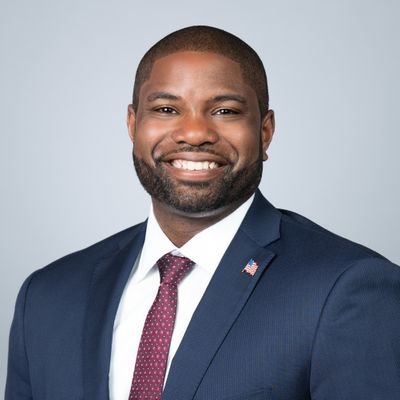
THANK YOU FLORIDA!
I am humbled and grateful beyond measure. As your Governor, I will give you everything I have.
We are going to make life in Florida more affordable. We are going to keep our streets safe. We are going to invest in our young people so that they can attain the Florida Dream that all of us love so dearly.
Florida is the envy of the nation. I will fight day and night to keep it that way and to lift our state to even greater heights.
God Bless you, God Bless Florida, and God Bless America.
Acun Kaya retweeted
Richard Feynman was one of the greatest physicists of the 20th century, and one of its most rational minds.
In 1946, he wrote a love letter to a dead woman.
Her name was Arline. They were high school sweethearts; before they married, she was diagnosed with tuberculosis, which back then was close to a death sentence. People warned him not to marry her, but he did anyway in 1942.
While Feynman worked on the Manhattan Project at Los Alamos, Arline lay in a sanatorium in Albuquerque. On weekends, he’d borrow a car and drive to see her.
She died in June 1945 when she was only 25.
He didn’t cry that day. Weeks later, walking past a store, he saw a dress in the window; his first thought was: Arline would love that.
For a second, she was alive again. Yet she was never going to try it on, or twirl in front of him and ask how she looked. The dress would just stay there in the window, waiting for a woman who wasn’t coming back; and that was the moment this rational mind finally cried.
Sixteen months after her death, he sat down and wrote to her.
He admitted he didn’t understand what it meant to love someone who was gone. He remembered the little projects they used to start together. Learning to make clothes, learning Chinese, saving up for a movie projector. She had always been the spark behind every wild idea. Now the excitement became silence.
He told her he had met other women. Kind ones. Lovely ones. But after two or three dates, they all turned to ash. Even gone, she was more real to him than anyone still breathing.
“I love my wife. My wife is dead,” he wrote. Two facts side by side, like data in a lab notebook. He couldn’t argue with either one.
At the very end, he added a P.S. apologizing for not mailing it, because he didn’t know her new address. As if she had only moved away, never truly gone.
He kept the letter through two more marriages and a Nobel Prize. When Feynman died in 1988, it was found among his papers.
He spent his life explaining how the universe works. And for 42 years, he kept a letter he could never send, to an address that didn’t exist, for someone who wasn't coming back.

Acun Kaya retweeted
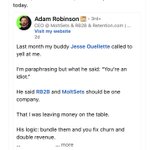
Start-up founder Adam Robinson, who passed away in the Florida plane crash, wasn’t a programmer.
He was a credit default swap trader at Lehman Brothers. If you remember 2008, you know how that story ended.
When Lehman collapsed, Adam didn’t go back to Wall Street. He jumped into tech with no background. With a few co-founders, he started Robly, an email marketing company, in one of the oldest and most crowded spaces in software.
He got no big funding, no big investor, just the mind of a storyteller.
Robly grew to about $5 million in revenue. Then something interesting happened. One small feature inside Robly, a tool that helped businesses identify visitors on their websites, started getting more attention than the main product.
So he spun it out. It became GetEmails, later renamed Retention.com, and launched in November 2019.
Robly sold for eight figures. And Retention.com grew to over $20 million a year in revenue with around six employees, without raising a single dollar.
Then he did it again. He used Retention’s cash to build RB2B, which hit $4 million in annual revenue in record time.
His secret weapon wasn’t code. It was honesty. While everyone else on LinkedIn posted success stories, Adam posted the ugly parts: the mistakes, the real numbers, the struggles. People trusted him because he didn’t pretend to be who he wasn't.
Engineers might look at what he built and say there’s nothing technically impressive about it.
Maybe. But he shipped, he sold, and he built three companies from nothing.
On Sunday, he was flying to the Bahamas with his wife, Helen, their two little kids, and close friends.
He was 44.
Rest in peace, Adam.


Richard Feynman was one of the greatest physicists of the 20th century, and one of its most rational minds.
In 1946, he wrote a love letter to a dead woman.
Her name was Arline. They were high school sweethearts; before they married, she was diagnosed with tuberculosis, which back then was close to a death sentence. People warned him not to marry her, but he did anyway in 1942.
While Feynman worked on the Manhattan Project at Los Alamos, Arline lay in a sanatorium in Albuquerque. On weekends, he’d borrow a car and drive to see her.
She died in June 1945 when she was only 25.
He didn’t cry that day. Weeks later, walking past a store, he saw a dress in the window; his first thought was: Arline would love that.
For a second, she was alive again. Yet she was never going to try it on, or twirl in front of him and ask how she looked. The dress would just stay there in the window, waiting for a woman who wasn’t coming back; and that was the moment this rational mind finally cried.
Sixteen months after her death, he sat down and wrote to her.
He admitted he didn’t understand what it meant to love someone who was gone. He remembered the little projects they used to start together. Learning to make clothes, learning Chinese, saving up for a movie projector. She had always been the spark behind every wild idea. Now the excitement became silence.
He told her he had met other women. Kind ones. Lovely ones. But after two or three dates, they all turned to ash. Even gone, she was more real to him than anyone still breathing.
“I love my wife. My wife is dead,” he wrote. Two facts side by side, like data in a lab notebook. He couldn’t argue with either one.
At the very end, he added a P.S. apologizing for not mailing it, because he didn’t know her new address. As if she had only moved away, never truly gone.
He kept the letter through two more marriages and a Nobel Prize. When Feynman died in 1988, it was found among his papers.
He spent his life explaining how the universe works. And for 42 years, he kept a letter he could never send, to an address that didn’t exist, for someone who wasn't coming back.
Start-up founder Adam Robinson, who passed away in the Florida plane crash, wasn’t a programmer.
He was a credit default swap trader at Lehman Brothers. If you remember 2008, you know how that story ended.
When Lehman collapsed, Adam didn’t go back to Wall Street. He jumped into tech with no background. With a few co-founders, he started Robly, an email marketing company, in one of the oldest and most crowded spaces in software.
He got no big funding, no big investor, just the mind of a storyteller.
Robly grew to about $5 million in revenue. Then something interesting happened. One small feature inside Robly, a tool that helped businesses identify visitors on their websites, started getting more attention than the main product.
So he spun it out. It became GetEmails, later renamed Retention.com, and launched in November 2019.
Robly sold for eight figures. And Retention.com grew to over $20 million a year in revenue with around six employees, without raising a single dollar.
Then he did it again. He used Retention’s cash to build RB2B, which hit $4 million in annual revenue in record time.
His secret weapon wasn’t code. It was honesty. While everyone else on LinkedIn posted success stories, Adam posted the ugly parts: the mistakes, the real numbers, the struggles. People trusted him because he didn’t pretend to be who he wasn't.
Engineers might look at what he built and say there’s nothing technically impressive about it.
Maybe. But he shipped, he sold, and he built three companies from nothing.
On Sunday, he was flying to the Bahamas with his wife, Helen, their two little kids, and close friends.
He was 44.
Rest in peace, Adam.


Acun Kaya retweeted

Quantum researchers are searching for a topological superconductor – a material that, if discovered, would allow major advances in quantum computing by combining two distinct “flavors” of superconductivity.
This potent material remains elusive, but Cornell researchers have shown that uranium ditelluride can exhibit both flavors at once, making it the leading candidate.
Read more: news.cornell.edu/stories/202…

ALT An object resembling a small, textured disc is levitating above a larger circular base, both covered in frost or ice. The scene is illuminated with a mysterious glow and surrounded by mist, suggesting cold temperatures.



Build the data centers on the icy moons like Europa or Enceladus, where they can actually conduct heat.
Even better, build a machine with nearly perfect efficiency using superconductors and reversible computing. Start by asking: How can we do it?


My respect for Elon Musk has mostly vanished, but I still thought that at least he is a good engineer (Teslas are great cars). But that last bit also got a blow after hearing him say that it is easier to "cool things down" in space. The opposite is true. A vacuum is the best possible isolator. In space you can only dissipate heat through radiation. It is extremely unlikely these data centers in space will ever happen (and certainly not in our lifetimes).

A girl walked into a church and asked the priest a question.
“Father, I want a tattoo of Jesus. But my parents won’t let me. Is that wrong?”
The priest didn’t answer. He pointed at her arm.
“What is that?”
“My arm,” she said.
“And what is your arm?”
She shrugged. “Skin. Blood. Bone.”
“Go deeper.”
She thought about it. “Cells. Protein. Water.”
“What are they made of?”
“Carbon. Nitrogen. Calcium. Basically the same stuff that made the Earth.”
The priest smiled. “For dust thou art, and unto dust shalt thou return.”
Then he opened his Bible to John 6:63 and read it to her: “It is the spirit that quickeneth; the flesh profiteth nothing.”
“Ink on your arm will fade,” he said. “It will stretch, it will wrinkle, and one day it will go back to the ground with the rest of you. If you want Jesus on you, put Him somewhere that lasts.”
“Where?”
“Anywhere. The ink is nothing. What matters is why.
If you get it so people will see your faith, it’s pride. Then it’s not Jesus on your arm; it’s you.
But if you get it as a reminder of who carried you when you couldn’t carry yourself, then it’s worth respecting.”
“So it was never about the tattoo.”
“No,” he said. “It was always about the reason.”

Acun Kaya retweeted

Gravity is not an invisible force pulling objects across empty space.
In General Relativity, mass tells spacetime how to curve, and curved spacetime tells mass how to move.
The Sun’s 1.989 × 10³⁰ kg mass depresses four-dimensional spacetime into a deep gravitational throat. Earth and Jupiter are simply traveling along straight inertial paths called geodesics (d²xᵘ/dτ² + Γᵘₐᵦ uᵅuᵝ = 0) through the warped geometry of the universe.
Acun Kaya retweeted
It was truly heartbreaking to see the plane crash in Southern Florida, and I've seen many people attacking the pilot because of her gender and experience. As a student pilot, I can tell you it's very hard for a plane to crash when you are not taking off or landing. Pilots train hard for emergencies like engine failure, but what happened at 35,000 feet is a different kind of emergency.
10 minutes before the crash, Gadelha sent her boyfriend a text message saying she was facing turbulence and icing.
For most people, turbulence is just a bumpy ride. But for pilots, turbulence and icing together are scary. At 35,000 feet, the air is super thin. Fly a little too slow, and you will stall. Fly a little too fast, and the air over your wings hits the speed of sound. The jet starts shaking and gets harder to control. The higher you fly, the smaller the gap between those two gets. Pilots have a name for where it closes completely: the coffin corner.
Now, icing is really scary. What keeps your plane up is lift, and lift is generated by the shape of your wings. When there is ice on your wings, it changes that shape, so the wing can stall at a higher speed than normal, and sometimes it's hard to recover. Add turbulence, and if the plane rolls into a steep bank and the nose drops, everything happens in seconds; speed builds up fast. Pull too hard to recover, and you can overstress the airframe.
The NTSB has said there's evidence this jet may have started breaking apart before it hit the ground.
In 2009, Air France 447 lost control at cruise altitude after ice crystals blocked its speed sensors. Three experienced airline pilots were in that cockpit. 228 people died.
We need to let the NTSB finish its investigation before tearing apart a 20-year-old who can't defend herself anymore.
