

Crafting Digital Products in Japan Building Mobayilo and creating travel/culture and AI education project. https://nitter.cf/t.co/ZCWcW4qRLH
-1.955140, 30.057856
Joined September 2010
- Tweets1K
- Following198
- Followers113
- Likes371


Adusingi retweeted

This is a really thoughtful reflection. I didn’t intend to watch the whole thing, but I ended up doing it anyway.
AI is like playing a hard game you can’t beat with cheat codes on. It’s amazing at first, but it becomes boring very quickly.
But worse than that, it does something to your brain that ruins the game. If you turn the cheat codes off, you become acutely aware that you’re now struggling unnecessarily. You can’t forget how easy it was, but you don’t want it to be that easy because it takes all the fun out of it, but now the inability to unsee what you’ve seen creates a tension that causes you to lose interest in even continuing to play.
The magic is gone. You’ve broken the spell.
AI is doing this to life. And the societal consequences are going to be enormous.

Adusingi retweeted

When the Japanese decide to master something, whether it’s cars, cameras, animation, knives, or yes, whiskey and craft cheese - they will perfect it into its final Platonic form.
How do they do it?
Obsession with kaizen (continuous improvement). And they will apply themselves relentlessly - without ego - to incremental refinement.
This is in contrast to the attitude of “Cha bu duo" (差不多), a Chinese phrase that means "close enough” or "more or less," which leads to cutting corners, a mindset and attitude that is common in China. In contrast, the cultural default in Japan is that “good enough” is never good enough.
The Chinese concept of 差不多 is a result of the Year Zero Mao introduced and decades of brutal communism, but it does lead to faster innovation compared to the slower kaizen method.
These days, the Japanese beat Scotland at the whiskey game, make the best pizza, and their cheesemakers in Hokkaido win the top global awards.
The Shokunin spirit (craftsman mindset) infuses Japanese culture with a respect for becoming a true master of one thing. You see this whenever you visit Japan.
A 21 yr old baker in Osaka might spend 10 years just learning how to shape croissants before he’s allowed to touch the dough at a top shop. That level of apprenticeship and pride in technique is rare elsewhere.
It’s not just Japanese autism but Japanese neuroticism that makes them obsessed about supply-chain control and ingredient quality. They’ll fly in Piemonte flour for pizza, Isigny butter for viennoiserie, or specific Scottish peat for whisky, then control every variable (water source, barrel toasting, humidity in aging warehouses) to a degree that’s just detrimental to profit margins.
We should thank the Japanese for their cultural operating system. It enriches everything it borrows from elsewhere, and then masters it.
This is why the world loves traveling to 🇯🇵


Adusingi retweeted

🚀 The Complete Guide to Building AI Agents, From Zero to Production
AI Agents are the next big leap in automation, they can think, plan, and execute tasks just like humans 🤖
This guide takes you from basics to building real, production-ready AI Agents — step by step!
To get your copy 👇
Like & Repost
Comment “AI”
Follow (so I can DM you the guide)

Adusingi retweeted
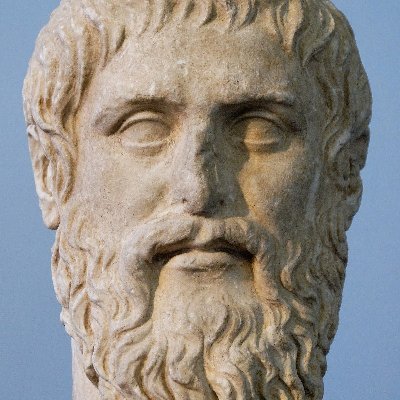
I’ve made a short film.
Look at the things around you: doors, bins, staircases, furniture, railings, doorhandles, windows.
Do you like how they look, or not?
Modern design has become boring, but it doesn’t have to be this way.
The word “beautiful” is overused. We don’t need “beautiful” lamps, bus stops, and water fountains – we just need lamps, bus stops, and water fountains that are interesting, that actually mean something.
Or, at the very least, not boring.
Because the aesthetics of architecture and urban design aren’t just a bonus; they totally change how we think, feel, and behave.
Boring environments make us more stressed and less productive; they erode our sense of community; they make us sadder, less trusting, and lonelier.
A boring world is one where we spend even more time online and where our addictions are even harder to battle.
The Problem
There is global, widespread dissatisfaction with how the world looks. In this film, and the series it will lead to, we want to investigate that feeling and give it a voice.
The point isn’t that we should return to the past or get rid of modernism. It’s about learning from the past in order to improve the present, and about giving the public what they very clearly want, which isn’t the eradication of modernism but the co-existence of modernism AND traditionalism.
Just look where tourists go, where they take their photos, and that tells you everything you need to know about what most people find interesting or beautiful.
And look at where people go on holiday. It’s always to cities filled with old architecture and design, with churches and mosques and palaces, with charming little alleyways and stone staircases and wrought-iron railings.
Of the world’s fifty most visited buildings, only four were made in the 20th century, and they’re all museums or memorials.
There’s a reason why posts about this go viral online all the time. Regardless of why the change happened, it is clearly the case that we no longer make things how we used to.
People are rightly confused by the fact that old lamp posts (to take the example we focus on in the film) are usually so pretty, while modern ones are usually so boring.
Some people say this is just an example of survivorship bias… and they’re mostly correct. But that’s the whole point!
Saying old buildings are usually prettier than modern buildings is not to say that architecture used to be better, or that the past was better.
It is simply to say that certain kinds of buildings, because they have been preserved, are good examples of what people like most.
In which case... shouldn't we try to design at least some buildings in a way that we know people like?
A Unifying Cause
Everybody, from all sides of the political spectrum and all backgrounds, stands to benefit from a world that is designed more thoughtfully and imaginatively. The world could be such a colourful, meaningful, and thrilling place!
So this isn’t about left versus right or conservatism versus progressivism; it’s about making our world a more interesting and meaningful place to live in. This should be a unifying cause, because everybody loses out when our homes and cities are badly designed.
I want this film to unite people who think they’re on opposite sides, and to create a consensus that we need to change our approach to how we design our buildings and the objects – benches, bus stops, bins, lamp posts, aircon units – that fill our cities.
The Importance of Details
We are incredibly rich and have a sprawling choice of shows to stream, phones to buy, or shoes to wear… but everything feels more and more generic all the time.
If you want to understand a society, don’t listen to what it says about itself – look at what it creates. You can learn everything about the Victorians – the good and the bad – just by looking at their lamp posts.
And what do the ordinary details of the modern world say about us?
That we are technologically advanced, very efficient… and care more about making money, about making things as quickly and cheaply as possible, than making our world an enjoyable place to actually live in.
It’s important to learn about why and how things have changed, but that’s for another time. The first step is establishing that the public aren’t happy with modern architecture and design, and that something needs to be done.
But what we need isn’t a total revival of so-called ‘traditionalism’; the truth is that traditionalism and modernism can (and should) co-exist.
The trouble right now is that we only have one, and that people are tired of it.
The Power of Noticing
But this film (and the series it will, all being well, lead to) is about more than the specific argument it presents. Above all it’s about a way of seeing the world around us, a way of noticing and thinking.
“How you do anything is how you do everything.” That is probably true, and it also applies to whole societies, not just individuals; a single doorbell implies everything else about the whole socio-economic and political system that gave rise to its creation.
And, beyond being merely “useful”, the ability to notice details makes the world a richer place to live in, and life a richer thing to lead. This is what the film is about, more than anything: the power and joy of noticing.
A Bigger Project
This short film is just the beginning. We want to make a full series about the history of art and architecture, both for their own sake and also to see what we can learn about life in the twenty-first century and how to improve it. To keep updated you can join our email list over at our website, linked in the reply below.
Final Words
You can watch the film here on X, or over on YouTube, also linked in the reply below.
So… this is where the dream begins, the dream of a new series and the dream of a more charming, more interesting, more meaningful modern world.
Spread the word.
Adusingi retweeted

Hey devs! Today we open-source our toolbox to ingest NFT data including token transfers, ownership, metadata, and trading history on popular marketplaces:
github.com/verynifty/nft-dat…
🧵

Adusingi retweeted

1/ Want to become a web3 dev?
What if we told you we’re releasing the ultimate web3 learning platform… for free?
Chainshot recently joined Alchemy & together we’ve built something new.
Buckle up frens, Alchemy University is here!
A 🧵 on the future of web3 education


Adusingi retweeted

🇯🇵 Hidden Christian Sites in the Nagasaki Region - THE UNESCO WORLD HERITAGE SITES.@UNESCO @mextjapan @heritage_TBS @prmag_bunka @MIC_JAPAN @nagasaki_motto @nagasaki_np @ngsk_now dokomaps.com/map/1406/hidden… #Church #世界遺産 #長崎県 #国宝 #catholic #heritagetreasures #dokomaps 🇯🇵
Adusingi retweeted
⛩The Sacred Island of Okinoshima - THE UNESCO WORLD HERITAGE SITES.@unesco @mextjapan @heritage_TBS @prmag_bunka @MIC_JAPAN @nishinippon_dsg @TwitFukuoka @fukuoka_twi dokomaps.com/map/1410/the-sa… #shrine #世界遺産 #福岡県 #九州 #国宝 #宗像大社 #dokomaps #Fukuoka #okinoshima🇯🇵
Adusingi retweeted

Privacy doesn't need to be delayed, and it shouldn't be this confusing. You can just download Signal now.

WhatsApp has delayed the introduction of a new privacy policy announced earlier this month after confusion and user backlash.
bit.ly/2XNoeBR
Adusingi retweeted
🧭 La carte des centres de vaccination dans l'Herault 💉dokomaps.com/map/1392/centre… @Prefet34 @montpellier_ @MDelafosse @F3Languedoc #covid19 #vaccination #herault #Occitanie #dokomaps
Adusingi retweeted
The ⭐️SHROUD OF THE SACRED FROG⭐️ designed by @RektmeRev.
A unique owner will be able to own this 1-1 @NiftyMuseum accessory.
⭐️ 3 days auction
⭐️ 1 Eth min bid
⭐️ 666 Rarity
⭐️ 1 winner
Will you be the one?
opensea.io/assets/0x47f42e4d…

Adusingi retweeted
2 weeks in! Find what's happening on Very Nifty by exploring with us the data 🧐
verynifty.medium.com/2-weeks…

Adusingi retweeted
To celebrate, we're giving away 1 @DontBuyMeme vNFTs which you can use to start mining $MUSE and level up your precious collectible.
Retweet this tweet, join Telegram, and follow us for a chance to win.
1 winner will be selected randomly in 24 hours!
t.me/verynifty

You can now wrap your @DontBuyMeme NFTs and start mining $MUSE with them!
Wrapping a NFT cost just 100 $MUSE

Adusingi retweeted
VeryNifty is live! To celebrate, we're giving away 3 vNFTs which you can use to start mining $MUSE and level up your precious collectible.
Retweet this tweet and follow us for a chance to win.
3 winners will be selected randomly in 24 hours. Good luck everyone!
Adusingi retweeted
Nifty: A fair(y) tail about life on the blockchain
medium.com/@verynifty/nifty-…
Adusingi retweeted

Le télétravail, la crise du Covid-19, et La Forge Collective
laforgecollective.fr/teletra…

Adusingi retweeted

Coinbase making tools for #DeFi is great, it shows the ecosystem is growing but don't get fooled by centralization. Price feed are an important part of DeFi but everyone building on the same feed is dangerous...

#DeFi has grown to more than $1B in assets pooled in a range of protocols. The Coinbase Price Oracle provides a critical service to the DeFi ecosystem: a trusted price feed that will make platforms safer, more reliable and unlock the next wave of adoption. blog.coinbase.com/introducin…