




Agirite retweeted
BEYOND THE HARVEST: RWANDA’S AGRICULTURAL EXHIBITIONS HIGHLIGHT THE VALUE OF FARM PRODUCTION
Agricultural production creates greater value when farmers can connect what they grow with better markets, improved practices and household food needs.
During Rwanda’s #WorldFoodDay2026 celebrations in Gatsibo District on 30 October, government officials and development partners toured an agricultural exhibition showcasing beans, maize, pumpkins, livestock and vegetable-growing demonstrations.
The tour brought together Dr. Telesphore Ndabamenye, Minister of Agriculture and Animal Resources; Dr. Solange Uwituze, Minister of State; Pudence Rubingisa, Governor of the Eastern Province; Mohamed Aw-Dahir, FAO Representative in Rwanda; and Andrea Bagnoli, WFP Country Director.
The exhibition provided a platform to showcase agricultural products and farming practices within the wider discussion on food security and innovation. Diverse crop production and livestock activities can contribute to food availability, dietary diversity and rural livelihoods. However, sustained benefits also depend on farmers’ access to reliable markets, appropriate storage, post-harvest management and opportunities to capture greater value from their produce.
For Rwanda’s agri-food system, the challenge is not simply to produce more, but to strengthen the links between farms, markets and consumers. Better market connections can help reduce post-harvest losses, improve farmers’ earning opportunities and support a more reliable supply of food.
Under the theme “Innovate Today. Nourish Tomorrow,” the Gatsibo exhibition highlighted the importance of connecting agricultural innovation with practical opportunities for farmers and the wider food system.
#WorldFoodDay2026 #Agriculture #Agribusiness #FoodSecurity #Rwanda


Agirite retweeted
JUNCAO GRASS: CAN BETTER LIVESTOCK FEEDING STRENGTHEN RWANDA’S DAIRY ECONOMY?
Rwanda’s livestock productivity depends not only on the number of animals farmers keep, but also on the availability of adequate, nutritious and affordable feed.
During Rwanda’s #WorldFoodDay2026 celebrations in Gatsibo District on 30 October, Dr. Solange Uwituze, Minister of State in the Ministry of Agriculture and Animal Resources, joined farmers and development partners in planting Juncao grass in Kiziguro Sector. The activity highlighted efforts to improve the availability of livestock fodder and strengthen animal production.
Juncao grass is being promoted as a potential source of livestock feed. Increasing access to suitable fodder can help farmers address feed shortages, support animal health and improve the conditions needed for dairy production. For smallholder livestock farmers, feed availability is an important part of managing production costs and sustaining milk supplies.
The economic connection is significant. When farmers can maintain adequate animal nutrition, they have a stronger basis for improving livestock productivity. More reliable milk production can support household consumption, create opportunities for dairy sales and strengthen links between livestock keepers and milk collection and processing businesses.
However, planting fodder is only one step. Lasting results depend on whether farmers can establish and maintain the grass, access sufficient land and water, apply appropriate feeding practices and manage livestock health. The value of this intervention will ultimately depend on adoption by farmers and measurable improvements in feed availability and livestock performance.
Under the #WorldFoodDay2026 theme, “Innovate Today. Nourish Tomorrow,” promoting Juncao grass highlights an important principle: stronger food systems require investment in the resources that sustain production not simply the final agricultural product.
For Rwanda’s dairy economy, better livestock feeding can be an important part of the pathway towards more productive farms, stronger rural livelihoods and improved access to milk.
#RwandaAgriculture #Livestock #DairyDevelopment #FoodSecurity
Agirite retweeted
BEYOND THE COW: GIRINKA’S TWO-SIDED CONTRIBUTION TO RWANDA’S FOOD SECURITY
Twenty-five vulnerable households received one cow each under the #Girinka Programme during Rwanda’s #WorldFoodDay2026 celebrations in Gatsibo District.
Dr. Telesphore Ndabamenye, Minister of Agriculture and Animal Resources; Dr. Solange Uwituze, Minister of State; Pudence Rubingisa, Governor of the Eastern Province; Mohamed Aw-Dahir, FAO Representative in Rwanda; and Andrea Bagnoli, WFP Country Director, joined the national celebrations.
The intervention highlights two connected dimensions of food security: productive livelihoods and household nutrition. Cattle can provide milk for family consumption, generate income through sales and supply manure for crop production. Meanwhile, serving milk and balanced meals to children during the celebrations reinforced the importance of nutritious diets.
However, lasting benefits depend on access to livestock feed, clean water, veterinary services and reliable markets. The real measure of success is not simply the number of cows distributed, but whether families can sustain production, strengthen their incomes and improve access to nutritious food.
#Girinka #FoodSecurity #Worldfoodday2026


Agirite retweeted
IFAD: INVESTING IN RURAL PEOPLE TO IMPROVE NUTRITION IN RWANDA
Agricultural investment must do more than increase production. It must help families access nutritious food, improve children’s diets and build healthier rural communities. This was an important message reflected in Rwanda’s #WorldFoodDay2026 celebrations in Gatsibo District on 30 October, held under the theme “Innovate Today. Nourish Tomorrow.”
During the national celebrations, the IFAD delegation shared milk with a child, highlighting the importance of nutritious foods in supporting children’s growth and development. The event also featured child growth monitoring, tracking of stunting indicators, demonstrations of nutritious meals for infants, and health screenings and healthy-lifestyle advice for adults.
These activities highlighted a fundamental challenge for food systems: producing food is essential, but production alone does not guarantee that households consume balanced and nutritious diets. Access to diverse foods, household purchasing power, nutrition awareness and appropriate feeding practices all influence nutritional outcomes.
IFAD’s work in Rwanda reflects the importance of connecting agricultural development with food security and nutrition. Through the Kayonza Irrigation and Integrated Watershed Management Project Phase II (KIIWP2), investments support rural livelihoods, agricultural development and household food and nutrition security. The project’s nutrition-related objectives include improving dietary diversity and supporting households to produce food for both consumption and income.
The Rwanda Dairy Development Project Phase II (RDDP2) provides another important example. Supported by IFAD and other financing partners, the project aims to strengthen Rwanda’s dairy value chain, improve productivity, expand market access and increase dairy consumption. These interventions can contribute to better nutrition by improving access to milk while creating economic opportunities for rural dairy households.
Milk can provide valuable nutrients, particularly for children, but sustainable nutrition also depends on access to a varied diet that includes other nutritious foods. That is why nutrition-sensitive agriculture must connect production, markets, household incomes and nutrition education rather than treating food security as a matter of output alone.
Through its Investing in Rural People approach, IFAD works to connect rural development with poverty reduction, food security, improved nutrition and resilience. Rwanda’s World Food Day celebrations offered a timely reminder that the success of agricultural investment should be assessed not only through harvests, productivity or income, but also through whether rural families can access and consume safe, diverse and nutritious food.
The ultimate objective is clear: investing in rural people must help transform agricultural progress into better nutrition, healthier children and stronger rural households.
#IFAD #InvestingInRuralPeople #WorldFoodDay2026 #Nutrition #FoodSecurity #Rwanda


BEYOND THE HARVEST: RWANDA’S AGRICULTURAL EXHIBITIONS HIGHLIGHT THE VALUE OF FARM PRODUCTION
Agricultural production creates greater value when farmers can connect what they grow with better markets, improved practices and household food needs.
During Rwanda’s #WorldFoodDay2026 celebrations in Gatsibo District on 30 October, government officials and development partners toured an agricultural exhibition showcasing beans, maize, pumpkins, livestock and vegetable-growing demonstrations.
The tour brought together Dr. Telesphore Ndabamenye, Minister of Agriculture and Animal Resources; Dr. Solange Uwituze, Minister of State; Pudence Rubingisa, Governor of the Eastern Province; Mohamed Aw-Dahir, FAO Representative in Rwanda; and Andrea Bagnoli, WFP Country Director.
The exhibition provided a platform to showcase agricultural products and farming practices within the wider discussion on food security and innovation. Diverse crop production and livestock activities can contribute to food availability, dietary diversity and rural livelihoods. However, sustained benefits also depend on farmers’ access to reliable markets, appropriate storage, post-harvest management and opportunities to capture greater value from their produce.
For Rwanda’s agri-food system, the challenge is not simply to produce more, but to strengthen the links between farms, markets and consumers. Better market connections can help reduce post-harvest losses, improve farmers’ earning opportunities and support a more reliable supply of food.
Under the theme “Innovate Today. Nourish Tomorrow,” the Gatsibo exhibition highlighted the importance of connecting agricultural innovation with practical opportunities for farmers and the wider food system.
#WorldFoodDay2026 #Agriculture #Agribusiness #FoodSecurity #Rwanda
IFAD: INVESTING IN RURAL PEOPLE TO IMPROVE NUTRITION IN RWANDA
Agricultural investment must do more than increase production. It must help families access nutritious food, improve children’s diets and build healthier rural communities. This was an important message reflected in Rwanda’s #WorldFoodDay2026 celebrations in Gatsibo District on 30 October, held under the theme “Innovate Today. Nourish Tomorrow.”
During the national celebrations, the IFAD delegation shared milk with a child, highlighting the importance of nutritious foods in supporting children’s growth and development. The event also featured child growth monitoring, tracking of stunting indicators, demonstrations of nutritious meals for infants, and health screenings and healthy-lifestyle advice for adults.
These activities highlighted a fundamental challenge for food systems: producing food is essential, but production alone does not guarantee that households consume balanced and nutritious diets. Access to diverse foods, household purchasing power, nutrition awareness and appropriate feeding practices all influence nutritional outcomes.
IFAD’s work in Rwanda reflects the importance of connecting agricultural development with food security and nutrition. Through the Kayonza Irrigation and Integrated Watershed Management Project Phase II (KIIWP2), investments support rural livelihoods, agricultural development and household food and nutrition security. The project’s nutrition-related objectives include improving dietary diversity and supporting households to produce food for both consumption and income.
The Rwanda Dairy Development Project Phase II (RDDP2) provides another important example. Supported by IFAD and other financing partners, the project aims to strengthen Rwanda’s dairy value chain, improve productivity, expand market access and increase dairy consumption. These interventions can contribute to better nutrition by improving access to milk while creating economic opportunities for rural dairy households.
Milk can provide valuable nutrients, particularly for children, but sustainable nutrition also depends on access to a varied diet that includes other nutritious foods. That is why nutrition-sensitive agriculture must connect production, markets, household incomes and nutrition education rather than treating food security as a matter of output alone.
Through its Investing in Rural People approach, IFAD works to connect rural development with poverty reduction, food security, improved nutrition and resilience. Rwanda’s World Food Day celebrations offered a timely reminder that the success of agricultural investment should be assessed not only through harvests, productivity or income, but also through whether rural families can access and consume safe, diverse and nutritious food.
The ultimate objective is clear: investing in rural people must help transform agricultural progress into better nutrition, healthier children and stronger rural households.
#IFAD #InvestingInRuralPeople #WorldFoodDay2026 #Nutrition #FoodSecurity #Rwanda
Agirite retweeted

IFAD Highlights the Importance of Nutrition at Rwanda’s World Food Day 2026 Celebrations
The International Fund for Agricultural Development (IFAD) joined the Government of Rwanda and development partners in Gatsibo District on 30 October 2026 to celebrate **World Food Day 2026**, under the theme *“Innovate Today. Nourish Tomorrow.”*
The national celebration brought together stakeholders from the agriculture and food systems sectors to highlight the importance of innovation in building sustainable food systems, improving food security and ensuring access to safe and nutritious food for all.
During the event, the IFAD delegation shared milk with a child, highlighting the important role of nutritious foods, particularly milk, in supporting children's healthy growth and development. The gesture reinforced the importance of making nutritious foods accessible to families, especially rural households.
Nutrition and health were also central to the celebrations through a dedicated Nutrition and Health Campaign. The activities included child growth monitoring and tracking of stunting indicators, live demonstrations of preparing and feeding nutritious meals to infants, as well as general health screenings and healthy lifestyle advice for adults. These interventions highlighted the close connection between adequate nutrition, child development and overall community health.
In Rwanda, IFAD contributes to improving nutrition and food security through strategic investments in agriculture and rural development. Among these is the **Kayonza Irrigation and Integrated Watershed Management Project (KIIWP)**, which supports food and nutrition security through improved agricultural production, dietary diversity and the production of nutritious foods.
@IFAD also supports nutrition outcomes through the **Rwanda Dairy Development Project Phase II (RDDP2), which works to strengthen the dairy value chain, improve milk production and consumption, and raise nutrition awareness among rural households. By improving dairy production and access to milk, the project contributes to better household nutrition while creating opportunities for increased incomes among dairy farmers.
Through these initiatives, IFAD works closely with the Government of Rwanda and development partners to ensure that investments in agriculture go beyond increasing production and farmers' incomes. They also contribute to more diverse and nutritious diets, improved household well-being and healthier communities.
As Rwanda joins the global community in marking World Food Day 2026, IFAD's engagement reinforces the importance of connecting agricultural innovation and productivity with better nutrition and health outcomes to build resilient food systems and ensure that everyone has access to safe, nutritious and sufficient food.


BEYOND THE COW: GIRINKA’S TWO-SIDED CONTRIBUTION TO RWANDA’S FOOD SECURITY
Twenty-five vulnerable households received one cow each under the #Girinka Programme during Rwanda’s #WorldFoodDay2026 celebrations in Gatsibo District.
Dr. Telesphore Ndabamenye, Minister of Agriculture and Animal Resources; Dr. Solange Uwituze, Minister of State; Pudence Rubingisa, Governor of the Eastern Province; Mohamed Aw-Dahir, FAO Representative in Rwanda; and Andrea Bagnoli, WFP Country Director, joined the national celebrations.
The intervention highlights two connected dimensions of food security: productive livelihoods and household nutrition. Cattle can provide milk for family consumption, generate income through sales and supply manure for crop production. Meanwhile, serving milk and balanced meals to children during the celebrations reinforced the importance of nutritious diets.
However, lasting benefits depend on access to livestock feed, clean water, veterinary services and reliable markets. The real measure of success is not simply the number of cows distributed, but whether families can sustain production, strengthen their incomes and improve access to nutritious food.
#Girinka #FoodSecurity #Worldfoodday2026
Agirite retweeted

Today, Hon. Dr. @T_Ndabamenye, Minister of Agriculture and Animal Resources, received a delegation led by the Deputy Minister of Agriculture and Food Security of Sierra Leone, accompanied by the @FAO team from Sierra Leone, for a courtesy visit.
Discussions focused on Rwanda’s agricultural transformation journey, potential synergies, and opportunities for collaboration, including private sector partnerships between Rwanda and Sierra Leone.


Agirite retweeted
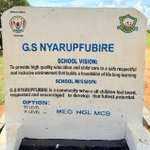
As part of celebrating #WFD2026, @FAORwanda joins hands with @RwandaAgri to plant fruit trees with students at GS Nyarupfubire in @NyagatareDistr,promoting better nutrition and environmental sustainability under the theme “Innovate Today. Nourish Tomorrow.”
Agirite retweeted

@NyagatareDistr plans to plant 10,000 fruit trees across 25 schools, with 530 already planted at GS Nyarupfubire.
The initiative aims to provide future fruit harvests for school communities, promote healthy eating and create greener learning environments.
Read more: ecoagrimedia.rw/nyagatare-pl…


Agirite retweeted

Proud to conclude Rwanda’s #WorldFoodDay celebrations successfully! Together with MINAGRI, Nyagatare and Gatsibo Districts leadership and Rome-based Agencies and partners, @FAORwanda supported the planting of 2 million Juncao cuttings and 55,000 fruit trees.
Innovate today, nourish tomorrow.

Agirite retweeted
As part of the #WorldFoodDay2026 celebrations at the World Food Baskets site in @GatsiboDistrict, FAO Rwanda Representative @Awdahir joined Hon. Minister @T_Ndabamenye in applying fertilizer to a maize plantation established at the beginning of Agricultural Season 2027A.
#WorldFoodDay2026


Agirite retweeted

Amplifying women's leadership where it matters most!
Raoudha Massaoudi, President of the Tunisian Association of Refrigeration and Air Conditioning, taking the floor to champion greater participation of women in technical training and employment across the RAC sector. Diverse leadership in engineering, technician training, and cold-chain management is essential to drive innovation, close skills gaps, and build a truly inclusive green economy.
With U-3ARC uniting over 45 associations and thousands of registered technicians, leaders here are shaping the Kigali Message ahead of MOP38. Investing in skilled women technicians and robust cold chains means less food waste, safer medicines, and real economic empowerment.
#U3ARCKigali2026 #CoolingAfrica


As a vet and farmer, I see it every day: a vaccine that loses the cold chain loses its power. Milk, eggs, meat and fish spoil before they reach families. Farmers lose income, and children lose nutrition.
That is why I am following an important meeting in Kigali today: the 6th Ordinary General Assembly of the Union of Associations of African Actors in Refrigeration and Air Conditioning (U-3ARC), which opens at @ACES_Cooling, Rubirizi Campus, and runs from 29 to 31 October 2026.
The meeting comes ten years after the Kigali Amendment. Africa’s cooling professionals are back in Kigali to advance safe alternative refrigerants, strengthen technician training, empower women in the sector and carry a united Kigali Message to MOP38.
For us in agriculture, this matters. Every cold room, milk cooler and vaccine fridge needs a skilled technician to keep it running. No cooling, no cold chain. No cold chain, no food security.
#U3ARCKigali2026 #CoolingAfrica


Agirite retweeted

TODAY IS MY BIRTHDAY!
Today, I pause and look back on the past 365 days.
Each day was a blessing and a chance to live, learn, and grow as a human.
I think about the little boy in rural Rwanda who met people who believed in him and helped him turn his dreams into reality.
Life is a gift. Having people around you who care, encourage you, and help you grow is an even greater blessing.
This year, I continued learning about agriculture, researching AI, supporting students, and building tools for farmers. From classrooms to farms, each experience reminded me why I care about this work: helping the people who grow our food.
One lesson I am learning is this:
Never be content with waiting for the bus. Get on the bus!
Never be content with being a passenger or conductor. Drive the bus!
Never be content with driving the bus. Own the bus!
Never be content with owning the bus. Own the road!
Never limit your horizons.
Have no horizons.
Thank you, God, for another year. Thank you to my family, friends, mentors, and everyone who continues to encourage me. Your kindness is part of this journey.
I enter this new chapter grateful, hopeful, and ready to keep learning, contributing, and lifting others along the way.
Before you scroll… wish me a Happy Birthday!

Agirite retweeted
Murakoze cyane @ConstantinUwase

#UyuMunsiMuMateka
#30Ukwakira
Havutse @jcniyomugabo, umuhinzi wabyigiye, rwiyemezamirimo, washinze @AgiriteMedia na @Agirite.
Yatweretse ko ubuhinzi bushobora gukorwa kijyambere, bukabyara inyungu, n’imbuga nkoranyambaga zikaba igikoresho cy’iterambere. 🎂
Isabukuru Nziza! 🎉


Agirite retweeted

“Training is not the destination. Decent work is.”
At #OffGridSolarForum2026, @UNICEFRwanda Deputy Rep @DominicRwanda shared how policy turns green skills into jobs for young people:
✅ Recognise skills
✅ Reward employers
✅ Require job pathways
#ForEveryChild #GreenSkills


Agirite retweeted

Genome editing offers new opportunities to improve crops, strengthen resilience and support food security across the region.
The Genome Editing for Crop Improvement Sensitization Workshop, delivered by @IITA_CGIAR
under the Consortium for Red Palm Weevil Control (C4RPWC), led by ICARDA, brought together stakeholders to explore the potential of genome editing in crop improvement and pest management.
Discussions highlighted the importance of regional collaboration, biosafety and regulatory frameworks in advancing responsible agricultural innovation.
🔗 Learn more: icarda.org/media/events/adva…


